Weber Genesis Review
Weber Genesis E-325s Review: Is It Worth Buying?
This Weber Genesis E-325s review covers the sweet spot in Weber's current Genesis gas grill lineup for many buyers: a 3-burner grill with a sear zone, premium Genesis build, strong cooking space, and broad Weber parts support. But the Weber Genesis 325s is not the right grill for everyone. Spirit is better for value buyers, Genesis E-335 makes more sense if you want a side burner, and used Genesis II models can be attractive if condition and repair costs are right.
- Best for:serious backyard gas grill buyers
- Main upgrade:sear zone and Genesis build
- Skip if:you mostly cook for 1–2 people
- Consider E-335 if:you want a side burner
- Consider Spirit if:value matters most
- Watch for:sale timing and replacement parts
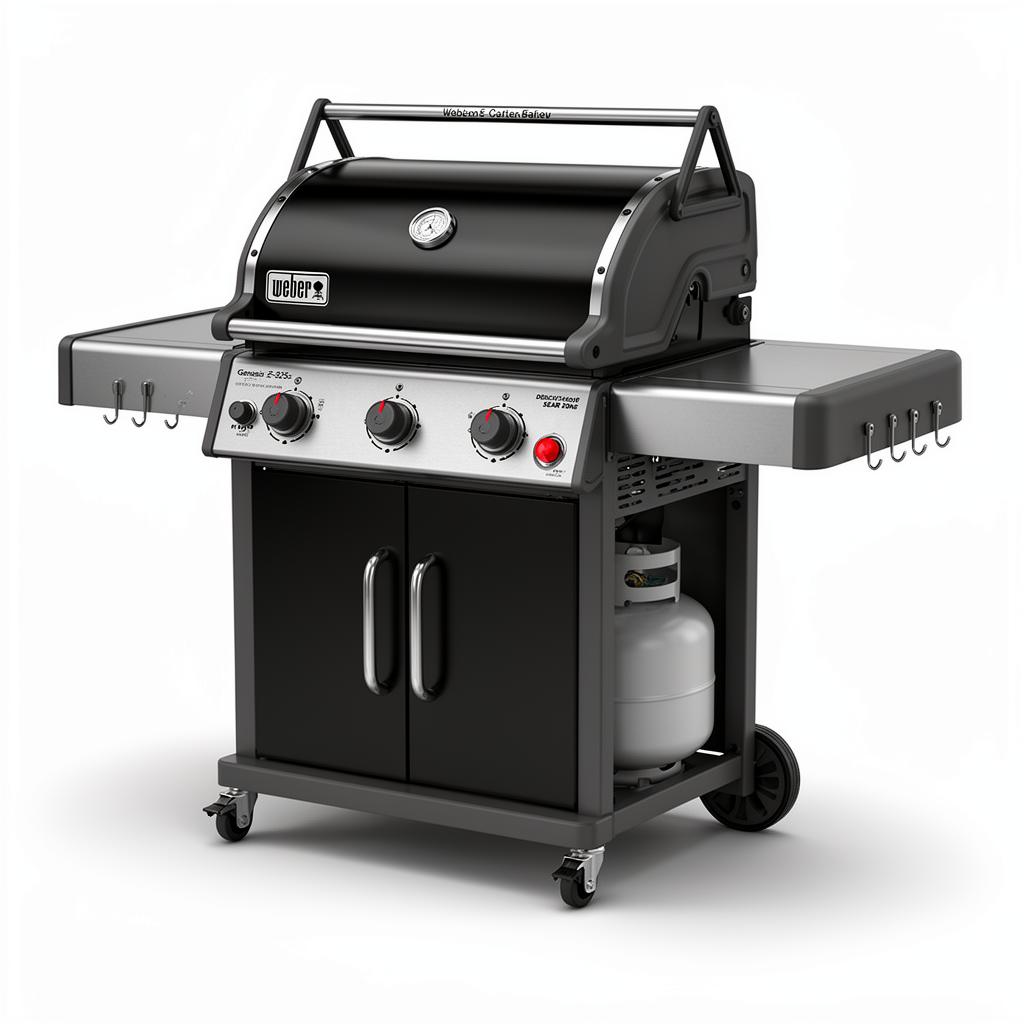 SEAR ZONE
Overall Score
The Verdict
The Weber Genesis E-325s is the grill Weber built to bridge Spirit and Summit — and it lands that target exactly. Cast-aluminum firebox, enclosed cart, PureBlu tapered burners, and the Weber Crafted accessory system. Worth the $450 premium over a Spirit E-310 for anyone cooking regularly or planning 15+ years of ownership. Not worth it if you grill casually for 2–4 people — the Spirit is a better buy there.
Build Quality
9.5/10
Cook Performance
9/10
Value for Money
8/10
Ease of Use
9/10
Quick Answer
Quick verdict: is the Weber Genesis E-325s worth it?
- Buy the E-325s if you want the Genesis sweet spot with sear zone.
- Buy Spirit if you want a smaller, cheaper Weber gas grill.
- Buy E-315 if you want Genesis build without the sear zone.
- Buy E-335 if you want a side burner.
- Buy used Genesis II only if condition and repair math are excellent.
- Wait for a sale if the E-325s is slightly above budget.
At a Glance
Pros and Cons at a Glance
The short version. Full analysis below.
Pros
What the Genesis 325s gets right
- PureBlu tapered burner tubes deliver noticeably more even heat than Spirit-line burners
- Dedicated 13,000 BTU sear zone hits 600°F+ for steakhouse-quality sears
- 513 sq in primary + 274 sq in expandable secondary grate = legitimate 8-person cooking capacity
- Enclosed cart with doors cleans up the aesthetic and hides the propane tank
- Weber Crafted frame system accepts dedicated griddle, pizza stone, wok inserts, and more
- Porcelain-enameled cast iron grates are heavier than Spirit grates; better heat retention
- 10-year limited warranty (12 years on the lid) — best in the mid-premium category
- Bright LED-lit knobs on premium variants are a genuinely useful nighttime feature
- Side tables are approximately 20% larger than Spirit's, with 6 tool hooks
Cons
Where the Genesis 325s falls short
- Roughly $450 more than a Spirit E-310 delivering similar cooking results for 2–4 people
- No side burner on the 325s (the 335 variant adds it for ~$200 more)
- Weber Connect on EX/SX variants is useful but doesn't justify the extra $200 alone
- Assembly takes 2–3 hours solo; not easy to move once built due to 145 lb weight
- The "E" versus "S" designation is aesthetic only — paying for stainless when the cooking performance is identical
- No electric rotisserie included; requires separate purchase
- Only the 335 variant has Weber's Smoke Boost feature for long low-and-slow cooks
- Smart features on EX/SX require app setup, Wi-Fi, and battery maintenance
The Specs
Weber Genesis 325s Key Specs
The numbers that matter, covering the E-325s as the reference model. Variant differences called out where applicable.
- Configuration
- 3-burner gas grill with dedicated sear zone (4 total flame sources)
- Fuel Type
- Liquid propane or natural gas (specify at purchase)
- Main Burner BTU
- 39,000 BTU/hour (3 × 13,000 BTU PureBlu burners)
- Sear Zone BTU
- 13,000 BTU/hour additional
- Total BTU Output
- 52,000 BTU/hour combined
- Primary Cooking Area
- 513 square inches
- Warming Rack
- 156 square inches (fixed)
- Expandable Secondary Grate
- 274 square inches (fold-out)
- Total Cooking Area
- 787 square inches (with secondary extended)
- Grate Material
- Porcelain-enameled cast iron (E) / Stainless steel rods (S)
- Burner Material
- Stainless steel PureBlu tapered burner tubes
- Flavorizer Bars
- Stainless steel (original 325s) / Porcelain-enameled steel (current E-325 refresh)
- Ignition
- Electronic crossover ignition (E/S) / Weber Connect smart ignition (EX/SX)
- Lid & Cook Box
- Porcelain-enameled steel (E/EX) / Stainless steel (S/SX)
- Frame System
- Weber Crafted (all variants) — accepts dedicated accessories
- Dimensions (Lid Closed)
- 47" H × 59" W × 31" D
- Dimensions (Lid Open)
- 63" H × 59" W × 31" D
- Weight
- 145–152 lbs depending on variant
- Retail Price (MSRP)
- E-325s: ~$999 | S-325s: ~$1,099 | EX-325s: ~$1,149 | SX-325s: ~$1,249
- Warranty
- 10-year limited on cooking system, 12-year on lid assembly, 5-year on electronic components
- Colors Available
- E-325s: Black or Copper | S-325s: Stainless | EX/SX: Black
Variant Guide
Weber Genesis 325s: E vs S vs EX vs SX Explained
Weber offers four variants of the 325s, separated by about $250 from bottom to top. Here's what actually differs between them.
The Baseline
Genesis E-325s
~$999
- •Porcelain-enameled steel lid (black or copper)
- •Porcelain-enameled cast iron grates
- •Standard electronic ignition
- •PureBlu tapered burners
- •Weber Crafted frame system
- •No smart features
Who it's for:
Anyone who wants the full Genesis experience without paying for stainless aesthetics or smart tech. Best value-per-dollar in the 325s line.
Stainless Upgrade
Genesis S-325s
~$1,099+$100
- •Stainless steel lid and body
- •Stainless steel rod cooking grates
- •Standard electronic ignition
- •PureBlu tapered burners
- •Weber Crafted frame system
- •No smart features
Who it's for:
Shoppers who specifically want a stainless aesthetic. Cooking performance is identical to the E-325s. The +$100 is purely cosmetic.
Smart (Black)
Genesis EX-325s
~$1,149+$150
- •Porcelain-enameled black lid (no copper option)
- •Porcelain-enameled cast iron grates
- •Weber Connect smart module
- •Integrated meat probe temperature monitoring
- •App-based cook guidance
- •LED-lit control knobs
Who it's for:
Tech-forward buyers who want to monitor internal meat temperature from their phone while inside the house. Weber Connect works well and the app is solid.
Top of the Line
Genesis SX-325s
~$1,249+$250
- •Stainless steel lid and body
- •Stainless steel rod cooking grates
- •Weber Connect smart module
- •Integrated meat probe temperature monitoring
- •App-based cook guidance
- •LED-lit control knobs
Who it's for:
Buyers who want both stainless aesthetics AND smart tech. Effectively the "maxed out" 325s configuration.
Our honest recommendation: the E-325s is the smart buy for 90% of shoppers. The stainless upgrade adds aesthetics without performance. Weber Connect is useful but doesn't justify $150–250 unless you actively want app-based cooking guidance. Buy the E-325s and invest the $200 difference in accessories, a quality cover, and better charcoal for the future.
Performance
How the Weber Genesis 325s Actually Cooks
Specs on paper don't tell the full story. Here's what real cook performance looks like.
1. Preheat Performance
The Genesis 325s reaches 500°F in approximately 8 minutes from cold with all three main burners on high. That's significantly faster than a Spirit E-310 (10 minutes) because of the higher BTU output and better heat retention in the heavier cook box. The sear zone — controlled by the small red knob — adds another 2–3 minutes to hit its peak 600°F+ searing temperature. For most backyard cooks, the entire grill is fully ready 10 minutes after ignition.
2. Heat Distribution and PureBlu Burners
Weber's PureBlu burner design is the most notable upgrade on the 2022+ Genesis platform. The tapered rectangular burner tubes — wider at the front, narrower toward the back — generate consistent gas pressure and even flame distribution across the entire tube length. In real cooks, this means edge-to-center temperature variation of about 10°F compared to roughly 15°F on a Spirit E-310 and 40°F on most competing mid-premium grills. Food on the corners cooks at nearly the same rate as food in the center — unusual and genuinely useful.
3. The Sear Zone in Practice
The dedicated sear zone — a fourth burner running independently at 13,000 BTU — is the 325s's headline feature. With sear zone on high and lid closed, surface temperatures hit 650–700°F on the grate within 4–5 minutes. This is genuinely steakhouse territory. You can sear a 1.5-inch ribeye for 90 seconds per side, move it to the cooler main zone to finish, and pull it off at a perfect medium-rare with professional-looking diamond grill marks. Spirit grills can't do this — they lack the concentrated high-heat zone.
4. Two-Zone Cooking Capability
With 3 main burners plus a sear zone, the Genesis 325s enables genuine three-zone cooking: hot (sear zone), medium (center burners on medium-high), and cool (outer burners off). This unlocks reverse searing for steaks, low-and-slow indirect cooking for ribs and pork shoulder (Weber's unofficial guideline: 250°F with one burner on low), and delicate cooking of fish or vegetables without flare-ups. The Spirit's 3-burner arrangement offers only two meaningful zones; the Genesis 325s offers three.
5. Low-Temperature Control
With just one main burner on lowest setting, the Genesis 325s can hold a steady 225°F with lid closed — making it legitimately capable for pork shoulder, brisket, or slow-smoked ribs. Weber's Smoke Boost feature (on the 335 variants, not on the 325s) adds dedicated low-temperature functionality. The 325s doesn't have Smoke Boost but still handles low-and-slow well enough that dedicated smokers aren't required for most backyard cooks.
Buyer Match
Who Should Buy the Weber Genesis 325s
The honest version. The Genesis 325s is the right grill for some people — and overkill for others.
Buy It If
The Genesis 325s is right for you if...
- You cook for 4–8 people regularly (cook area matches family/hosting needs)
- You grill 2+ times per week (daily usage justifies the build quality premium)
- You want a dedicated sear zone for restaurant-quality steaks
- You plan to keep the grill 15+ years and want best-in-class durability
- You want the Weber Crafted accessory ecosystem (griddle, pizza stone, wok, rotisserie)
- You care about even cooking edge-to-edge and want PureBlu burners
- Budget isn't the primary decision factor — you're willing to pay for quality
Skip It If
The Genesis 325s is wrong for you if...
- You cook for 2–4 people — a Weber Spirit E-310 does the same job for $450 less
- You grill only occasionally (a few times per month) — build quality premium won't pay off
- You want a side burner for simmering sauces (you need the 335 variant instead)
- You want long low-and-slow smoking as a primary use (the 335 with Smoke Boost or a dedicated smoker is better)
- You want stainless aesthetics but won't use the cooking features — just buy a Spirit II S-310 for less
- Your primary cook is wings or pizza at 700°F+ (a Weber Kettle + Vortex or Slow 'N Sear does this better)
- Budget is a concern and you need the grill now (Spirit E-310 is the smart compromise)
The Comparison
Genesis 325s vs Spirit E-310: When's the Upgrade Worth It?
The single most common question from buyers considering the Genesis 325s. Here's the honest breakdown.
Entry-Level
Weber Spirit E-310
- $549 retail
- 32,000 BTU (no sear zone)
- 529 sq in primary cooking
- 2-zone cooking capability
- Open cart (propane tank visible)
Buy the Spirit E-310 if...
- •You cook for 2–4 people
- •Budget matters
- •You don't need a sear zone
- •You don't need Weber Crafted accessories
Mid-Premium
Weber Genesis E-325s
- $999 retail (+$450)
- 52,000 BTU total (incl. sear zone)
- 513 sq in primary + 274 sq in expandable
- 3-zone cooking with dedicated sear
- Enclosed cart with storage
Buy the Genesis 325s if...
- •You cook for 5+ people regularly
- •You sear steaks 2+ times per month
- •You host backyard parties
- •You want a 15–20 year grill investment
The honest math: the $450 premium for the Genesis 325s works out to about $30 per year over the 15-year Weber lifespan. For anyone cooking regularly, that's trivial. For casual grillers using it 20–30 times per year, the math flips — that's $15–20 per cook in premium cost, which feels expensive. Match the grill to your actual cooking frequency, not the aspirational version.
Living With It
What to Expect After Year One
Every grill has a lifecycle. Here's the realistic maintenance and replacement-parts picture for the Weber Genesis 325s over 10–15 years of ownership.
Year 1–2
Step 1
Break-in and burn-off
Routine use, occasional grease tray cleaning. Stainless flavorizer bars on original 325s variants perform at peak; porcelain flavorizer bars on current E-325 refresh start showing wear signs around year 2. The learning curve is understanding the 3-zone cooking layout and dialing in preheat for different cook types.
Year 2–4
Step 2
Initial parts cycles
Sear zone igniter battery first replacement (CR2032 lithium cell, under $5). If you have the EX/SX variant, the Weber Connect module requires firmware updates and occasional battery changes. On E-325 refresh units, first porcelain flavorizer bar replacement may happen — original 325s stainless bars go 7–10+ years.
Year 4–7
Step 3
Burner tubes and deeper maintenance
PureBlu burner tubes typically show their first wear signs around year 5. Weber's OEM replacement kit (specific to Genesis 2022+ platform) runs $100–150 for the 3-burner + sear zone set. Aftermarket availability for the PureBlu design is still limited compared to older Genesis generations. Grease management system components may need replacement at year 6–7.
Year 7–10
Step 4
Flavorizer bars and cooking grates
Flavorizer bar replacement (whether stainless or porcelain) typically falls in this window for most owners. Cooking grates may need replacement if the porcelain is heavily chipped or cast iron has rusted through. Consider upgrading to stainless grates at this point if you have the porcelain version.
Year 10–15
Step 5
Heavy-wear parts cycle
Second flavorizer bar replacement. Sear zone components may need attention. If the Weber Connect module on EX/SX variants has reached end-of-life support, consider decommissioning the smart features and running the grill as a standard E-325s. The cook box, lid, and cart itself will easily last another 10+ years.
Total 10-year ownership cost beyond initial purchase: $300–450 in replacement parts if you go OEM, $200–300 if you go aftermarket. The firebox, lid, and enclosed cart essentially never fail — Weber's 2022 Genesis redesign is built to outlast every consumable part.
Ready for replacement parts? See our complete guide: Weber Genesis Grill Parts →
Competitors
Alternatives to the Weber Genesis 325s
If the 325s isn't quite right, here are the four most serious alternatives at adjacent price points.
Step Down
Weber Spirit E-310
The 3-burner Spirit for $450 less. Same reliable Weber build quality, smaller cook area, no sear zone. The smart buy for 2–4 person cooks.
Step Up
Weber Genesis E-335
The next step up in the Genesis line — adds Smoke Boost for low-and-slow cooking and includes a side burner for sauces. $200–300 more than the E-325s.
Genesis Big Brother
Weber Genesis E-435
The 4-burner flagship Genesis. More cook area, more BTUs, all the premium features. Roughly $300–500 more than the E-325s depending on variant.
Premium Summit Tier
Weber Summit E-470
Jump to Weber's top-tier Summit line — 12-year warranty on burners, dedicated smoker/warming drawer, infrared rotisserie burner. Different cooking experience entirely.
Genesis Line Comparison
Weber Genesis E-325s vs E-315 vs E-335
The E-325s sits in the middle of Weber's current Genesis line. Here is how it compares to the simpler E-315 below it and the feature-loaded E-335 above it.
| Model | Best for | Main feature difference | What you give up | Verdict |
|---|---|---|---|---|
Genesis E-315 | Buyers who want Genesis build without paying for a sear zone | 3 main burners, no dedicated sear zone | High-heat searing power | Good simpler Genesis pick |
Genesis E-325sOUR PICK | Buyers who want a sear zone but do not need a side burner | Adds dedicated sear zone burner | No side burner | Best middle pick in the Genesis line |
Genesis E-335 | Buyers who want sear zone plus a side burner | Sear zone plus integrated side burner | Costs roughly $200–$300 more | Best if you actually use a side burner |
If you are torn between the E-315 and E-325s, the deciding question is searing. If you are torn between the E-325s and E-335, the deciding question is whether you will genuinely use a side burner.
New vs Used
Weber Genesis E-325s vs used Genesis II
The Weber Genesis E-325s is the current-style, new-buy choice with full warranty and modern Weber parts support. A used Weber Genesis II can be a strong value if you find a clean, well-maintained example at the right price.
Buy the new E-325s if you want warranty coverage, current-platform support, and zero risk on grates, burner tubes, and ignition. Consider a used Genesis II if you are comfortable inspecting a grill, sourcing replacement parts, and doing basic maintenance — and only if the repair budget does not erase the savings.
Fuel Type
Weber Genesis E-325s propane vs natural gas
Liquid propane (LP)
The right pick for most patios, renters, and anyone without a dedicated natural gas line. Easy to set up, easy to move, and tanks are widely available.
Natural gas (NG)
The right pick if you have a permanent outdoor gas line at your grilling spot. No tank swaps and no running out mid-cook, but the grill is fixed in place.
Check the fuel type before you buy. The E-325s ships as either LP or NG, and aftermarket conversion is not officially supported on this platform — do not assume you can switch later.
Related: best propane grills · grill igniter not working
Sear Zone
How good is the Weber Genesis E-325s sear zone?
The sear zone is one of the biggest reasons to pick the E-325s over a simpler Genesis E-315 or a Weber Spirit. It is genuinely useful for steaks, burgers, chops, and high-heat finishing.
That said, a sear zone does not fix bad technique. Preheat fully with the lid closed, pat food dry before it hits the grate, and use an instant-read thermometer to pull at the right internal temperature. Buyers who do not really care about searing are usually fine with the E-315 or a Spirit.
Related: Weber Spirit vs Genesis
Long-Term Ownership
Weber Genesis E-325s parts and long-term ownership
A Genesis E-325s is a better long-term buy when parts are easy to find and maintain. Here is what to plan for and where to read more.
Burner tubes
- What fails:
- Holes, uneven flame, hot spots after 5–8 years.
- How to inspect:
- Light all burners and look for steady blue flame top to bottom.
- When to replace:
- When flame is yellow, weak, or won't stay lit.
Flavorizer bars
- What fails:
- Rust-through and flaking; porcelain bars wear faster than stainless.
- How to inspect:
- Pull them out yearly and check for holes and heavy rust.
- When to replace:
- When more than ~30% is corroded or warped.
Cooking grates
- What fails:
- Chipped porcelain or rusted cast iron after 7–10 years.
- How to inspect:
- Look for bare metal, deep rust, or food sticking unevenly.
- When to replace:
- When porcelain is chipped through or rust returns after cleaning.
Igniter kit and battery
- What fails:
- Weak spark, no click, sear-zone won't light first try.
- How to inspect:
- Swap the CR2032 battery first; check electrodes for grease buildup.
- When to replace:
- If new battery doesn't fix it, replace electrodes and module.
Regulator and hose
- What fails:
- Low flame on all burners — the classic Weber regulator lockout.
- How to inspect:
- Disconnect tank, open valves, reconnect slowly. Look for cracks.
- When to replace:
- Every 5–7 years or sooner if flame stays low after a reset.
Grease tray and drip pans
- What fails:
- Buildup causes flare-ups and is the #1 grill fire risk.
- How to inspect:
- Check after every 2–3 cooks; empty before any long cook.
- When to replace:
- Liners as needed; full tray when warped or rusted.
Control knobs
- What fails:
- Cracking, hard to turn, indicator wear.
- How to inspect:
- Confirm they click cleanly through each setting.
- When to replace:
- When the knob spins on the valve stem or indicator is gone.
Lid thermometer
- What fails:
- Reads 50–100°F low after years of grease and heat cycling.
- How to inspect:
- Compare against an instant-read probe at the grate.
- When to replace:
- When it's off by more than 25°F.
Grill cover
- What fails:
- Cracking, tearing, trapped moisture against the lid.
- How to inspect:
- Check fit yearly; look for water pooling inside.
- When to replace:
- When seams split or it no longer fits snugly.
Accessories
Weber Genesis E-325s accessories worth buying
Weber Genesis grill cover (300-series fit)
- Best for:
- Protecting the cart finish and grates
- Why it matters:
- A correctly sized cover is the single best way to extend the grill's exterior life.
- Fit:
- Confirm fit for the current Genesis 300-series footprint.
- Watch out for:
- Avoid generic covers that trap moisture against the lid.
Weber Crafted griddle insert
- Best for:
- Smash burgers, breakfast, and seared veg
- Why it matters:
- Drops into the Weber Crafted frame for fast griddle-style cooking.
- Fit:
- Built for the Weber Crafted frame on current Genesis grills.
- Watch out for:
- Pre-season and clean carefully to avoid rust.
Weber Crafted frame accessories
- Best for:
- Pizza stone, sear grate, dual-sided sear grate
- Why it matters:
- Expands the E-325s into multiple cooking styles without a new grill.
- Fit:
- Designed for Weber Crafted-compatible grates.
- Watch out for:
- Only buy inserts that match the Weber Crafted frame system.
Instant-read meat thermometer
- Best for:
- Pulling steaks, chicken, and pork at the right temp
- Why it matters:
- Internal temperature decides doneness — not the lid thermometer.
- Fit:
- Works with any grill.
- Watch out for:
- Skip slow analog probes; choose a fast digital model.
Bristle-free grill brush
- Best for:
- Cleaning grates without wire bristle risk
- Why it matters:
- Keeps grates clean and reduces flare-ups on the sear zone.
- Fit:
- Use on cast iron and stainless grates.
- Watch out for:
- Replace when worn — even bristle-free heads wear out.
Weber grill cleaner spray
- Best for:
- Deep cleaning grates, flavorizer bars, and exterior
- Why it matters:
- Safer than oven cleaner on porcelain surfaces.
- Fit:
- Safe for Weber porcelain-enameled parts.
- Watch out for:
- Always rinse before next cook.
Propane tank gauge
- Best for:
- Avoiding running out mid-cook on LP
- Why it matters:
- Cheap insurance for the LP version of the E-325s.
- Fit:
- Standard LP tank fitting.
- Watch out for:
- Gauges are estimates — keep a spare tank if possible.
Replacement regulator and hose
- Best for:
- Diagnosing low-flame and weak-heat issues
- Why it matters:
- An aging regulator is a common cause of weak grill performance.
- Fit:
- Match the connection type for your fuel and grill.
- Watch out for:
- Use a Weber-compatible replacement.
Grill tool set
- Best for:
- Day-to-day grilling
- Why it matters:
- Long handles keep hands safe near the hot sear zone.
- Fit:
- Any full-size gas grill.
- Watch out for:
- Stainless beats plastic-handled tools long term.
Sale Timing
Should you wait for a Weber Genesis E-325s sale?
The E-325s is expensive enough that sale timing matters. Memorial Day, Labor Day, Black Friday, Cyber Monday, and end-of-season clearance are the windows most worth watching. Discounts can be retailer-dependent and inventory varies.
Do not buy the wrong fuel type or the wrong model just because it is discounted. A great deal on the wrong grill is not a great deal.
Related: When do Weber grills go on sale · Black Friday Weber deals · Cyber Monday Weber deals
Buyer Mistakes
Mistakes to avoid before buying the Weber Genesis E-325s
- 1.Buying it when a Weber Spirit is more than enough
- 2.Buying it when you actually need a side burner (look at E-335)
- 3.Ignoring propane vs natural gas — the wrong fuel version is a real problem
- 4.Not measuring patio space and lid clearance
- 5.Forgetting to plan for assembly and delivery
- 6.Not budgeting for a cover and a good thermometer
- 7.Skipping a quick look at the E-315 and E-335 before deciding
- 8.Assuming the sear zone will fix bad technique on its own
- 9.Buying outside sale windows when you can wait a few weeks
- 10.Ignoring long-term replacement parts and maintenance
FAQ
Weber Genesis 325s Frequently Asked Questions
Is the Weber Genesis E-325s worth it?
Is Weber Genesis E-325s better than Spirit?
What is the difference between Weber Genesis E-315 and E-325s?
Should I buy Weber Genesis E-325s or E-335?
Does Weber Genesis E-325s have a side burner?
Is Weber Genesis E-325s good for searing?
Should I buy propane or natural gas Genesis E-325s?
What Weber Genesis E-325s parts wear out first?
What accessories should I buy with the Weber Genesis E-325s?
Should I wait for a Weber Genesis E-325s sale?
Is a used Genesis II better than a new E-325s?
Is Weber Genesis E-325s too big for a small patio?
How long should a Weber Genesis E-325s last?
How do you clean a Weber Genesis E-325s?
What's the difference between the Weber Genesis 325s and the newer Genesis E-325?
Is the Weber Genesis 325s worth $450 more than a Weber Spirit E-310?
What's the difference between the E-325s, S-325s, EX-325s, and SX-325s?
Does the Weber Genesis 325s have a side burner?
How big is the Weber Genesis 325s cooking area?
How long does a Weber Genesis 325s grill last?
Can the Weber Genesis 325s be converted from propane to natural gas?
Does Weber Connect (on the EX/SX variants) actually work?
What accessories should I buy with the Genesis 325s?
Where can I find Weber Genesis 325s replacement parts?
The Bottom Line
Final verdict: should you buy the Weber Genesis E-325s?
The Weber Genesis E-325s is the grill Weber built to bridge the Spirit and Summit lines — and it lands that target exactly. Better burners, bigger cooking area, dedicated sear zone, Weber Crafted accessory ecosystem, and build quality that will outlast 20 years of backyard cooking. At $999, it's expensive but genuinely earns the premium over a Spirit for anyone who cooks regularly.
Our honest recommendation: buy the E-325s if you cook 2+ times per week for 5+ people and plan long-term ownership. Buy the Spirit E-310 if you cook casually or for smaller groups — the Spirit does 90% of what the 325s does at half the price. Look at the Genesis E-335 only if you specifically need a side burner or Smoke Boost for low-and-slow cooking.
Of the four 325s variants (E, S, EX, SX), the E-325s is the smart buy for 90% of shoppers. Stainless aesthetics (S) add $100 without performance gains. Weber Connect (EX/SX) adds $150–250 for smart features that are nice-to-have, not essential. Spend the savings on accessories and a quality cover.
Buy the E-325s
If you want the Genesis sweet spot with a sear zone.
Buy a Weber Spirit
If you want better value and a smaller footprint.
Buy the E-315
If you want Genesis build without a sear zone.
Buy the E-335
If you want a side burner alongside the sear zone.
Buy used Genesis II
If the condition and repair math are excellent.
Wait for a sale
If the E-325s is slightly above your budget.
Score breakdown
- Build Quality: 9.5/10 — Best-in-class in the mid-premium category; cast-aluminum firebox, enclosed cart, Weber Crafted frame
- Cook Performance: 9/10 — PureBlu burners excel, sear zone delivers, only the lack of side burner limits the score
- Value for Money: 8/10 — Legitimately premium, not cheap; the Spirit is a better value for casual grillers
- Ease of Use: 9/10 — Intuitive controls, LED-lit knobs on EX/SX, solid ignition reliability
- Overall: 9.0/10
Affiliate disclosure: qualitygrillparts.com earns a small commission on qualifying purchases at no extra cost to you.
Related Guides
Parts
Weber Genesis Grill Parts
Burner tubes, flavorizer bars, grates and more for the Genesis line.
Read guideCompare
Weber Spirit vs Genesis
Which Weber tier actually fits your patio and cooking style.
Read guideUsed Buying
Genesis II 300 Series
Used Genesis II buying checklist and what to inspect first.
Read guideCompare
Weber Genesis vs Summit
When stepping up to the Summit is worth the extra spend.
Read guideParts
Genesis Burner Tubes
OEM and aftermarket burner tube options for Genesis grills.
Read guideParts
Genesis Flavorizer Bars
Stainless vs porcelain bars and when to replace them.
Read guideReference
Weber Replacement Parts Guide
Full Weber replacement parts walkthrough across the lineup.
Read guideSale Timing
When Do Weber Grills Go on Sale
The best windows to buy a Weber at a real discount.
Read guide