Weber Recipe
Weber Grilled Boneless Skinless Chicken Thighs: Juicy, Fast, Foolproof
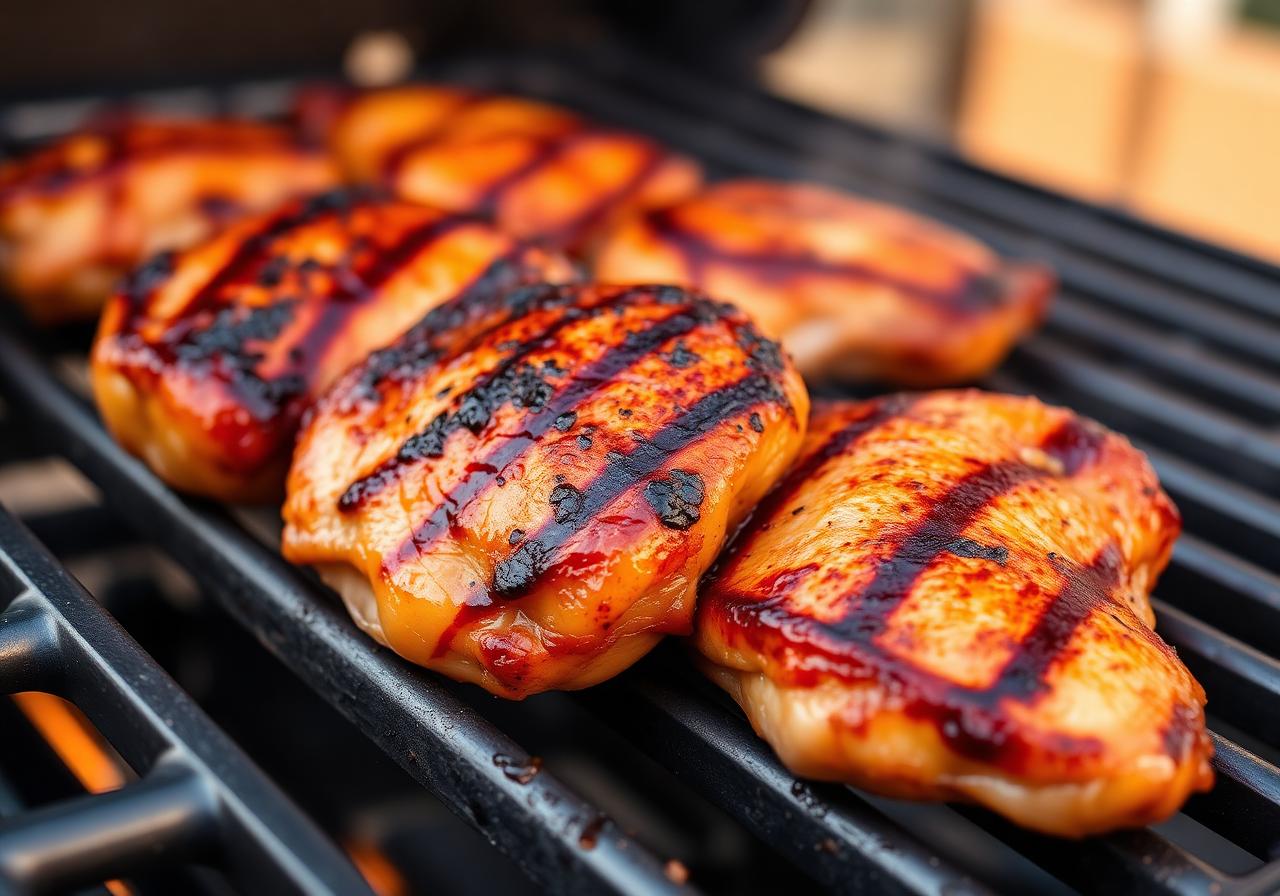
Boneless skinless chicken thighs are the most forgiving cut of chicken you can put on a Weber gas grill. They don't dry out like breasts. They don't need careful skin-side management like bone-in thighs. A quick 2-hour soy-apple marinade, 5 minutes per side on direct high heat (around 550°F), and you're pulling restaurant-quality chicken off the grill in under 10 minutes of cook time. Perfect for fajitas, lettuce wraps, salads, or stacked on rice. This recipe works on any Weber — Spirit, Genesis, Summit, Q-series, or charcoal kettle with a hot enough fire.
The Recipe
Weber Grilled Boneless Skinless Chicken Thighs
Rated 4.9 — based on 182 reader ratings
Prep Time
5 minutes
Cook Time
10 minutes
Rest Time
2 hours marinate
Serves
4-6 (6-8 thighs)
Smoker temp: 550°F (high heat, all burners on HIGH)
Pull temp: 160°F internal (carries to 165°F after rest)
Recommended pellets: Works on Weber Spirit, Genesis, Summit, Q-series, or Kettle (high direct heat)
Share this recipe:
Before You Start
What You'll Need
The marinade is the secret. Everything else is chicken, a grill, and a thermometer.
The Ingredients
Optional for fajita wraps
- •8-12 lettuce leaves (butter lettuce or romaine)
- •2 bell peppers, sliced
- •1 large onion, sliced
- •1 lime, cut into wedges
- •Fresh cilantro for garnish
The marinade does the work. Don't skip it — a 2-hour bath in soy sauce and apple juice is what separates restaurant-quality chicken thighs from dry, bland ones. The apple juice provides natural sugars that caramelize on the grill; the soy sauce provides salt and umami depth.
The Equipment
No specialty equipment needed. Weber's standard stainless steel grates handle this cook beautifully. If you have porcelain-coated cast iron grates, they produce slightly deeper sear marks but heat conduction is identical.
Step by Step
How to Grill Boneless Chicken Thighs on a Weber
Five steps. The marinade takes 2 hours (passive); everything else takes about 15 minutes of active work.
- 1
MARINATE
Mix the marinade and soak the thighs for 2 hours
In a gallon zip-top bag, combine soy sauce, apple juice, water, olive oil, lemon juice, Frank's Hot Sauce, sugar, cumin, and paprika. Seal the bag and shake vigorously until the sugar dissolves and the marinade is uniform.
Add the chicken thighs to the bag. Press out as much air as possible before sealing. Lay the bag flat in the refrigerator so the marinade contacts all surfaces of the chicken. Marinate for 2 hours minimum — longer is better (up to 8 hours). Don't go over 12 hours; the soy sauce salt will start to over-cure the meat.
If you're short on time, 30 minutes is the absolute minimum to get any marinade effect. But for best flavor, plan for the full 2 hours.
Time: 5 minutes active + 2 hours passive
- 2
PREHEAT
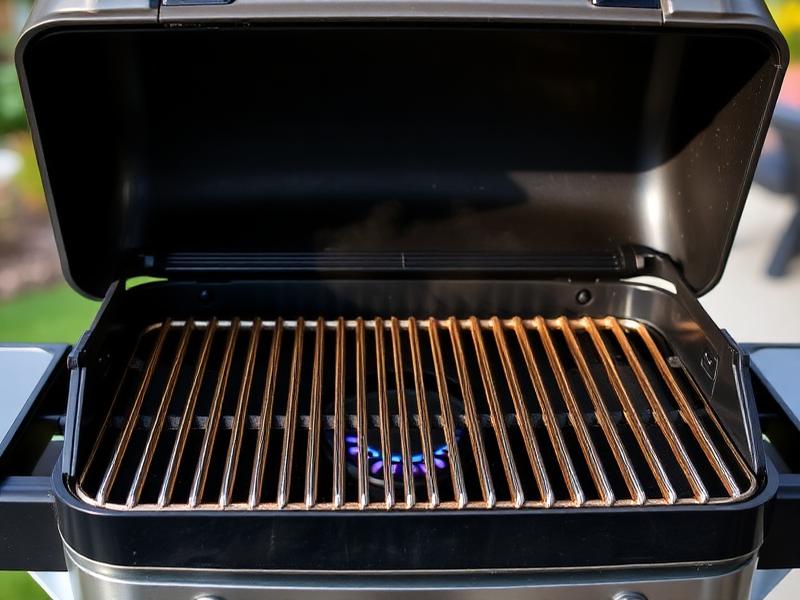
Preheat Weber on HIGH (~550°F) for 15 minutes
Turn all Weber burners to HIGH. Close the lid and let the grill preheat for 15 full minutes. Your grill should be running at around 550°F when fully preheated — the grates need to be genuinely hot for proper sear marks.
While the grill preheats, scrape the grates clean with a wire brush. Dirty grates = stuck chicken + weak sear marks. A clean, hot grate is the difference between restaurant-quality chicken and frustrating home-cook chicken.
Remove the marinated chicken from the fridge 10 minutes before cooking so it can temper slightly. Cold chicken straight from the fridge cooks unevenly on a 550°F grill.
Time: 15 minutes preheat + 10 minute temper
- 3
GRILL
Pat dry, season, and grill 5 minutes smooth-side down
Remove the thighs from the marinade and pat them dry with paper towels — wet chicken doesn't sear properly, it steams. Discard the marinade (it's contaminated with raw chicken juices).
Sprinkle both sides of each thigh lightly with dry rub. The rub adds seasoning depth and helps with bark formation during the quick grill. Don't overdo it — these thighs are already heavily marinated.
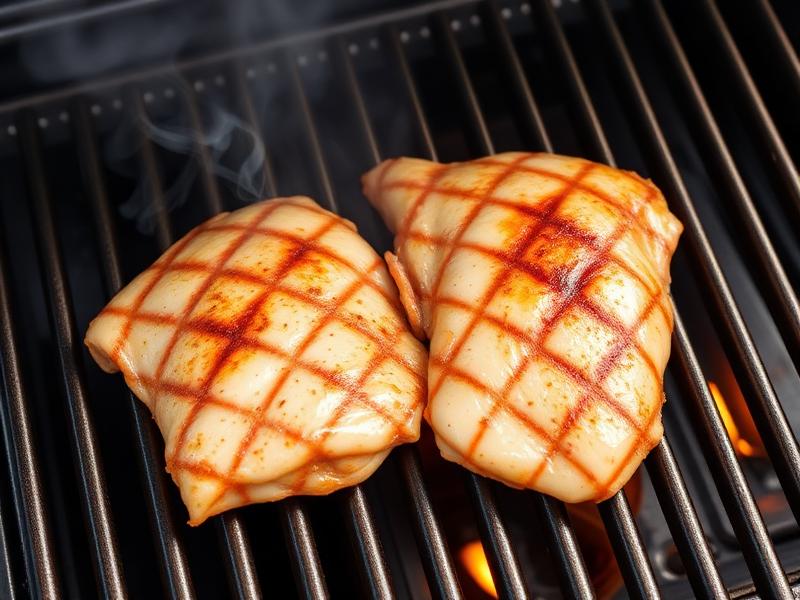
Place the thighs on the hot grill grates smooth-side down (the side that was originally skin-side; it's flatter and sears cleaner). Close the lid.
Set a 5-minute timer. Do not open the lid during this phase. Opening the lid drops grill temperature from 550°F to 400°F in 15 seconds — you lose your sear.
Time: 5 minutes (first side)
- 4
FLIP
Flip and grill 5 more minutes to 160°F internal
Open the lid. The thighs should have dark, pronounced grill marks on the smooth side. Flip each thigh with tongs (not a fork — piercing releases juice). Close the lid again.
Set another 5-minute timer. At the 3-minute mark, check internal temperature with an instant-read thermometer in the thickest thigh. If it's approaching 160°F, pull the thighs off. Chicken thighs are done at 160°F internal (carryover cooking brings them to 165°F during the rest — the USDA-safe temperature).
Unlike chicken breasts (which dry out fast above 165°F), thighs have enough fat to stay juicy even at 175-185°F if you want them more well-done. But 160°F pull / 165°F rest is the sweet spot for maximum juiciness.
Time: 5 minutes (second side)
- 5
REST
Rest 3-5 minutes, then serve in lettuce wraps
Transfer the grilled thighs to a clean cutting board. Rest for 3-5 minutes — short rest because thighs are relatively small. Carryover cooking finishes at ~165°F internal.
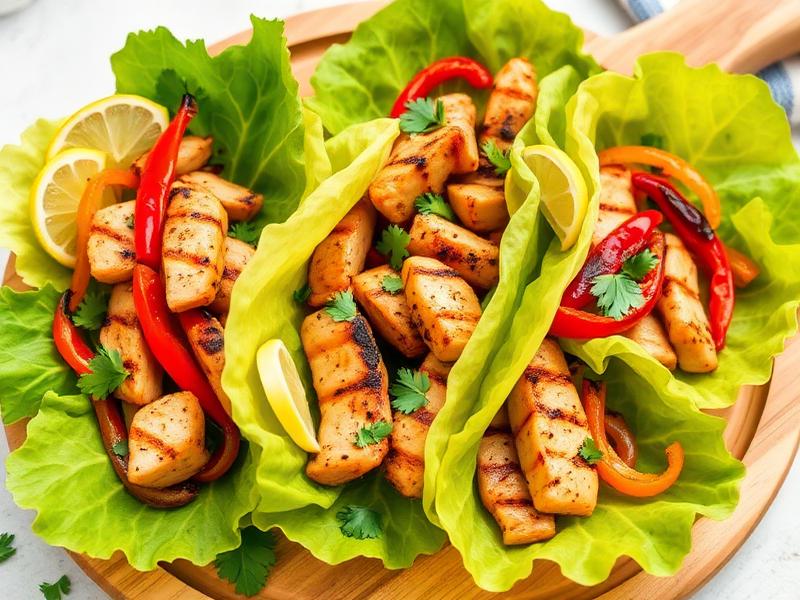
Slice each thigh into 1/2-inch thick strips across the grain. Serve however you like — three popular options:
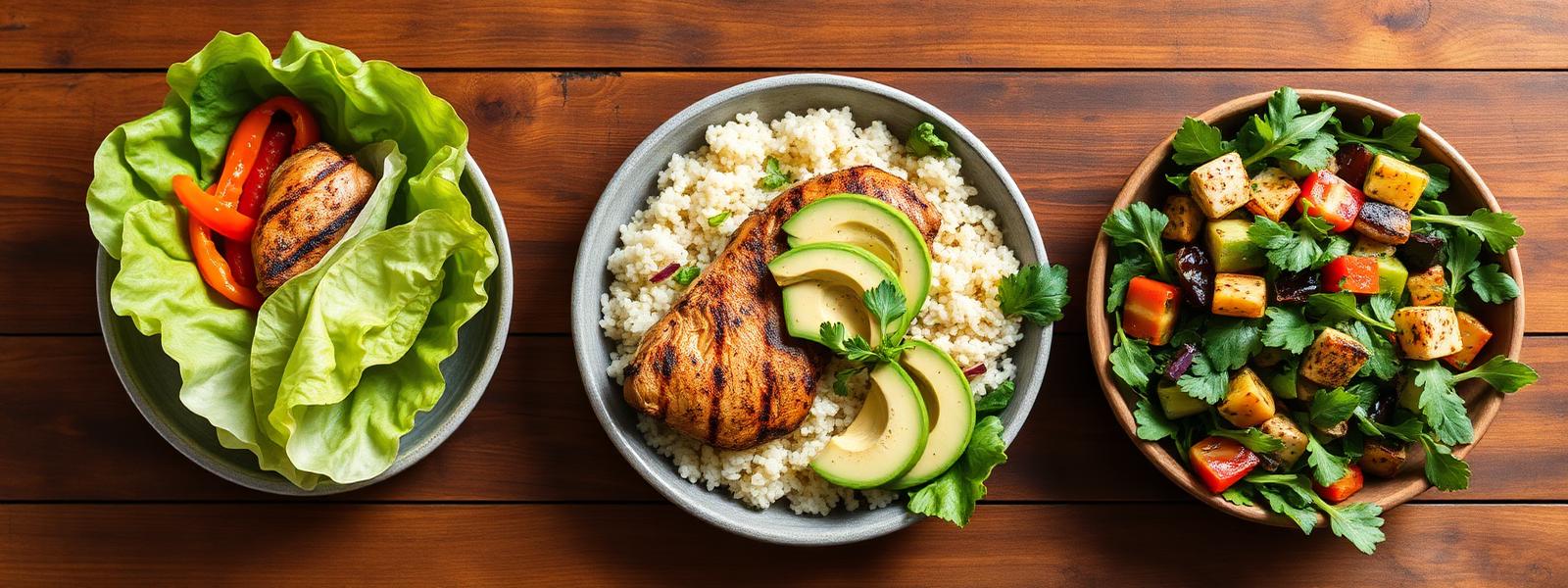
Fajita-style lettuce wraps: pile sliced chicken on butter lettuce leaves with grilled bell peppers, caramelized onions, a squeeze of lime, and fresh cilantro. The original qualitygrillparts.com serving method.
Over rice or cauliflower rice: chicken sliced thin, drizzled with sauce of choice, served with grilled vegetables on the side.
On salads: slice cold or warm over mixed greens with a vinaigrette.
Time: 3-5 minutes rest + 5 minutes slicing
The Case for Thighs
Why Boneless Skinless Thighs Beat Chicken Breasts on the Grill
Most home cooks default to chicken breasts because that's what grocery stores push. The grill tells a different story.
Chicken breasts dry out. It's not a technique problem — it's a biology problem. Breasts are 99% lean muscle with almost no intramuscular fat. Above 165°F internal (food-safe temperature), they shed moisture fast. The difference between 165°F juicy and 170°F dry is about 2 minutes of extra grill time.
Thighs solve this at the anatomical level. Thigh meat has 2-3x the intramuscular fat of breast meat. The fat protects the muscle from drying even at higher temperatures (up to 185°F internal is still juicy with thighs). The window between "cooked" and "overcooked" is 20 degrees wide instead of 5. That's a much more forgiving margin for grilling.
Breast problems on the grill
Uneven thickness (tapered ends cook faster), low fat content means fast drying, tight muscle fibers lock juice in for only a narrow temperature window. Easy to overcook. Also: boneless skinless breasts are more expensive per pound than boneless skinless thighs.
Thigh advantages
Uniform thickness (thighs are naturally flat), 2-3x more fat than breasts = more forgiving temperature window, richer flavor from dark meat, cheaper per pound at most grocery stores. Dark meat chicken is simply better-suited to high-heat grilling than white meat.
If your chicken grilling has been disappointing, switch to thighs. One change — same grill, same technique, same marinade — completely different results.
Grill Compatibility
Which Weber Grills This Recipe Works On
The 550°F direct-heat method works on every Weber gas grill and most Weber charcoal setups. Here's how to adapt for each.
Weber Spirit & Spirit II
Works perfectly at max heat. All three burners on HIGH reaches 500-550°F within 15 minutes. 2-3 burner setup gives you plenty of direct-heat space for 6-8 thighs at once.
See Spirit parts →Weber Genesis (all generations)
Genesis grills reach higher temperatures than Spirits due to stronger burners. You may hit 600°F+ on high. Monitor closely — the 5-minutes-per-side timing may drop to 4 minutes on a hot Genesis.
See Genesis parts →Weber Summit
Summit's Flavorizer Bars and infrared rear burner make this cook easy. Skip the rear burner — direct heat from the main burners is what you want. Temperature ramps up fast; start checking thighs at the 4-minute mark.
Weber Kettle (22" / 26" / Master-Touch)
Build a two-zone fire with charcoal piled on one side. Sear the thighs over direct coals for 3-4 minutes per side, then move to the indirect zone to finish to 160°F internal. Expect slightly more smoke flavor than gas grilling.
See kettle accessories →Works equally well on: Weber Traveler (portable), Weber Q1000/Q2000/Q3000 series (tabletop), Smokey Joe (with direct-heat charcoal zone). The method transfers to any grill capable of 500°F+ direct heat.
The Gear I Use
Essential Gear for Grilling Chicken Thighs
Three tools make this recipe foolproof. All of them are cheap.
Instant-Read Thermometer
Even forgiving chicken thighs benefit from temperature checking. A fast-reading thermometer (ThermoWorks Thermapen ONE at $109, or ThermoPro TP19 at $25) reads in 2-3 seconds — lets you pull at 160°F without overcooking. Don't use the built-in grill hood thermometer; it reads the grill temperature, not your chicken.
Shop instant-read thermometers →Wire Grill Brush
Clean grates are non-negotiable for this recipe. Dirty grates = stuck chicken + inconsistent sear marks. GrillArt bristle-free rope brush at $20 is the safer choice (no metal bristles in your food). Weber's own wire brush works but requires occasional inspection for shed bristles.
Shop grill brushes →Long-Handled Tongs
Flipping chicken thighs on a 550°F grill requires tongs, not a fork. Piercing the meat releases juice. OXO Good Grips locking tongs at $20 are the workhorse — long enough to keep your hands away from heat, grippy enough to handle delicate thighs without squishing.
Shop BBQ tongs →BBQ Dry Rub
A low-sugar BBQ rub complements the marinade. Traeger Chicken Rub, Killer Hogs BBQ Rub, or Meat Church Holy Gospel all work. Avoid high-sugar rubs (Sweet Baby Ray's styles) — they burn at 550°F. Coarse salt + pepper + garlic powder + smoked paprika is a simple homemade alternative.
Shop BBQ rubs →Avoid These
6 Common Weber Chicken Thigh Mistakes
This recipe is forgiving, but six mistakes will tank your results anyway.
Mistake 1: Grilling at medium heat instead of high
Medium heat (350-400°F) cooks chicken thighs in 15-18 minutes with weak grill marks. High heat (550°F) cooks them in 10 minutes with pronounced sear marks and better flavor caramelization. Cranking your Weber burners to HIGH is not optional — it's what makes this recipe work.
Mistake 2: Opening the grill lid too often
Every time you open a 550°F grill lid, temperature drops to 400°F within 15 seconds. The recovery takes 2-3 minutes. Open the lid too often and you're cooking at a lower average temperature than you think. Set a 5-minute timer for each side and TRUST the timer. The lid stays closed.
Mistake 3: Skipping the marinade (or cutting it short)
Chicken thighs have plenty of natural flavor, but 30 minutes of marinating is the difference between “decent” and “memorable.” 2 hours is ideal. The soy sauce adds salt and umami; the apple juice provides sugars for caramelization; the acid (lemon) tenderizes slightly. Cut any of these and the result suffers.
Mistake 4: Using sweet BBQ rub at 550°F
Sweet-heavy dry rubs (brown sugar as the first ingredient) burn at 550°F grill temperatures. The sugars turn black and bitter before the chicken cooks through. Use low-sugar rubs (Traeger Chicken Rub, Killer Hogs, Meat Church Holy Gospel) or skip the rub entirely.
Mistake 5: Pulling thighs based on appearance, not temperature
Chicken thighs can look golden-brown and “done” on the outside while still being pink inside. Or they can look pink on the outside (from marinade color) while being fully cooked. Looks deceive; a thermometer doesn't. 160°F internal pull temperature is the only reliable signal.
Mistake 6: Overcrowding the grill grates
Crowded thighs steam each other instead of searing. Leave at least 1/2 inch between each thigh on the grates. For a standard Weber Spirit or Genesis, 6-8 thighs is the max — more requires cooking in two batches. Crowded grilling gives you dull gray chicken; properly-spaced grilling gives you restaurant-quality sear marks.
What to Do With Them
6 Ways to Serve Grilled Chicken Thighs
One grilled cook, six different meals. Versatility is why boneless thighs belong in your regular rotation.
1. Fajita Lettuce Wraps
Butter lettuce, sliced chicken, grilled peppers and onions, lime, cilantro.
2. Weeknight Rice Bowls
Jasmine rice, sliced chicken, avocado, black beans, hot sauce.
3. Mediterranean Salad
Mixed greens, feta, olives, cucumber, cherry tomatoes, lemon vinaigrette.
4. Classic Tacos
Corn tortilla, sliced chicken, pico de gallo, crema, queso fresco.
5. Chicken Parmesan Sandwich
Toasted ciabatta, grilled chicken, marinara, mozzarella, basil.
6. Simple Plate Dinner
Chicken, grilled asparagus, roasted potatoes, Dijon pan sauce.
Grilled chicken thighs keep in the fridge for 4 days and freeze beautifully. Slice cooled thighs thin, portion into zip-top bags, freeze flat. Thaws in 10 minutes for sandwiches or salads. Reheat in a skillet with a splash of chicken broth for 2-3 minutes — retains juiciness better than microwave reheating.
FAQ