Traeger Recipe
Traeger Pork Chops: The Reverse-Seared Recipe for Perfect Juicy Chops
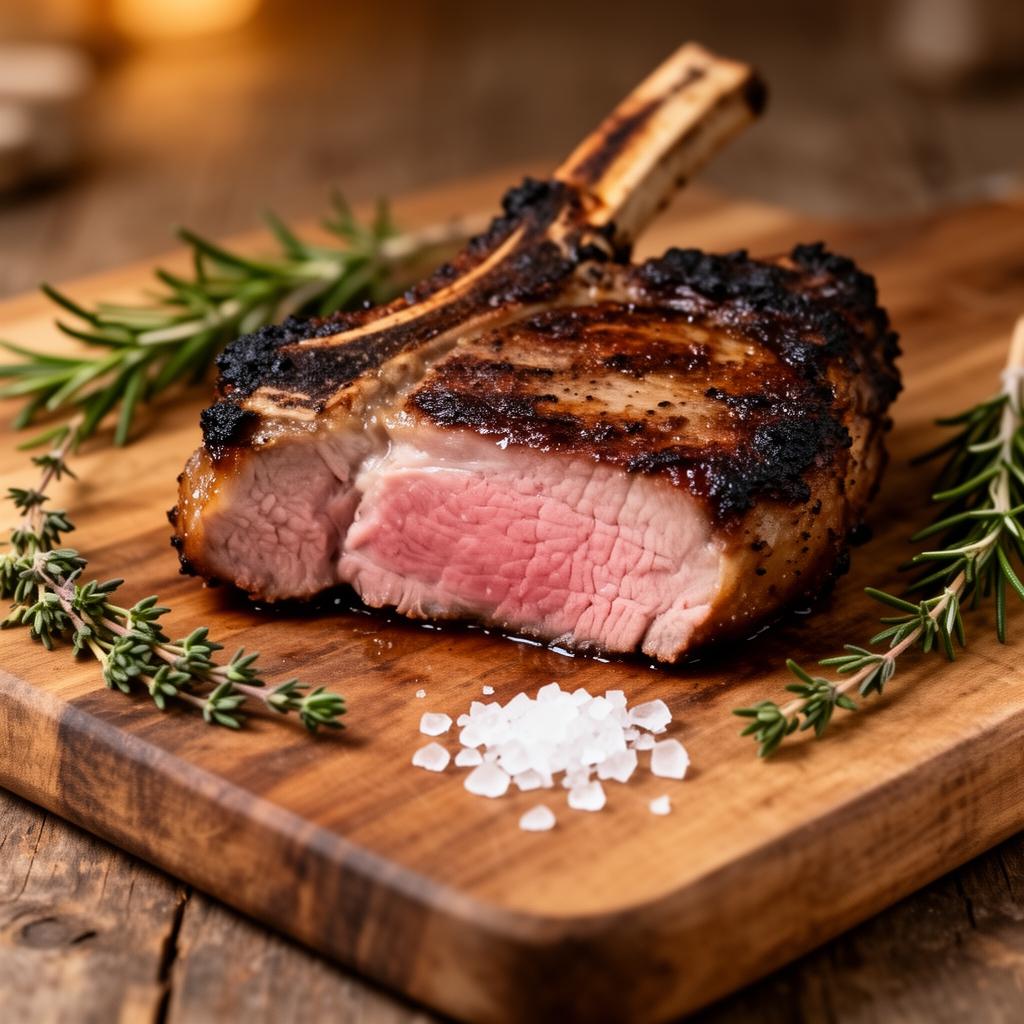
The secret to restaurant-quality pork chops isn't high heat — it's reverse searing. Smoke bone-in pork chops low at 225°F until they reach 130°F internal, then blast them over 450°F+ heat for 2-3 minutes per side to build a dark, caramelized crust and finish at 145°F internal. The result: juicy pink centers, steakhouse-quality exteriors, and zero chance of the dry, rubbery chops most home cooks end up with. Total time: about 90 minutes from cold grill to plate.
The Recipe
Traeger Reverse-Seared Pork Chops
Rated 4.9 — based on 112 reader ratings
Prep Time
10 minutes
Cook Time
60-90 minutes
Rest Time
5-10 minutes
Serves
4 (4 thick chops)
Smoker temp: 225°F (pull at 130°F internal)
Pull temp: 145°F final after sear
Recommended pellets: Apple, Cherry, or a hickory blend
Share this recipe:
Before You Start
What You'll Need
Thick-cut, bone-in chops are the single most important ingredient choice. Everything else is easy.
The Ingredients
Homemade Dry Rub (if making your own)
- • 2 tbsp brown sugar
- • 1 tbsp smoked paprika
- • 1 tbsp kosher salt
- • 2 tsp black pepper
- • 1 tsp garlic powder
- • 1 tsp onion powder
- • 1/2 tsp cayenne pepper
Why bone-in? The bone conducts heat more evenly and protects the meat adjacent to it from overcooking. Boneless chops work in a pinch but require 15-20% less cook time.
The Equipment
Most Traegers only reach 450-500°F — not quite hot enough for a true steakhouse sear. GrillGrates (stainless panels that go on top of your regular grates) hit 150°F hotter than the Traeger's max temp. For reverse sears specifically, they're the single best upgrade. A cast iron skillet on the grill works equally well.
Step by Step
How to Reverse-Sear Pork Chops on a Traeger
Six steps. The technique is simple; the timing windows are tight. Read all six steps before starting.
- 1
PREP
Season the chops and let them temper
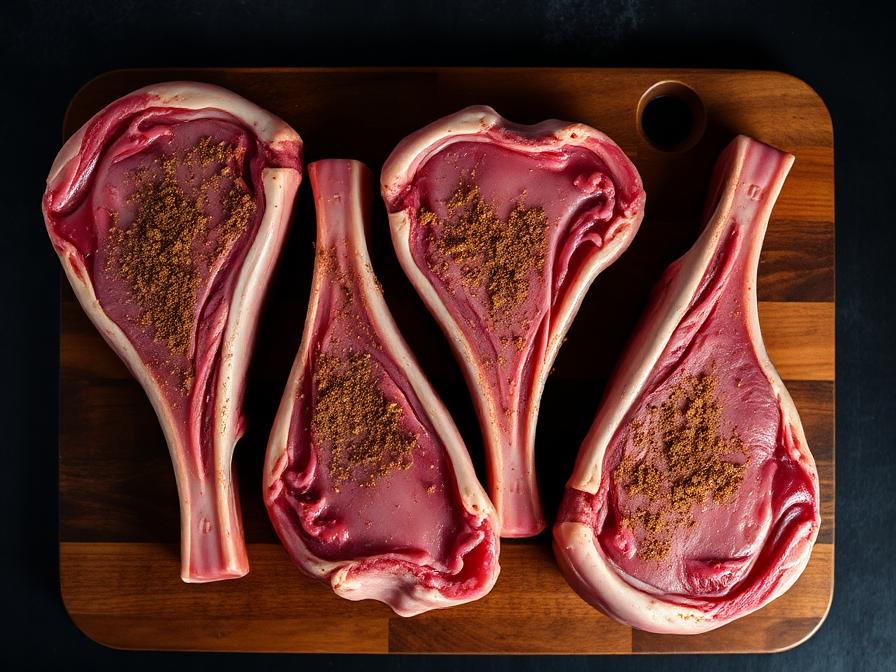
Pat the chops dry with paper towels — dry surface equals better smoke absorption and better sear color. Drizzle both sides with olive oil and rub in. Apply the dry rub generously to both sides and the edges, pressing it in.
Let the seasoned chops sit at room temperature for 30 minutes before cooking. Cold chops straight from the fridge don't cook evenly through — the outside overcooks before the center catches up. Tempered chops (55-65°F surface) give you the window you need for the reverse sear to work.
Time: 10 minutes active + 30 minutes temper
- 2
PREHEAT
Preheat the Traeger to 225°F
Fire up the Traeger and set it to 225°F with lid closed. If your grill has Super Smoke mode (Ironwood, Timberline, Woodridge), enable it — pork chops are on the smoke for an hour, and extra smoke concentration builds a better flavor layer.
Recommended pellets: Apple for balanced sweetness, Cherry for depth and beautiful reddish color, or a 70/30 blend of hickory and apple if you want bolder smoke. Pecan is an underrated choice — subtle nuttiness that pairs beautifully with pork.
Time: 15 minutes preheat
- 3
SMOKE
Place chops on the grates and smoke to 130°F internal
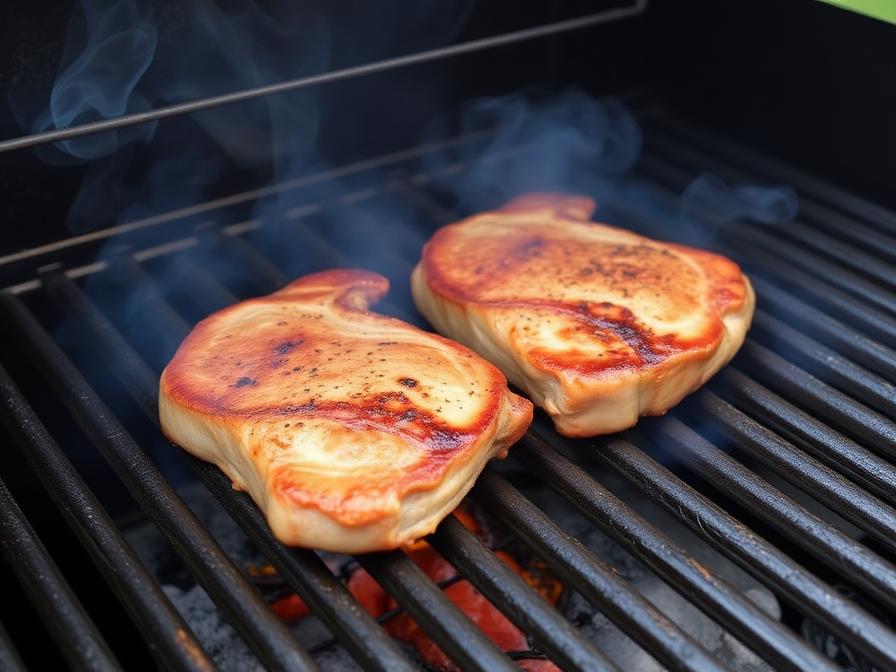
Place the chops directly on the grill grates with space between each chop. Close the lid. Insert an instant-read thermometer into the thickest chop, avoiding the bone. Do not open the lid again until you check temperature at the 45-minute mark.
At 225°F, 1.5-inch chops reach 130°F internal in approximately 60-75 minutes. 2-inch chops take 90-100 minutes. Every grill runs slightly differently — use the thermometer, not the clock.
Critical temperature window: pull the chops off the grill at exactly 130°F internal. Above 135°F, the sear step will push them past the ideal 145°F finishing temperature. Below 125°F, the sear won't fully cook the interior. 130°F is the window.
Time: 60-90 minutes depending on chop thickness
- 4
REST
Rest briefly while the sear surface heats
Pull the chops off the grill and set them on a plate. Tent loosely with foil. Now crank the Traeger to its maximum temperature (usually 450-500°F) OR heat a cast iron skillet on a stovetop until it smokes.
If using GrillGrates or a cast iron skillet on the Traeger, give it 10-15 minutes at max temperature to get genuinely hot. A lukewarm sear surface produces grey exteriors, not crust. Don't rush this step.
During this preheat, the chops' residual heat carries internal temperature from 130°F up to about 133-135°F — normal and useful.
Time: 10-15 minutes
- 5
SEAR
Sear 2-3 minutes per side to 145°F internal
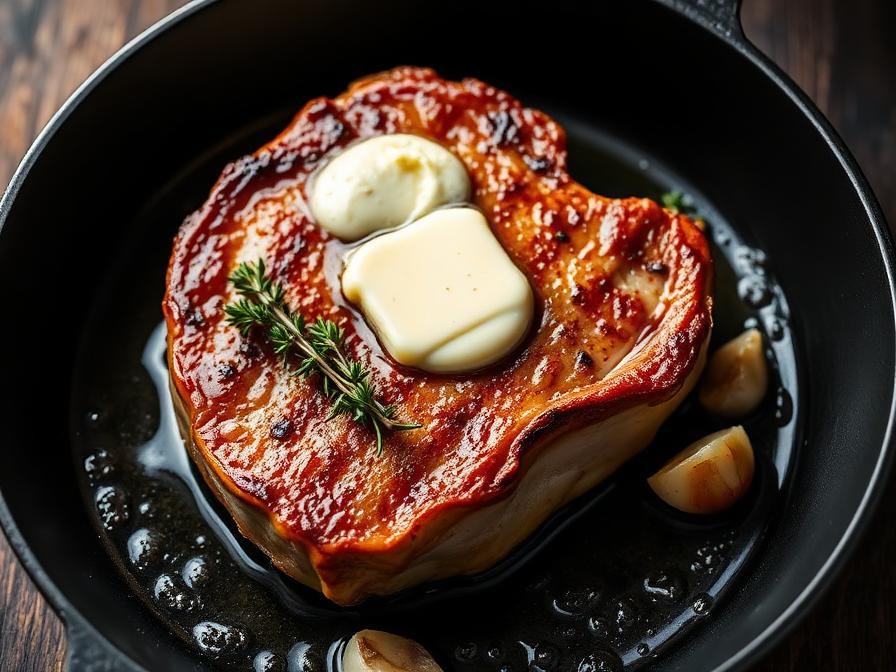
Place the chops onto the screaming-hot sear surface. If using cast iron, add 2 tablespoons of butter, thyme/rosemary, and smashed garlic to the pan — this creates a butter baste. Use a large spoon to spoon the foaming butter over the chops as they sear.
Sear 2-3 minutes per side, depending on chop thickness. You're looking for a dark brown, almost black crust — not grey. Flip once with tongs (no piercing). The chops should finish at exactly 145°F internal when pulled from the sear surface.
Pro tip: stand each chop on its edge for 30-45 seconds to render the fat cap. The fat cap is where the best flavor lives; don't skip this.
Time: 5-7 minutes total sear
- 6
SERVE
Rest 5-10 minutes, then serve
Transfer the chops to a cutting board or warm plate. Tent loosely with foil and rest for 5-10 minutes. Internal temperature will climb another 3-5°F during the rest (carryover cooking), finishing at around 148-150°F — perfect doneness for pork.
Skip this rest and you lose 30% of the juices when you cut in. Wait 5 minutes at minimum; 10 is better.
Slice against the grain or serve chops whole. Drizzle with the butter baste from the cast iron pan if using. Sprinkle with flaky sea salt. Serve with roasted root vegetables, mashed potatoes, or a simple green salad.
Time: 5-10 minutes rest
The Temperature Logic
Why 130°F / 145°F? Understanding the Reverse Sear Windows
The magic of reverse searing is in the temperature math. Here's why these specific numbers matter.
Traditional grilling puts a cold pork chop directly over high heat. The outside hits 500°F+ while the inside is still 38°F (fridge temp). By the time the interior reaches 145°F (food-safe), the outside has been sitting at high heat for 8-10 minutes — long enough to completely dry out and overcook. This is why 90% of home-grilled pork chops are disappointing.
Reverse searing flips the sequence: cook the chop LOW AND SLOW until the interior is 90% of the way to done, THEN add the crust in a brief, hot sear. Because the interior is already at 130°F, the sear only needs 2-3 minutes per side to hit 145°F finish — not enough time to dry anything out.
Why 130°F before the sear?
The interior reaches near-doneness without any browning or drying. The 15°F gap between 130°F (pull from smoke) and 145°F (final) is the exact window the sear fills. Pull earlier (say 120°F) and the sear won't fully cook the interior. Pull later (140°F) and the sear overcooks it.
Why 145°F final?
145°F is the USDA food-safe temperature for pork, and the temperature where pork chops are still juicy with a hint of pink at the center. Above 150°F, fat starts rendering OUT of the muscle and the chop turns dry. The old advice of "cook pork to 160°F" is outdated — the USDA dropped that to 145°F in 2011.
Carryover cooking matters too. When you pull the chop from the sear at 145°F, internal temperature continues rising 3-5°F during the rest as heat redistributes from the outer layer inward. Final serving temperature: 148-150°F — still pink, still juicy, no pink juice on the plate.
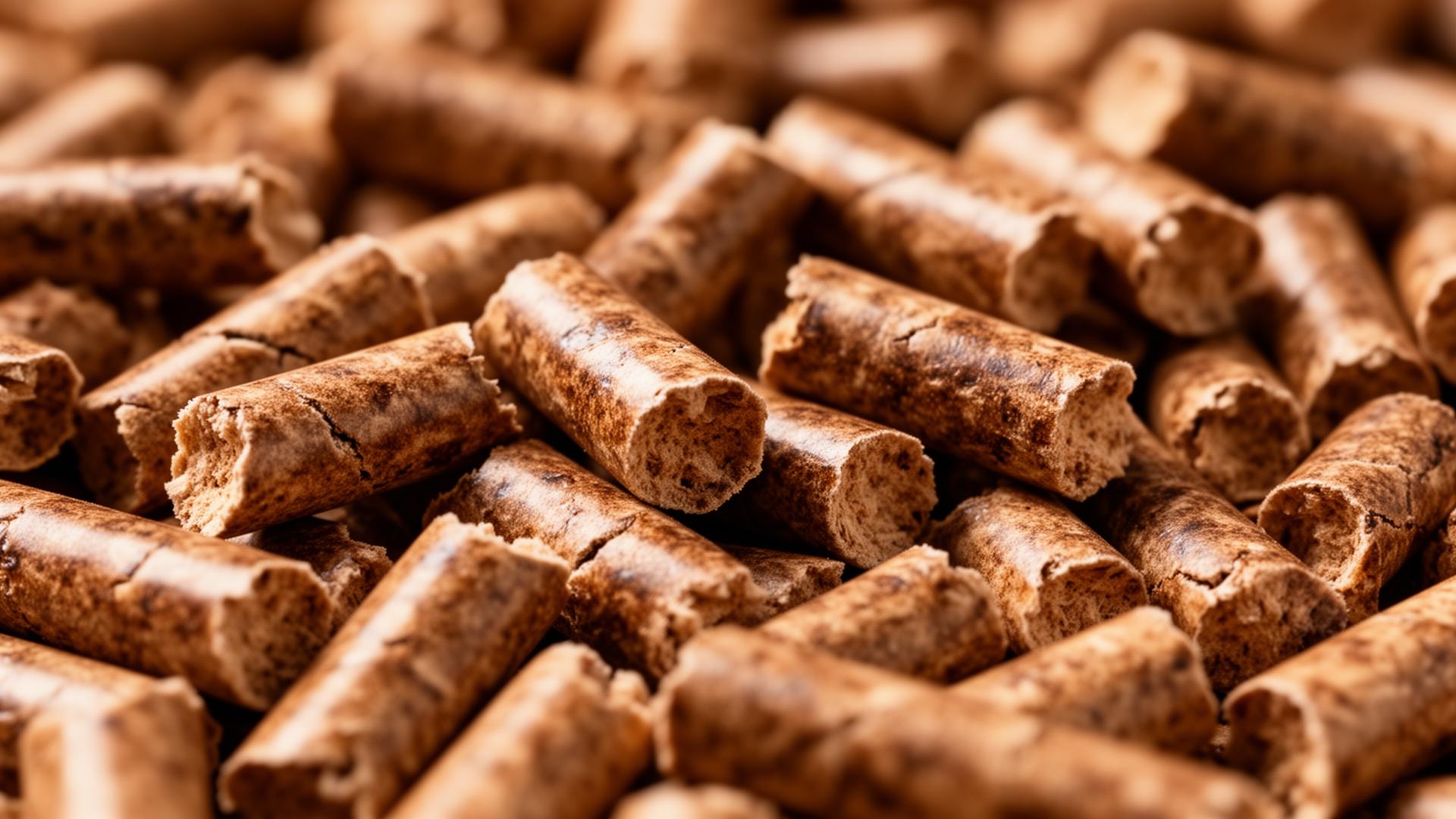
Pellet Selection
The Best Pellets for Traeger Pork Chops
Pork chops absorb smoke faster than a whole pork butt because they're smaller and exposed. Milder pellets produce better results here than heavy hickory or mesquite.
Apple (Top Pick)
Best pellet for pork chops in the entire Traeger lineup. Mild, slightly sweet smoke that highlights pork's natural flavor without overpowering. Pairs beautifully with fruit-based glazes, apple sauce, or a simple butter finish. If you only buy one pellet for pork chops, buy apple.
Best for: Everyday cooks, balanced flavor, best color on the chop
Cherry (For Color and Depth)
Produces a gorgeous deep reddish-mahogany color on the crust and adds subtle fruity sweetness. Slightly bolder than apple; still mild enough for a 60-90 minute smoke. Cherry is the competition choice for photographed chops — it simply looks better in photos.
Best for: Visual presentation, competition-style looks
Pecan (Underrated)
Nutty, slightly sweet smoke that most home cooks have never tried. Exceptional on pork — produces a more complex flavor than apple or cherry. Harder to find in stores but widely available on Amazon. Worth seeking out if you've already tried the obvious choices.
Best for: Adventurous flavor seekers, pork specialists
What to Avoid
- •Mesquite: too aggressive for a 60-90 minute cook; overwhelms pork's subtlety
- •Walnut: bitter when used alone for pork
- •Pure oak: works fine but produces less flavor than fruitwoods for this specific cook
The Gear I Use
Essential Gear for Traeger Pork Chops
Four pieces of gear that meaningfully improve reverse-seared pork chops. The sear surface is the one that matters most.
GrillGrates (Sear Panels)
Most Traegers max out at 450-500°F — not quite hot enough for a steakhouse sear. GrillGrates (stainless panels that go on top of your regular grates) hit 150°F hotter than the Traeger's max. For reverse sears, they're the single most impactful upgrade. Alternative: a cast iron skillet on the grill works equally well.
Shop GrillGrates →Instant-Read Thermometer
The reverse sear has tight temperature windows (130°F pull, 145°F finish). You need a thermometer that reads in 2-3 seconds, not 8-10. ThermoWorks Thermapen ONE ($109) is the professional standard. ThermoWorks Thermopop ($35) is the budget version that delivers 90% of the performance.
Shop instant-read thermometers →Cast Iron Skillet
10-12 inch cast iron skillet is the alternative to GrillGrates for the sear. Also enables the butter baste with herbs and garlic that restaurants use. Lodge 12-inch at $35 is the workhorse; Field Company No. 10 at $165 is the premium handcrafted option.
Shop cast iron skillets →Wood Pellets
Apple for everyday cooks, Cherry for competition looks, Pecan for adventurous flavor. A 20-pound bag from Traeger, Bear Mountain, or Lumberjack runs $18-30 and lasts roughly 15-20 pork chop cooks. Always keep a backup bag.
Shop Traeger pellets →Avoid These
7 Common Traeger Pork Chop Mistakes
What separates restaurant-quality pork chops from hockey pucks. All preventable.
Mistake 1: Using thin pork chops
Chops under 1 inch thick cannot be reverse seared successfully. They cook through in 20 minutes at 225°F and give you no window for a meaningful sear. Minimum thickness: 1.5 inches. 2 inches is better. If your grocery store only sells thin chops, ask the butcher to cut you thicker ones from a whole pork loin — it's the same cut, just sliced differently.
Mistake 2: Cooking boneless chops like bone-in chops
Boneless chops cook 15-20% faster than bone-in chops of the same thickness because there's no bone slowing heat conduction. If you're using boneless, pull from smoke at 125°F (not 130°F) to compensate. Or switch to bone-in — they're forgiving, more flavorful, and similarly priced.
Mistake 3: Cooking past 150°F internal
The USDA changed the safe pork temperature to 145°F back in 2011. Old advice (160°F) is outdated. Above 150°F, fat renders out and chops dry out dramatically. Pull at 145°F after the sear and let carryover cooking bring them to 148-150°F during the rest. Perfectly pink, perfectly juicy, perfectly safe.
Mistake 4: Skipping the reverse sear entirely
Some "smoked pork chop" recipes stop at 145°F internal with no sear. You get pork-tinted grey color on the outside and no crust. The sear is what makes reverse seared chops look like steakhouse cooking. 5 extra minutes of work, dramatically better result.
Mistake 5: Using a lukewarm sear surface
A sear surface under 500°F produces greying, not crusting. Cast iron needs 10-15 minutes at max heat to be genuinely ready. GrillGrates need the same preheat. If you're not sure it's hot enough, splash a water droplet — should instantly sizzle into steam and evaporate within 2 seconds. If the water just sits there, wait longer.
Mistake 6: Piercing the chop with a fork
Tongs only. Piercing the chop with a fork or knife releases juice and dries out the finished product. Even the thermometer should go in ONCE and stay there — don't repeatedly poke around looking for the "right" spot.
Mistake 7: Not resting before serving
Pork chops need 5-10 minutes of rest between the sear and the first cut. Skip it and juice pools on the cutting board instead of staying in the meat. The rest is not optional, even if everyone's hungry.
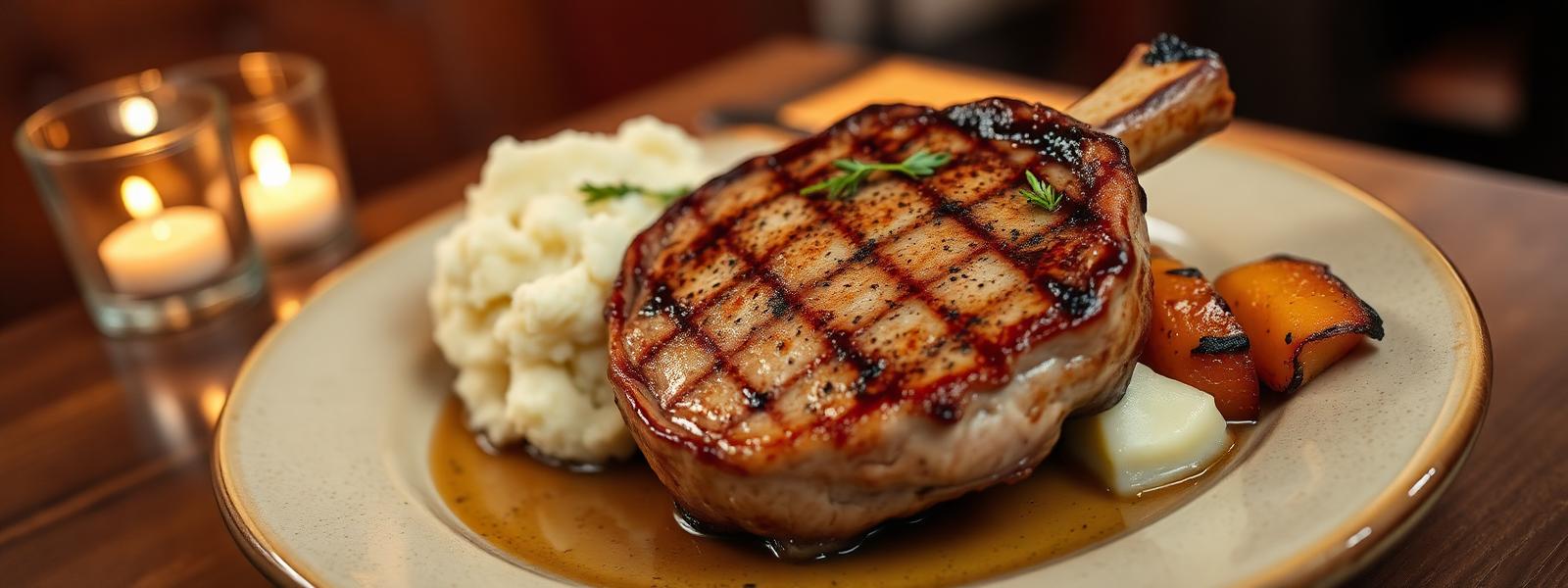
What to Serve With Them
6 Ways to Serve Traeger Pork Chops
Restaurant-quality chops deserve sides that don't steal the spotlight. Keep it simple.
1. Classic Plate
Roasted potatoes, sautéed green beans, apple sauce. The steakhouse standard.
2. Apple Pan Sauce
Serve over caramelized apples and onions deglazed with apple cider.
3. Herb Butter Board
Thin-sliced chops fanned on a board with compound butter and flaky salt.
4. Mediterranean
Lemon-roasted potatoes, grilled zucchini, tzatziki drizzle.
5. Southern
Mac and cheese, collard greens, cornbread.
6. Sheet Pan Dinner
Slice and serve over roasted Brussels sprouts, butternut squash, and bacon.
Leftover pork chops slice beautifully for lunch sandwiches the next day. Slice thin against the grain, pile on brioche with Dijon mustard, arugula, and pickled red onion. Better than any deli sandwich.
FAQ