Traeger Recipe
Traeger Pulled Pork: The Complete Boston Butt Recipe
Smoked pork butt is the gateway recipe for every Traeger owner — forgiving, affordable, and crowd-feeding. This guide walks you through the complete method: picking the right Boston butt, the dry rub, the smoke (225°F for 4-6 hours), the stall and when to wrap, the finish at 204°F internal, the mandatory 1-hour rest, and the shred. For a 7-9 pound bone-in pork butt, plan on 8-10 hours total. The results justify every minute.
Once you've nailed pulled pork, our smoked brisket recipe is the natural next project — same low-and-slow philosophy, but on beef and longer.
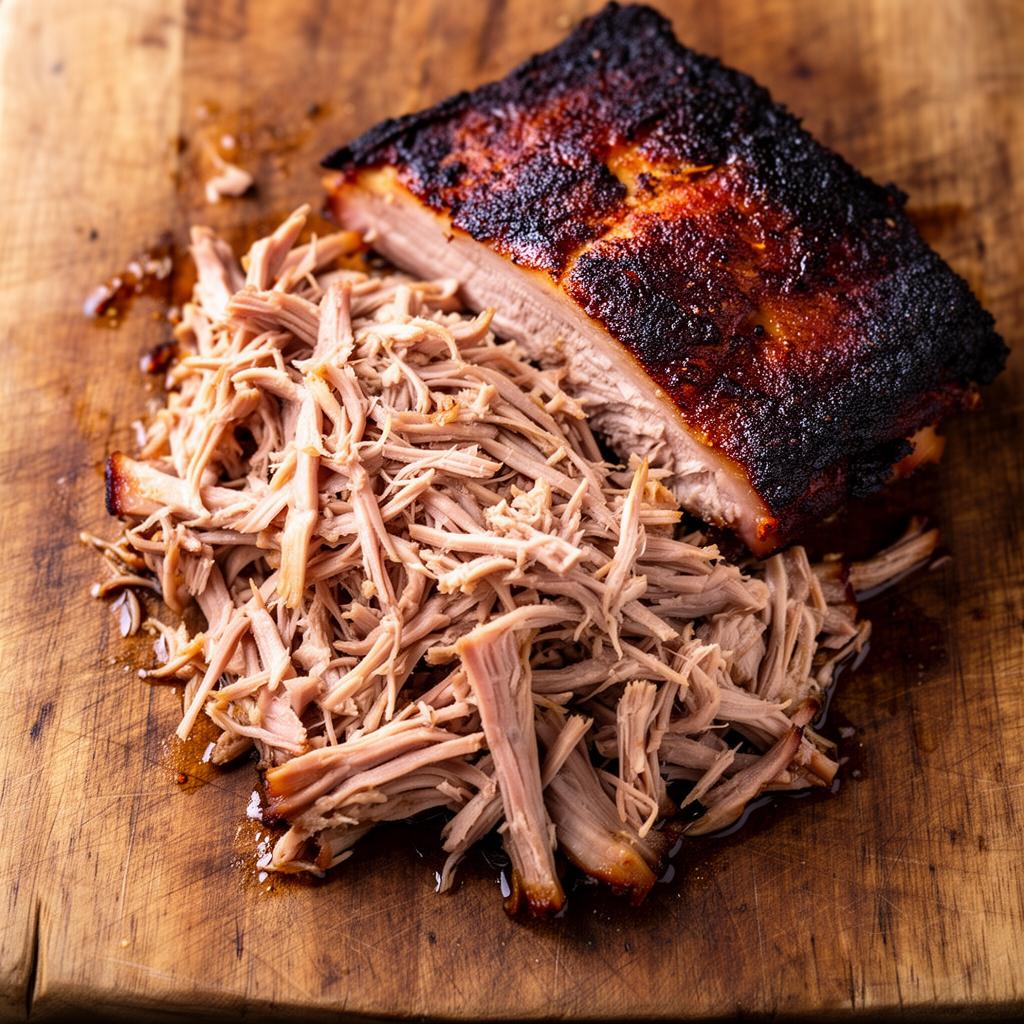
The Recipe
Traeger Pulled Pork (Boston Butt)
Rated 4.9 — based on 127 reader ratings
Prep Time
20 min + overnight rest
Cook Time
8-10 hours
Rest Time
1 hour
Serves
10-12 people
Smoker temp: 225°F then 250°F after wrap
Pull temp: 204°F internal (probe slides in clean)
Recommended pellets: Hickory, Apple, or a 70/30 blend
Share this recipe:
Before You Start
What You'll Need
The ingredients are simple — a pork butt, a rub, and apple juice for the wrap. The equipment matters more than most recipes admit.
The Ingredients
Homemade Dry Rub (if making your own)
- 1/4 cup brown sugar
- 2 tbsp smoked paprika
- 1 tbsp black pepper
- 1 tbsp kosher salt
- 1 tsp garlic powder
- 1 tsp onion powder
- 1 tsp mustard powder
- 1 tsp chili powder
Meat Church Honey Hog is the store-bought rub most pit masters swap to once they try it — it's a popular choice for this recipe.
The Equipment
If you're still deciding on a Traeger, our Weber vs Traeger comparison covers which pellet grill actually fits your cooking style. Otherwise, let's cook.
Step by Step
How to Smoke Pulled Pork on a Traeger
Eight steps. The work is in steps 1, 2, and 8. Steps 3-7 are the Traeger doing its job.
- 1
PREP
Trim, rub, and refrigerate
Start with a 7-9 pound bone-in Boston butt — bone-in holds together better during the cook and shreds cleaner. Pat the meat completely dry with paper towels. Trim any thick, hard fat from the outside, leaving about 1/4 inch of fat cap for moisture. Score the fat cap in a crosshatch pattern to help the rub penetrate.
Coat the entire butt with yellow mustard as a binder — don't skip this step and don't worry about flavor; mustard adds none to the finished pork. Generously apply the dry rub, pressing it into every surface. Wrap the butt in plastic wrap and refrigerate. The overnight rest is what separates good pulled pork from great pulled pork — 8-24 hours gives the salt time to penetrate and the sugars time to set up. If you're short on time, 2 hours minimum.
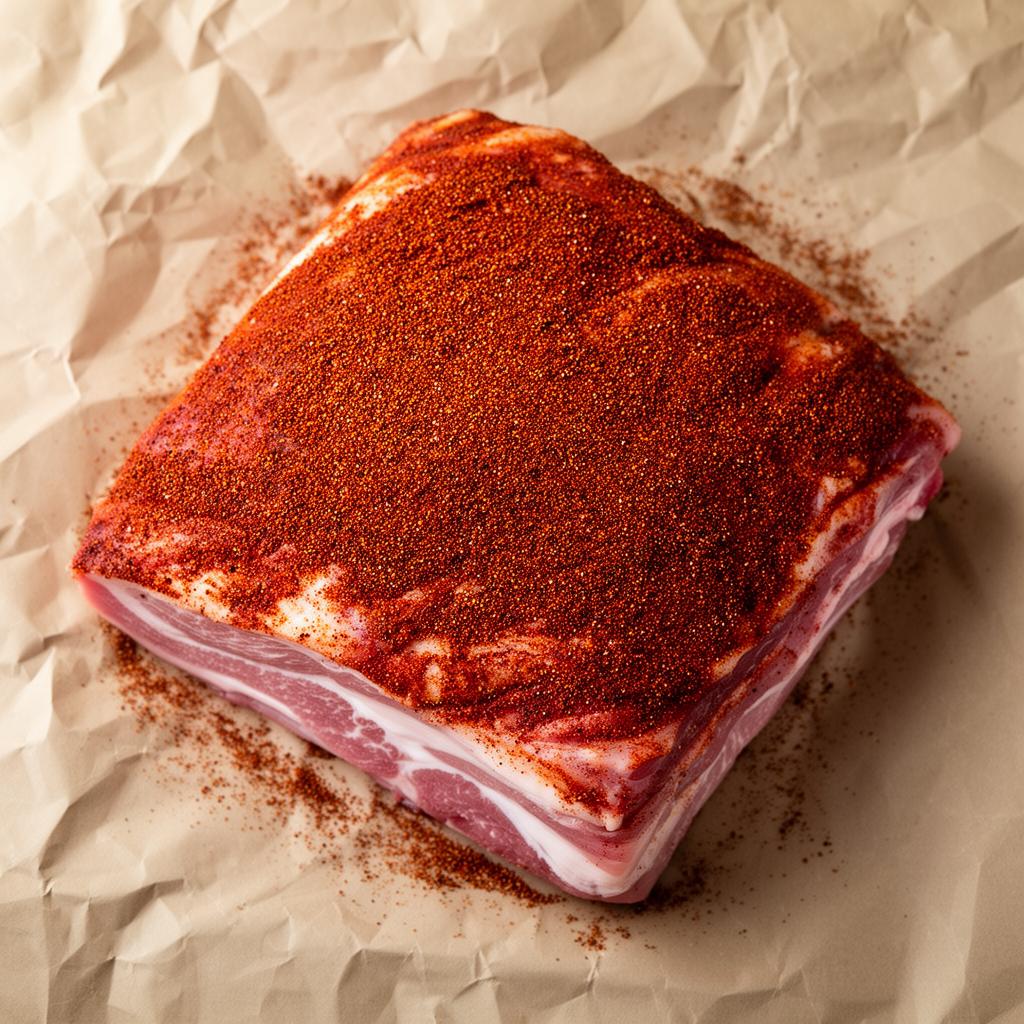
Time: 20 minutes active + at least 2 hours refrigerated (overnight preferred)
- 2
PREHEAT
Preheat the Traeger to 225°F
Fire up your Traeger and set it to 225°F. If your grill has Super Smoke mode (available on Ironwood, Timberline, and newer Woodridge models), enable it now — the extra smoke during startup builds a better bark. Close the lid and let the grill stabilize for 15 minutes.
While the grill warms, take the pork butt out of the fridge and let it temper at room temperature for 20-30 minutes. Cold meat going onto a hot grill adds 45-60 minutes to the total cook time. Insert your leave-in meat thermometer into the center of the butt, aiming for the thickest section and avoiding the bone.
Time: 15 minutes preheat + 20-30 minute meat temper
- 3
SMOKE
Smoke at 225°F until internal temperature hits 160°F
Place the pork butt fat side up directly on the grill grates. Close the lid and walk away. Do not open the lid for the next 3-5 hours. Every time you open the lid, you add 15-20 minutes to the total cook time and lose smoke penetration.
Optional but recommended: after the first 90 minutes, spritz the pork with apple juice or apple cider vinegar every hour. A simple food-grade spray bottle works. The spritz helps build bark and adds subtle flavor. Check internal temperature at hour 3 — should be around 140-150°F.
Pull the pork off the grill when internal temperature reaches 160°F. This usually happens 3-5 hours in for a 7-9 pound butt.
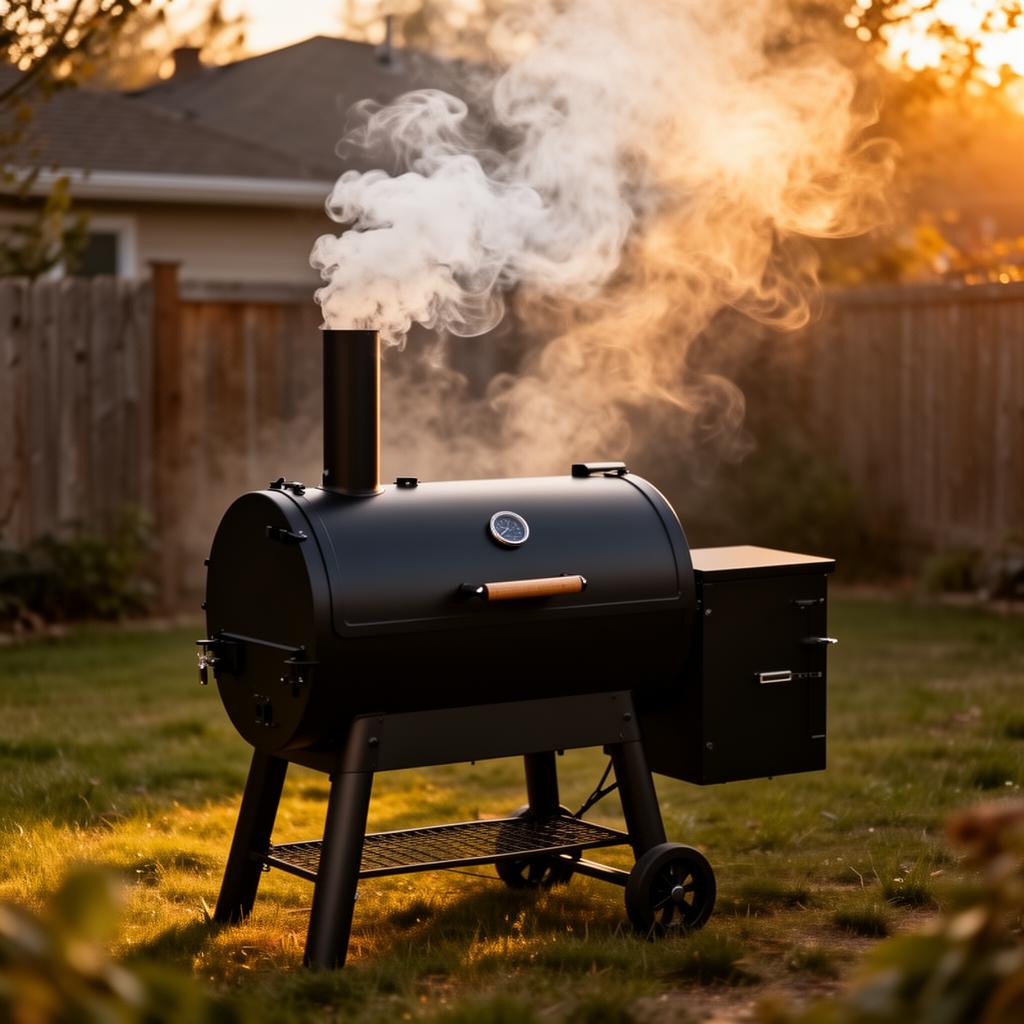
Time: 3-5 hours
- 4
WRAP
Wrap tightly in foil with apple juice
Lay two large sheets of heavy-duty aluminum foil on your counter in a cross pattern. Carefully transfer the pork butt to the center, fat side up. Pour 1 cup of apple juice around the base of the meat (not on top) — this creates the steam environment that pushes the butt through the stall.
Wrap the foil tightly into a sealed packet. Leave the thermometer probe exposed through a small corner so you can keep reading internal temperature. The wrap serves two critical jobs: it pushes the butt through "the stall" (that famous 4-hour plateau around 165°F where temp stops climbing) and creates steam that keeps the meat juicy.
Time: 5 minutes
- 5
RETURN
Back on the grill, bump temp to 250°F
Place the foil-wrapped butt back on the grill, fat side up. Increase Traeger temperature to 250°F. This is the standard finishing temp once you're past the bark-building phase. If your grill has Super Smoke mode, it turns off automatically at 250°F.
Close the lid. Walk away again.
Time: No active time
- 6
FINISH
Cook to 204°F internal
Continue cooking at 250°F until internal temperature reaches 204°F. This is the single most important temperature in the entire cook. Below 200°F, the collagen hasn't fully broken down and the meat won't shred properly. Above 205°F, you risk drying out the cook.
The real doneness test is the probe test: the thermometer should slide into the thickest part of the meat with near-zero resistance, like warm butter. If you feel any resistance, keep cooking — temperature alone isn't enough. A perfectly done Boston butt accepts a probe cleanly.
Time: Another 3-4 hours wrapped at 250°F
- 7
REST
Rest wrapped for at least 1 hour
When internal temperature hits 204°F and the probe slides in clean, remove the butt from the grill. Leave it wrapped in the foil. Do not unwrap yet.
Rest the wrapped butt for at least 45 minutes, ideally a full hour. Some pros wrap the foil packet in beach towels or place it in an insulated cooler for this rest — the extra insulation keeps juices redistributing. Internal temperature will briefly climb another 3-5°F before starting to cool.
Skipping this rest is the #1 mistake amateur smokers make. You will lose up to a third of your juices if you shred immediately.
Time: 45-60 minutes
- 8
SHRED
Shred, sauce, and serve
Unwrap the foil carefully — there's hot liquid inside, and that liquid is gold. Pour it through a fat separator (or into a bowl and let sit 10 minutes so the fat rises). The flavorful pork juice underneath gets poured back over the shredded meat.
Put on disposable nitrile gloves and shred the pork by hand, or use two forks. The bone should slide cleanly out of the center — if it doesn't, you pulled it 20 minutes too early (learn this for next time). Discard the bone and any large unrendered fat. Keep the crispy dark bark mixed into the shred — that's where most of the flavor lives.
Season with additional dry rub to taste, pour the reserved fat-free liquid back in, and optionally toss with BBQ sauce. For Carolina-style pulled pork, use a vinegar-based sauce; for classic sweet-sticky, any Kansas City-style sauce works. Serve warm on buns, in tacos, over rice, or any of the ways listed below.
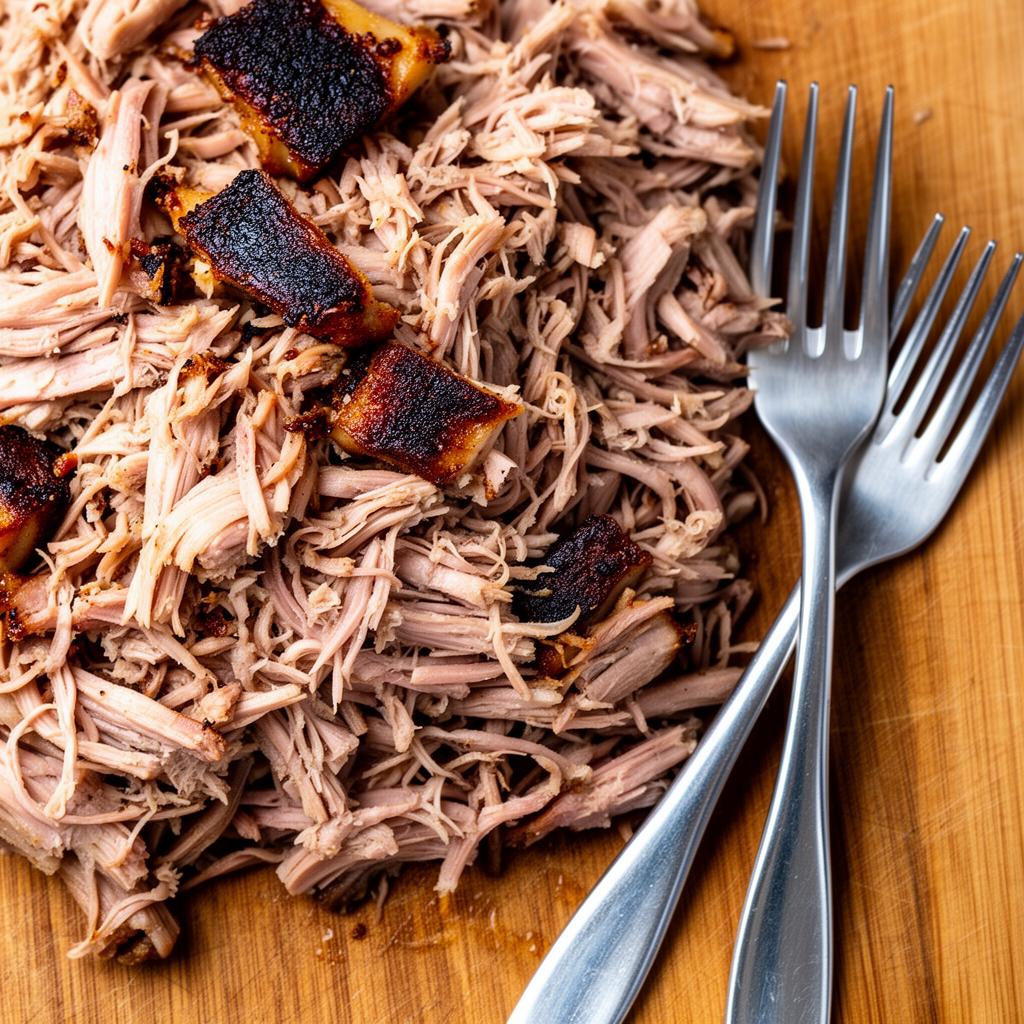
Time: 15 minutes
What to Expect
Understanding "The Stall" (And Why Your Pork Sits at 165°F for 4 Hours)
Every new smoker experiences it. The internal temp climbs steadily from 40°F to 160°F, then stops. For hours. Sometimes 4+ hours. Don't panic.
The stall is real, it's physics, and it's the reason this recipe wraps the pork in foil. As the pork cooks, moisture on the surface evaporates — and evaporation absorbs heat. When enough moisture is evaporating off a large piece of meat, it absorbs exactly as much heat as the smoker is adding. Internal temperature plateaus.
The stall typically happens between 160°F and 170°F internal, and lasts anywhere from 1 hour on a small butt to 4+ hours on a large one. It feels like the grill is broken. It's not.
Two ways to handle the stall:
Wrap Method (this recipe)
Foil-wrap the meat at 160°F internal with apple juice. The foil traps moisture, prevents further evaporation, pushes internal temp through the stall. Total cook: 8-10 hours for a 7-9 pound butt. This is the approach for most backyard cooks.
Texas Crutch / Naked Method
Don't wrap. Let the pork sit at 165°F for as long as it takes. Produces slightly better bark because of extended smoke exposure. Total cook: 12-14 hours for the same butt size.
For most backyard cooks, wrapping is the right call. You give up a minor amount of bark depth and gain 3-4 hours of your day back. The flavor difference is noticeable to competition judges and approximately nobody else.
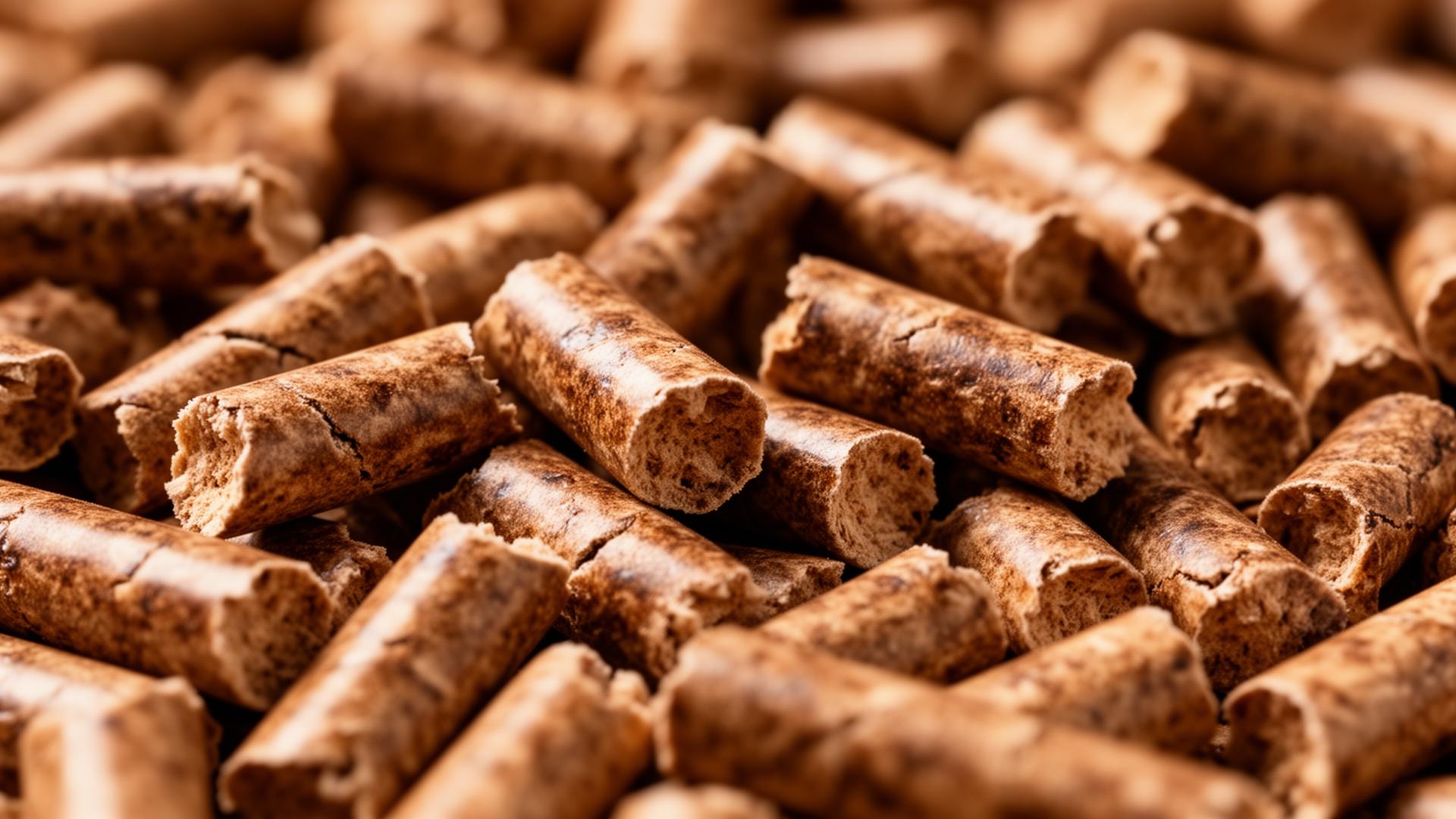
Pellet Selection
The Best Wood Pellets for Pulled Pork
Pork pairs well with fruitwoods and smoky hardwoods. The right pellet depends on how aggressive you want the smoke.
Hickory (Classic Choice)
The pit master's go-to for pork. Strong, bold smoke with subtle sweetness. Produces the dark mahogany bark that Instagram loves. Can be overpowering on smaller cuts; perfect on a 7-9 pound butt that can absorb the smoke.
Best for: Traditional BBQ flavor, thick bark
Apple (Balanced Favorite)
Sweeter, milder smoke than hickory. Produces a beautiful reddish bark and a less aggressive flavor. The pellet most modern pit masters prefer for pulled pork. Recommended for first-timers and anyone who finds hickory too strong.
Best for: Balanced flavor, beautiful color
Cherry or Custom Blends
Cherry adds mild sweetness and a gorgeous reddish bark. Many pit masters run a 70/30 blend of apple + hickory, or 50/50 cherry + hickory, for best of both worlds. Mesquite is too aggressive for a long cook — save it for steaks.
Best for: Color, blended flavor profiles
Recommended Pellet Brands
- •Traeger Signature Blend — default for Traeger owners; balanced hickory/maple/cherry mix
- •Traeger Hickory or Traeger Apple — single-wood pellets for focused flavor
- •Bear Mountain — strong budget alternative, runs in any Traeger
- •Lumberjack 100% Hickory or Apple — higher-intensity option for experienced smokers
- •CookinPellets Perfect Mix — premium aftermarket brand, longer-burning
Timing Options
Cooking Times: Overnight, 6-Hour, and Same-Day Approaches
A 7-9 pound bone-in Boston butt takes 8-10 hours total. If you want to fit the cook into different schedules, here are the three most common approaches.
Overnight Cook
- •10 PM: Butt goes on the grill
- •6 AM: Wrap in foil with apple juice
- •10 AM-12 PM: Hits 204°F
- •12-1 PM: Finishes resting
- •1 PM: Serve for lunch
Best for gameday hosting or large gatherings. The smoker runs while you sleep — set up a grill controller or use the Traeger's WiFire app to monitor temperature overnight. Keep the grill in a dry, covered area.
Same-Day (Start at Sunrise)
- •6 AM: Butt goes on the grill
- •11 AM: Wrap in foil with apple juice
- •2-3 PM: Hits 204°F
- •4 PM: Finishes resting
- •4 PM: Serve for dinner
The classic pulled pork schedule. Start at dawn, serve at dinner. If you're using a smaller 5-6 pound butt, you can start closer to 8 AM and still finish by dinner. Perfect for weekends.
Quick Method (6 Hours)
- •Use a smaller 4-5 pound butt
- •Smoke at 250°F (not 225°F) from start
- •Wrap at 160°F internal around hour 3
- •Hit 204°F around hour 5-6
- •30-45 minute rest minimum
Not ideal but workable when you're short on time. You lose some smoke penetration at the higher temperature, and the bark won't be as deep. For a true 6-hour cook, start with a smaller butt — a 7-9 pound butt physically cannot finish in 6 hours regardless of technique.
The honest rule: plan on 90 minutes per pound at 225°F, or 75 minutes per pound at 250°F. A 7-pound butt = ~10 hours at 225°F or ~8 hours at 250°F. Add 1 hour for the rest. Add 30 minutes for variability. Shorter times mean smaller butts.
The Gear I Use
Essential Gear for Traeger Pulled Pork
Four things that matter more than anything else when you're smoking pulled pork. Everything else is optional.
Leave-In Meat Thermometer
Non-negotiable. You need to know internal temp without opening the lid. ThermoPro TP20 is the value pick at $70 — two probes, wireless, reliable. MEATER Plus is the premium option ($100) with a single wireless probe that lives inside the meat.
Shop meat thermometers →Wood Pellets
You need at least 20 pounds of pellets for a full Boston butt cook. Traeger Hickory or Apple are safe bets. Bear Mountain is 40% cheaper and works in any Traeger. Don't run low — a Traeger running out of pellets mid-cook is a disaster.
Shop Traeger pellets →Heat-Resistant BBQ Gloves
Shredding a 204°F pork butt with bare hands is painful. Thin cotton gloves work for 30 seconds. Real heat-resistant BBQ gloves rated to 900°F+ let you work the meat directly. $20 investment, pays off every cook.
Shop BBQ gloves →Food-Grade Spray Bottle
Optional but genuinely helps. Apple juice or apple cider vinegar sprayed every hour during the first 4 hours builds a better bark. Any clean food-grade spray bottle works — no need for a BBQ-branded one.
Shop spray bottles →Avoid These
7 Common Traeger Pulled Pork Mistakes
What separates okay pulled pork from great pulled pork. All preventable.
Mistake 1: Using boneless pork butt
Bone-in cuts hold together during the cook, shred better, and are cheaper per pound. The bone acts as a doneness indicator — when it slides cleanly out, the meat is done. Buy bone-in every time. Grocery store: 7-9 pounds typical. Costco/Sam's Club: 10-12 pounds at better prices per pound.
Mistake 2: Skipping the overnight rub rest
Rubbing 30 minutes before smoking produces noticeably weaker flavor than rubbing 8+ hours in advance. Salt needs time to penetrate; sugars need time to set up. If you can't rub overnight, rub at least 2 hours in advance. Skipping the rest = just seasoning the surface.
Mistake 3: Pulling off the grill too early
Internal temperature alone isn't enough. The pork needs to probe with zero resistance. If a thermometer resists at 200°F, keep cooking. Pulling at 195-200°F produces chunks instead of shreds. Every extra 30 minutes at 250°F adds tenderness.
Mistake 4: Shredding without resting
The rest isn't optional. Freshly cooked pork has juices at the surface; resting lets them redistribute through the meat. Shred immediately and you lose up to 30% of the moisture within 10 minutes. Rest wrapped 45-60 minutes = pulled pork that stays juicy for days.
Mistake 5: Discarding the foil liquid
The liquid inside the foil is concentrated pork flavor. Pour it through a fat separator, skim the fat, mix the remaining liquid back into the shred. Skipping this step throws away the best flavor of the entire cook.
Mistake 6: Over-saucing immediately
Traditional BBQ serves sauce on the side. Bark and smoke flavor you worked 10 hours for get buried under sweet sauce. If sauce is essential, offer it as a condiment. Carolina vinegar sauces are the exception — they brighten without masking.
Mistake 7: Using too-cold pork
Pork going onto the grill at fridge temperature (38°F) adds 45-60 minutes of cook time versus tempered pork (60-70°F). Let the rubbed, wrapped butt sit at room temperature for 20-30 minutes before the smoker.
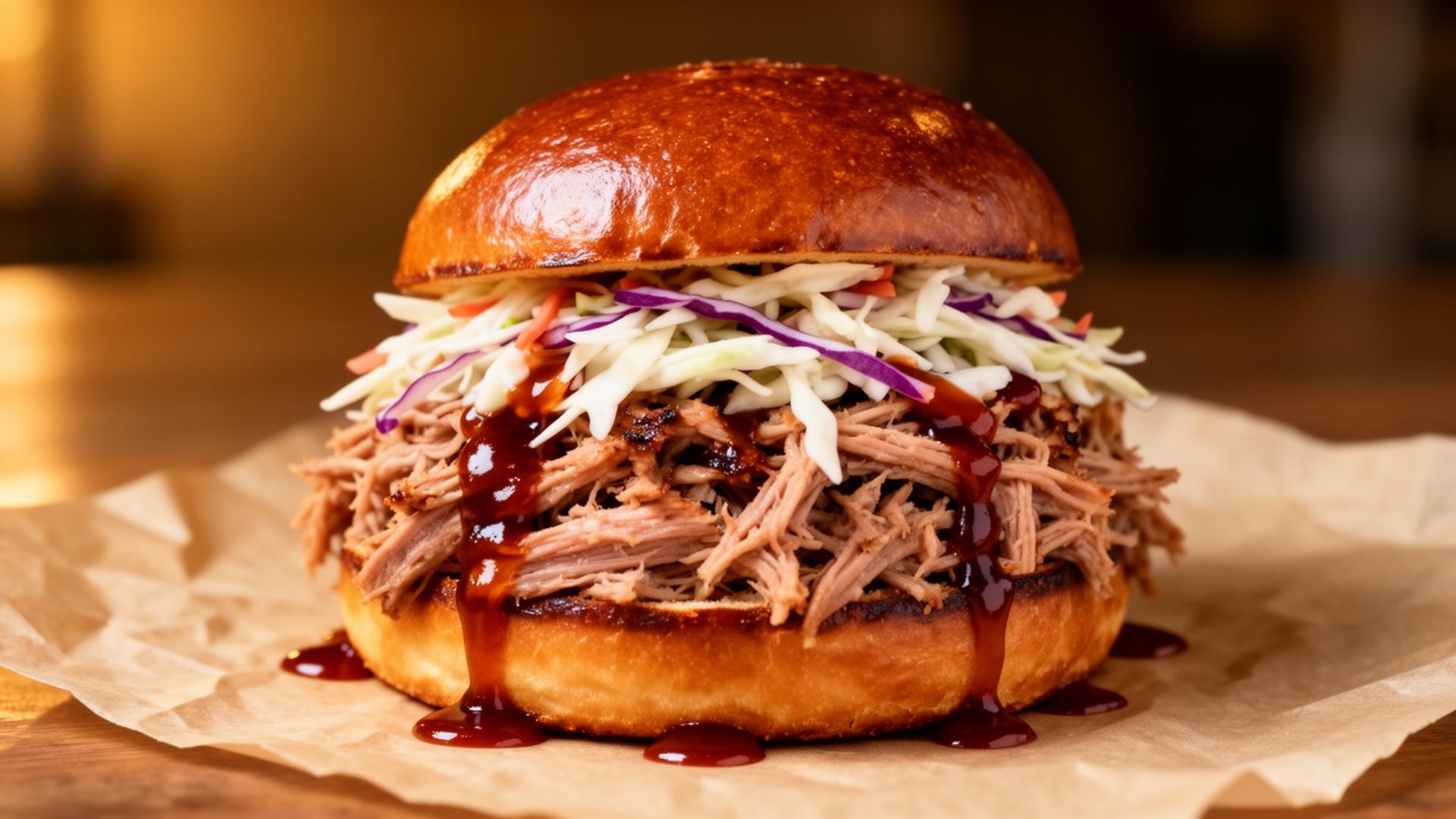
What to Do With It
8 Ways to Serve Traeger Pulled Pork
Pulled pork is one of the most versatile proteins you can make. Here's what to do with the inevitable leftovers.
1. Classic Pulled Pork Sandwich
Brioche bun, coleslaw on top, Carolina vinegar sauce.
2. Loaded Nachos
Tortilla chips, pulled pork, melted cheese, jalapeños, BBQ drizzle.
3. Pulled Pork Tacos
Corn tortilla, pork, pickled red onion, cilantro, lime.
4. Pulled Pork Mac & Cheese
Folded into creamy mac for the ultimate comfort bowl.
5. BBQ Pork Pizza
Red onion, mozzarella, pulled pork, BBQ sauce, cilantro.
6. Pork Hash
Crisped in a cast iron skillet with potatoes and eggs on top.
7. Stuffed Sweet Potatoes
Baked sweet potato, pulled pork, sour cream, chives.
8. Pulled Pork Quesadilla
Flour tortilla, cheese, pork, pressed until crispy.
Leftover pulled pork freezes beautifully — portion into zip-top bags with a little cooking liquid, press flat, squeeze out air, freeze. Good for 3 months. Thaws in hot water or microwave in 10 minutes.
FAQ