Weber Genuine Regulator + Hose Assembly
The OEM replacement for Spirit, Genesis, and Summit. Pre-cut hose length matched to Weber cabinet dimensions. The right call if you own a Weber and want everything to look factory.
Live Guide · Troubleshooting
If you need to reset a gas grill regulator, the fix takes 60 seconds with no parts and no tools. Every burner is weak, nothing gets above 300°F, and the grill that hit 600°F last weekend now barely sears a hot dog. The cause is almost never a broken grill — it's a propane regulator stuck in bypass mode.
This is the same procedure used by Weber, Char-Broil, Blackstone, Napoleon, and DOZYANT customer support. We've laid it out in order, with the diagnostic check that rules out the two other problems people mistake for bypass mode, and brand-by-brand notes for Weber Spirit, Genesis, Char-Broil, Blackstone, Napoleon, Char-Griller, Kenmore, and Expert Grill.
Quick Answer · 50 seconds
To reset a gas grill regulator: (1) turn all burner knobs OFF, (2) close the propane tank valve completely, (3) disconnect the regulator from the tank, (4) wait 30–60 seconds for the internal excess flow valve to release, (5) reconnect the regulator hand-tight only, (6) open the tank valve slowly (quarter turn, wait, then fully), (7) wait 5 seconds, then (8) light one burner on HIGH. A full blue 6-inch flame means the reset worked. If flames stay weak after two attempts, the regulator itself has failed and needs replacement.
On this page
Step 0 · Diagnose first
Bypass mode is the most over-diagnosed grill problem on the internet. Before you touch the regulator, run through both columns. If your symptoms line up cleanly on the left, the reset is your fix. If they line up on the right, you're looking at a different part.
If you're on the right side of that table:
Background · 30 seconds
Every modern propane grill regulator contains a small safety device called an Excess Flow Valve, or EFV. It sits inside the QCC1 coupling — the big plastic nut that screws onto your tank — and its job is exactly what the name says: shut down flow when it senses too much.
The EFV was mandated on all propane grill regulators sold in North America after 1995, and the trigger is intentionally sensitive. Open the tank valve too quickly, leave a burner knob cracked, swap a tank without closing things down first, and the EFV will trip. Once tripped, it limits propane flow to roughly 10% of normal — enough that the grill still lights, but nowhere near enough for real cooking. That's bypass mode.
The important framing: bypass mode is the regulator working correctly. Nothing is broken. Resetting the regulator on a gas grill simply tells the EFV that downstream conditions are safe again so it can re-open. It's a feature, not a defect.
The Fix · 5 minutes
Run these eight steps in order. Skipping a step — especially the first or the fourth — is why most resets fail on the first try. Total time: about five minutes. Works on Weber, Char-Broil, Blackstone, Napoleon, Char-Griller, Kenmore, Expert Grill, and any other propane grill built after 1995.
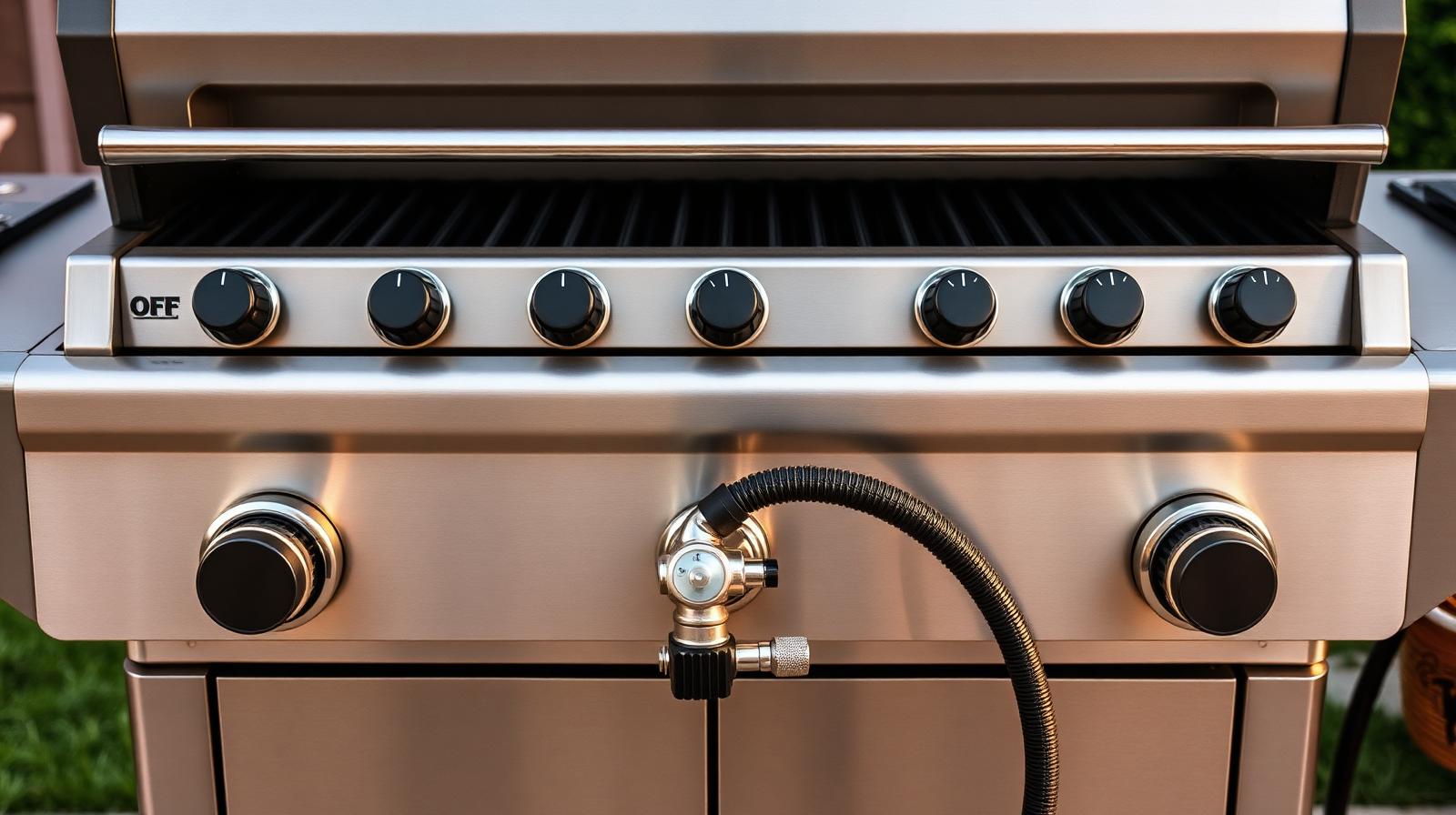
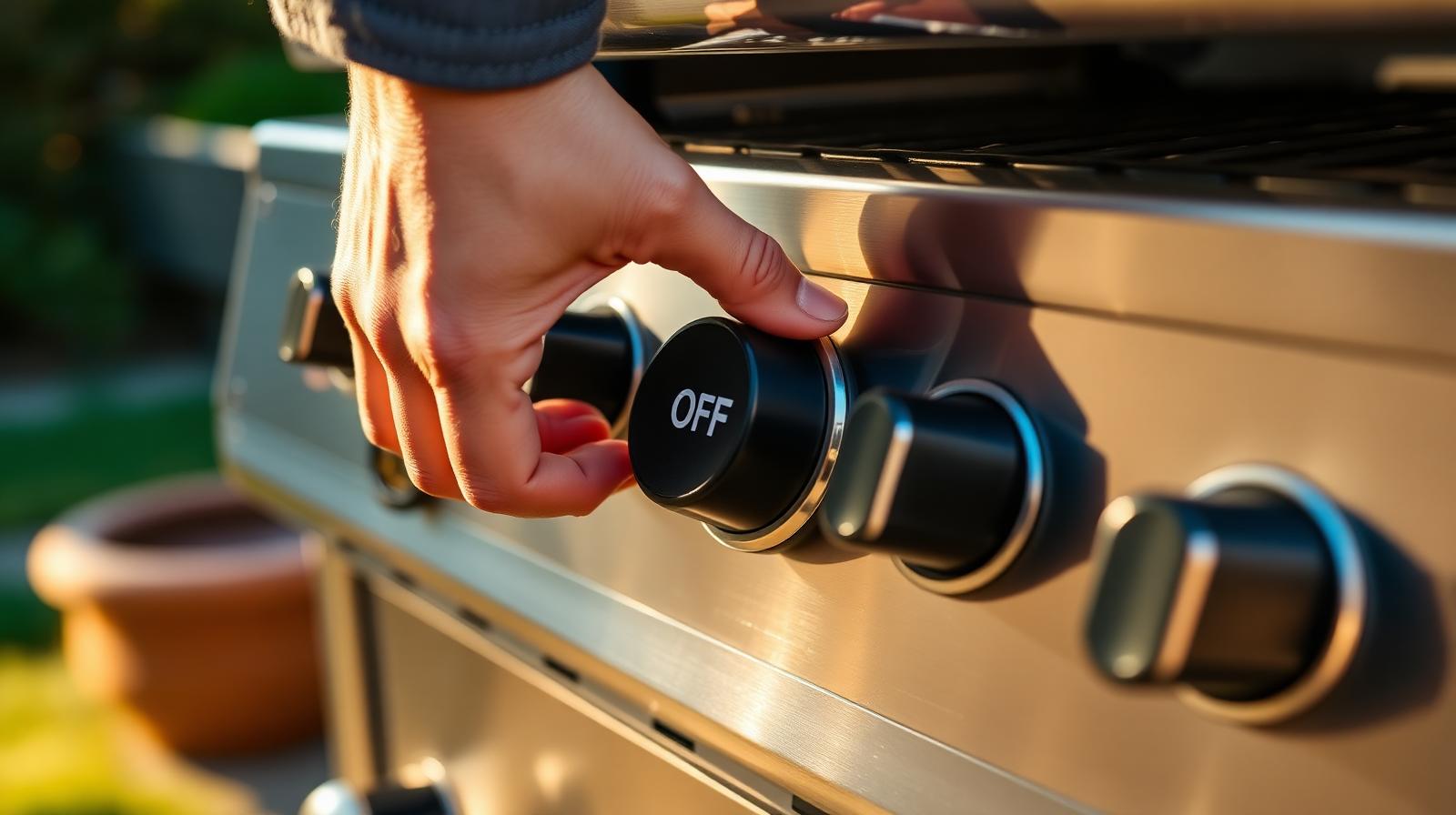
This is the single most common reason resets fail. Even a knob that's cracked open a quarter turn is enough to keep gas flowing during the reset, which re-trips the Excess Flow Valve the moment you reopen the tank. Walk the line, confirm each knob is in the full OFF position, and don't skip the side burner if your grill has one.

Turn the tank valve clockwise until it stops, hand-tight. No wrench, no pliers — overtightening damages the valve seat and creates leaks later. Once it's closed, the grill is fully isolated from the gas supply.

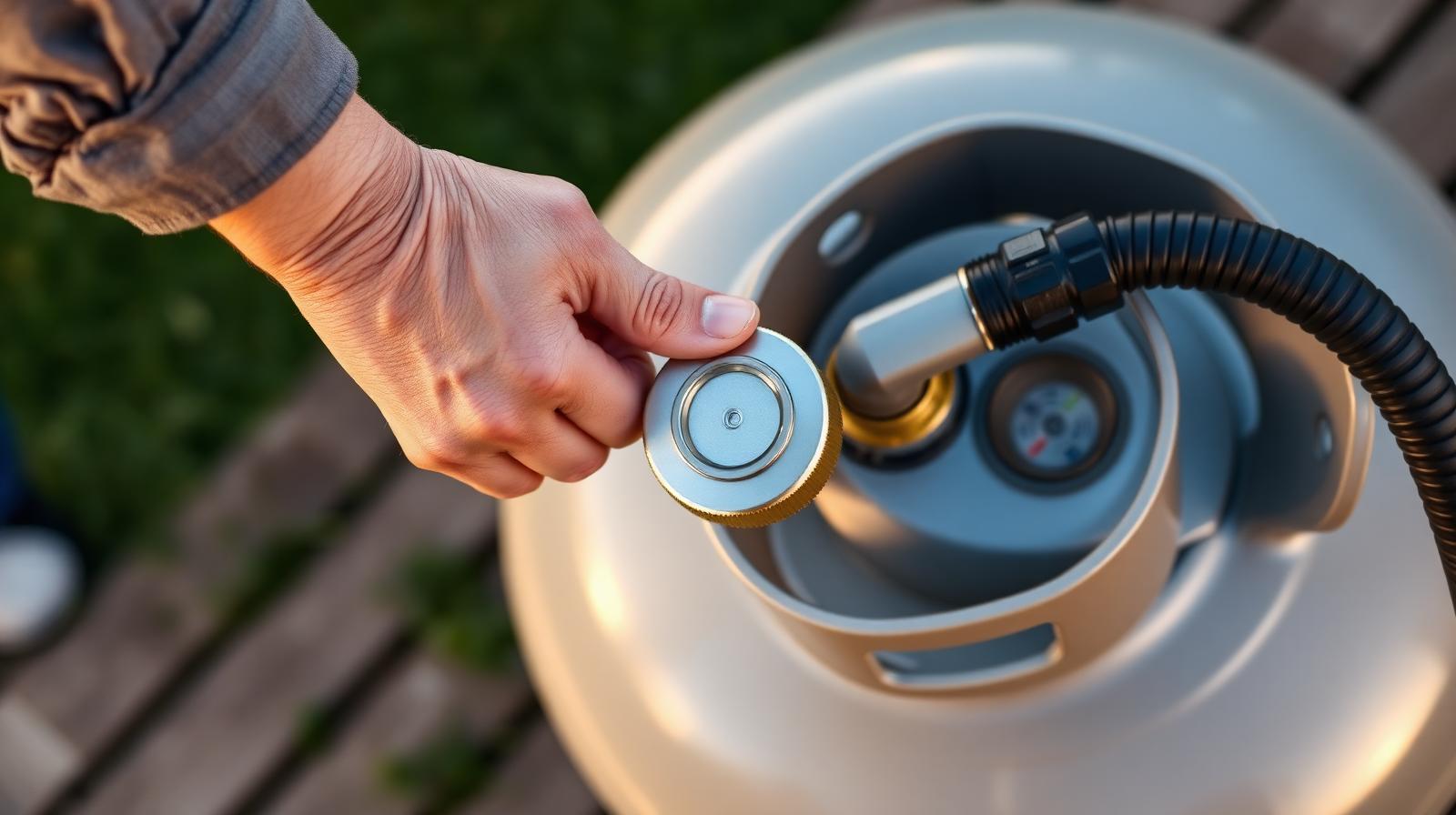
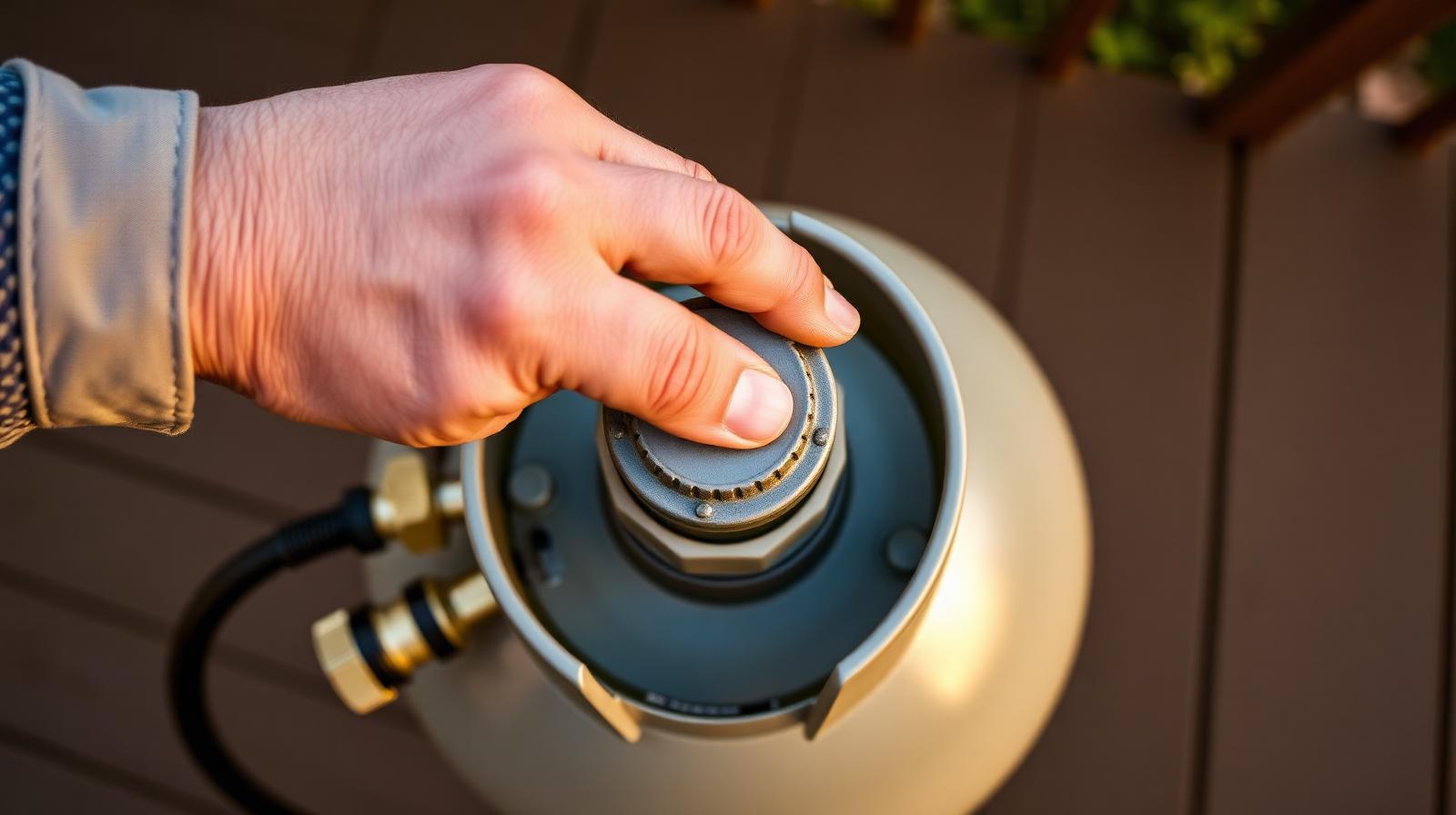
Unscrew the large plastic QCC1 coupling counterclockwise (looking down at it from above). It should turn freely by hand. If it's seized, a pair of pliers used gently on the plastic collar — not the brass — will break it loose. Set the regulator aside so it's not touching the tank.

This is the actual reset. The Excess Flow Valve inside the regulator only releases when downstream pressure drops to zero. A full minute is overkill but guarantees the EFV resets — rushing this step is the second most common reason a reset fails.

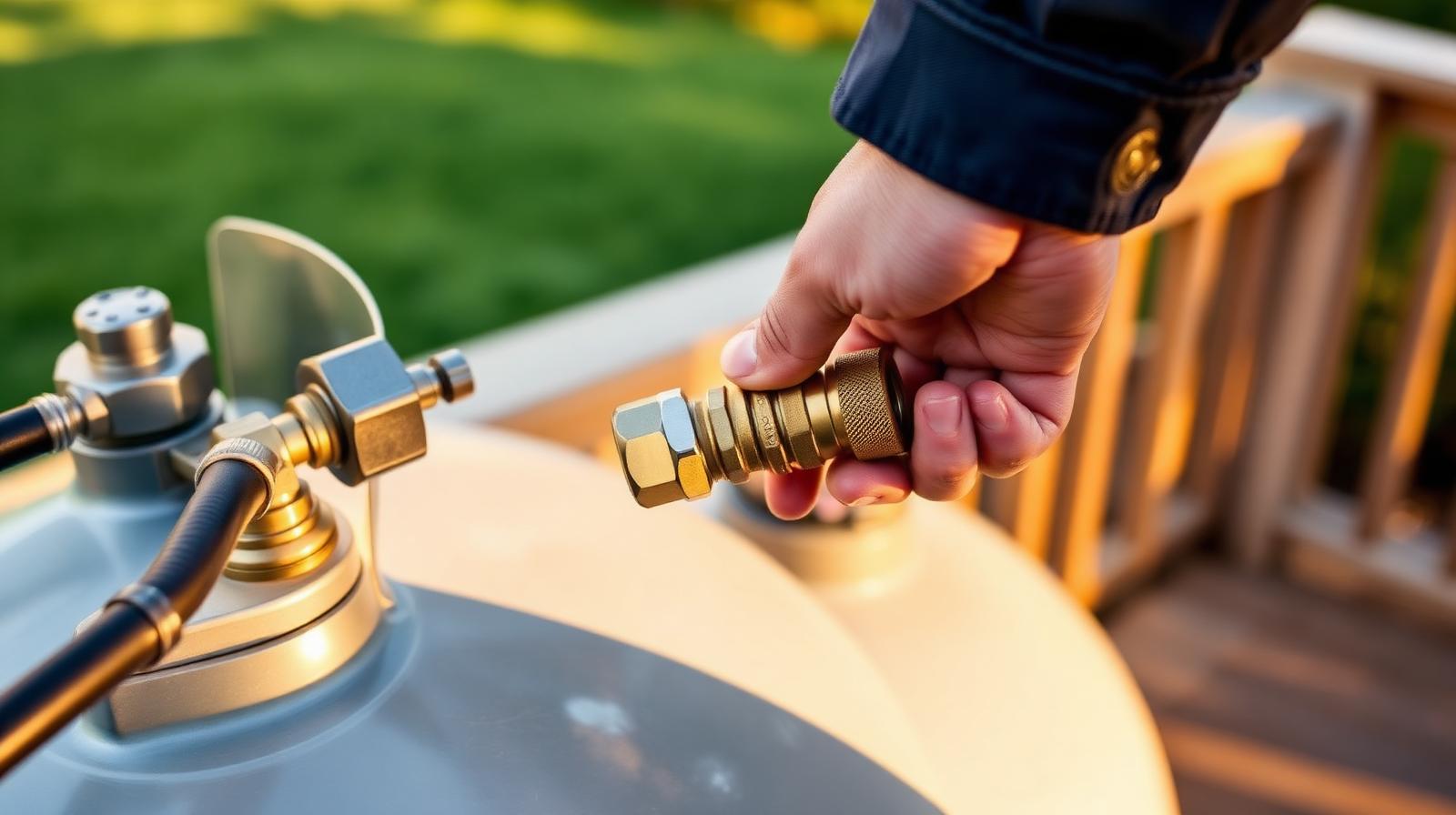
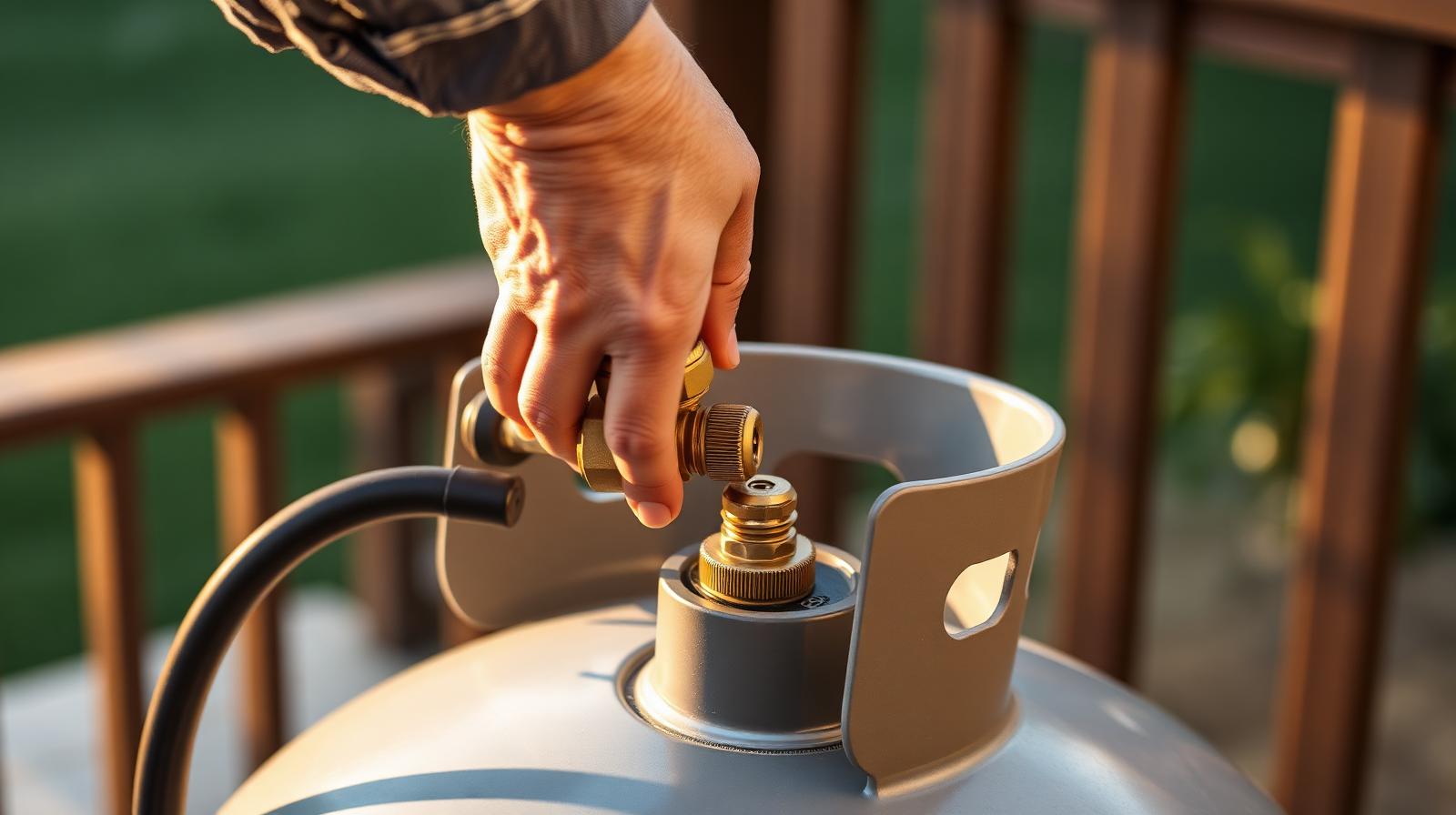
The QCC1 fitting uses a rubber O-ring against a stainless steel seat — the seal comes from compression, not torque. Hand-tight is correct. A wrench will deform the O-ring and create the very leak you're trying to avoid. Snug, then a quarter turn more, and stop.

Crack the tank valve a quarter turn, wait 5 seconds for the line to pressurize against the closed regulator, then open it the rest of the way. Opening fast is exactly what trips the EFV in the first place. Slow is the whole point.

Give the regulator a moment to equalize. Reaching for a knob immediately can cause a small pressure spike that some sensitive regulators read as a leak.

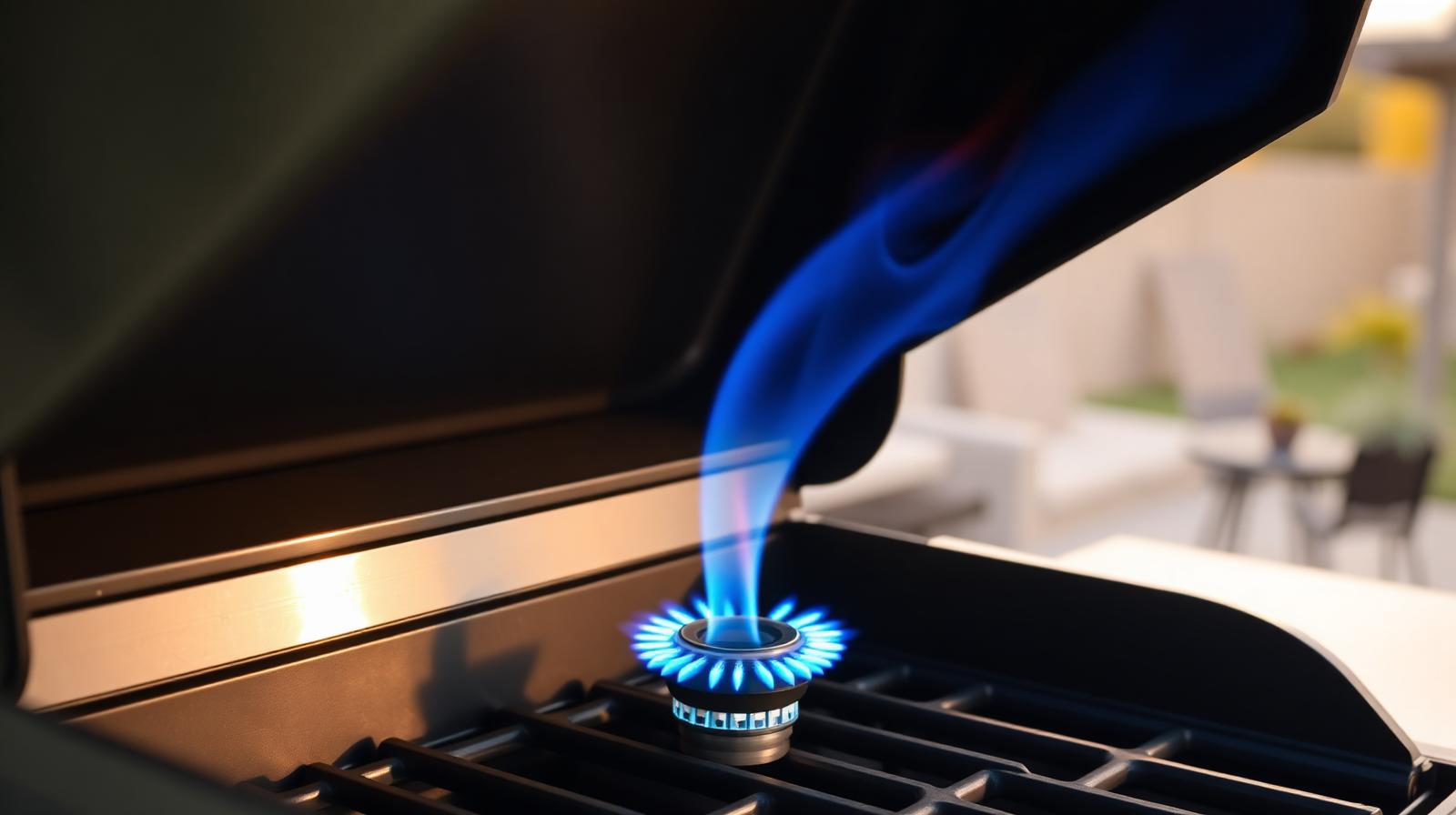
Turn one burner — usually the leftmost — to HIGH and ignite. A successful reset shows up as a full, blue, six-inch flame within 5–10 seconds. Then bring up the other burners one at a time. If the first burner stays weak, close everything down and try the reset one more time before assuming the regulator itself is dead.

When the reset fails
If resetting the regulator on your gas grill does not work, the diagnosis splits into four sub-problems. Match your situation, then apply the fix. Don't keep cycling the same reset over and over — you're either using wrong technique or the regulator is mechanically dead.
Cause: You're opening the tank valve too fast, or one burner knob was cracked open when you opened the tank.
Fix: Confirm every single knob is fully OFF before touching the tank valve. Then open the tank only a quarter turn, wait five seconds, and continue opening the rest of the way slowly. This single change fixes the majority of repeat trips.
Cause: The EFV diaphragm has failed permanently. The reset cannot bring back a worn-out internal spring.
Fix: Replace the regulator-and-hose assembly. Skip the next reset attempt — you're wasting cook time. See the replacement section below for the two parts that fit 95% of grills.
Cause: Intermittent regulator. The EFV is opening, then chattering closed under load. Classic early-failure mode.
Fix: Replace before the next cook. An intermittent regulator will eventually fail mid-cook on a meal you care about — fix it now while the kitchen isn't waiting.
Cause: Usually procedure (rushing the tank valve), occasionally a weak EFV spring on its way out.
Fix: Run the slow-open procedure deliberately for three cooks in a row. If the regulator still trips after careful technique, the EFV is failing. Replace.
Decision · Reset vs Replace
The reset works for the vast majority of bypass-mode trips, but regulators don't last forever. Any one of the five triggers below means it's time for a new assembly — not another reset attempt.
An EFV that won't seat after two careful resets is mechanically worn. No amount of patience will bring it back — replacement is the only fix.
Rubber diaphragms inside low-pressure regulators dry out and fatigue. Even if it still passes a leak test, an old regulator will trip into bypass more easily and deliver inconsistent pressure as it ages.
Any visible damage to the hose is an automatic replace — not a question. Hoses don't get repaired, they get replaced as a complete assembly with the regulator.
Mix 50/50 dish soap and water, brush it on the regulator-to-tank connection with the gas on, and watch. Growing bubbles mean a leak the reset cannot solve. Replace the assembly.
If you can smell propane near the regulator with every burner knob in the OFF position and the tank valve open, the regulator's internal seal has failed. This is the one symptom where you stop using the grill immediately and replace before the next cook.
Decision tool
Find your situation in the left column and look across. One column will have a checkmark. That's your move.
| Situation | Reset | Replace |
|---|---|---|
| First time it's ever happened on this grill | ||
| Reset failed once — flame still weak | ||
| Reset failed twice in a row | ||
| Regulator is 10+ years old | ||
| Visible cracks, kinks, or fraying on the hose | ||
| Gas smell with every knob OFF |
Replacement Parts
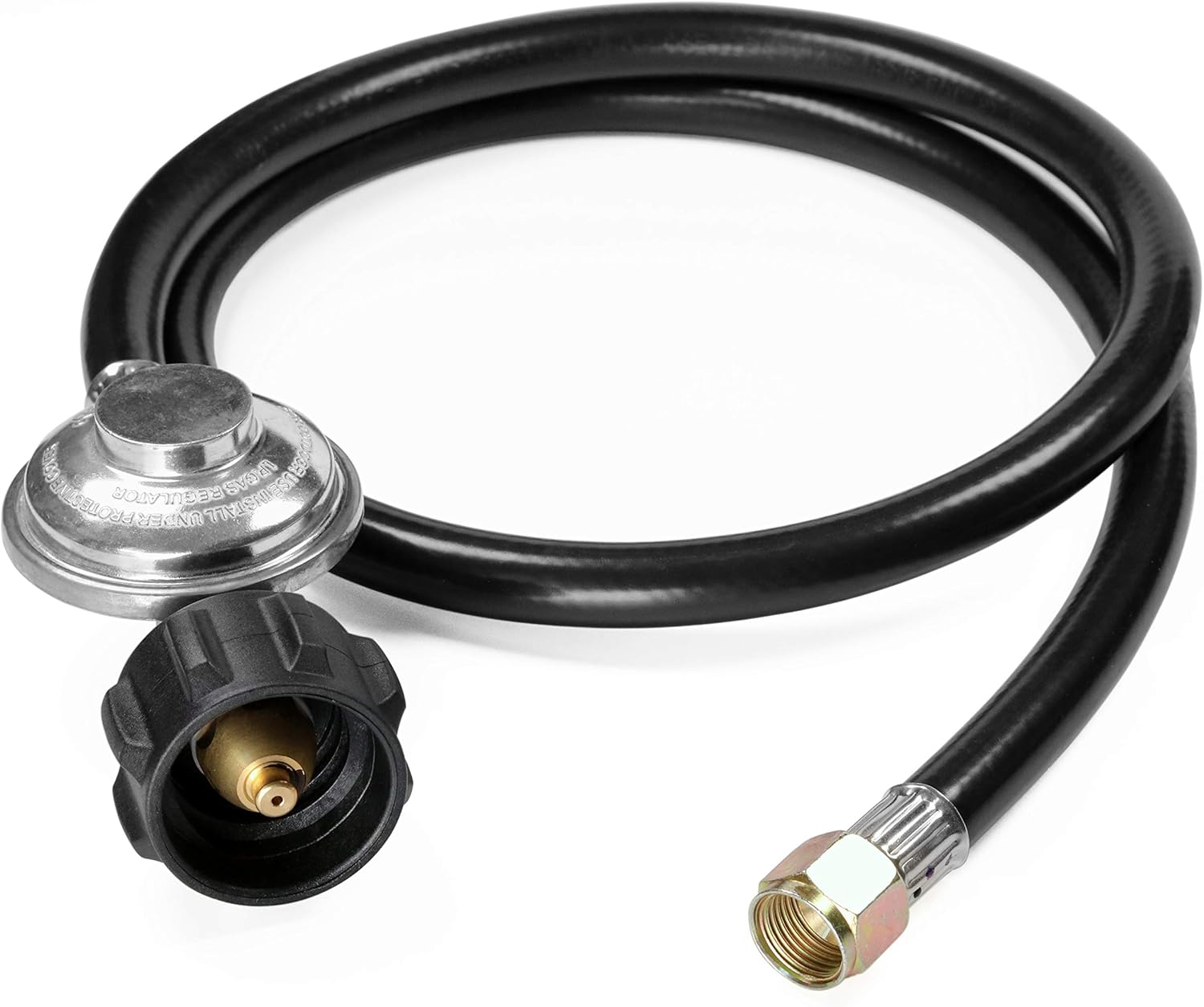
Two regulators cover 95% of backyard grill setups. Both are QCC1 Type-1 low-pressure assemblies — the standard for every propane grill sold in North America since the mid-1990s. For the full Weber-specific parts breakdown, see our Weber grill replacement parts guide.

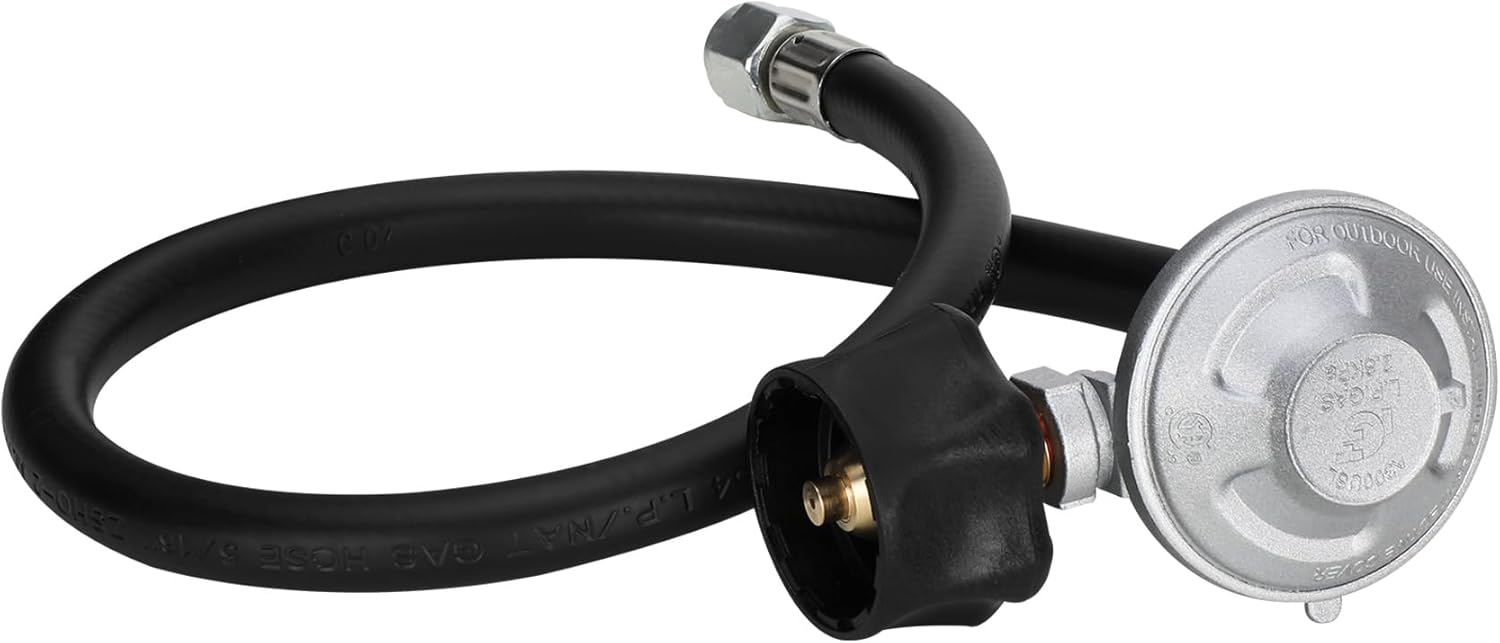
The OEM replacement for Spirit, Genesis, and Summit. Pre-cut hose length matched to Weber cabinet dimensions. The right call if you own a Weber and want everything to look factory.

3-foot QCC1 hose with low-pressure regulator. Works on Char-Broil, Nexgrill, Royal Gourmet, Brinkmann, Kenmore, Blackstone. About half the price of OEM, built to the same Type-1 spec.
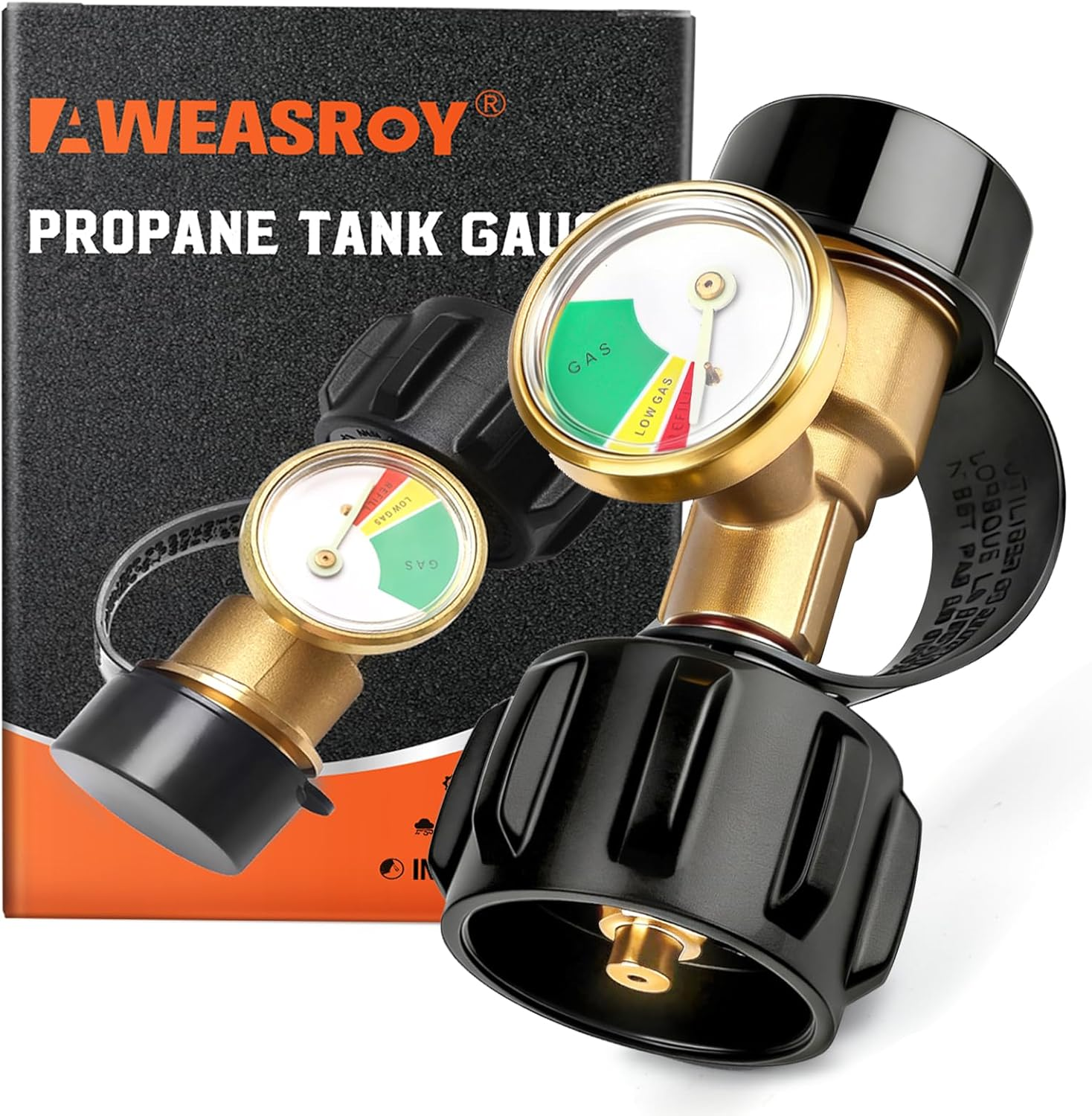
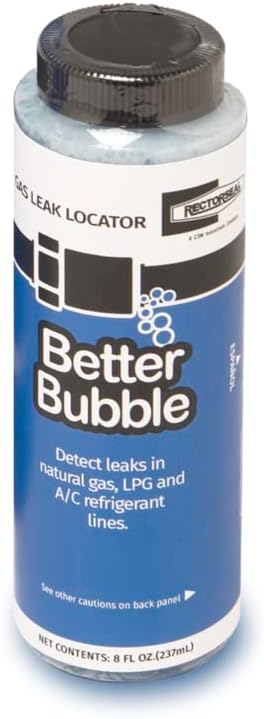
Two cheap accessories that make the next regulator failure a 30-second diagnosis instead of a 30-minute one.

Sticks to the side of the tank and shows fuel level by temperature. Rules out 'empty tank' before you even touch the regulator.

Pre-mixed soap solution that builds bigger, more visible bubbles than dish soap. Pays for itself the first time you confirm a leak before lighting.
Replace with confidence — both options are in stock on Amazon.
Brand-Specific Guides
The 8-step procedure is identical across propane brands — the QCC1 coupling and the Excess Flow Valve are universal. What changes brand-to-brand is hose routing, factory-regulator quality, and how quickly bypass mode shows up under load.
Weber Spirit, Genesis, and Summit gas grills all use the same Type-1 QCC1 regulator design. The Weber grill regulator reset procedure is the universal 8-step procedure above — there is no Weber-specific trick, despite what forum posts will tell you. Knobs OFF, close tank, disconnect, wait 60 seconds, reconnect hand-tight, open tank slowly, light one burner.
The one Weber-specific note: on Genesis II models, the regulator hose runs behind the cart and the QCC1 coupling can catch on the rear wheel during disconnection. Tilt the propane tank slightly toward the front of the cart before you start unscrewing — this gives the coupling a clear line of travel and saves five minutes of fighting it.
Common Weber failure mode: factory regulators on Spirit and Genesis grills built between roughly 2010 and 2015 had a higher early-failure rate. If your Weber is from that era and the regulator trips into bypass more than once or twice a season, replace it proactively rather than continuing to reset. See Weber Spirit parts or Weber Genesis parts for the rest of your maintenance kit. The Weber grill reset regulator process is the same on every Spirit, Genesis, and Summit generation — the same procedure that works on a 1998 Spirit 500 still works on a 2024 Spirit II E-310.
Char-Broil grills use the standard QCC1 connection, so the same 8-step universal reset works without modification. To reset regulator on Char-Broil grill, follow the procedure above exactly.
The Char-Broil-specific note is TRU-Infrared. The infrared emitter plates need full regulator pressure to glow correctly — they're noticeably more sensitive to bypass mode than standard tube burners, and you'll see symptoms (cold zones, slow preheat) faster on a TRU-Infrared model than on a standard one. Open the tank valve extra slowly on these (eighth-turn, wait, then continue). If the reset doesn't hold, the DOZYANT universal replacement is a direct fit on every Char-Broil model.
Blackstone griddles use the same QCC1 regulator design as every other propane appliance. The Blackstone grill regulator reset procedure is identical — every step on this page applies.
Blackstone-specific note: griddles need more delivered pressure than grills to heat evenly across a flat top. A bypass-mode regulator that would still feel "okay-ish" on a tube-burner grill will produce obvious cold zones on a 36-inch Blackstone. The diagnostic is faster, and the bar for a successful reset is higher. Blackstone sells OEM replacements, but the DOZYANT universal works equally well at roughly half the price.
Standard QCC1, same 8-step Napoleon grill regulator reset procedure. No brand-specific deviation needed.
Napoleon Prestige and Rogue series ship with heavier-duty factory regulators that fail measurably less often than budget brands — if a Napoleon's regulator has tripped into bypass, the reset almost always works. For replacement, Napoleon's OEM regulator is preferred for built-in or island installations where the hose routing is fixed and matched length matters.
Same QCC1, same 8-step reset on every gas Char-Griller. To reset the regulator on a Char Griller, the procedure above is the complete answer.
Two Char-Griller-specific notes worth knowing. First: the Char-Griller Akorn is a charcoal kamado — it has no regulator and bypass mode does not apply, so this guide is irrelevant for that model. Second: Char-Griller's factory regulator hose is often shorter than competitors' (around 24 inches versus 36), so an aftermarket replacement should match the original length to avoid binding around the cart frame.
Same QCC1, same procedure — whether the regulator hose for your Kenmore grill is broken or just needs a reset, the diagnostic flow above tells you which it is. Reset first; if symptoms return, the hose-and-regulator assembly is the only fix.
Kenmore is a re-badged grill, manufactured by Nexgrill or Char-Broil depending on year and model. The regulator is generic and the universal DOZYANT replacement always fits. Kenmore-branded OEM regulators for older models are out of production — aftermarket is the only path forward, and it's not a downgrade.
Same QCC1, same 8-step procedure to reset Expert Grill regulator. The catch: Expert Grill regulators are the lowest-quality factory parts on this list. If yours is more than two years old and has been bypassing frequently, replace rather than reset. The DOZYANT universal regulator costs less than a refill of the propane tank and will outlast the rest of the grill.
Safety · Always
The reset and even the regulator swap are safe DIY for almost everyone — there's no electricity, no torque spec, and the worst-case outcome of doing it wrong is a hand-tight fitting that leaks and fails the soap-bubble test. That said, three situations are an automatic stop.
Persistent gas smell. Any gas odor that doesn't clear within a few minutes of closing the tank means there's an active leak somewhere you haven't found. Stop, ventilate, call your propane supplier.
Visible damage to the regulator body. Cracks, dents, or melted plastic on the regulator itself — not the hose — are beyond a swap. The whole assembly needs replacing and the tank should be inspected before reuse.
The tank itself is damaged. Rust pitting, dents, an expired recertification date, or a damaged collar means the tank is the issue, not the grill. Exchange or refill at a certified site.
FAQ
Turn every burner knob OFF, close the propane tank valve, disconnect the regulator from the tank, wait 30–60 seconds, reconnect hand-tight, open the tank valve slowly (quarter turn, then the rest), wait five more seconds, and light one burner on HIGH. Full blue flame within 10 seconds means the reset worked.
About five minutes start to finish, with a built-in 30–60 second wait while the Excess Flow Valve inside the regulator releases. The actual hands-on time is closer to 60 seconds — most of the procedure is waiting for pressure to equalize.
Almost always because the tank valve is opened too quickly with one or more burner knobs cracked open. The Excess Flow Valve inside every QCC1 regulator is designed to trip when it sees a sudden flow spike. If trips continue after careful slow-open technique, the regulator's EFV spring is worn and the part needs replacing.
Plan on 8–12 years for a Weber OEM regulator and 4–7 years for budget aftermarket parts. Rubber components degrade even when the grill sits unused, and UV exposure on uncovered grills accelerates wear. Once you've reset a regulator more than twice in a season, it's reached the end of its service life.
Yes — bypass mode is a safety feature, not a defect. The regulator is intentionally limiting flow to a safe level. The grill will still cook, just slowly and at low temperature. There's no danger; you just won't get sear-quality heat. Reset before the next serious cook.
A faint hum is normal during the first few minutes as the diaphragm seats. A persistent loud whistle isn't — it usually means the regulator was overtightened or the hose has a kink restricting flow. Loosen, straighten the hose, and reseat hand-tight only.
Indirectly. Below about 40°F, propane vaporizes more slowly, which can starve the regulator and mimic bypass symptoms — weak flames, no high heat. The fix isn't a reset; it's a fuller tank (more surface area for vaporization) or warmer storage. A reset done in cold weather often won't hold until temperatures rise.
Functionally identical — both are QCC1 Type-1 low-pressure regulators rated for the same outlet pressure. The differences are hose length (Weber's is pre-cut for their cabinet routing), connector finish, and price. A DOZYANT or similar universal regulator works perfectly on a Weber Spirit if you don't mind a slightly different look behind the cabinet.
Classic bypass symptom. The regulator is delivering just enough pressure to keep one burner lit, but not enough to feed two simultaneously. Reset using the 8-step procedure above. If it happens again right after a successful reset, the regulator is failing — replace it.
Backyard propane grills use low-pressure (about 11 inches of water column, or roughly 1/2 psi). High-pressure regulators are for turkey fryers, burners, and commercial gear. Putting a high-pressure regulator on a backyard grill will damage the burners and is genuinely dangerous. When in doubt, the part is labeled.
Only if the old grill is less than 5 years old, the regulator passes a soap-bubble leak test, and the hose has zero visible damage. Even then, you're trading a known-good new part for an unknown-condition old one. For the price difference, install fresh — the universal DOZYANT replacement is roughly the cost of one bag of charcoal.
Bypass mode is temporary — the EFV tripped and a reset clears it. A bad regulator is permanent — the diaphragm or EFV spring has worn out and a reset no longer holds. The diagnostic is simple: if the 8-step reset restores full flame and the grill stays at full output through a normal cook, it was bypass. If symptoms return within minutes, it's a bad regulator.
Three reasons account for almost every failed reset: (1) a burner knob was cracked open during the procedure, (2) the tank valve was opened too quickly, or (3) the regulator's EFV is mechanically worn out. Walk the steps once more carefully. If the reset still fails on the second try, the part is dead — replace.
Identical to the universal procedure: knobs OFF, close tank, disconnect, wait 60 seconds, reconnect hand-tight, open tank slowly, wait, light one burner on HIGH. Weber Spirit regulators are standard QCC1 Type-1 — no Weber-specific trick is needed. If reset fails twice, swap to a Weber OEM or universal QCC1 replacement.
Same 8-step universal procedure. Char-Broil TRU-Infrared models are more sensitive to bypass than standard burners — open the tank valve extra slowly on those (eighth-turn, then wait, then continue). If the reset fails, the DOZYANT universal regulator is a direct fit.
Identical procedure to a grill — Blackstone griddles use the same QCC1 design. Worth knowing: griddles need more pressure than grills to heat evenly across the flat top, so bypass mode shows up faster on a Blackstone. If your reset works once but the griddle still has cold zones, the regulator is on its way out.
No. Natural-gas regulators are a completely different design — no QCC1 coupling, no Excess Flow Valve, no bypass mode. Weak flame on a natural-gas grill points to upstream house-line pressure or a clogged orifice, not the regulator itself.
$20–$35 for a universal QCC1 hose-and-regulator assembly, $40–$70 for Weber OEM. Both options are well under the cost of a new grill, and installation is hand-tight only. See the replacement parts section above for the two we recommend.
Related Guides
Live Guide
The 8 most common causes of weak grill heat — regulator bypass, clogged burners, spider webs, worn flavorizer bars — with a 60-second diagnostic.
Live Guide
Battery-first diagnostic flow that solves 60% of broken igniters before you buy a replacement.
Live Guide
Heat shield, heat plate, heat tent, flame tamer — they're all the same part. Identify yours, then find the right replacement.
Two regulators cover almost every backyard grill out there. Pick the one that matches your setup, install it hand-tight, and you're back to high-heat cooking this afternoon.