Head-to-Head Comparison · 2026 Update

Traeger Westwood vs Pro 575: Closeout vs New Launch (2026)

The Traeger Pro 575 is being phased out — Engadget confirmed that the new Westwood and Westwood XL are replacing the Pro series in Traeger's lineup. That makes this comparison unusual: the Westwood ($699) is the brand-new entry-level smart pellet grill; the Pro 575 (originally $799, now $500–600 closeout) is the discontinued grill it's replacing. Both have 18-lb hoppers, both have WiFIRE Wi-Fi, both run on the Traeger app — but the differences in temperature ceiling, accessory system, controller, and Keep Warm mode are real. After cross-referencing AmazingRibs.com's full Pro 575 testing, Engadget's Westwood hands-on, and 5 years of Pro 575 owner reports on Smoked BBQ Source, here's the honest verdict on which Traeger you should buy right now.

10 min read Updated May 2026 Independently researched
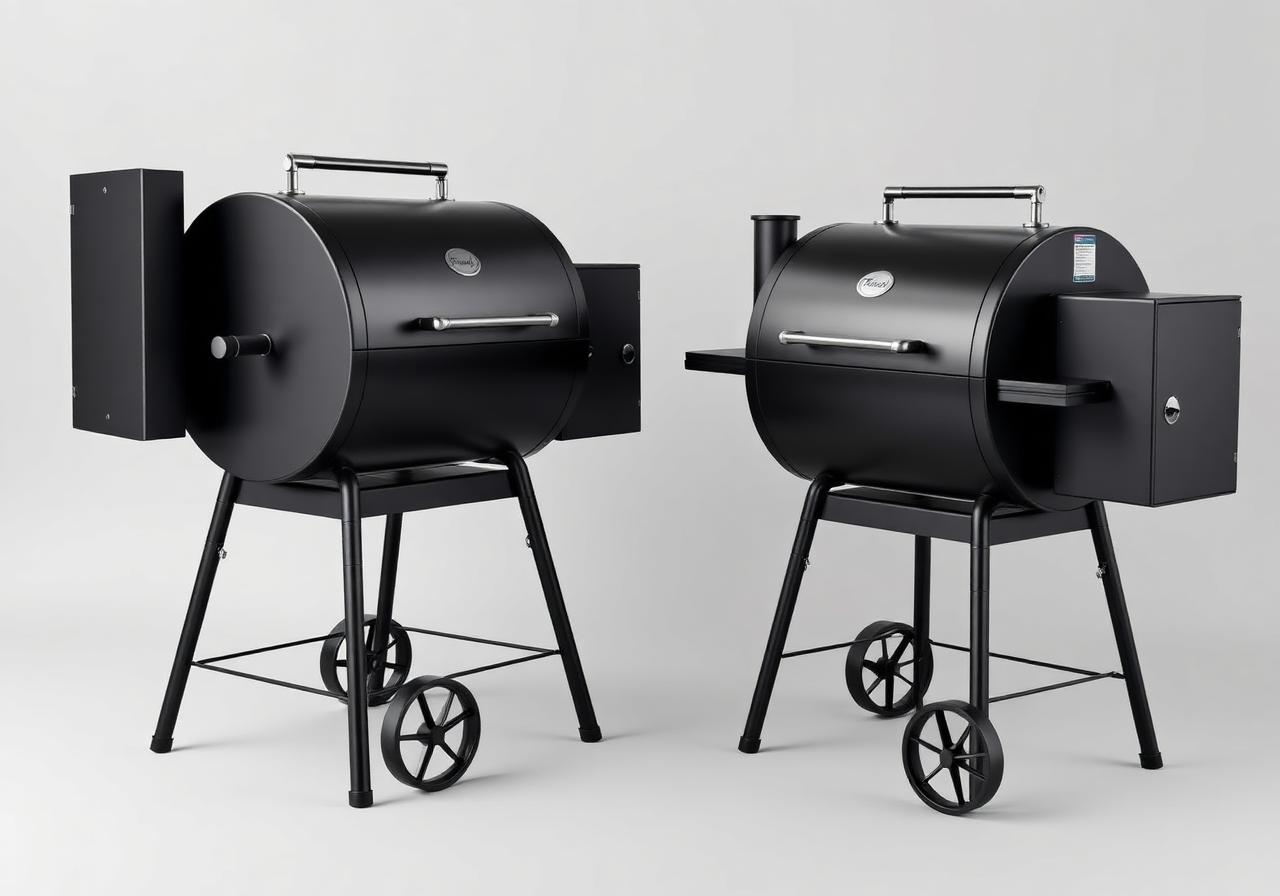
Traeger Westwood and Traeger Pro 575 pellet grills side by side comparison

New launch vs closeout — the comparison is closer than the marketing suggests.

TL;DR

The 30-Second Answer

Buy the Pro 575 (Closeout) if you...

  • Find it priced at $500–600 (anything above $700 is overpriced for a discontinued model)
  • Want the higher 500°F max temp for occasional searing
  • Value Keep Warm mode for entertaining
  • Don't care about the P.A.L. accessory rail or ModiFIRE compatibility
  • Don't mind buying a discontinued model with reduced parts/software support over time

Buy the Westwood (New Launch) if you...

  • The Pro 575 is selling at or above $700 in your region
  • You want the P.A.L. rail and ModiFIRE accessory ecosystem
  • You'll use the dual-tier cooking configuration
  • You want 8–10 years of guaranteed parts and software support
  • You'd rather buy a current-generation grill that will receive updates

If you can find a Pro 575 at $500 or below, it's the better deal — same brand, same hopper size, higher max temp, Keep Warm mode included. At $600+, the Westwood is the smarter buy because you're paying near-equivalent money for a current-generation grill with 5+ more years of support runway. Anything above $700 for a discontinued Pro 575 is overpriced.

By the Numbers

Westwood vs Pro 575: Side-by-Side Specs

SpecTraeger WestwoodTraeger Pro 575 (Discontinued)
Original MSRP$699.99$799.99
Current Pricing (May 2026)$699 retail$500–600 closeout (varies by retailer)
Total Cooking Area653 sq in (dual-tier)572 sq in (425 main + 150 secondary)
Pellet Hopper Capacity18 lbs18 lbs
Temperature Range180–450°F180–500°F
Max Temp Advantage+50°F over Westwood
ControllerButton-based digitalKnob-based digital with D2 Direct Drive
WiFIRE Wi-Fi + BluetoothYesYes
Wired Probe Ports11
Wireless Probe CompatibleYes (+$80)Yes (+$80)
Super Smoke ModeNoNo
Keep Warm ModeNoYes
TurboTemp Fast StartupNo (slower preheat)Yes
Hopper Clean-Out TrapdoorYesYes
Dual-Tier CookingYes (designed feature)Yes (secondary grate on brackets)
P.A.L. Pop-and-Lock RailYesNo
ModiFIRE CompatibilityYesNo
Side ShelfBuilt-inOptional accessory ($60)
Bottom Storage ShelfYesNo
Build QualitySame generationOlder D2 Direct Drive (proven 5+ years)
Software UpdatesActiveContinuing for now; uncertain post-phaseout
Parts Availability8–10+ year guaranteed8–10 years projected
Warranty3-year limited3-year limited
StatusCurrently shippingCloseout — being phased out

The honest reading: the Pro 575 has 3 features the Westwood lacks (50°F higher max temp, Keep Warm mode, TurboTemp fast preheat) and lacks 4 features the Westwood adds (P.A.L. rail, ModiFIRE, built-in side shelf, bottom storage shelf). The Westwood adds 81 sq in of cooking area but in a dual-tier configuration that may or may not match your cooking style. This isn't a clear winner; this is a trade-off matrix.

Head-to-Head

5 Categories That Matter

1. Searing and High-Heat Cooking

Winner: Pro 575 (decisive)

The Pro 575 reaches 500°F; the Westwood maxes at 450°F. For pellet-grill standards, neither truly sears like a gas grill or charcoal — AmazingRibs.com confirmed the Pro 575 produces "tepid brown" sears even at full heat — but the 50°F higher ceiling on the Pro 575 makes a real difference for reverse-searing tri-tip, finishing pizza dough, and getting Maillard browning on burgers. If you sear regularly, the Pro 575 is the better buy at any reasonable closeout price. If you mostly smoke and rarely sear, the Westwood's 450°F is plenty.

2. Accessory Ecosystem and Customization

Winner: Westwood (decisive)

The Pro 575 has no accessory rail system — Traeger's P.A.L. (Pop-and-Lock) and ModiFIRE accessories don't fit the Pro generation at all. The Westwood inherits the P.A.L. rail from premium Ironwood and Timberline lines: snap-on front shelves, paper towel holders, condiment trays, ModiFIRE griddle inserts. If you'll customize your grill with accessories, this category is the entire conversation.

3. Cooking Space and Configuration

Winner: Tie (with caveats)

The Westwood has 653 sq in vs the Pro 575's 572 sq in — 14% more on paper. But both use dual-tier configurations (main grate + secondary rack), and real-world capacity is closer than the spec gap suggests. The Pro 575's 425 sq in main grate fits a 12-lb brisket comfortably (per AmazingRibs.com testing); the Westwood's main grate is similarly sized. If you cook for 4–6 people, both are sufficient. If you cook for 8+ regularly, neither is enough — get the Westwood XL or Pro 780 instead.

4. Convenience Features

Winner: Pro 575

The Pro 575 has Keep Warm mode (holds 165°F after a cook completes — useful for late dinner guests) and TurboTemp fast startup (faster preheat than standard Traegers). The Westwood drops both. For owners who entertain regularly or hate slow preheats, this matters. The Westwood compensates with the P.A.L. rail's accessory shelf for prep convenience, but that's not the same as Keep Warm.

5. Long-Term Support and Resale Value

Winner: Westwood

The Pro 575 is being phased out, which means: parts availability declines over 5–10 years, software updates may stop, resale value drops faster than current models. The Westwood is a current-generation grill with active development and a guaranteed support runway. For owners planning to keep the grill 5+ years, the Westwood's support timeline is the safer bet. For owners who replace grills every 3–4 years anyway, this category matters less — the Pro 575's closeout price could fully justify the support trade-off.

Buy at the Right Price

What's the Right Price for Each?

Pro 575 Pricing Tiers

  • $400 or below: Excellent buy — get it immediately, even with the support phase-out
  • $450–550: Good buy — better deal than the Westwood at this price tier
  • $550–650: Even with the Westwood — depends on whether you value 500°F max temp or P.A.L. rail more
  • $650–700: Lean Westwood — the Pro 575's discontinued status doesn't justify near-MSRP
  • $700+: Skip — overpriced for a discontinued model; buy the Westwood at this price point

Westwood Pricing Tiers

  • $599 or below (sale): Excellent buy — the Westwood at this price beats almost any Pro 575 closeout
  • $649–699 (current retail): Standard market price — fair buy for a current-generation grill
  • $699–749 (slight markup): Acceptable — Traeger holds price well at launch
  • $750+: Skip — wait for Black Friday or Memorial Day sales; the Westwood will be discounted

The honest take: most pricing scenarios favor the Pro 575 at closeout. If your local retailer has the Pro 575 at $500–600, that's the better deal. The Westwood becomes the smarter buy primarily when the Pro 575 closeout supply runs out (likely Q3–Q4 2026) or when the price gap closes to $50 or less.

Owner Reports

What 5 Years of Pro 575 Owners Say (And Early Westwood Reports)

The Pro 575 has been in production since 2020. Owner reports on Smoked BBQ Source, Reddit's r/Traeger, and the BBQ Brethren forum consistently praise: (1) the D2 Direct Drive controller's reliability over years of use, (2) the polished Traeger app, (3) the hopper clean-out trapdoor for swapping pellet flavors, (4) the consistency of low-and-slow cooking. Common complaints: weak searing at the 500°F max, occasional temperature swings on windy days, the painted finish prone to rust in humid climates without diligent care.

The Westwood has been on the market 3 weeks at the time of this review. Engadget's hands-on noted the simplified button-based controller (no knob) and the absence of Super Smoke and Keep Warm modes, framing the Westwood as a "no-frills" simplification. Early Traeger Forum reports praise the P.A.L. accessory system and dual-tier configuration but echo Engadget's concern about the missing pellet sensor. Long-term reliability data on the Westwood doesn't exist yet — the controller architecture is new, not the proven D2 design from the Pro 575.

The risk-adjusted reading: the Pro 575 is a known quantity with 5+ years of owner data. The Westwood is a launch product with unknowns. For owners who hate being early adopters, the Pro 575 closeout is the safer purchase. For owners who want the latest feature set and ecosystem, the Westwood is the smarter long-term play.

Both grills produce essentially identical cooking results — same Traeger pellet system, same convection airflow, same temperature precision. Food quality is not the differentiator between these two; ownership experience and feature ecosystem are.
Reframe

The Wrong Question: "Which Traeger Is Newer?"

The honest answer to "should I get the newer Westwood or the older Pro 575?" depends entirely on price and use case — newer doesn't automatically mean better. The Westwood and Pro 575 represent two different design philosophies at roughly the same price tier: the Pro 575 prioritizes max temperature and convenience features; the Westwood prioritizes accessory ecosystem and modern interface design.

The right question is: what features matter most to your cooking, and what's the price gap between the two right now? If the Pro 575 closeout is $500 and the Westwood is $699, the Pro 575 wins on dollar-for-dollar value unless you specifically need P.A.L. accessories or dual-tier cooking. If the Pro 575 closeout is $650 and the Westwood is $699, the Westwood wins on long-term support runway alone.

The trap is buying the Westwood because it's "the new one" without considering what you're paying for — and missing a $200 closeout savings on a Pro 575 that does 90% of what the Westwood does. The trap on the other side is buying the Pro 575 at near-MSRP because it's "the proven one" and getting a discontinued grill at full price for no good reason.

Which One Fits Your Cooking

10 Cooking Scenarios — Better Choice

Cooking ScenarioBetter ChoiceWhy
Smoking 1 brisket per month + weeknight grillingEither (price decides)Both handle this scenario equally well
Reverse-searing steaks weeklyPro 57550°F higher max temp matters for searing
Hosting parties of 6–10 with late-arriving guestsPro 575Keep Warm mode keeps food at serving temp
Customizing with shelves, holders, accessoriesWestwoodP.A.L. rail accessory ecosystem
Cooking on a tight budget under $600Pro 575 (closeout)Best price-per-feature in the comparison
Want the latest Traeger software/recipesWestwoodActive development; Pro 575 development winding down
First Traeger purchase, future-proof for 5–10 yearsWestwoodSupport runway favors the new generation
Replacing a failing 2018 TraegerPro 575 closeoutFamiliar D2 controller, lower price
Cooking pizza weeklyPro 575Higher 500°F max temp matters for pizza crust
Smoking only (never high-heat)EitherMax temp doesn't matter for smoking-only use

FAQ

Frequently Asked Questions

Is the Traeger Pro 575 still being sold?
Technically yes, but as closeout inventory only — Traeger is phasing it out in favor of the Westwood and Westwood XL. Per Engadget, the new Westwood line is replacing the Pro series. As of May 2026, Pro 575 stock is still available at Amazon, Home Depot, BBQGuys, and other major retailers, often at $500–600 closeout pricing. Once existing inventory clears (likely Q3–Q4 2026), the Pro 575 will only be available used or refurbished.
What's the actual difference between Westwood and Pro 575?
Three features the Pro 575 has that the Westwood lacks: 50°F higher max temperature (500°F vs 450°F), Keep Warm mode, TurboTemp fast preheat. Three features the Westwood has that the Pro 575 lacks: P.A.L. accessory rail, ModiFIRE compatibility, built-in side shelf and bottom storage shelf. Cooking area is roughly comparable (Westwood: 653 sq in dual-tier; Pro 575: 572 sq in dual-tier). Both have 18-lb hoppers, 1 wired probe port, WiFIRE Wi-Fi, and 3-year warranties.
Should I buy a closeout Pro 575 or the new Westwood?
Depends on price and use case. At $500 or below, the Pro 575 closeout is the better deal — same brand, more features (Keep Warm, higher max temp), 5+ years of proven reliability. At $650 or above, the Westwood is the smarter buy — current-generation grill with active software support and the P.A.L. accessory ecosystem. In the $550–650 middle zone, it's a coin flip based on whether you value max temp or accessories more.
Will the Pro 575 still get parts and warranty support?
Yes — Traeger's standard discontinued-product policy is 8–10 years of parts availability post-discontinuation. The Pro 575's 3-year warranty is honored normally during the warranty period, and replacement parts (auger motors, hot rods, induction fans, hoppers, grates) will be available through Traeger's parts catalog and aftermarket suppliers. See our Traeger Grill Parts hub for current parts compatibility.
Why is Traeger replacing the Pro 575 with the Westwood?
Traeger is consolidating their entry-level lineup around the P.A.L. and ModiFIRE accessory ecosystem they introduced on the Ironwood and Timberline lines. The Westwood brings that ecosystem down to a $699 price point — something the Pro 575's older architecture couldn't accommodate. Traeger is also in financial restructuring per Engadget's reporting, which makes lineup simplification a strategic priority.
Does the Pro 575 have Super Smoke mode like the Timberline?
No. The Super Smoke setting is exclusive to the Timberline and Ironwood lines — neither the Pro 575 nor the Westwood have it. For maximum smoke flavor on either grill, run the smoke phase at 165–200°F before increasing heat for the cook. Both grills produce thin blue smoke at low temperatures regardless of having a dedicated Super Smoke button.
Is the Westwood easier to clean than the Pro 575?
They're roughly equivalent. Both have hopper clean-out trapdoors for swapping pellet flavors. Neither has the easy-clean ash and grease container that the Woodridge and Timberline have — both still require manual ash vacuuming and grease bucket disposal. The Pro 575's older configuration is slightly more familiar to long-time Traeger owners; the Westwood's dual-tier configuration adds one more grate to clean. Net difference: minimal.
Will the Westwood feel like an upgrade if I'm coming from a Pro 575?
In some ways yes, in some ways no. Upgrades: P.A.L. rail accessory ecosystem, ModiFIRE compatibility, built-in side shelf and bottom storage, slightly larger cooking area. Downgrades: lower 450°F max temp (vs Pro 575's 500°F), no Keep Warm mode, no TurboTemp fast startup. For owners who used Keep Warm regularly or relied on the 500°F ceiling for searing, the Westwood will feel like a sidegrade with new accessories rather than a clear improvement. For owners who didn't use those features, the Westwood is a clean upgrade.