Head-to-Head Comparison

Traeger Westwood vs Woodridge: Is the $200 Upgrade Worth It? (2026)

The Traeger Westwood at $699 and the Traeger Woodridge at $899 are the two cheapest connected pellet grills Traeger sells — and the $200 gap between them is the most-Googled upgrade decision in the Traeger lineup. But most affiliate sites get this comparison wrong: they tell you the base Woodridge has Super Smoke mode. It doesn't — Super Smoke is exclusive to the Woodridge Pro ($1,149) and Elite ($1,499). So what does the $200 Westwood-to-Woodridge upgrade actually buy you? After cross-referencing Traeger's official spec sheets, AmazingRibs.com's Woodridge Pro testing, GearJunkie's year-long Woodridge ownership review, and Smoked BBQ Source's full Woodridge breakdown, here's the honest verdict on whether the upgrade is worth it for your cooking.

11 min read Updated May 2026 Independently researched
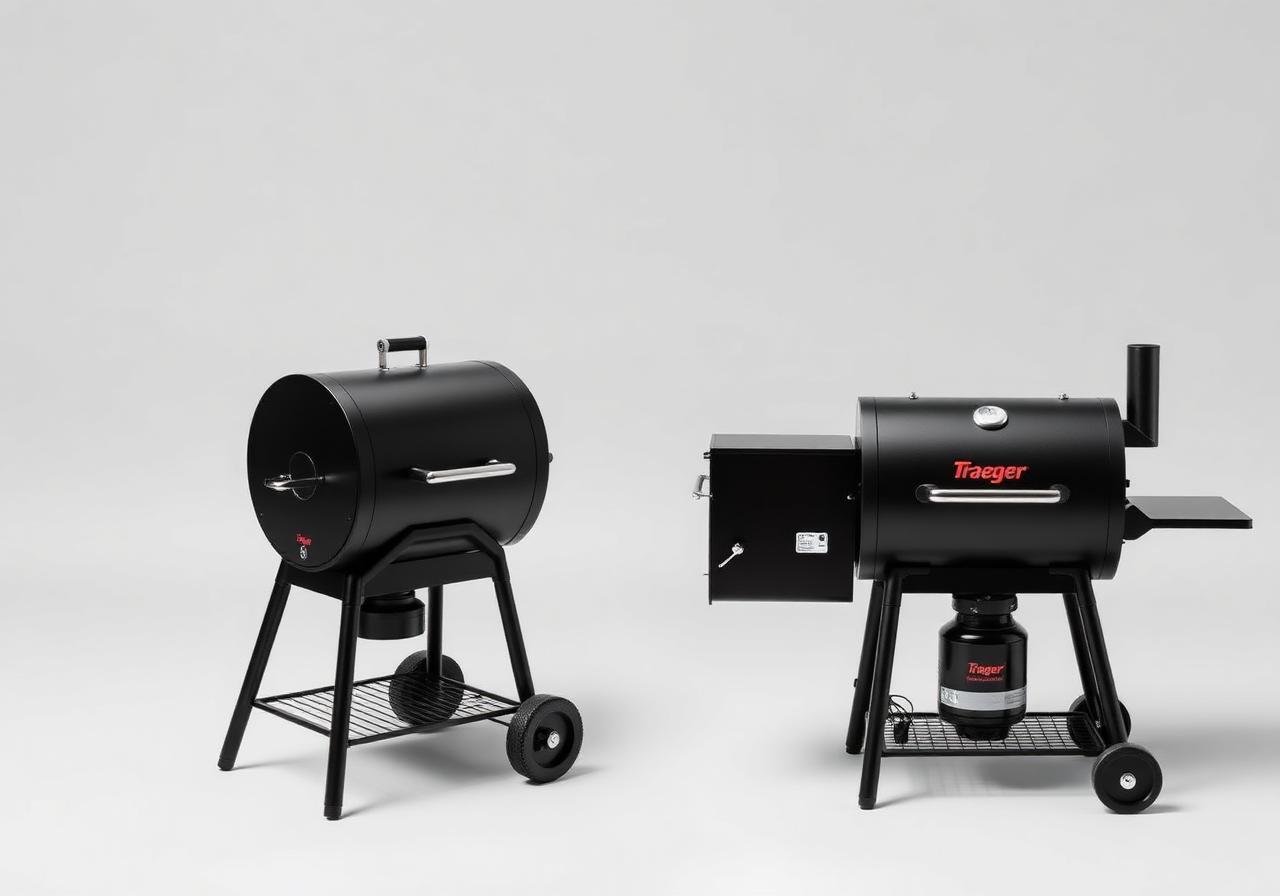
Traeger Westwood and Traeger Woodridge pellet grills side by side comparison

$699 vs $899 — the upgrade math hinges on how often you actually cook.

Read This First

The Base Woodridge Does NOT Have Super Smoke

This is the most-misrepresented spec in the Traeger lineup. Most affiliate review sites claim the Woodridge has Super Smoke mode — Traeger's signature feature that produces extra smoke at low temperatures. It doesn't, at least not at the base $899 tier. Super Smoke is reserved for the Woodridge Pro ($1,149), Woodridge Pro Plus (~$1,299), and Woodridge Elite (~$1,499). The base Woodridge omits it.

This matters because the most common reason people upgrade from a Westwood to a Woodridge — "I want Super Smoke for my brisket" — doesn't actually apply at the $200 upgrade tier. To get Super Smoke, you're looking at a $450 jump from Westwood to Woodridge Pro, not $200. If Super Smoke is your priority, skip the base Woodridge entirely.

So what DOES the $200 Westwood-to-base-Woodridge upgrade actually buy you? Three things: (1) the EZ-Clean Grease & Ash Keg that consolidates cleanup into a single removable bucket, (2) a pellet level sensor that alerts the app when you're running low, and (3) 207 sq in more cooking space (860 sq in vs 653 sq in). Whether those three features are worth $200 depends entirely on how much you cook and how much you value cleanup convenience.

TL;DR

The 30-Second Answer

Buy the Westwood ($699) if you...

  • Cook for 1–6 people regularly
  • Don't smoke more than 4 times a month
  • Don't mind manual ash cleanup
  • Already check pellet hopper visually before each cook
  • Want the cheapest entry point into Traeger's smart-grill ecosystem
  • Will spend the saved $200 on pellets, accessories, or wireless probes instead

Buy the Base Woodridge ($899) if you...

  • Cook for 6+ people frequently
  • Smoke 5+ times per month and value cleanup convenience
  • Want app alerts for pellet level (no more guesswork mid-cook)
  • Need the 50°F higher max temp (500°F vs 450°F) for searing
  • Will use the 207 sq in of additional cooking space
  • Don't need Super Smoke (if you do, skip to Woodridge Pro at $1,149)

If you're a casual cook who smokes occasionally and doesn't mind manual cleanup, the Westwood saves you $200 you can put toward pellets, a wireless probe ($80), or a Bear Mountain bulk-pellets order. If you cook frequently and value the EZ-Clean keg + pellet sensor + extra space, the base Woodridge is the smart upgrade — but only if Super Smoke isn't on your priority list. If Super Smoke matters, the real comparison is Westwood vs Woodridge Pro ($699 vs $1,149), not Westwood vs base Woodridge.

By the Numbers

Westwood vs Woodridge (Base): Side-by-Side Specs

SpecTraeger WestwoodTraeger Woodridge (Base)
Price (MSRP)$699.99$899.00
Price Gap+$200
Total Cooking Area653 sq in (dual-tier)860 sq in (520 + 340 sq in)
Cooking Area Gap+207 sq in (32% more)
Pellet Hopper Capacity18 lbs18 lbs
Pellet Level SensorNoYes (app alerts)
Temperature Range180–450°F180–500°F (real-world ~480°F per AmazingRibs)
Max Temp Gap+50°F (matters for searing/pizza)
ControllerButton-based digitalKnob + button digital
WiFIRE Wi-Fi + BluetoothYesYes
Wired Probe Ports12
Wireless Probe CompatibleYes (+$80)Yes (+$80)
Super Smoke ModeNoNo (Pro and Elite only)
Keep Warm ModeNoYes
EZ-Clean Grease & Ash KegNoYes (single removable bucket)
TurboTemp Fast StartupNoYes
P.A.L. Pop-and-Lock RailYesYes
ModiFIRE CompatibilityYesYes
Side ShelfBuilt-inFolding side shelf included
Bottom Storage ShelfYesYes
Insulated LidNoNo (Elite only)
Side Sear BurnerNoNo (Elite only)
Assembly Time~60 min, two-person~90 min Traeger says, ~3 hrs solo per GearJunkie
Weight~130 lbs~165 lbs
Warranty3-year limited3-year limited
StatusCurrently shippingCurrently shipping

The honest takeaway: the base Woodridge adds 7 features the Westwood lacks (pellet sensor, EZ-Clean keg, second probe port, 50°F higher max temp, Keep Warm mode, TurboTemp, larger cooking area). It does NOT add Super Smoke — that's a Woodridge Pro feature. The $200 upgrade is real value if you cook often; it's overkill if you smoke 2–4 times a month.

Head-to-Head

6 Categories That Matter

1. Cleanup Convenience

Winner: Woodridge (decisive)

The Woodridge's EZ-Clean Grease & Ash Keg is the single biggest reason to upgrade. Both pellet ash and grease drippings collect in one removable bucket — pull it out, dump it, snap it back. The Westwood requires the older Traeger cleanup process: vacuum the firepot, scrape grease into a separately-lined drip tray, dispose. AmazingRibs.com's testing notes the EZ-Clean still requires occasional manual ash sweeping for buildup that misses the keg, but the everyday cleanup is dramatically faster. For owners cooking 3+ times per week, this saves ~10 minutes per cook — the upgrade pays for itself in time within a year.

2. Cooking Space and Capacity

Winner: Woodridge

The Woodridge's 860 sq in beats the Westwood's 653 sq in by 32%. Configured as a 520 sq in main rack plus a 340 sq in secondary rack, the Woodridge fits roughly 30 chicken breasts, 8 rib racks, or 28 burgers. The Westwood handles ~22 chicken breasts, 5 rib racks, or 19 burgers. For households of 6+ or anyone batch-smoking multiple primals, the Woodridge's space advantage is decisive. For households of 1–4, the Westwood's 653 sq in is plenty.

3. High-Heat Searing

Winner: Woodridge

The Woodridge claims a 500°F max temperature; the Westwood maxes at 450°F. AmazingRibs.com's testing measured the actual Woodridge ceiling at ~480°F on a 72°F ambient day — pellet grills typically don't hit their advertised max in real-world conditions. Even at 480°F vs the Westwood's ~440°F practical ceiling, the Woodridge has a meaningful advantage for reverse-searing steaks, finishing pizza dough, and getting Maillard browning. Neither grill matches a gas grill or kamado for searing — for that, you want the Woodridge Elite with its dedicated side burner.

4. Pellet Management

Winner: Woodridge

The Woodridge has a pellet level sensor that monitors hopper fuel and sends app alerts when you're running low. The Westwood doesn't — you check pellets visually before each cook and guess at fuel level during long smokes. For 12+ hour brisket cooks, the pellet sensor is a real quality-of-life improvement. For 4-hour weeknight cooks, you'd never run low on pellets anyway, so the feature matters less.

5. Long-Term Value

Winner: Tie (depends on use case)

Both are current-generation grills with active software support and 3-year warranties. The Woodridge has been on the market 16 months (launched January 2025); long-term reliability data exists. The Westwood is 3 weeks old at the time of this review; long-term data doesn't yet. The Woodridge's price has already increased $100 since launch (per GearJunkie's year-long review) — Traeger pricing tends to drift upward, so locking in current pricing matters. For a 5–10 year ownership horizon, both grills should serve well.

6. Software and App Experience

Winner: Tie

Both grills use identical Traeger Connected/WiFIRE app — same recipe library, same probe alerts, same set-and-forget interface. Smoked BBQ Source's testing notes the WiFIRE app is the strongest in the connected-grill category, beating Pit Boss, Camp Chef, and Z Grills. The Woodridge gets pellet-sensor alerts that the Westwood doesn't; otherwise, the app experience is functionally identical.

Overlooked Advantages

What the Westwood Does Better Than the Woodridge

In a comparison where the Woodridge wins most categories, the Westwood has three real advantages most reviews skip. First, portability: at ~130 lbs vs the Woodridge's ~165 lbs, the Westwood is meaningfully easier to move across patios, fit through gates, or relocate to covered storage. For owners with tight outdoor spaces or who store the grill indoors during winter, the 35-lb weight difference matters.

Second, assembly time: Traeger says the Woodridge takes 90 minutes; GearJunkie's reviewer needed 3 hours alone (or 90 minutes with help). The Westwood assembles in ~60 minutes with two people, ~75–80 alone. For owners who'd rather spend Saturday cooking than assembling, the Westwood is the easier path to first cook.

Third, price-to-value math for casual cooks: if you smoke once a month and grill weeknight burgers, you're not using the Woodridge's pellet sensor, EZ-Clean keg, or 207 extra sq in often enough to justify $200. The Westwood gives you the same Traeger ecosystem (WiFIRE, app, recipes, accessories) at a price that doesn't penalize light use. The right buy is the cheapest grill that meets your cooking needs, not the most-feature-packed grill in your budget.

The $200 Question

What's $200 Actually Buying You?

Feature Added by WoodridgeApproximate Value
EZ-Clean Grease & Ash Keg$50–80 (saves 10 min/cook in time)
Pellet level sensor$20–40 (convenience, not critical)
207 sq in additional cooking area$50–80 (matches XL upgrade math at $0.30/sq in)
Second wired probe port$30 (vs buying wireless probe at $80)
50°F higher max temp$30–50 (only if you sear regularly)
Keep Warm mode$20 (occasional value for entertaining)
TurboTemp fast startup$10 (5–10 minutes saved per cook)
Slightly heavier construction$20 (longer-term durability)
Total apparent value$230–330

On paper, the $200 upgrade pays back $230–330 in feature value — slight win for the Woodridge. But this math only works if you'll actually USE all the upgraded features. For occasional cooks (smoke once a month or less), the EZ-Clean keg and pellet sensor are saving you time on cooks you weren't doing anyway. For frequent cooks (3+ per week), every feature compounds value. The $200 upgrade is a frequent-cook decision.

The Third Option

When the Real Answer is Woodridge Pro ($1,149)

For ~$250 more than the base Woodridge ($899 → $1,149), the Woodridge Pro adds three features the base Woodridge skips: Super Smoke mode (extra smoke production at 165–225°F — the feature most buyers actually want when they "upgrade to Woodridge"), the FreeFlow firepot (improved pellet combustion for cleaner smoke), and a 24-lb hopper (vs 18 lbs on Westwood and base Woodridge). The Pro also has a folding front shelf and a slightly larger 970 sq in cooking area.

The $1,149 vs $699 Westwood comparison ($450 gap) is the more honest "upgrade conversation" for serious smokers. If you're going to spend $200 more on the base Woodridge primarily for smoke flavor, you're spending the wrong $200 — you'll still lack Super Smoke and find yourself wishing you'd gone to the Pro. The base Woodridge is the right buy for cleanup convenience and capacity, NOT for smoke flavor.

Decision tree: Buy the Westwood if you're price-sensitive or smoke occasionally. Buy the base Woodridge if you cook frequently and value cleanup. Buy the Woodridge Pro if smoke flavor is your top priority. Buy the Woodridge Elite ($1,499+) if you want the integrated side searing burner. Each tier solves a specific problem; pick the tier that solves YOUR problem, not the tier with the most features.

Which One Fits Your Cooking

10 Cooking Scenarios

Cooking ScenarioBetter ChoiceWhy
Weeknight family dinners (4 people)Westwood653 sq in is plenty; $200 saved goes toward meat
Weekend BBQ for 6–10 guestsWoodridgeEZ-Clean and 860 sq in pay off when entertaining
Smoking 2 briskets simultaneouslyWoodridgeWestwood fits 1 brisket; Woodridge fits 2
Smoking 1 brisket per month + grilling weeknightsWestwoodLight smoking use doesn't justify $200 upgrade
Hosting parties of 10+ regularlyWoodridge Pro or XLBoth base options are too small for this
Daily cooking (3+ cooks per week)WoodridgeEZ-Clean saves 30+ min per week
Cooking on a tight budgetWestwoodLowest entry point for connected Traeger
First Traeger purchase, want to learn the platformWestwoodCheaper to discover whether you'll use the features
Replacing a 2018+ Traeger that diedWoodridgeFamiliar feature set + cleanup upgrade
Smoking is the primary use caseWoodridge ProSuper Smoke is THE feature for serious smokers

FAQ

Frequently Asked Questions

Does the base Traeger Woodridge have Super Smoke mode?
No. Super Smoke mode is exclusive to the Woodridge Pro ($1,149), Woodridge Pro Plus (~$1,299), and Woodridge Elite (~$1,499). The base Woodridge ($899) does not include Super Smoke. This is the most-misrepresented spec in the Traeger lineup — most affiliate sites claim the base Woodridge has Super Smoke when it doesn't. Verify on Traeger's official spec sheet before purchase if Super Smoke is on your priority list.
What's the actual difference between Westwood and base Woodridge?
Seven features the Woodridge adds: EZ-Clean Grease & Ash Keg, pellet level sensor with app alerts, 207 sq in more cooking space (860 vs 653), 50°F higher max temp (500 vs 450), second wired probe port, Keep Warm mode, TurboTemp fast startup. The Woodridge does NOT add Super Smoke — that's the Pro tier feature. Both grills share WiFIRE Wi-Fi, P.A.L. accessory rail, ModiFIRE compatibility, and the Traeger Connected app.
Is the $200 Westwood-to-Woodridge upgrade worth it?
For frequent cooks (3+ times per week), yes — the EZ-Clean keg saves ~10 minutes per cook, which compounds quickly. For occasional cooks (smoke once a month, grill weeknights), probably not — you're paying for cleanup convenience and capacity you won't fully use. The honest math: feature-by-feature, the Woodridge adds $230–330 of perceived value for $200 of actual cost, but only if you'll USE every feature regularly.
If I want Super Smoke, should I get the Woodridge?
You need the Woodridge Pro ($1,149), not the base Woodridge ($899). The base Woodridge skips Super Smoke entirely. If smoke flavor is your top priority and you're choosing between Westwood ($699) and Woodridge tiers, the right comparison is Westwood vs Woodridge Pro — a $450 gap, not $200. For serious smokers, that $450 jump pays back in flavor; for casual users, the gap is hard to justify.
How does the cooking space compare in real cooking terms?
The Westwood (653 sq in) handles ~22 chicken breasts, 5 rib racks, 19 burgers, or 1 large brisket. The Woodridge (860 sq in) handles ~30 chicken breasts, 8 rib racks, 28 burgers, or 2 briskets simultaneously. For households of 1–4, the Westwood is plenty. For households of 6+, or anyone batch-smoking multiple primals, the Woodridge's 32% more space is decisive.
Is the EZ-Clean ash keg actually worth it?
For frequent cooks, yes. AmazingRibs.com's testing confirmed the EZ-Clean keg consolidates 90% of cleanup into a single removable bucket — drippings, ash, and grease all in one place. The Westwood requires manual scraping and vacuuming, which adds ~10 minutes per cook. For owners cooking 3+ times per week, the EZ-Clean saves 30+ minutes per week. For occasional cooks, the time savings is real but smaller-scale.
What about the Woodridge Pro vs Woodridge Elite?
The Woodridge Pro ($1,149) adds Super Smoke mode and the FreeFlow firepot. The Woodridge Elite ($1,499+) adds an integrated electric side burner for high-heat searing, plus an insulated grill lid. If you've decided Super Smoke matters, choose Pro. If you also want integrated searing without buying a separate gas grill or kamado, choose Elite. The Elite is the only Traeger that genuinely sears like a gas grill.
Will the Woodridge be discontinued like the Pro 575?
Unlikely in the short term. The Woodridge launched January 2025 and is Traeger's main mid-range product line — it's not going anywhere soon. Compare to the Pro 575, which had been in production since 2020 and was due for replacement. The Westwood and Woodridge are positioned as complementary tiers in Traeger's current lineup, not competing for the same buyers.