Beef Steak Recipe
Smoked London Broil: The Reverse-Sear Recipe (Marinate, Smoke, Sear)
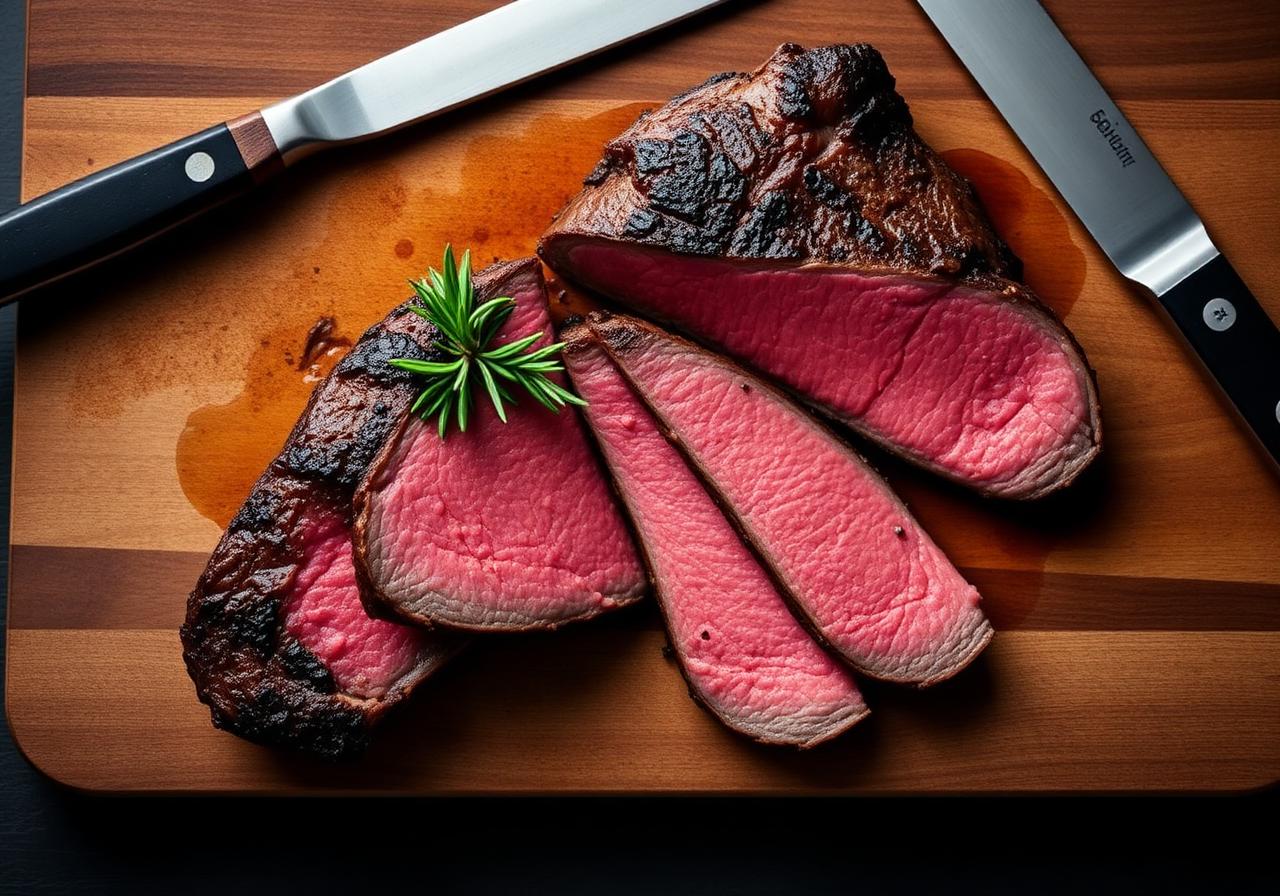
London Broil is the cut at the grocery store that confuses most home cooks — it's both a cut name (top round steak, 1-1.5 inches thick) AND a cooking method (marinate + high-heat broil). The reverse-sear method takes the best of both: marinate the steak to tenderize and add flavor, smoke it low at 225°F to 125°F internal for deep wood-fire flavor, then sear it hot at 450°F+ for 2-3 minutes per side for the crust. Slice paper-thin against the grain, and you've turned a $10-15 cut into restaurant-quality steakhouse beef. Total time: 90 minutes from cold steak to serving. The recipe most home cooks should be doing instead of cranking up the broiler.
The Recipe
Smoked London Broil (Reverse Sear Method)
Rated 4.9 — based on 187 reader ratings
Prep Time
15 minutes (+ 4-8 hr marinate)
Cook Time
45-75 min smoke + 4-6 min sear
Rest Time
10-15 minutes
Serves
4-6
Smoker temp: 225°F (smoke) → 450°F+ (sear)
Pull temp: 125°F (smoke) → 135°F (sear)
Recommended pellets: Oak (top pick), hickory, pecan, or cherry
Share this recipe:
Know Your Cut
What "London Broil" Actually Is (And the Confusion No One Explains)
The single most confusing label at the meat counter. "London Broil" can mean two completely different things depending on who's labeling it.
"London Broil" is actually a COOKING METHOD invented in the United States in the early 1900s — marinate a tough cut of beef, then broil it under high heat, slicing thin against the grain. The dish has nothing to do with London (it's American). Over time, supermarkets started labeling certain cuts as "London Broil" because they're the cuts traditionally used for the recipe. This created confusion: today, "London Broil" labels appear on multiple cuts.
Top Round STEAK (most common)
- Cut format: Steak, 1-1.5 inches thick, 1-2 lbs
- From: The top round subprimal (rear leg/hindquarter)
- Texture: Lean, slightly tough — needs marinade
- What this recipe targets: Standard 'London Broil' at most supermarkets
- Best cook: Reverse sear or hot-and-fast grill
Top Round ROAST
- Cut format: Whole roast, 3-5 lbs, 3-4 inches thick
- From: Same subprimal as the steak above
- Texture: Same lean texture but in roast form
- Different recipe entirely: Smokes low-and-slow at 225°F to 130°F internal
- See: Our /traeger-top-round-roast/ page
Flank Steak (occasionally)
- Cut format: Long, flat, 1-2 lbs
- From: Belly area (NOT the round)
- Texture: Slightly more tender than top round
- Less common: Some butchers label flank as 'London Broil'
- Same technique: Marinate + reverse sear works
For this recipe: assume you bought the standard top round STEAK labeled "London Broil" (1-1.5 inches thick, 1-2 lbs). This is the most common interpretation at supermarkets. If you bought a 3+ lb roast labeled "London Broil," go to our Traeger Top Round Roast page instead — that's a different recipe (whole roast, low-and-slow, slice for sandwiches). Flank steak labeled "London Broil" works with this recipe with minor adjustments (slightly faster cook).
Method Logic
Why Reverse Sear (Instead of Just Hot-and-Fast Grilling)
The traditional "London Broil" method is hot-and-fast grilling. Reverse sear produces meaningfully better results — here's why.
The classic "London Broil" cooking method (marinate + high-heat broil) was invented before home pellet grills existed. With modern smokers, you have two options that the original method couldn't deliver: deep wood-fire flavor AND seared crust simultaneously. Reverse sear is how you get both.
Smoke Adds Flavor That Grilling Can't
The 45-75 minute smoke phase at 225°F builds wood-fire flavor that hot-and-fast grilling can't deliver. Even with smoke chips on a gas grill, 7-10 minutes of grill time isn't enough for meaningful smoke absorption. Reverse sear gives the meat 45+ minutes of low-and-slow smoke before the high-heat finish — producing London Broil that genuinely tastes like BBQ, not just grilled steak.
Better Edge-to-Edge Doneness
Hot-and-fast grilling produces a 'gray band' around the edges — overcooked layer between the crust and pink center. Reverse sear keeps the entire interior at uniform medium-rare because the slow smoke phase brings every layer to near-target temperature before the brief sear. Result: 100% pink edge-to-edge with a proper crust. Especially noticeable on London Broil because the gray band is more pronounced on a thin cut.
More Forgiving for Home Cooks
Hot-and-fast London Broil is unforgiving — 90 seconds too long and it's overcooked. Reverse sear gives you a longer 'done window' because the smoke phase is gradual. You can pull from smoke when the probe hits 125°F internal, then sear briefly. Less likely to overshoot than panic-flipping a steak on a 450°F grill.
The practical advantage: reverse-seared London Broil is meaningfully better than hot-and-fast London Broil for the same time investment. For 90 minutes of mostly hands-off cooking + 4-6 minutes of active sear, you get genuine BBQ-quality results that compete with steakhouse cooking.
Before You Start
What You'll Need
A 1.5-2 lb London Broil (top round steak), simple marinade, and a smoker. Most ingredients are pantry staples.
The Ingredients
Alternative Marinades
- Asian-style: gochujang, soy, sesame, ginger, garlic, brown sugar
- Italian-style: olive oil, balsamic, garlic, oregano, basil
- Honey-soy: soy, honey, ginger, garlic, sesame oil
- Coffee rub: dry rub instead of marinade — for cooks who prefer no liquid marinade
Marinades work two ways for London Broil: they tenderize through acid (vinegar, citrus) and add flavor through aromatics. The classic recipe above uses red wine vinegar for tenderization + olive oil for richness + soy/Worcestershire for umami depth. If you skip marinade entirely, the meat works but is meaningfully tougher.
The Equipment
On searing: pellet grills max at ~500°F natively. To get genuinely high-heat sear marks (650°F+), use GrillGrates ($80-100) — aluminum panels that concentrate heat. Alternative: do the sear in a cast iron skillet on the stovetop. Either approach produces better sear marks than the bare pellet grill grates at 500°F.
Step by Step
How to Smoke London Broil (Reverse Sear, 6 Steps)
Marinate ahead, smoke for flavor, sear for crust. Total active time: ~10 minutes plus mostly hands-off cooking.
- 1
MARINATE
Make marinade, submerge London Broil, refrigerate 4-8 hours
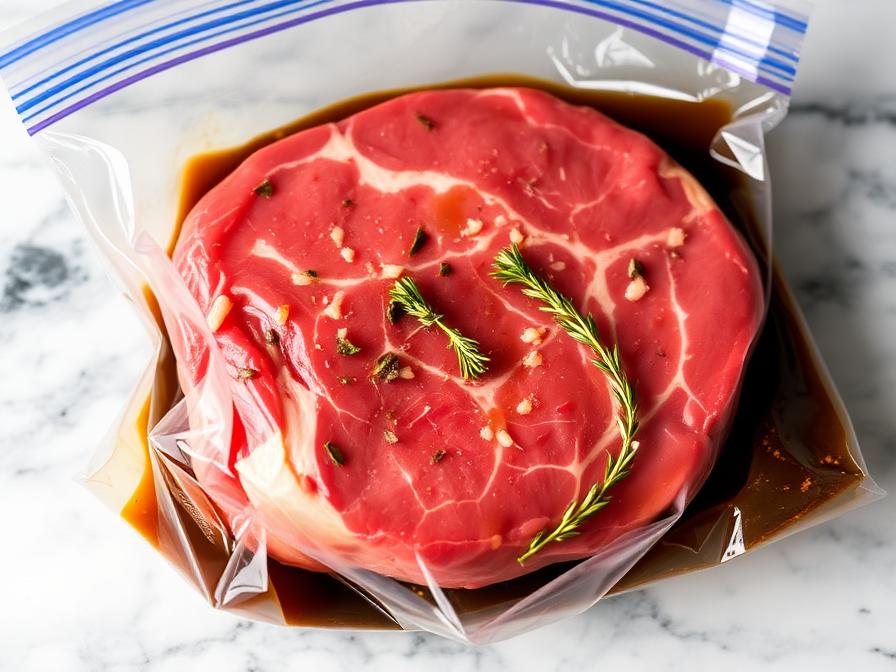
Combine marinade ingredients in a glass bowl or zip-top bag: olive oil, red wine vinegar, soy sauce, Worcestershire, minced garlic, Dijon, salt, pepper, herbs, optional red pepper flakes. Whisk to combine.
Place the London Broil in the bag (or bowl). Pour marinade over to fully coat. Massage marinade into the meat for 30 seconds. Seal bag (or cover bowl). Refrigerate 4-8 hours — overnight is ideal.
If you're short on time, 2 hours minimum is acceptable but the marinade has less time to penetrate. The acid (vinegar) tenderizes the meat over 4+ hours; under 2 hours produces meaningfully less tender results.
Don't marinate over 12 hours — the acid eventually breaks down the meat fibers too much, producing a mushy texture. The 4-8 hour window is the sweet spot.
Time: 5 minutes active + 4-8 hour marinate
- 2
TEMPER
Remove from marinade, pat dry, season lightly, rest at room temp
Remove the London Broil from the marinade. Discard the marinade. Pat the steak completely dry with paper towels — wet meat steams instead of searing/smoking properly.
Lightly season both sides with additional salt and pepper (the marinade includes these but the surface needs more for crust development).
Let the steak sit at room temperature for 30-45 minutes while the smoker preheats. Cold meat from the fridge cooks unevenly — the room-temperature rest is non-negotiable for thin cuts like London Broil where temperature differential matters more.
Time: 5 minutes active + 30-45 minute room-temperature rest
- 3
SMOKE
Stage 1: Smoke at 225°F to 125°F internal
Preheat your smoker to 225°F with your chosen wood (oak, hickory, pecan, or cherry recommended).
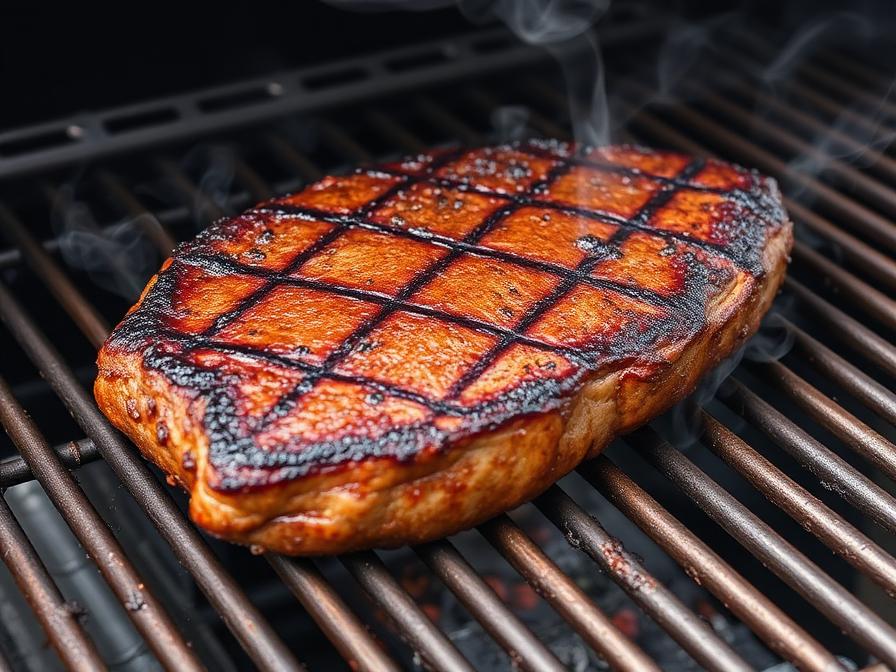
Place the London Broil directly on the grill grates. Insert a wireless probe thermometer into the THICKEST part of the steak (don't touch the cooking grate — get the probe in the center).
Smoke at 225°F until internal temperature reaches 125°F. This typically takes 45-75 minutes depending on steak thickness: 1-inch thick takes 30-45 minutes; 1.5-inch thick (most common) takes 45-60 minutes; 2-inch thick takes 60-90 minutes.
Don't open the lid during the smoke. Trust the thermometer. When the steak hits 125°F internal, pull it from the smoker. Set on a clean plate while the grill ramps up to sear temperature. The internal temp will continue climbing 3-5°F via carryover during this brief rest — totally fine, accounted for in the recipe.
Time: 45-75 minutes (depends on thickness)
- 4
RAMP
Crank smoker to 450°F+, prep sear surface
Crank your smoker to its maximum temperature setting (typically 450-500°F on most pellet grills). The grill takes 8-12 minutes to climb from 225°F to 450°F+.
If using GrillGrates: place them on the cooking grates during the temperature ramp. GrillGrates concentrate heat to 650°F+ — meaningfully better sear marks than the bare 450°F grates.
Optional alternative: if your smoker can't get hot enough, finish the sear in a cast iron skillet on the stovetop with high-heat oil — works just as well, sometimes better for thick steaks.
Time: 8-12 minutes ramp
- 5
SEAR
Stage 2: Sear 2-3 minutes per side to 135°F final
When the smoker hits maximum temperature, place the rested London Broil back on the grates (or on the GrillGrates). Sear 2-3 minutes per side without moving. The sear should make an audible sizzle when the steak hits the grates.
Pull the steak from the sear when internal temperature hits 135°F for medium-rare (carryover during rest brings it to 138-140°F final). For medium, pull at 140°F (final 145°F). Don't go past medium — the lean cut becomes tough and dry.
Time: 4-6 minutes total sear
- 6
SLICE
Rest 10-15 minutes, slice paper-thin against the grain
Transfer the seared London Broil to a cutting board. Tent loosely with foil — not tightly (traps too much steam) but loose foil tent (preserves crust while keeping warm).
Rest for 10-15 minutes. Internal temperature climbs another 3-5°F via carryover (final 138-140°F medium-rare). Juices redistribute throughout the meat. Skipping the rest loses 30-40% of juices to the cutting board.
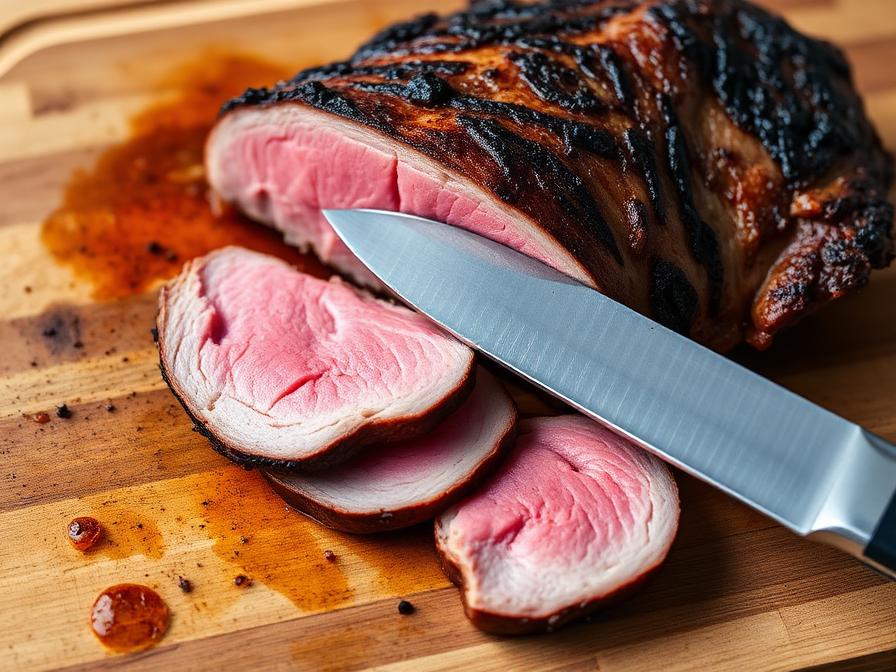
After resting, slice the London Broil paper-thin (1/8 inch) against the grain. Identify the grain direction first — long muscle fibers running through the meat. Slice PERPENDICULAR to those fibers (not parallel). This is critical for tenderness on a relatively tough cut.
If you have an electric meat slicer, this is the time to use it — produces more uniform thin slices than even experienced manual slicing. Serve immediately as steakhouse-style sliced steak, OR pile onto sandwiches, salads, tacos, or noodle bowls.
Time: 10-15 minutes rest + 5 minutes slicing
Alternative Methods
Two Other Methods That Also Work
Reverse sear is the recommended method, but two alternatives produce different results that some cooks prefer.
Traditional Approach
Hot-and-Fast Grill (The Classic London Broil Method)
Best for: Cooks who want speed over smoke flavor
- Marinate: 4-8 hours
- Preheat: Pellet grill or gas grill to 400°F+
- Cook: Grill 7-10 minutes per side until internal hits 130-135°F
- Rest: 10-15 minutes
- Slice: Paper-thin against the grain
- Total time: ~25 minutes after marinade
Trade-offs: Less smoke flavor than reverse sear, but faster (no 45-75 minute smoke phase). The meat texture is similar; the flavor is meaningfully different (less wood-fire depth). For weeknight cooking when you want London Broil but don't have 90 minutes, this is the right choice.
Counterintuitive Approach
Brisket-Style (Smoke to Fall-Apart)
Best for: Cooks who want shredded/pulled-style meat
- Marinate or dry rub: 4-8 hours
- Smoke: 225°F to 160°F internal (~2 hours)
- Wrap: Butcher paper or foil
- Continue: Smoke wrapped to 200-205°F internal (~2 hours more)
- Rest: 30-60 minutes wrapped
- Total time: ~5 hours
Trade-offs: This is fundamentally different from sliced London Broil — produces fall-apart shredded texture for pulled-style sandwiches or tacos. Counterintuitive because most authority sources say "don't cook past 145°F." But the brisket-style method works because the long cook breaks down connective tissue. Different end product entirely.
For most home cooks, reverse sear (Method 1) is the right pick. It produces the best balance of smoke flavor + sear marks + tender texture. Method 2 is the speed alternative when you want classic London Broil in 25 minutes. Method 3 is the experimental approach if you want shredded beef instead of sliced steak. All three work; pick based on your time and end-use preferences.
Wood Selection
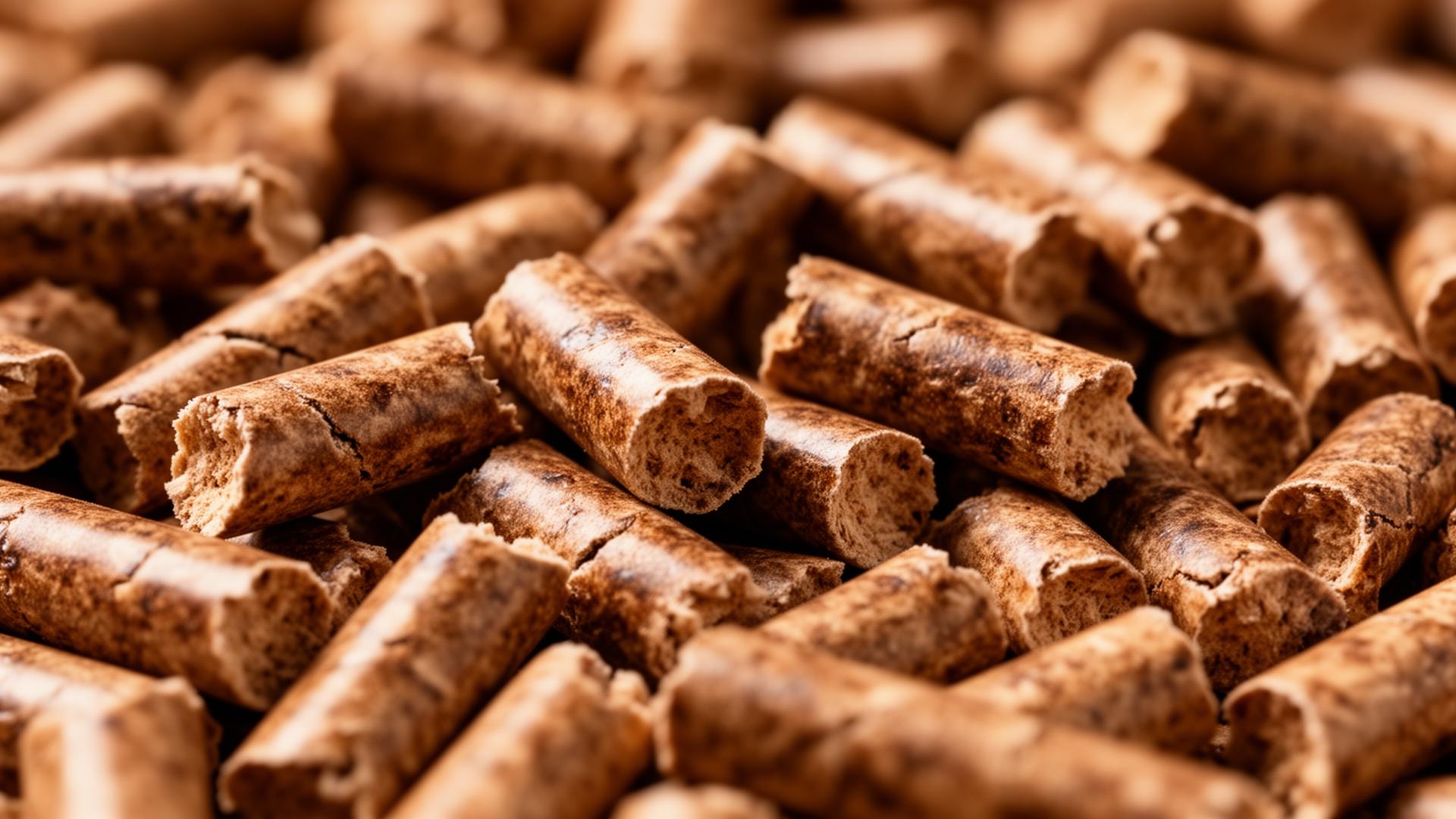
The Best Wood for Smoked London Broil
Beef stands up to bolder smoke than chicken or pork. Oak is the consensus pick; hickory and pecan are excellent alternatives.
Oak (Top Pick)
Authority pit masters recommend oak for beef cuts generally. Balanced, classic smoke flavor that complements beef without overpowering. Same wood used in Texas-style brisket smoking. Bear Mountain Post Oak ($28/20lb) is the standard pellet pick.
Best for: Authentic Texas-style flavor
Hickory or Pecan
Hickory delivers bolder traditional BBQ smoke. Pecan is the underrated nutty alternative. Both excellent step-up choices from oak.
Best for: Hickory: bold | Pecan: refined
Cherry (Color Bonus)
Slightly milder with subtle fruit sweetness. Adds beautiful reddish-mahogany color to the bark. Best blended with oak (50/50) for color + flavor.
Best for: Visual appeal
What to Avoid
- •Mesquite: too aggressive for the relatively short London Broil cook
- •Apple alone: too mild for beef
- •Maple alone: too subtle
The Gear I Use
Essential Gear for Smoked London Broil
Four tools that meaningfully impact London Broil results.
Wireless Probe Thermometer
Critical for hitting precise pull targets — 125°F (Stage 1 smoke) and 135°F (Stage 2 sear). Narrow done window means accuracy matters. ThermoPro TP19 ($25), ThermoWorks Smoke ($99), or MEATER Plus ($100).
Shop wireless thermometers →Long Sharp Slicing Knife
Critical for paper-thin slicing on a relatively tough cut. 10-12 inch blade. Wusthof Classic 10-inch ($150), Victorinox Fibrox 12-inch Granton ($60), or any quality slicer. Dull knives produce thick uneven slices that ruin the texture.
Shop slicing knives →GrillGrates (For Sear)
Pellet grills max at ~500°F natively — adequate for cooking but marginal for proper sear marks. GrillGrates concentrate heat to 650°F+ for genuine steakhouse sear marks. $80-100 investment that transforms reverse-sear results. Alternative: cast iron skillet on stovetop.
Shop GrillGrates →Oak or Hickory Wood Pellets
Oak is the consensus pellet for beef cuts. Hickory adds bolder flavor. Bear Mountain Post Oak ($28/20lb), Lumberjack 100% Oak ($30), or Traeger Hickory ($25). 20-pound bag handles 12-15 London Broil cooks.
Shop oak pellets →Avoid These
6 Common London Broil Mistakes
Six preventable errors that turn a budget cut into chewy disappointment.
Mistake 1: Skipping the marinade
London Broil's primary tenderization comes from marinade. The acid (vinegar, citrus) breaks down muscle fibers; aromatics add flavor. Skipping marinade and going straight to seasoning produces meaningfully tougher meat. Even 2 hours of marinating helps; 4-8 hours is ideal. Don't shortcut this step.
Mistake 2: Marinating too long (over 12 hours)
The acid eventually breaks down meat fibers too much, producing a mushy texture. The 4-8 hour sweet spot is well-established. Don't leave London Broil marinating for 24 hours thinking 'more is better' — it's not. Set a timer to remove from marinade at 8 hours max.
Mistake 3: Cooking past 145°F internal
Same as top round — London Broil is lean and dries out above 145°F. The reverse-sear pull at 135°F (final 138-140°F after rest) is the medium-rare sweet spot. Above 145°F = dry, tough, ruined. Don't be tempted to 'cook to safe' when the actual safe minimum is 145°F.
Mistake 4: Slicing thick or with the grain
The TWO most-impactful slicing mistakes. Thick slicing makes London Broil chewy even when properly cooked. Slicing WITH the grain (parallel to fibers) produces long tough strands. Slice PAPER-THIN (1/8 inch) AGAINST the grain (perpendicular to fibers) for tender results. The slicing technique matters as much as the cooking technique.
Mistake 5: Skipping the rest
10-15 minute rest after pulling is non-negotiable. Carving immediately loses 30-40% of juices to the cutting board. Tent loosely with foil, rest, then slice. Internal temperature climbs another 3-5°F via carryover during rest — accounted for in the pull temperature.
Mistake 6: Trying to sear at 500°F (instead of 650°F+ with GrillGrates)
Pellet grills max at ~500°F natively. That's hot enough for cooking but marginal for proper steakhouse sear marks. The result is visible sear marks but not the crisp char that defines great London Broil. GrillGrates ($80-100) concentrate heat to 650°F+. Alternative: finish sear in cast iron skillet on stovetop. Either approach produces meaningfully better crust than bare pellet grates at 500°F.
How to Serve
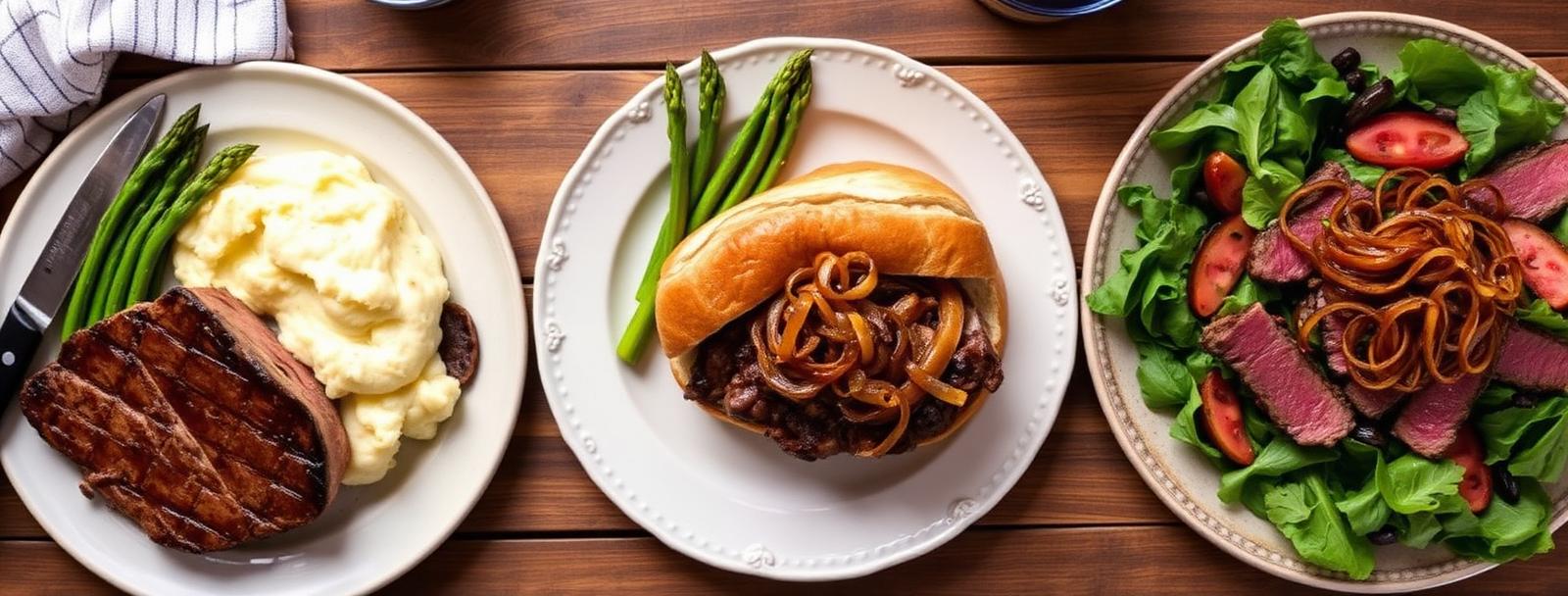
6 Ways to Serve Smoked London Broil
Sliced thin against the grain, London Broil works as steakhouse-style dinner OR sandwich/salad/taco filler.
Steakhouse Plate
Sliced steak with mashed potatoes, asparagus, mushrooms, red wine reduction. Restaurant presentation.
Steak Sandwich
Hoagie roll with sliced steak, caramelized onions, melted provolone, mushrooms, horseradish mayo.
Steak Salad
Mixed greens, sliced steak, blue cheese, red onion, balsamic vinaigrette. Healthy lunch.
Steak Tacos
Flour tortillas with sliced steak, avocado, lime crema, cilantro, queso fresco. Friday night dinner.
Open-Faced
Toasted sourdough with thin sliced steak, horseradish cream, arugula, caramelized onions. Quick lunch.
Asian Noodle Bowl
Use Asian-style marinade. Slice over rice noodles with hot broth, scallions, soft-boiled egg, mushrooms.
Storage: Sliced leftover London Broil keeps in airtight containers in the fridge for 3-4 days. Reheat gently in 300°F oven covered with foil for 5-10 minutes (don't reheat at high temperatures — dries out lean meat). Cold leftovers work beautifully on sandwiches and salads. Freeze for up to 2 months in zip-top bags.
FAQ