Budget Beef Recipe
Smoked Bottom Round Roast on a Traeger: Two Methods (Slice or Shred)
Bottom round roast (also called rump roast) is the round primal's most flavorful cut — slightly fattier than top round, slightly more affordable at $4-7/lb at Costco. The catch: bottom round is genuinely TOUGHER than top round because it comes from the more-worked outside of the rear leg. This gives you two legitimate cooking choices: smoke low-and-slow to 130°F medium-rare and slice paper-thin for sandwiches, OR braise pot-roast style at 225°F to 200°F internal for fall-apart shredded results. Both work; both produce excellent results; the right choice depends on what you want from the meat.
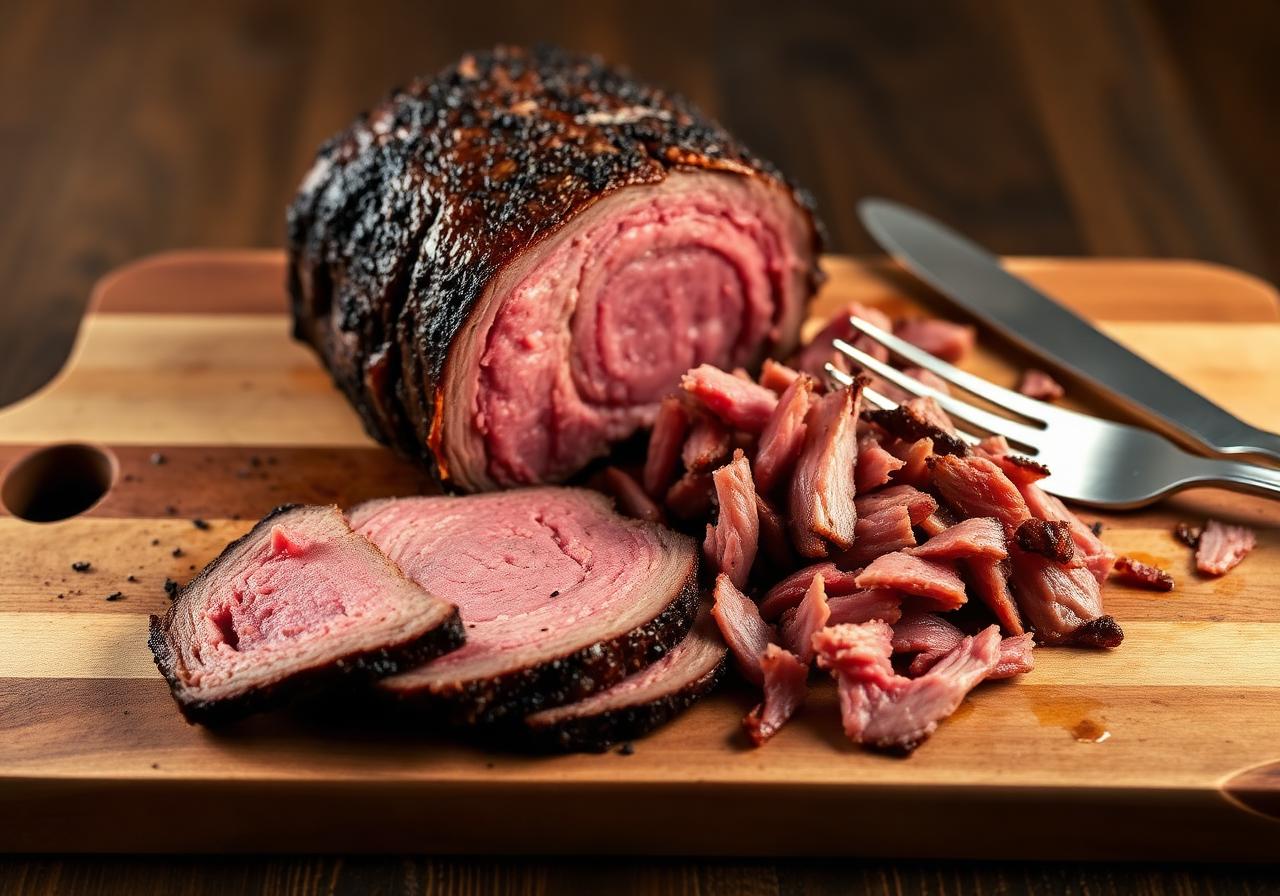
The Recipe
Smoked Bottom Round Roast (Two Methods)
Rated 4.9 — based on 243 reader ratings
Prep Time
10-15 minutes (+ optional 4-12 hr dry brine)
Cook Time
Method 1: 2-3 hrs | Method 2: 4-5 hrs
Rest Time
15-20 min (slice) or 10 min (shred)
Serves
6-10 (or 12-15 sandwiches)
Smoker temp: 225-250°F (slice) or 500°F sear → 225°F braise (shred)
Pull temp: 130°F (slice) or 200-205°F (shred)
Recommended pellets: Oak (top pick), hickory, pecan, or cherry
Share this recipe:
Know Your Cut
Bottom Round vs Top Round vs Eye of Round
All three come from the round primal (rear leg/hindquarter). Knowing the differences matters because they cook differently and produce different results.
The round primal sits on the cow's rear quarter — well-exercised muscle that produces lean, flavorful, but slightly tougher cuts than the more tender front sections. Three distinct subsections produce three different roasts:
Bottom Round (THIS RECIPE)
- Size: 3-4 lbs typical roast
- Shape: Larger, similar to top round
- Marbling: Slight (more than top round, less than chuck)
- Texture: Toughest of the three round cuts
- Best use: Slice thin OR braise (both work)
- Pull temps: 130°F (slice) or 200°F (shred)
- Cost: $4-7/lb (cheapest of the round cuts)
- Often labeled: "Rump Roast" or "Bottom Round Roast"
Top Round
- Size: 3-5 lbs typical roast
- Shape: Larger, flatter, rectangular
- Marbling: Slight
- Texture: More tender than bottom round
- Best use: Slice paper-thin for sandwiches
- Pull temp: 130°F (medium-rare)
- Cost: $5-8/lb
- See: Our /traeger-top-round-roast/ page
Eye of Round
- Size: 2-3 lbs typical roast
- Shape: Small, cylindrical, bullet-like
- Marbling: Very lean (the leanest)
- Texture: Most tender of the three
- Best use: Smoked roast beef, sandwich slices
- Pull temp: 130°F (medium-rare)
- Cost: $4-7/lb
- See: Our /smoked-eye-of-round-roast/ page
Critical buying note: Bottom round is often labeled "Rump Roast" — same cut, different name. Per Traeger's beef cut guide, bottom round has slightly MORE flavor than top round (slightly fattier) but is also slightly TOUGHER (more-worked muscle). The flavor advantage and lower price make bottom round genuinely worth the extra cooking attention.
Pick Your Approach
Slice or Shred? Pick Your Method
Bottom round works two completely different ways. The right method depends on what you want from the meat.
Method 1 — Slice
Low-and-Slow to Medium-Rare (Slice for Sandwiches)
- Total time: 2-3 hours
- Pull temp: 130°F internal
- Texture: Medium-rare, sliced paper-thin
- Best uses: Roast beef sandwiches, French dip, charcuterie, salad topping
Smoke at 225-250°F until internal hits 130°F. Rest 15-20 minutes. Slice paper-thin against the grain with a sharp slicing knife. Same technique as top round, but bottom round's slightly tougher texture means thin slicing matters even more.
Best when you want:
- Roast beef sandwich meat (thin sliced, medium-rare)
- Quick cooking time (2-3 hours total)
- Versatility (slices work cold or warm)
- Lower budget impact if time-constrained
Skip this method if you don't have a sharp slicing knife.
Method 2 — Shred
Pot Roast Braise (Fall-Apart Tender)
- Total time: 4-5 hours
- Pull temp: 200-205°F internal
- Texture: Fall-apart shredded
- Best uses: Pot roast plate, shredded beef tacos, pulled-style sandwiches
Sear roast at 500°F for 25-30 minutes. Reduce to 225°F. Place in Dutch oven with broth and vegetables. Cover with foil. Cook until 200-205°F internal. Shreds with two forks. This is what Traeger officially recommends for bottom round.
Best when you want:
- Pot roast Sunday dinner (with potatoes, carrots, gravy)
- Shredded beef tacos or sandwiches
- Hands-off cooking (after the initial sear)
- More forgiving cooking (no narrow done window)
Skip this method if you don't have a Dutch oven that fits in your smoker.
Both methods produce excellent results — they're just different recipes for different end uses. Method 1 = roast beef. Method 2 = pot roast / shredded beef. If you want both at different times, the same bottom round roast works for either approach.
Before You Start
What You'll Need
A 3-4 pound bottom round (or rump) roast. Method 2 also needs vegetables and a Dutch oven.
Method 1 Ingredients (Slice)
Method 2 Ingredients (Shred)
The Equipment
Homemade SPG Beef Rub
- • 2 tablespoons kosher salt
- • 2 tablespoons coarse black pepper
- • 1 tablespoon garlic powder
- • 1 tablespoon onion powder
- • 1 teaspoon smoked paprika (optional)
- • 1/2 teaspoon ground mustard
The "SPG" rub (Salt + Pepper + Garlic) is the consensus base for beef. Apply about 1.5 tablespoons of rub per pound of meat.
Method 1 Step-by-Step
How to Smoke Bottom Round Roast for Slicing (Method 1)
Five steps. Same technique as top round but with extra emphasis on thin slicing because bottom round is slightly tougher.
- 1
PREP
Dry brine and season the roast
Pat the bottom round roast completely dry with paper towels. If you have time, dry brine 4-12 hours ahead: sprinkle kosher salt liberally on all sides — about 1 teaspoon per pound. Place on a wire rack in the fridge UNCOVERED. The cold dry air evaporates surface moisture (better browning during the smoke) AND salt penetrates deep into the meat for better seasoning depth.
The dry brine matters MORE for bottom round than top round because the slightly tougher texture benefits from better salt penetration.
Just before cooking, drizzle with olive oil OR yellow mustard as binder. Apply dry rub generously to all sides — about 1.5 tablespoons per pound. Optional: insert 4-5 garlic cloves into the roast by piercing with a knife and pushing them into the holes (traditional pot-roast technique that works for slicing version too).
Let the seasoned roast sit at room temperature for 30-45 minutes while the smoker preheats. Cold meat from the fridge cooks unevenly.
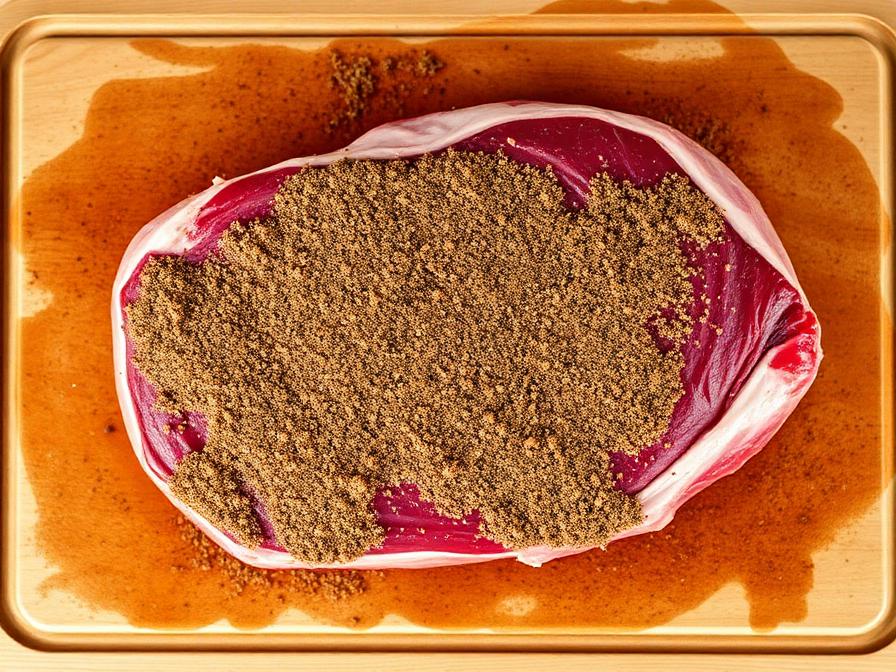
Time: 10 minutes active + 4-12 hour dry brine + 30-45 minute room-temp rest
- 2
PREHEAT
Preheat the smoker to 225-250°F
Fire up your smoker. 225°F = maximum smoke flavor (best for the relatively short bottom round cook). 250°F = faster cook with still excellent smoke flavor (saves about 30 minutes total).
Recommended wood for bottom round: Oak (consensus best for beef round cuts), Hickory (bolder traditional BBQ smoke), Pecan (nutty, refined), or Cherry (color bonus). Avoid mesquite (too aggressive for the relatively short cook) and apple alone (too mild for beef).
If using Super Smoke mode (Ironwood, Timberline, Woodridge Pro), enable for the entire cook — bottom round absorbs smoke flavor exceptionally well.
Time: 15 minutes preheat
- 3
SMOKE
Smoke until internal hits 130°F (medium-rare)
Place the roast directly on the grill grates. Insert a wireless probe thermometer into the THICKEST part of the roast (not touching the cooking grate — get the probe well into the center).
Smoke at 225-250°F until internal temperature reaches 130°F. Rule of thumb: 30-40 minutes per pound at 225-250°F. A 3-lb roast takes 1.5-2 hours; a 4-lb roast takes 2-2.5 hours; a 5-lb roast takes 2.5-3 hours.
Critical: do NOT exceed 145°F. Bottom round is lean (similar to top round) and dries out rapidly above this temperature. The 130°F pull with rest produces moist, tender medium-rare. Above 145°F = dry, tough, ruined.
Optional: spritz with apple juice or beef broth every 30-45 minutes for moisture insurance. Most cooks skip this — bottom round's slightly higher fat content keeps it moist enough without spritzing.
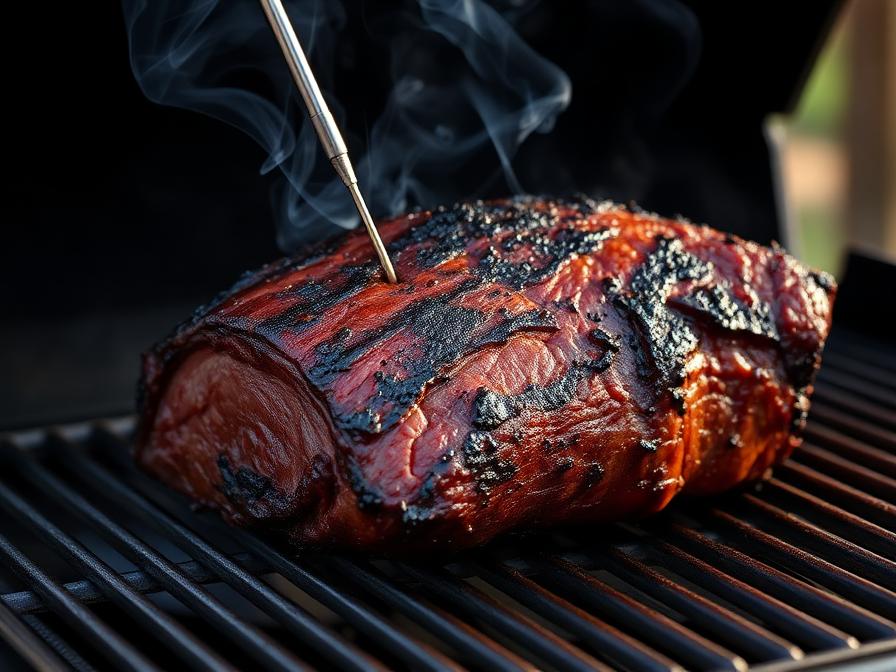
Time: 1.5-3 hours (depends on roast size)
- 4
REST
Pull at 130°F, tent loosely with foil, rest 15-20 minutes
When the roast hits 130°F internal, immediately pull it from the smoker. Transfer to a cutting board. Tent loosely with foil — not tightly (traps too much steam) but loose foil tent (preserves crust while keeping warm).
Rest for 15-20 minutes. Internal temperature climbs another 3-5°F via carryover (final 133-138°F), juices redistribute throughout the meat, and the exterior crust firms up slightly.
For larger roasts (4+ lbs), some pit masters extend the rest to 60 minutes by placing the foil-wrapped roast inside an empty cooler with a towel ('Texas crutch'). Optional but produces better results for larger bottom rounds.
Time: 15-20 minutes (or up to 60 minutes in cooler)
- 5
SLICE
Slice paper-thin AGAINST the grain
Place the rested roast on a cutting board. Identify the grain direction — long muscle fibers running through the meat. Slice PERPENDICULAR to those fibers (against the grain).
Use a long sharp slicing knife (10-12 inches). Slice the roast into paper-thin slices — 1/8 inch thick is ideal for bottom round (thinner than top round because bottom is tougher). If you have an electric meat slicer, use it.
Why thin slicing matters MORE for bottom round than top round: Bottom round is the toughest of the three round cuts. Even at perfect medium-rare, sliced thick it eats slightly chewy. Sliced paper-thin against the grain, it eats as tender as top round. The slicing technique closes the texture gap.
Serve as roast beef sandwiches (hoagie + horseradish + provolone), French dip with warm au jus, plated dinner with mashed potatoes, charcuterie slices, or salad topping.
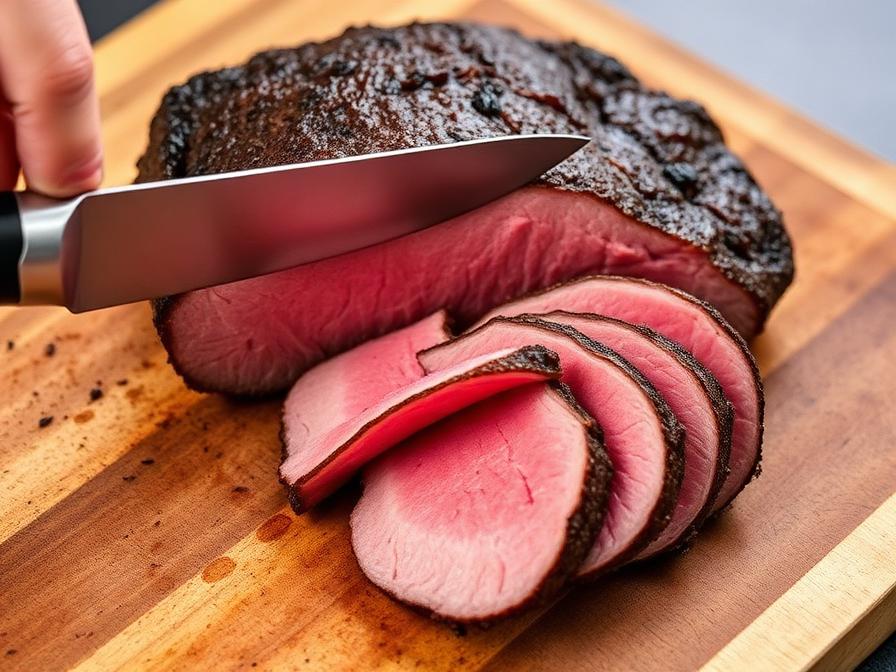
Time: 10-15 minutes slicing
Method 2 Step-by-Step
How to Smoke-Braise Bottom Round Pot Roast Style (Method 2)
Five steps. Sear high, then braise low. Hands-off after the initial sear. Falls apart at 200°F internal.
- 1
PREP
Season generously, prep Dutch oven and vegetables
Pat the bottom round dry. Drizzle with olive oil. Season generously with kosher salt, black pepper, garlic powder, and onion powder (or use a beef rub like Traeger Prime Rib Rub).
Prep vegetables for the braise: 1 lb potatoes (Yukon Gold or red, halved or quartered), 4 carrots cut into 2-inch pieces, 4 celery stalks cut into 2-inch pieces, 1 onion quartered, 4-5 garlic cloves smashed, 4-5 fresh thyme sprigs.
Pour 2 cups of beef broth into a Dutch oven (large enough to hold the roast plus vegetables — typically 6-quart capacity).
Time: 10-15 minutes prep
- 2
SEAR
Sear the roast at 500°F for 25-30 minutes
Preheat your Traeger (or pellet grill) to 500°F with the lid closed. Place the seasoned roast on a rack in the Dutch oven (or directly in the bottom — both work) with the broth underneath.
Place the Dutch oven on the grill grates. Close the lid. Sear for 25-30 minutes — until the outside develops a dark mahogany crust. The high-heat sear adds Maillard browning that develops deep flavor for the long braise to come.
You can also sear without the Dutch oven (just place the roast on grates) for slightly better crust development, then transfer to the Dutch oven for the braise. Either approach works.
Time: 25-30 minutes
- 3
BRAISE SETUP
Drop temperature, add vegetables, cover with foil
After the sear, reduce smoker temperature to 225°F. Add the prepared vegetables (potatoes, carrots, celery, onion, garlic) around the roast in the Dutch oven. Add fresh thyme sprigs.
Cover the Dutch oven tightly with heavy-duty aluminum foil (creates a sealed braise environment). Insert a wireless probe thermometer through the foil into the thickest part of the roast.
Add more beef broth as needed during cooking — the liquid level should stay at 1/3 to 1/2 the height of the roast throughout. Vegetables should be partially submerged.
Time: 5 minutes setup
- 4
BRAISE
Continue smoking until 200-205°F internal
Continue cooking at 225°F until internal temperature reaches 200-205°F. This typically takes 2-3 hours after the initial sear.
The braise environment (covered with foil + broth in pan) creates a moist heat that breaks down connective tissue in the bottom round. By 200-205°F, collagen has fully rendered into gelatin — the meat falls apart with minimal force.
This is fundamentally different from Method 1 (where 145°F+ would dry out the meat). The braise environment + sealed cover protect the meat from drying even at the higher temperature. The connective tissue breakdown is what allows shredding.
Time: 2-3 hours (after the sear)
- 5
SHRED
Rest 10 minutes, shred, serve
When the roast hits 200-205°F internal, remove the Dutch oven from the smoker. Let rest 10 minutes covered.
Transfer the roast to a cutting board. Use two forks to shred the meat (or bear claws if you have them). The roast should fall apart with minimal force — if it resists shredding, return to the smoker for another 15-20 minutes.
Optional: thicken the pan drippings into gravy. Strain the cooking liquid into a saucepan, simmer 5-10 minutes to reduce, whisk in 1 tablespoon flour or cornstarch slurry to thicken.
Serve as classic pot roast plate (with carrots, potatoes, gravy, dinner rolls), shredded beef tacos with lime crema, pulled-style sandwiches on hoagie rolls with provolone and horseradish, or loaded baked potato with shredded beef topping.
Time: 10 minutes rest + 5-10 minutes shredding/saucing
Wood Selection
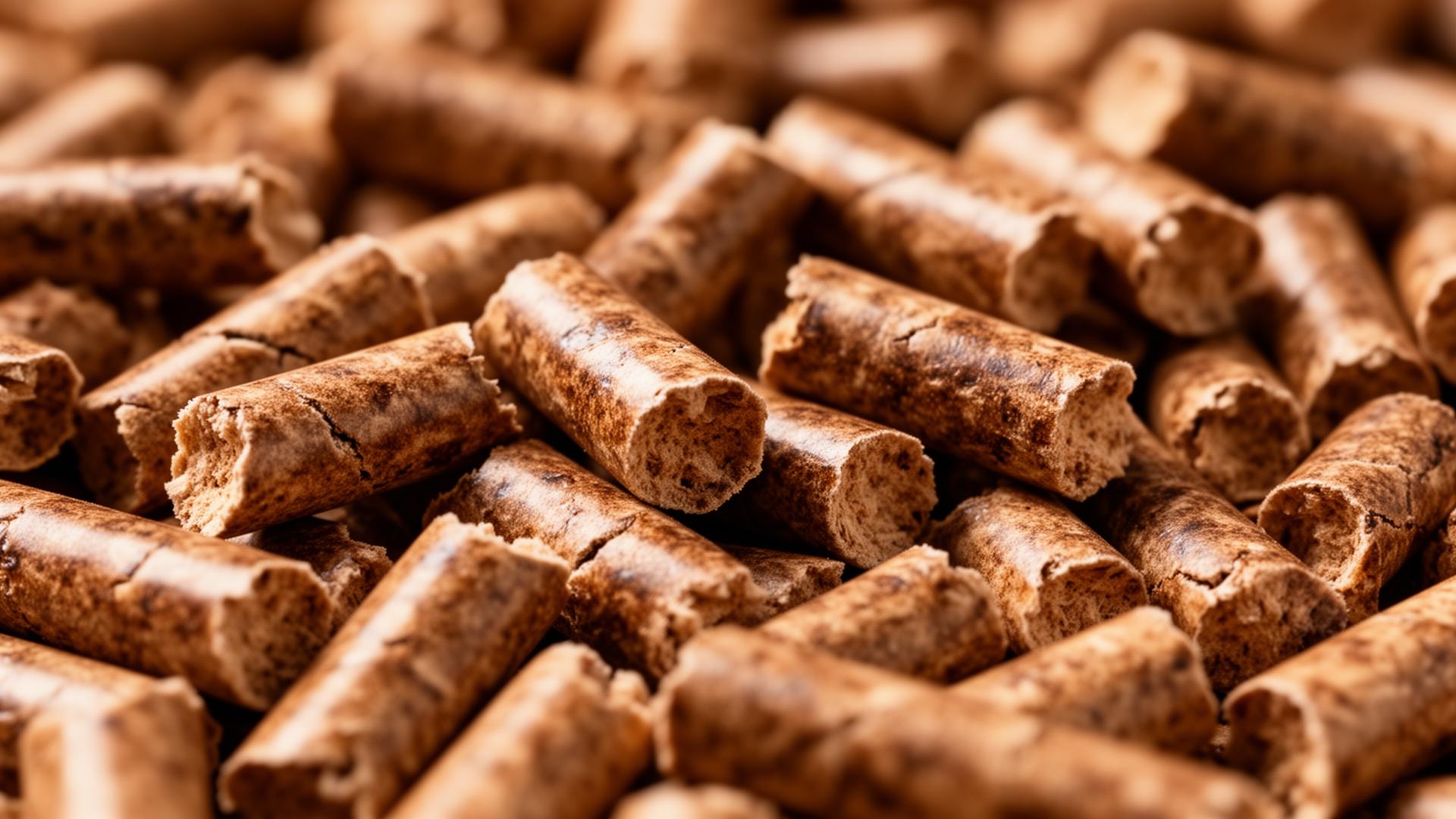
The Best Wood for Smoked Bottom Round
Same recommendations as top round — beef stands up to bolder smoke, oak is the consensus pick.
Oak (Top Pick)
Authority pit masters consistently recommend oak for beef round cuts. Oak produces a balanced, classic smoke flavor that complements beef without overpowering. Same wood used in Texas-style brisket smoking. Bear Mountain Post Oak ($28/20lb) is the standard pellet pick.
Best for: Authentic Texas-style beef smoking
Hickory or Pecan
Hickory delivers bolder traditional BBQ smoke. Pecan is the underrated nutty alternative. Both excellent step-up choices from oak. Pecan is the pit-master's pick for refined smoked roast beef.
Best for: Hickory: bold BBQ | Pecan: refined nutty
Cherry (Color Bonus)
Slightly milder with subtle fruit sweetness. Adds beautiful reddish-mahogany color to the bark. Best blended with oak (50/50) for both color and flavor depth.
Best for: Visual appeal, mild smoke profile
What to Avoid
- •Mesquite: too aggressive for the cook
- •Apple alone: too mild for beef
- •Maple alone: too subtle for the cook
The Gear I Use
Essential Gear for Smoked Bottom Round Roast
Four tools for both methods. The Dutch oven is unique to Method 2 (pot roast).
Wireless Probe Thermometer
Critical for hitting precise pull targets — 130°F (Method 1) or 200°F (Method 2). ThermoPro TP19 ($25), ThermoWorks Smoke ($99), or MEATER Plus ($100). Method 1 has narrow done window; Method 2 needs accurate breakdown temp.
Shop wireless thermometers →Dutch Oven (Method 2)
Required for Method 2 pot roast braise. 6-quart Lodge Cast Iron Dutch Oven ($60-80) is the standard pick — fits a 4-lb bottom round plus vegetables, lasts decades, doubles as serving dish. Le Creuset Enameled Dutch Oven ($300+) is the heirloom version. Skip if doing Method 1 only.
Shop Dutch ovens →Long Sharp Slicing Knife (Method 1)
Critical for Method 1 paper-thin slicing. Bottom round needs even thinner slices than top round (1/8 inch ideal). Wusthof Classic 10-inch ($150), Victorinox Fibrox 12-inch Granton ($60), or any quality long thin blade. Skip if doing Method 2 only.
Shop slicing knives →Oak or Hickory Wood Pellets
Oak is the consensus pellet for round cuts. Hickory adds bolder flavor. Bear Mountain Post Oak ($28/20lb), Lumberjack 100% Oak ($30), or Traeger Hickory ($25). 20-pound bag handles 6-8 bottom round cooks across either method.
Shop oak pellets →Avoid These
6 Common Bottom Round Roast Mistakes
Six preventable errors that turn a budget recipe into chewy disappointment.
Mistake 1: Trying to slice Method 2 (or shred Method 1)
The methods aren't interchangeable at finishing. Method 1 (130°F) produces medium-rare meat that slices but won't shred (connective tissue intact). Method 2 (200°F) produces fall-apart meat that shreds but is overcooked for slicing (well past the medium-rare window). Pick your method at the start; commit to the corresponding finish technique.
Mistake 2: Cooking Method 1 past 145°F
Same as top round — bottom round is lean and dries out above 145°F. The 130°F pull is critical for moist medium-rare results. Above 145°F = dry, tough meat with no recovery. If you accidentally overshoot 145°F on Method 1, switch to Method 2 — keep cooking to 200°F to break down what's now overcooked meat into shreddable texture.
Mistake 3: Slicing Method 1 thick
Bottom round is the toughest round cut. Even at perfect medium-rare, thick slicing makes it chewy. Slice paper-thin (1/8 inch) against the grain. If you don't have a sharp slicing knife, switch to Method 2 — pot roast doesn't require precision slicing skill.
Mistake 4: Skipping the sear on Method 2
The 500°F initial sear builds Maillard browning that creates flavor depth for the long braise. Skipping the sear and going straight to 225°F braise produces pot roast that tastes flat and one-dimensional. The 25-30 minute sear is worth the time investment.
Mistake 5: Insufficient liquid in Method 2
The braise requires beef broth in the Dutch oven covering 1/3 to 1/2 the height of the roast throughout cooking. Add more broth if liquid level drops below 1/3 the roast height. Insufficient liquid = roast dries out; the foil cover alone isn't enough to maintain moisture. Check liquid level every 60-90 minutes during the braise.
Mistake 6: Buying "rump roast" thinking it's different
"Rump roast" and "bottom round" are usually the same cut — different labels at different stores. The same recipe applies to both labels equally. Don't be confused by sign labels — buy based on price and visual appearance (lean cut, 3-4 lbs, from the round primal). Both labels work for both methods.
How to Serve
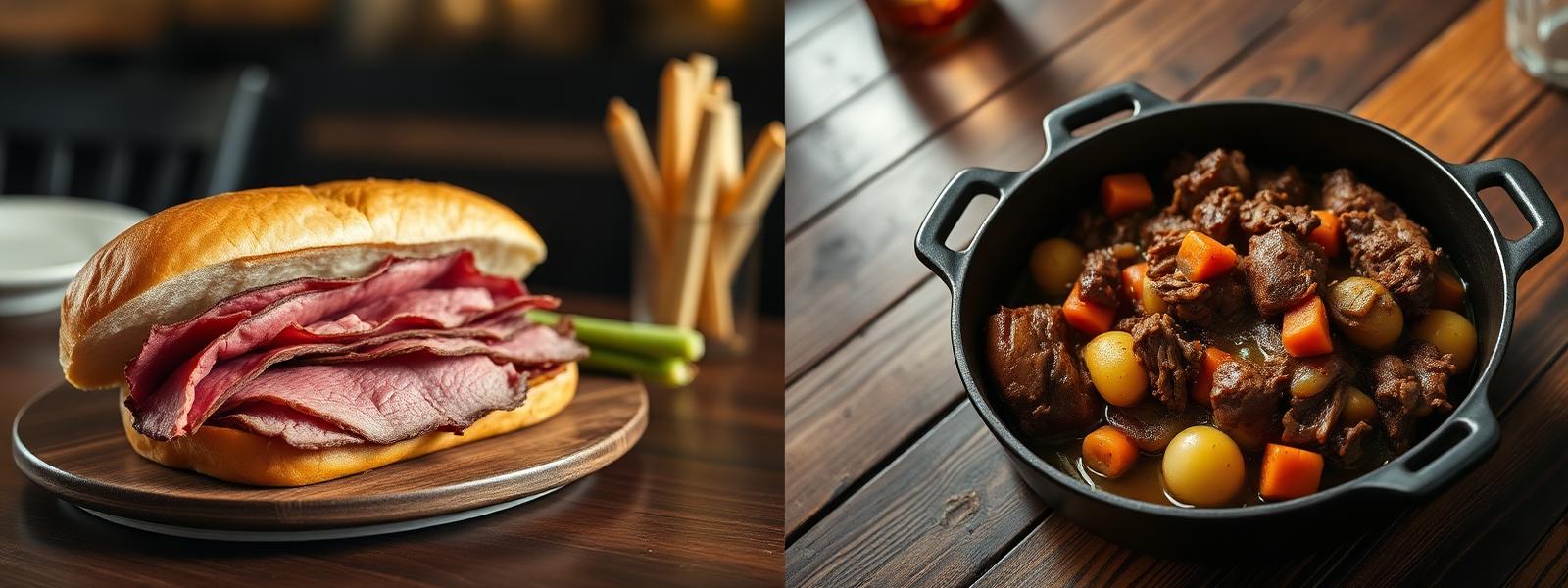
Serving Both Methods
Two methods produce very different end uses. Match your serving to your method.
Method 1
Sliced Roast Beef
- Classic roast beef sandwich (hoagie + horseradish + provolone)
- French dip with warm au jus
- Sunday dinner plate with mashed potatoes
- Charcuterie / cheese board
- Salad topping with blue cheese vinaigrette
- Beef and broccoli stir-fry (cold leftover sliced)
Method 2
Shredded Pot Roast
- Classic pot roast plate (carrots, potatoes, gravy)
- Shredded beef tacos with lime crema
- Loaded baked potato with shredded beef
- Pulled-style sandwiches on hoagie rolls
- Beef and noodle bowls
- Beef enchiladas (next-day leftover)
Storage: Method 1 sliced roast beef keeps 5-7 days in the fridge. Method 2 shredded beef keeps 4-5 days. Both freeze well — sliced roast beef best in 1-week sandwiches; shredded beef freezes for up to 2 months in zip-top bags. Don't waste leftovers; both methods produce excellent next-day meals.
FAQ