Traeger Steak Recipe
Traeger Smoked Ribeye: The Reverse-Sear Recipe for Steakhouse Results
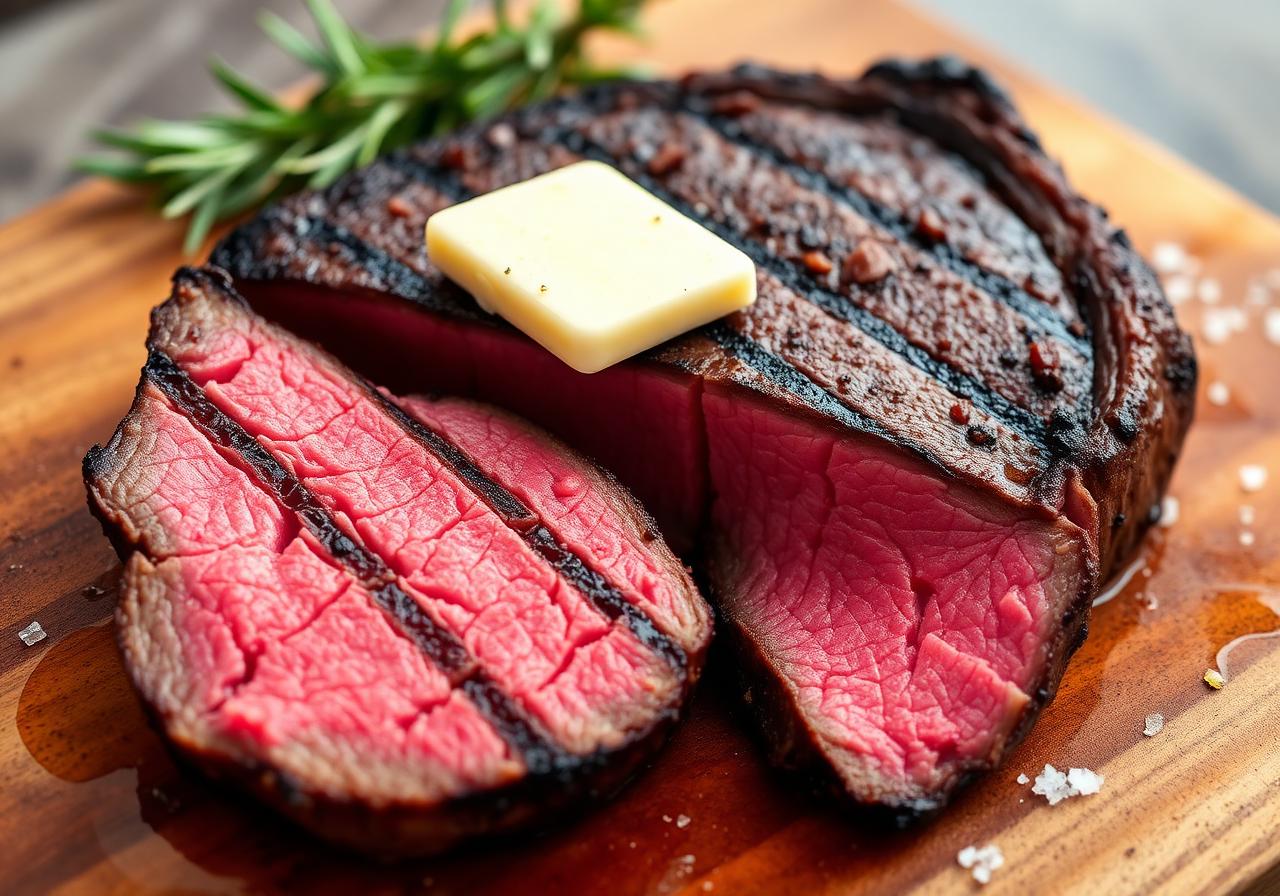
The reverse-sear method on a Traeger produces ribeye that genuinely competes with steakhouse-quality results. The two-stage technique solves the "pellet grills can't sear" problem: smoke low and slow at 225°F to build wood-fire flavor and bring the steak to 115-120°F internal, then crank the Traeger to 500°F and sear hard for crisp crust and medium-rare finish. With GrillGrates added, you get genuinely steakhouse-grade sear marks. Total time: 60-90 minutes for thick-cut 1.5-2 inch ribeyes. The premium recipe every Traeger owner should master once they've gotten comfortable with pulled pork and ribs.
The Recipe
Traeger Smoked Ribeye (Reverse Sear)
Rated 4.9 — based on 203 reader ratings
Prep Time
5 min (+ optional 24-hr dry brine)
Cook Time
45-60 min Stage 1 + 6-8 min Stage 2
Rest Time
5-10 min uncovered
Serves
2-4 (one steak per person)
Smoker temp: 225\u00B0F (Stage 1) then 450-500\u00B0F (Stage 2)
Pull temp: 130\u00B0F internal (medium-rare)
Recommended pellets: Hickory, Pecan, or Traeger Signature Blend
Share this recipe:
Before You Start
What You'll Need
Quality ribeye, simple seasoning, and ideally GrillGrates for the sear stage. Most ingredients are pantry staples.
The Ingredients
Compound Butter (Optional but Recommended)
- 4 tablespoons unsalted butter, room temperature
- 2 cloves garlic, finely minced
- 1 tablespoon fresh herbs (rosemary, thyme, or parsley), finely chopped
- 1/2 teaspoon kosher salt
- 1/4 teaspoon black pepper
- Optional: 1 teaspoon Worcestershire sauce
- Mix all ingredients in a small bowl, refrigerate while steak cooks
Buy quality ribeyes for this recipe. Choice grade is fine; Prime or Wagyu is better. The premium of better beef is justified for reverse-sear cooking \u2014 the technique highlights meat quality rather than masking it. Costco's Prime ribeyes at $15-20/lb are an excellent value point. Snake River Farms American Wagyu is the premium splurge option.
The Equipment
About GrillGrates: Traeger pellet grills max out at around 500°F. That's hot enough for cooking but marginal for proper sear marks. GrillGrates are aluminum panels that sit on top of your existing grill grates \u2014 they reach 650°F+ surface temperatures by concentrating heat. The difference in sear quality is dramatic. $80-100 investment that transforms reverse-sear results. Strongly recommended for this specific recipe.
The Technique Explained
Why Reverse Sear (And Why It Solves the Pellet Grill Steak Problem)
Pellet grills get unfairly criticized for not searing well. The reverse-sear method specifically solves this issue and produces steakhouse-quality results.
Traditional steak cooking puts the steak on screaming-hot heat first to develop a crust, then continues cooking until the interior hits the target temperature. This "front-loaded heat" approach struggles on pellet grills because they typically max at 500°F \u2014 high but not high enough for the cast-iron-skillet-level heat that traditional searing requires.
Reverse sear inverts the process: cook low and slow first to bring the interior to near-target temperature, then briefly hit it with high heat for the crust. The benefits are specific:
Edge-to-Edge Pink Perfection
Traditional searing creates a "gray band" of overcooked meat between the crust and pink center. Reverse sear keeps the entire interior at uniform medium-rare because the slow smoke phase brings every layer to the same temperature before the brief sear. Result: 100% pink edge-to-edge with a proper crust.
Wood Smoke Flavor
The 45-60 minute smoke phase imbues the ribeye with subtle wood-fire flavor that traditional sear-first cooking can't deliver. Hickory, pecan, or mesquite smoke complements beef without overpowering. This is the ingredient that elevates Traeger ribeye above gas grill or oven cooking.
Better Searing on a Pellet Grill
Because the steak is already 115-120°F when it hits the high heat, the sear stage only needs 3-4 minutes per side. Even at the Traeger's 500°F max (650°F+ with GrillGrates), this brief contact time produces excellent crust without overcooking the interior. The shorter sear time fits within pellet grill capabilities.
The reverse-sear technique is what makes pellet grills competitive with cast iron skillets and screaming-hot gas grills for steak cooking. Once you've reverse-seared a ribeye on a Traeger, the "pellet grills can't sear" criticism becomes obviously wrong.
Step by Step
How to Reverse-Sear Ribeye on a Traeger
Six steps across two stages. The technique is straightforward; the temperature management is what separates good results from great results.
- 1
SEASON
Salt the steaks 24-48 hours ahead (optional but recommended)
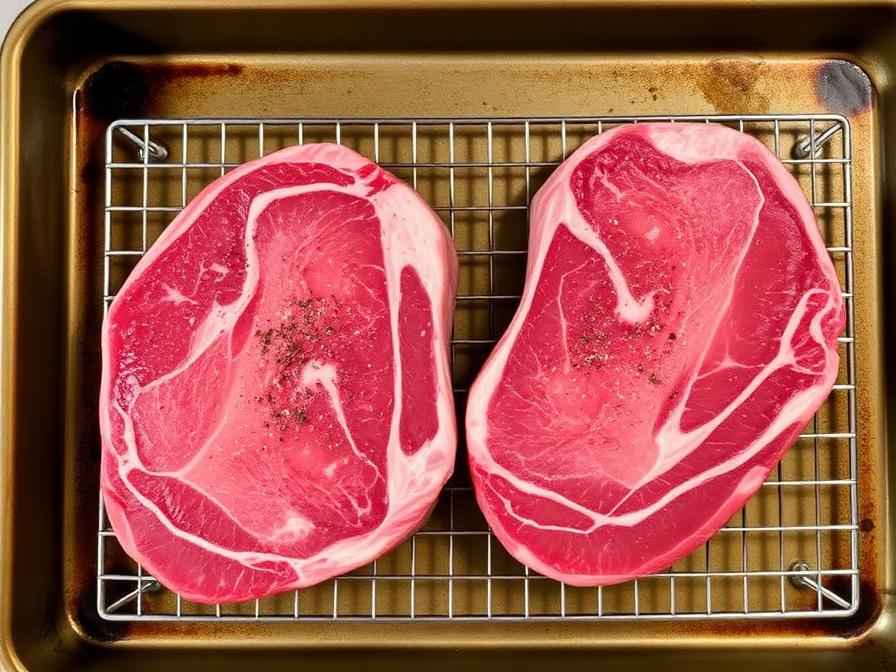
Pat the ribeyes completely dry with paper towels. Sprinkle kosher salt liberally on all sides — about 1 teaspoon per pound of meat. Place steaks on a wire rack set over a baking sheet, refrigerate UNCOVERED for 24-48 hours.
The dry brine accomplishes two things: salt penetrates deep into the meat for better seasoning depth, AND the cold dry air evaporates surface moisture creating a drier exterior that browns better during the sear stage. Skipping the dry brine works but produces meaningfully less crispy crust.
If short on time, salt the steaks 30-60 minutes before cooking minimum. Don't salt and immediately cook — gives no time for the salt to penetrate.
Just before cooking, pat steaks dry again. Add coarse black pepper and any optional rub (Meat Church Holy Cow, Coffee Black Pepper, Traeger Beef Rub). Let steaks sit at room temperature for 30 minutes while the smoker preheats.
Time: 5 minutes active + 24-48 hour dry brine + 30 minute room-temperature rest
- 2
PREHEAT
Set Traeger to 225°F with Super Smoke if available
Fire up your Traeger and set it to 225°F. If your model has Super Smoke mode (Ironwood, Timberline, Woodridge Pro), enable it for Stage 1 — ribeye absorbs smoke flavor exceptionally well during the first 30-45 minutes.
Hickory is the classic beef pairing — bold, slightly sweet, traditional BBQ flavor. Pecan offers a subtle nutty profile that pairs beautifully with ribeye's buttery richness. Mesquite delivers strong Texas-style smoke; use for shorter cooks (under 60 minutes) or it can overpower. Traeger Signature Blend (hickory + maple + cherry) is the safe balanced default.
Avoid apple alone (too mild for beef) and pure cherry alone (better for color than flavor on this cut).
Time: 15 minutes preheat
- 3
STAGE 1
Smoke at 225°F until internal hits 115-120°F
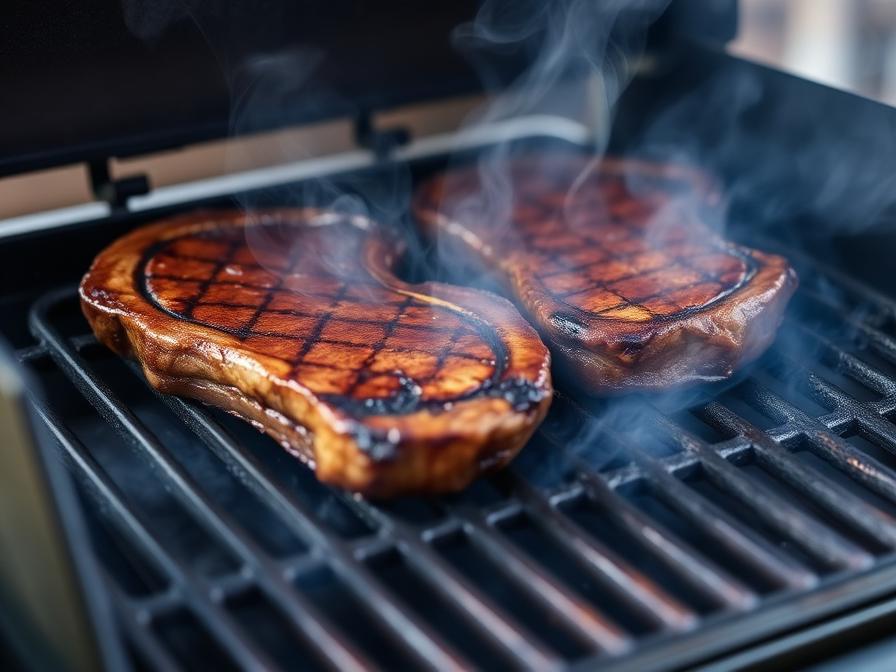
Place the seasoned ribeyes directly on the grill grates. Insert a probe thermometer into the thickest part of one steak, avoiding bone if bone-in.
For medium-rare, pull at 115°F if you're confident in your thermometer and want rare-leaning medium-rare; pull at 120°F for solid medium-rare with carryover; pull at 125°F for medium.
Smoke time depends on steak thickness: 1.25-inch takes 30-45 minutes; 1.5-inch takes 45-60 minutes; 2-inch takes 60-90 minutes.
Don't open the lid during this stage. Trust the thermometer. The Traeger maintains steady temperature; the steaks will hit target internal temperature when they hit it.
When the steaks reach 115-120°F internal, pull them off the grill and place on a clean plate. Tent loosely with foil. Now move to Stage 2.
Time: 45-90 minutes (depends on thickness)
- 4
CRANK
Increase to 500°F and let GrillGrates preheat
Crank the Traeger to its maximum temperature setting (typically 500°F on most models). This takes 8-12 minutes for the grill to climb from 225°F to 500°F.
If using GrillGrates: place the GrillGrate panels on the cooking grates during this preheat. The GrillGrates need 10-15 minutes at maximum heat to reach their concentrated 650°F+ surface temperature. This is where pellet grills produce sear marks comparable to cast iron skillets.
If NOT using GrillGrates: the Traeger's main grates work, just less dramatically. Sear marks will be visible but less pronounced. Still produces good results.
While the grill heats, the steaks rest at room temperature on the plate. This brief rest helps the surface dry slightly, improving sear quality.
Time: 10-15 minutes for grill to reach 500°F
- 5
STAGE 2
Sear 3-4 minutes per side until 130°F internal
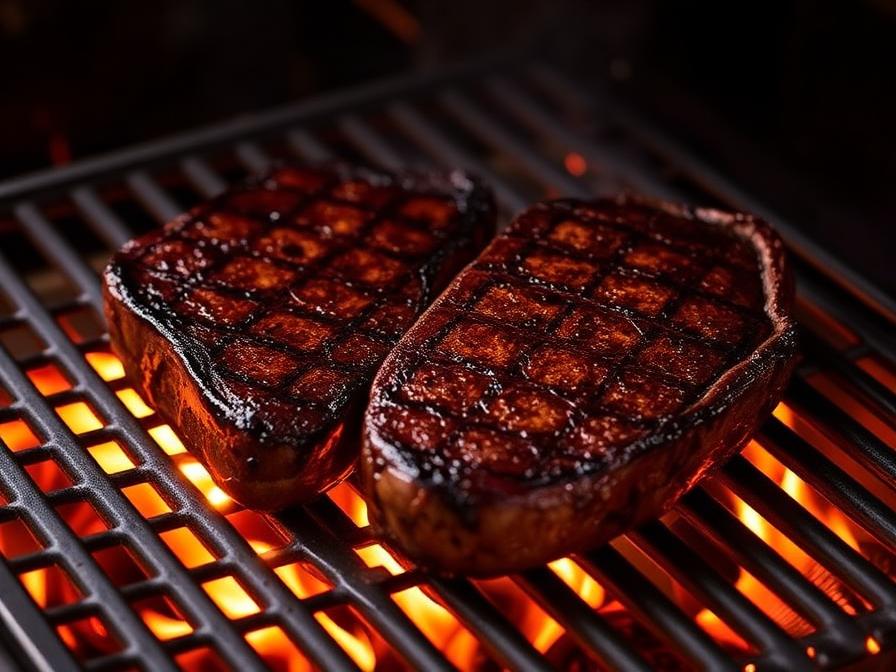
When the Traeger hits maximum temperature (500°F or higher with GrillGrates), place the steaks back on the hot grates. The sear should make an audible sizzle when the steak makes contact.
Sear 3-4 minutes per side without moving the steaks. Resist the temptation to lift and check — the contact time is what creates the crust. If you have a probe thermometer, monitor internal temperature during the sear.
Pull the steaks at 130°F internal for medium-rare. Carryover cooking during the rest will bring the steaks to 132-135°F final temperature.
Optional: rotate the steaks 90 degrees halfway through each side for cross-hatch grill marks. Instagram-worthy presentation but doesn't affect cooking quality.
For thicker steaks (2 inches+) that need more sear time: sear 4-5 minutes per side. Watch internal temperature carefully — overcooking happens quickly at 500°F.
Time: 6-8 minutes total sear
- 6
REST
Rest 5-10 minutes UNCOVERED with butter on top, then slice
Pull the ribeyes from the grill when internal temperature hits 130°F. Transfer to a clean cutting board.
Top each steak with 1-2 tablespoons of butter (compound butter if you made it; plain unsalted butter works fine). The butter melts over the steak during the rest, adding richness and finishing flavor.
Rest UNCOVERED on the cutting board for 5-10 minutes. Internal temperature climbs another 3-5°F via carryover (final 132-135°F). Tenting with foil works for keeping warm but slightly softens the crust — for maximum crust crispness, leave uncovered.
After resting, slice the ribeyes against the grain (look for the direction of the long muscle fibers — slice perpendicular to them). For bone-in ribeyes, slice meat from the bone first, then slice the meat into thick strips. Serve immediately with the butter that pooled during the rest.
Pair with: roasted potatoes, grilled asparagus, sauteed mushrooms, Caesar salad, or simple green vegetables. A bold red wine (Cabernet Sauvignon, Malbec, Syrah) is the classic pairing.
Time: 5-10 minutes rest + 5 minutes slicing
Doneness Reference
Ribeye Doneness Temperature Guide
Match cook temperatures to your preferred doneness. Always cook to internal temperature, not time.
The reverse-sear method requires you to pull the steak BEFORE the final target temperature because of carryover cooking during the rest. Use this table to determine pull temperatures for each doneness level:
Doneness
Rare
Pull from smoke
105°F
Pull from sear
120°F
Final after rest
122-125°F
Visual / who it's for
Cool red center, very soft texture. Steakhouse traditionalists who want maximum red center.
Doneness
Medium-Rare (Recommended)
Pull from smoke
115°F
Pull from sear
130°F
Final after rest
132-135°F
Visual / who it's for
Warm pink center, slight resistance to touch, juices run pink. Most ribeye eaters; the "default" steakhouse target.
Doneness
Medium
Pull from smoke
120°F
Pull from sear
135°F
Final after rest
138-140°F
Visual / who it's for
Pink center fading to gray, firmer to touch. Buyers who prefer less pink but still juicy.
Doneness
Medium-Well
Pull from smoke
130°F
Pull from sear
145°F
Final after rest
148-150°F
Visual / who it's for
Slight pink center, firm to touch, juices clear. Buyers who don't like pink.
Doneness
Well-Done (Not Recommended)
Pull from smoke
140°F
Pull from sear
155°F
Final after rest
158-160°F
Visual / who it's for
No pink, fully gray, firm. Ribeye dries out at this temperature — choose a leaner cut or accept the dryness.
Critical: the pull temperatures account for carryover cooking. Do NOT cook to 135°F internal expecting medium-rare \u2014 the temperature will continue climbing during the rest, ending up medium or beyond. Pull early and let carryover finish the cook.
Wood Selection
The Best Wood for Smoked Ribeye
Wood choice meaningfully affects ribeye's final flavor. Bolder woods work for beef than for chicken or pork.
Hickory (Classic Beef Choice)
The most popular pellet for beef. Bold, slightly sweet smoke that complements ribeye's richness without overpowering. Produces deep mahogany sear marks. The default choice for most pit masters cooking beef. If you only buy one pellet for steaks, buy hickory.
Best for: Classic BBQ flavor, traditional beef pairing
Pecan (Underrated Choice)
Nutty, slightly sweet profile that's underused for beef. Pairs beautifully with ribeye's buttery richness — the nuttiness complements the fat content. Less aggressive than hickory, more interesting than mild fruit woods. Pit-master's pick for refined ribeye.
Best for: Refined flavor, complex profile
Mesquite or Signature Blend
Mesquite delivers Texas-style intense smoke — bold and distinctive. Best used for shorter cooks (under 60 minutes) because intense flavor can overwhelm in longer cooks. Traeger Signature Blend (hickory + maple + cherry) is the safe balanced default.
Best for: Bold Texas style, or balanced default
What to Avoid
- •Apple alone: too mild for beef. Pleasant for chicken or pork; gets lost on ribeye.
- •Cherry alone: produces beautiful color but minimal flavor depth on ribeye. Better blended.
- •Maple alone: too subtle for beef. Works in blends but not as standalone wood for steak.
The Gear I Use
Essential Gear for Reverse-Seared Ribeye
Four tools that meaningfully impact reverse-sear results. GrillGrates is the single biggest upgrade.
GrillGrates (Sear Panels)
The single most-impactful upgrade for Traeger steak cooking. Aluminum panels that sit on top of regular grates and concentrate heat to 650°F+ — solving the "pellet grill max temp" problem. $80-100 for the standard set. Transforms reverse-sear results dramatically. If you only buy one accessory for steak cooking on a Traeger, buy GrillGrates.
Shop GrillGrates →Wireless Probe Thermometer
Reverse-sear precision requires real-time temperature monitoring. ThermoWorks Smoke ($99) or MEATER Plus ($100) deliver wireless temperature tracking — see internal temp on your phone without opening the lid. Essential for the 115-130°F precision targets.
Shop wireless thermometers →Hickory or Pecan Pellets
Hickory for classic beef flavor, pecan for refined nutty profile. Traeger Hickory ($25/20lb), Bear Mountain ($22), or Lumberjack 100% varietals all work. 20-pound bag lasts 8-10 steak cooks. Match wood to your beef preference.
Shop steak pellets →Premium Steak Rub
Meat Church Holy Cow, Traeger Coffee Black Pepper Rub, Traeger Beef Rub, or Killer Hogs The BBQ Rub. Premium rubs ($10-18) genuinely improve over plain salt-and-pepper. Or make your own with kosher salt + coarse black pepper + granulated garlic (the SPG mix).
Shop steak rubs →Avoid These
6 Common Reverse-Sear Ribeye Mistakes
Six preventable errors that ruin what should be steakhouse-quality results.
Mistake 1: Cooking thin steaks with the reverse-sear method
Reverse-sear works for steaks 1.25 inches thick or thicker. Thin steaks (under 1 inch) cook through during the smoke phase before the sear has any meaningful effect — the technique just produces overcooked thin steak with smoke flavor. For thin steaks (under 1.25"), use traditional searing on cast iron or high-heat gas grill instead. Reverse-sear is specifically a thick-cut technique.
Mistake 2: Overshooting the smoke phase pull temperature
Pulling the steak at 130°F from the smoke phase means the final temperature after sear will be 145°F+ — well into medium territory, beyond medium-rare. The smoke phase target is 115-120°F internal (significantly under final target) because the sear adds another 10-15°F, plus carryover during rest adds 3-5°F. Always pull early from smoke phase.
Mistake 3: Skipping GrillGrates and expecting steakhouse sear marks
Traeger pellet grills max at ~500°F. That's hot enough for cooking but marginal for proper sear marks. Without GrillGrates concentrating heat to 650°F+, you'll get visible sear marks but not the cross-hatch char marks that look like steakhouse cooking. GrillGrates aren't optional if Instagram-worthy sear marks matter to you.
Mistake 4: Cooking right out of the fridge
Cold steaks hitting any cooking surface produce uneven results. The exterior overcooks while the interior catches up. Always let ribeyes rest at room temperature for 30 minutes (some pit masters extend to 45-60 minutes) before they hit the smoker. Especially important for thick 1.5-2 inch steaks where temperature differential matters more.
Mistake 5: Tenting with foil during the rest
Foil tenting works for keeping food warm during long waits, but it slightly softens the crust you just created. For maximum crust crispness, rest steaks UNCOVERED on the cutting board. The 5-10 minute rest is short enough that the steaks don't cool meaningfully — and the crust stays crispy.
Mistake 6: Not letting the dry brine work
Dry brining 24-48 hours before cooking dramatically improves results, but most home cooks skip it because they're cooking the same day. If you can plan ahead, dry brine. The flavor depth and skin moisture difference is significant. Even 8 hours helps; 30 minutes minimum if you're truly out of time. Skip the dry brine entirely and the recipe still works — just less optimally.
How to Serve It
6 Ways to Serve Smoked Ribeye
Premium steak deserves quality presentation. Six serving styles for different occasions.
1. Classic Steakhouse Plate
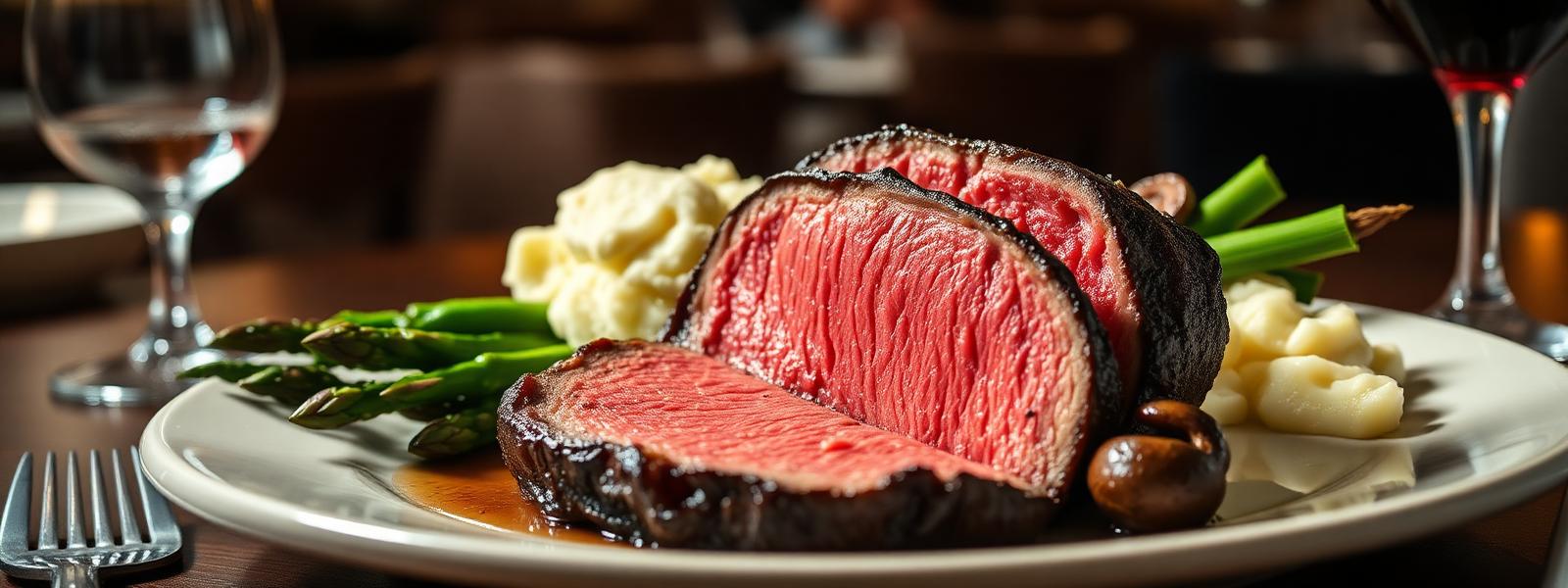
Whole ribeye on plate with creamy mashed potatoes, sauteed mushrooms, and grilled asparagus. The default special-occasion presentation.
2. Sliced Family Style
Sliced ribeye on a wooden cutting board, finishing salt sprinkled, fresh herbs scattered. Family serves themselves.
3. Surf and Turf
Half a ribeye paired with grilled shrimp or a butter-poached lobster tail. Special-occasion luxury at home.
4. Steak Salad
Sliced cold leftover ribeye over Caesar salad, blue cheese wedge, or arugula with shaved parmesan. Perfect next-day lunch.
5. Open-Faced Sandwich
Sliced ribeye on toasted sourdough with horseradish cream, peppery arugula, and caramelized onions. Pub-style steak melt.
6. Steak Tacos
Sliced ribeye with avocado, queso fresco, cilantro, and lime crema in warm flour tortillas. Crowd-pleaser remix.
Leftover ribeye keeps in the fridge 3-4 days. Reheat gently in a 350°F oven for 8-10 minutes wrapped in foil \u2014 high heat reheating dries out the meat. Or slice cold and serve over salad or in sandwiches the next day. Don't waste leftovers.
FAQ