Smoker Recipe
Smoked Salmon on a Pellet Grill: The Pellicle-First Recipe That Actually Works
Hot-smoked salmon is one of the most rewarding and most-failed home smoking projects. The technique is simple — brine, smoke, eat — but most home cooks skip the single most important step: forming the pellicle. The pellicle is the tacky film that develops when brined salmon air-dries uncovered in the fridge overnight. Without it, smoke literally won't stick to the fish, leaving you with bland, mushy salmon that took 12 hours of preparation. With it, you get firm, flaky, deeply-flavored salmon that competes with smokehouse-quality. The 3-hour cook time on the smoker is the easy part; the 12-hour preparation is what actually matters. This guide makes the technique foolproof.
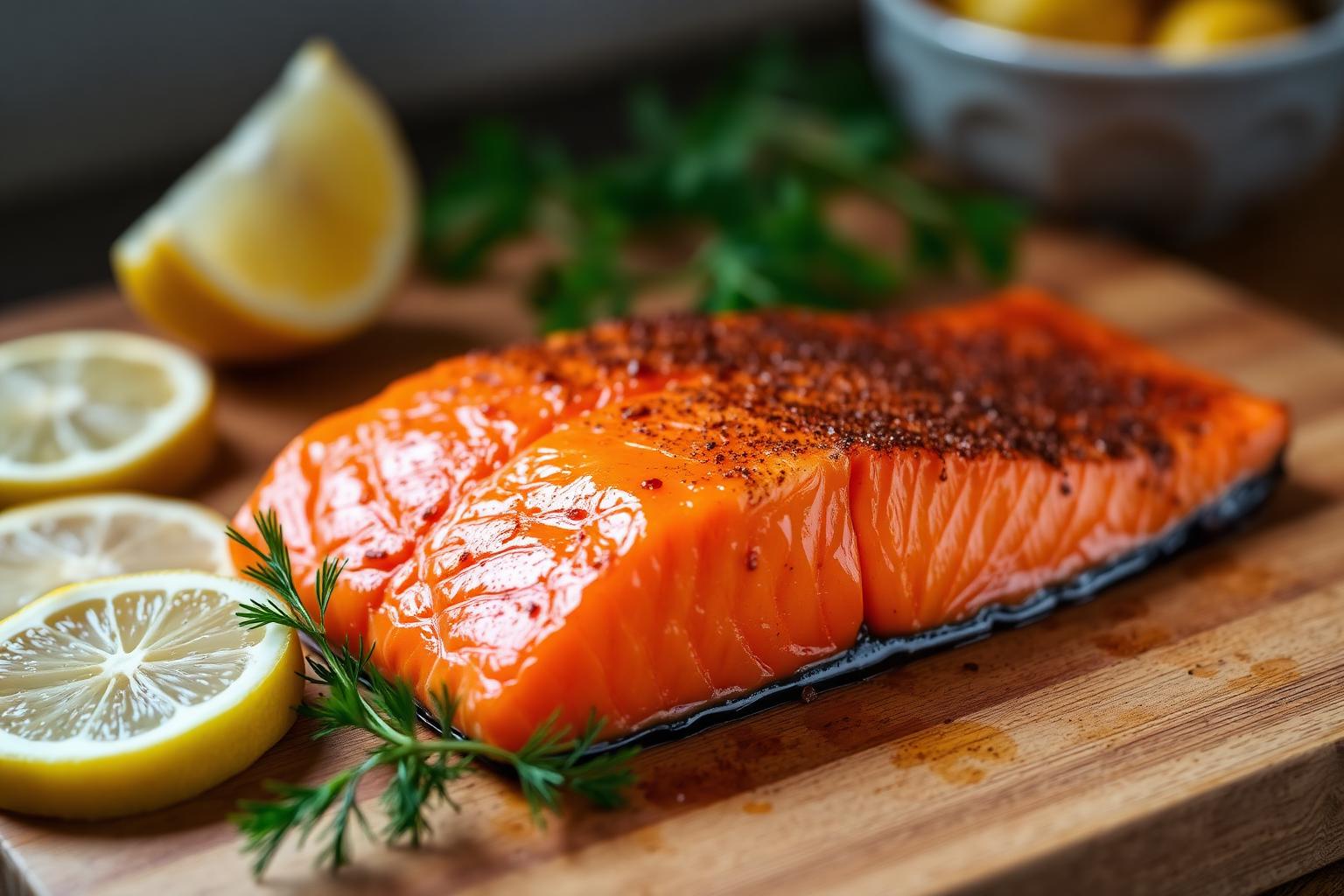
The Recipe
Hot-Smoked Salmon (with Pellicle)
Rated 4.9 — based on 237 reader ratings
Prep Time
15 min + 4-6 hr brine
Cook Time
1.5-3 hrs smoke
Rest Time
5-10 min
Serves
4-6
Smoker temp: 180°F (more smoke) or 225°F (faster)
Pull temp: 140°F internal (carries to USDA-safe 145°F)
Recommended pellets: Alder (traditional), Apple, Cherry, or Pecan
Share this recipe:
The Critical Step
What Is a Pellicle? (And Why It's the Step Most Home Cooks Skip)
If you've ever made smoked salmon at home and been disappointed — bland flavor, mushy texture, weak smoke — the pellicle is almost certainly what you missed.
A pellicle is a thin, tacky film that forms on the surface of brined salmon when it air-dries uncovered in the refrigerator. The film is composed of dissolved proteins drawn out by the brine that re-bind on the surface as moisture evaporates. To the touch, properly-pellicled salmon feels slightly sticky — not wet, not dry — like the skin of a hard-boiled egg.
It's What Smoke Sticks To
Wet salmon surfaces repel smoke — moisture creates a barrier between fish and smoke particles. Properly-formed pellicle is dry-but-tacky, providing the ideal surface for smoke compounds to bond with the fish. Without pellicle, you'll smoke fish for 3 hours and end up with weak smoke flavor that disappears overnight in the fridge. With pellicle, the smoke flavor is rich and persists for days.
It Takes Time, Not Skill
Pellicle formation requires no technique — just patience. After brining and rinsing, place salmon skin-down on a wire rack in the fridge UNCOVERED for 4-12 hours (overnight is ideal). The cold dry refrigerator air does the work. No equipment, no monitoring, no babysitting. The only mistake home cooks make is skipping this step entirely because it adds 12+ hours to the recipe timeline.
It Improves Texture Too
Beyond smoke adhesion, the pellicle gives finished smoked salmon a meaningfully better texture — slightly firmer outer surface that contrasts beautifully with the moist flaky interior. Salmon smoked without pellicle has a uniform mushy texture throughout. The textural contrast is what separates "okay home smoked salmon" from "smokehouse-quality smoked salmon."
The 12-hour pellicle wait is non-negotiable. It's also the reason this recipe spans two days. Plan accordingly: brine and pellicle on Saturday afternoon/night, smoke on Sunday morning. Trying to compress this into one day produces inferior results.
Two Techniques
Hot Smoke vs Cold Smoke (This Recipe Is Hot Smoke)
When people say "smoked salmon," they could mean two completely different things. This recipe is hot smoke — the safer, easier, more versatile method.
This Recipe
Hot-Smoked Salmon
- Smoke temp: 180-225°F
- Final internal: 140-145°F (fully cooked)
- Texture: Flaky, can eat with a fork
- Cook time: 1.5-3 hours
- Equipment: Any standard smoker
- Food safety: USDA-safe, no special equipment
Best for: Dinner main, salads, pasta, lunch, snacking. Versatile.
Different Recipe
Cold-Smoked Salmon (Lox-Style)
- Smoke temp: 60-90°F (no cooking)
- Final internal: Below 90°F
- Texture: Silky, sliced thin like deli salmon
- Cure + smoke time: 12-24+ hours
- Equipment: Cold smoker or modified rig with smoke tube
- Food safety: Requires careful temperature control + cure
Best for: Bagels with cream cheese, charcuterie boards, sushi.
This recipe focuses on hot smoke because it's safer, faster, and more versatile for home cooks. Cold smoking requires careful food safety attention (the salmon never reaches a temperature that kills bacteria) and specialized equipment. Hot-smoked salmon can be eaten warm right off the grill, chilled and used in salads, flaked into pasta, or simply enjoyed as is.
Before You Start
What You'll Need
A 2-3 pound salmon fillet, simple brine ingredients, and patience. Most ingredients are pantry staples; the salmon is the only specialty item.
The Ingredients
Dry Brine Alternative
For dry brine instead of wet brine (some pit masters prefer it):
- 1 cup brown sugar
- 1/4 cup kosher salt
- 1 tablespoon coarse black pepper
- Optional: 1 tablespoon dried dill
Apply directly to salmon flesh (not skin), refrigerate 2-4 hours, rinse thoroughly.
The 4:1 sugar-to-salt ratio is the consensus across authority salmon recipes. Higher salt = too salty; higher sugar = doesn't cure properly. This ratio works whether you use wet brine or dry brine. The brown sugar caramelizes during smoking, contributing to the dark mahogany color.
The Equipment
On pin bones: every salmon fillet has 25-30 pin bones running down the center of the flesh. Run your fingers along the fillet from head to tail — you'll feel them. Remove EACH ONE before brining. Skipping this is unforgivable on smoked salmon — guests bite into bones. Pin bone tweezers ($10) make this tedious task tolerable. Most fish counters will remove them on request, but always double-check.
Step by Step
How to Hot-Smoke Salmon (5 Steps Across Two Days)
Five steps, but the time is mostly hands-off. The active work is 30-45 minutes total. The waiting is what produces excellent results.
- 1
PREP
Remove pin bones, then choose wet or dry brine
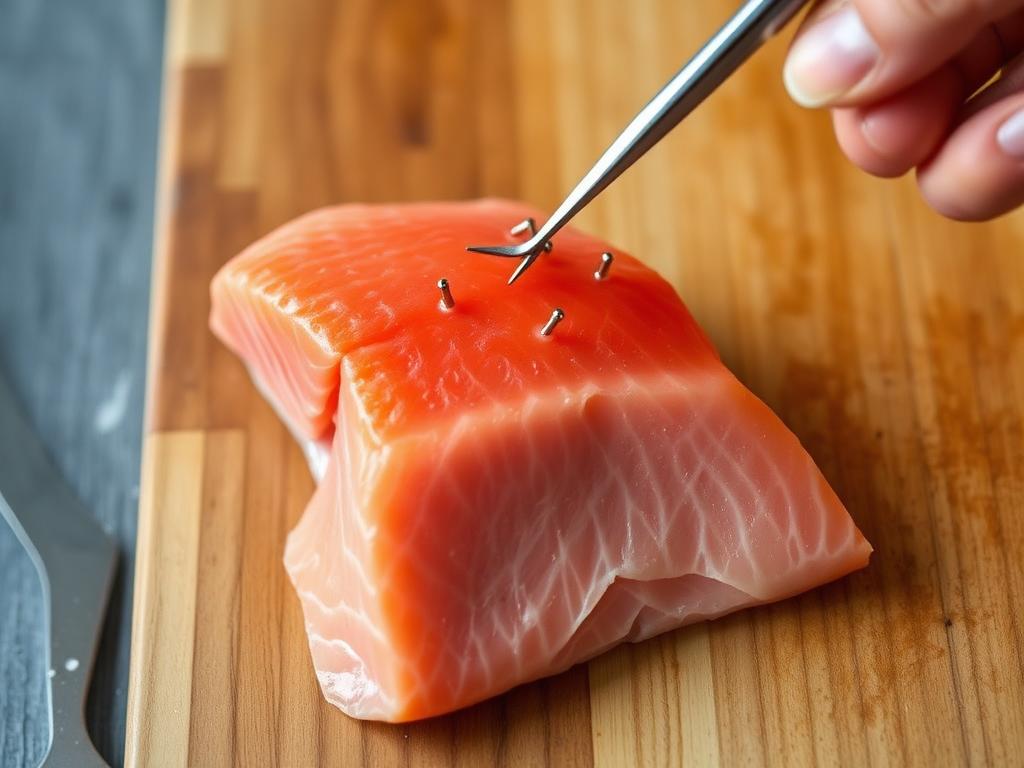
Place the salmon fillet skin-down on a clean cutting board. Run your fingers along the centerline from head end to tail end. You'll feel small bones poking up — these are pin bones. There are typically 25-30 of them, spaced about 1 inch apart along the first 1/3 of the fillet (the head end).
Use pin bone tweezers (or needle-nose pliers cleaned in hot water) to grip each pin bone and pull it out at a slight angle toward the head. Pull steadily — don't tear the flesh. Discard each bone. Inspect the fillet a second time after the first pass; it's easy to miss bones the first time.
If your fish counter offered to remove pin bones, double-check anyway. Missed pin bones in finished smoked salmon are unforgivable.
Now choose your brining method. Wet brine (most popular): in a glass baking dish, dissolve 1 cup brown sugar and 1/4 cup kosher salt in 4 cups water. Add optional flavorings (garlic, lemon, dill). Submerge salmon completely. Cover with plastic wrap. Refrigerate 4-6 hours.
Dry brine (some pit masters prefer): mix 1 cup brown sugar with 1/4 cup salt. Spread half the cure on plastic wrap, lay salmon skin-down, cover with remaining cure. Wrap tightly, place on rimmed plate, weight down with second pan. Refrigerate 4-6 hours.
Either method works. Wet brine produces slightly milder flavor; dry brine produces firmer texture and concentrated seasoning.
Time: 15 minutes active + 4-6 hour brine
- 2
PELLICLE
Rinse off brine completely, refrigerate uncovered overnight
After brining, remove the salmon and rinse it THOROUGHLY under cold running water. This step is non-negotiable — unrinsed salmon will be way too salty after smoking. Run water over both sides of the fillet for 30-60 seconds.
Pat completely dry with paper towels.
Place the salmon skin-down on a wire rack set over a rimmed baking sheet (the sheet catches any drips). Refrigerate UNCOVERED for 4-12 hours. Overnight (8-12 hours) is ideal.
During this time, the cold dry refrigerator air evaporates surface moisture from the salmon. Dissolved proteins from the brine re-bind on the surface, forming a thin tacky film — the pellicle. To the touch, properly-formed pellicle feels slightly sticky, like a hard-boiled egg's surface. Not wet, not dry — tacky.
This is the step most home cooks skip and the reason most home-smoked salmon disappoints. Without pellicle, smoke compounds can't bond with the fish surface. With pellicle, smoke flavor is rich and persistent.
If your fridge is small or you need the rack space, a small countertop fan blowing on the rack at room temperature for 1-2 hours can substitute (must keep salmon below 40°F throughout). The fridge method is safer and more reliable.
Time: 5 minutes active + 4-12 hour pellicle formation
- 3
PREHEAT
Preheat smoker to 180°F (or 225°F for faster cook)
Fire up your smoker. Two temperature options:
180°F (recommended for maximum smoke flavor): lower temperature means longer cook time but more time exposed to smoke = deeper smoke flavor penetration. Best results for salmon specifically. If your Traeger has Super Smoke mode (Ironwood, Timberline, Woodridge Pro), this is when to use it — Super Smoke at 180°F is the gold standard for salmon.
225°F (faster cook): if you're short on time or want a slightly firmer texture. Smoke flavor is still good but less pronounced than the 180°F approach.
Recommended wood for salmon: Alder is the traditional choice — Pacific Northwest indigenous tribes have used alder for salmon for centuries. Mild, sweet, perfect for fish. Apple is slightly sweet and mild — excellent fallback if alder isn't available. Cherry brings a mild fruit profile with beautiful color. Pecan is nutty and subtle, pairs beautifully with salmon's natural fat.
Avoid hickory and mesquite — both are too aggressive for salmon's delicate flavor.
Time: 15 minutes preheat
- 4
SMOKE
Smoke skin-down to 140°F internal (1.5-3 hours)
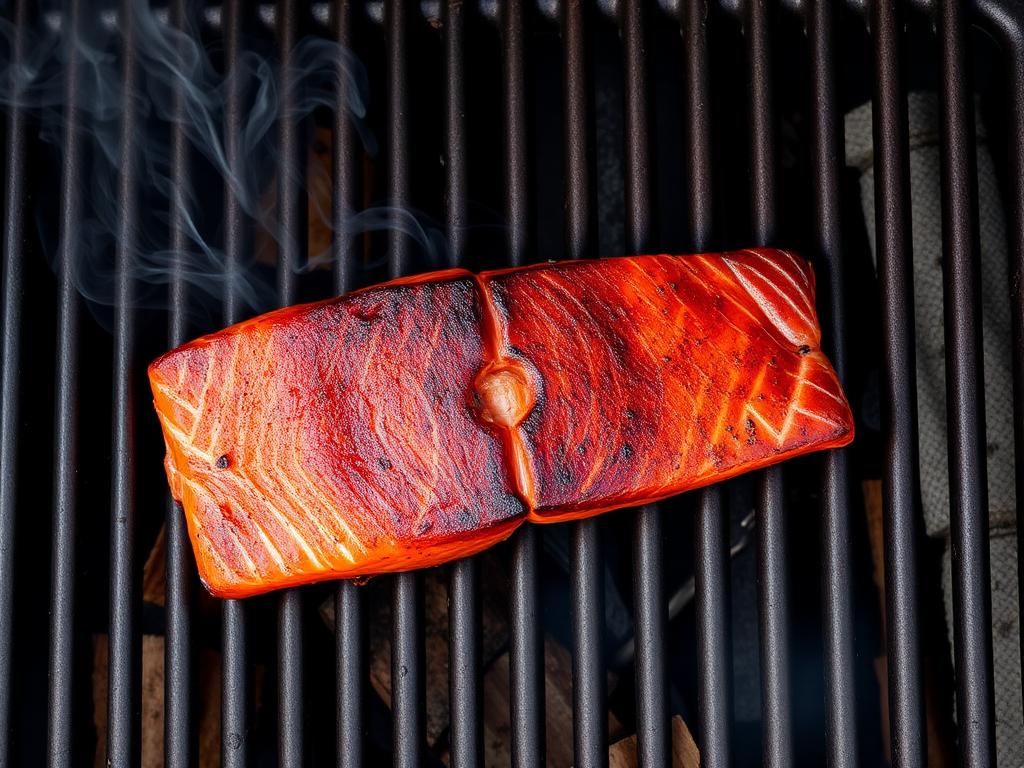
Place the pellicled salmon directly on the grill grates, skin-down. The skin protects the flesh from direct heat and prevents the fillet from breaking apart during the cook.
Insert a wireless probe thermometer into the thickest part of the fillet. Don't move the salmon during the cook — fish breaks apart easily.
Smoke until internal temperature reaches 140°F. This is the perfect medium-flake temperature for salmon — fully cooked, USDA-safe, but still moist and tender. Don't pull at higher temperatures (145°F+ produces drier salmon).
Time required: 2-3 hours at 180°F smoker, 1.5-2.5 hours at 200°F, 1-2 hours at 225°F.
Optional: brush salmon with honey or maple syrup glaze 2-3 times during the smoke (every 30 minutes), waiting 30 minutes between glazes. The glaze caramelizes on the pellicle for a sweet-glazed finish. Skip if you want pure smoke flavor.
Don't open the lid during the smoke unless you're glazing. Each lid-open drops smoker temperature 30-50°F and extends cook time. Trust the thermometer.
Time: 1.5-3 hours
- 5
REST
Rest 5-10 minutes, then serve warm or chill for later
When the salmon hits 140°F internal, remove it from the smoker. Use a long thin fish spatula to transfer — salmon is delicate when fully cooked.
Rest on a cutting board for 5-10 minutes. The internal temperature climbs another 3-5°F via carryover, finishing at the USDA-safe 145°F.
Smoked salmon can be served two ways:
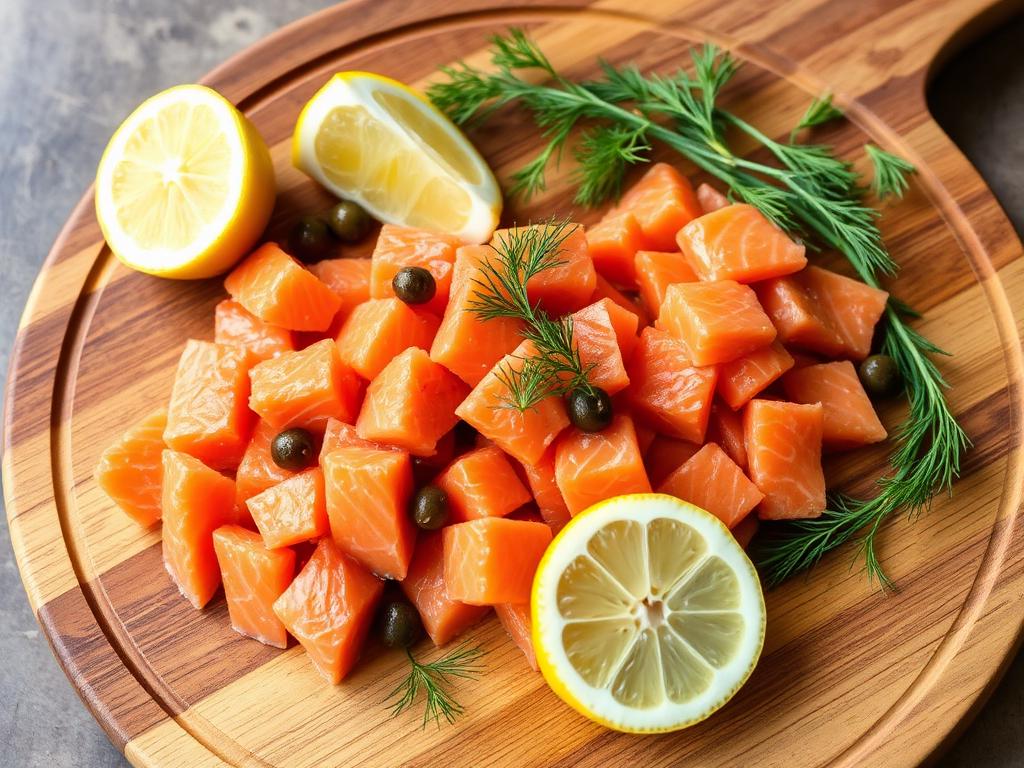
Warm (right after smoking): flake into chunks, serve with crackers, lemon wedges, fresh dill, sour cream, or capers. Excellent as appetizer. Pairs with white wine (Sauvignon Blanc, Pinot Grigio) or champagne.
Chilled (refrigerate 1-4 hours): once cooled, the texture firms up and the flavors meld. Use chilled smoked salmon for bagels with cream cheese, salmon salad, pasta, salads, charcuterie boards, breakfast quiche, or smoked salmon dip.
Storage: leftover smoked salmon keeps in the fridge 3-5 days in an airtight container. For longer storage, vacuum seal and freeze up to 3 months.
Time: 5-10 minutes rest + serving
Wood Selection
The Best Wood for Smoked Salmon
Salmon's delicate flavor pairs with milder woods than beef or pork. Alder is the traditional gold standard.
Alder (Traditional Gold Standard)
Pacific Northwest indigenous tribes have used alder for salmon smoking for centuries. The reason: alder produces a mild, slightly sweet smoke that perfectly complements salmon's natural fat without overpowering it. If you can find alder pellets, buy them. They're specifically formulated for fish smoking.
Best for: Authentic salmon smoking, traditional flavor
Apple or Cherry (Reliable Fallback)
Both are excellent if alder isn't available. Apple is the mildest fruit wood — neutral, slightly sweet, won't overpower. Cherry adds beautiful mahogany color to the fillet plus subtle fruit sweetness. Either produces excellent salmon results.
Best for: Apple = mildest fallback, cherry = visual appeal
Pecan (For Bolder Flavor)
Nutty, slightly sweet profile. Slightly bolder than apple or cherry but still mild enough for salmon. Pairs beautifully with salmon's natural fat — the nuttiness complements rather than competes. Pit-master's pick for refined smoked salmon.
Best for: Refined flavor, slightly bolder smoke
What to Avoid
- •Hickory: far too aggressive for salmon. Will completely overpower the fish.
- •Mesquite: even worse than hickory for salmon. Avoid entirely.
- •Oak alone: not bad but produces less interesting flavor than fruit woods on fish.
The Gear I Use
Essential Gear for Smoked Salmon
Four tools that meaningfully impact smoked salmon results. Pin bone tweezers are the most-overlooked.
Wireless Probe Thermometer
Salmon has a narrow done window — 140°F is perfect, 150°F is overcooked. The wireless probe lets you monitor without opening the lid. ThermoPro TP19 ($25), ThermoWorks Smoke ($99), or MEATER Plus ($100). Critical for hitting the precise 140°F target consistently.
Shop wireless thermometers →Alder Wood Pellets
Alder is the traditional gold standard for salmon. Bear Mountain 100% Alder ($28/20lb) or Lumberjack 100% Alder ($32/20lb) are the specialty picks. Traeger Apple ($25/20lb) is the reliable fallback. 20-pound bag handles 8-10 salmon cooks.
Shop alder pellets →Pin Bone Tweezers
Every salmon fillet has 25-30 pin bones. Removing them is tedious without proper tools. OXO Good Grips Fish Pin Bone Tweezers ($10) — angled tip designed specifically for pin bones. Alternatively, Wusthof Pin Bone Pliers ($25). Worth the small investment to avoid biting into bones in finished smoked salmon.
Shop pin bone tweezers →Fish Spatula
Standard kitchen spatulas tear flaky cooked salmon. Fish spatulas are long, thin, slotted, and angled — designed specifically for delicate fish transfer. Wüsthof Fish Spatula ($35) or OXO Good Grips Fish Spatula ($15). Indispensable for transferring smoked salmon from grate to plate intact.
Shop fish spatulas →Avoid These
7 Common Smoked Salmon Mistakes
Seven preventable errors that separate disappointing home smoked salmon from smokehouse-quality results.
Mistake 1: Skipping the pellicle formation
The #1 most-impactful mistake. The 4-12 hour pellicle wait isn't optional — it's what allows smoke compounds to bond with the salmon surface. Skipping this step produces salmon that took 12+ hours to prepare but tastes weakly smoked. Plan ahead. Brine and pellicle on Saturday afternoon/night, smoke on Sunday morning. The 12-hour wait is what makes the difference between "okay home smoked salmon" and "smokehouse-quality results."
Mistake 2: Not rinsing brine thoroughly
After brining, the salmon must be rinsed under running water for 30-60 seconds. Unrinsed salmon will be excessively salty after smoking — completely inedible in some cases. Rinse both sides thoroughly until water runs clear. Pat dry with paper towels. Then proceed to pellicle formation. Many home cooks rush this step and ruin the recipe.
Mistake 3: Pulling at 145°F+ instead of 140°F
Salmon's perfect texture is at 140°F internal — moist, flaky, fully cooked. At 145°F (USDA-safe minimum) salmon is borderline. At 150°F it's noticeably dry. Pull at 140°F and let carryover bring it to safe temperature during the rest. Recipes that say "cook to 145°F" are technically correct for safety but produce inferior texture.
Mistake 4: Using hickory or mesquite pellets
Salmon's delicate flavor is overpowered by aggressive smoke. Hickory and mesquite — perfect for beef and pork — completely dominate fish. Stick with alder, apple, cherry, or pecan. The result with mild woods isn't "less smoky" — it's "smoky enough to taste smoke and salmon together." With hickory or mesquite you taste only smoke.
Mistake 5: Not removing pin bones
Every salmon fillet has 25-30 pin bones running down the center. Skipping this prep step is unforgivable on smoked salmon — guests bite into bones in finished food. Run your fingers along the fillet, find each bone, remove with pin bone tweezers. 5 minutes of tedious work prevents a catastrophic mistake. If your fish counter offered to remove pin bones, double-check anyway.
Mistake 6: Using salmon thinner than 1 inch
Thin salmon fillets cook unevenly during smoking — exterior overcooks before interior reaches target temperature. For hot smoking, choose fillets at least 1 inch thick (preferably 1.5 inches at the thickest part). Thinner fillets work better for grilling at higher heat. The minimum 1-inch thickness is what allows the full smoke phase to develop flavor before the fish overcooks.
Mistake 7: Buying farmed salmon when wild is available
Wild salmon (king, sockeye, coho) has firmer texture and more pronounced flavor than farmed Atlantic salmon. For premium smoked salmon results, splurge on wild king or sockeye. Farmed salmon is fine for grilling and baking but suffers in smoking — the higher fat content can render out into mushy texture during longer cook times. If wild is available and budget allows ($25-30/lb vs $15-20 for farmed), wild produces noticeably better smoked salmon.
How to Serve It
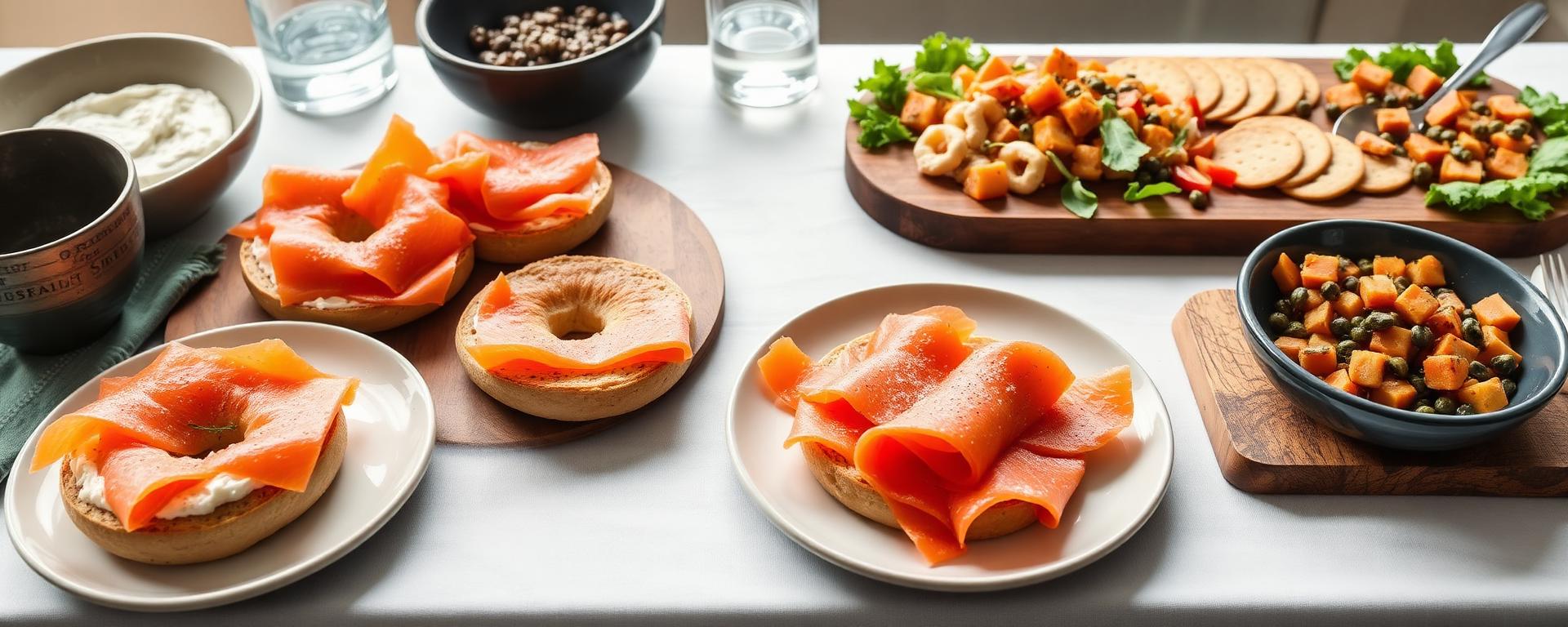
6 Ways to Serve Smoked Salmon
One of the most versatile recipes you'll cook. Smoked salmon works as appetizer, brunch main, dinner main, and lunch leftover.
1. Bagel and Cream Cheese
Toasted everything bagel, cream cheese, flaked smoked salmon, capers, red onion, fresh dill, lemon. The classic brunch.
2. Smoked Salmon Salad
Mixed greens, smoked salmon, sliced cucumber, red onion, capers, dill, lemon vinaigrette. Light lunch.
3. Charcuterie Board
Flaked salmon, crackers, cream cheese, capers, lemon wedges, fresh herbs, olives, pickled vegetables. Entertaining centerpiece.
4. Pasta with Smoked Salmon
Linguine or pappardelle with smoked salmon, peas, lemon zest, dill, parmesan, cream sauce. Date night dinner.
5. Smoked Salmon Dip
Cream cheese + sour cream + flaked salmon + lemon + dill + capers, served with crackers. Party appetizer.
6. Eggs Benedict Florentine
Toasted English muffin, smoked salmon, poached egg, hollandaise, spinach. Sunday brunch upgrade.
Leftover smoked salmon keeps in the fridge 3-5 days in airtight containers. For longer storage, vacuum seal and freeze up to 3 months. Frozen smoked salmon thaws in the refrigerator overnight; texture is essentially unchanged. The recipe makes 4-6 servings as a dinner main; 8-10 servings as an appetizer.
FAQ