Holiday Recipe
Smoked Prime Rib: The Reverse-Sear Recipe for the Perfect Holiday Roast
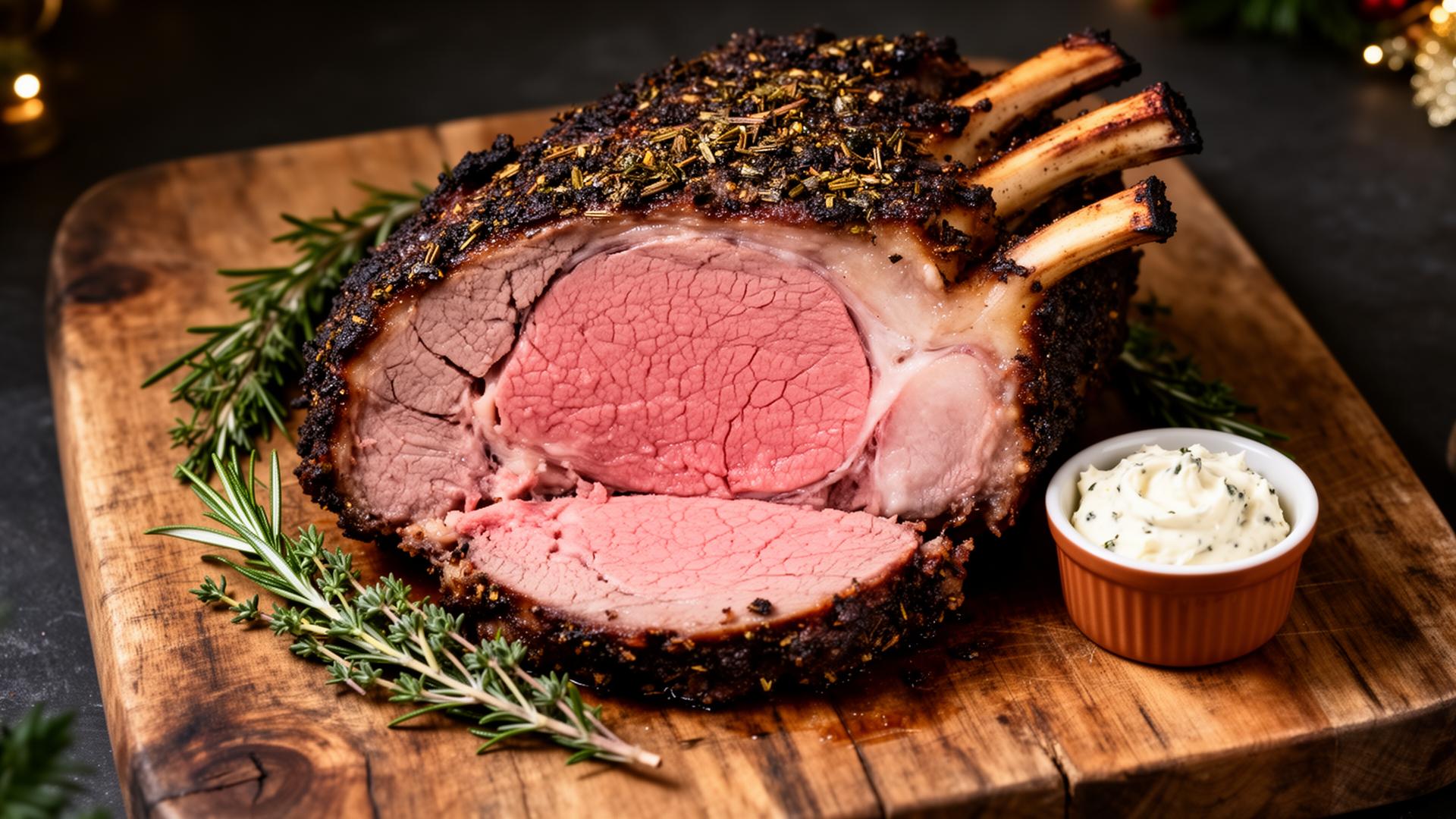
Smoked prime rib is the holiday showstopper — a 6-8 pound bone-in roast with deep wood-fire flavor, pink edge-to-edge medium-rare interior, and crispy seared crust. The reverse-sear method on a Traeger or pellet grill produces results that genuinely compete with steakhouse prime rib for a fraction of the cost ($60-150 vs $50+ per person at a restaurant). The technique: dry brine 24 hours, smoke at 225°F to 120°F internal (about 4 hours), then crank the grill to 500°F and sear briefly for the crust. Total time about 5 hours of mostly hands-off cooking. Christmas dinner, New Year's celebration, anniversary meal — this is the recipe that makes the occasion.
The Recipe
Smoked Prime Rib (Reverse Sear Method)
Rated 4.9 — based on 284 reader ratings
Prep Time
10 min (+ optional 24-48 hr dry brine)
Cook Time
3.5-5 hrs Stage 1 + 8-15 min Stage 2
Rest Time
20-30 min
Serves
8-12
Smoker temp: 225°F (Stage 1) then 450-500°F (Stage 2)
Pull temp: 125°F internal (medium-rare; carries to 130°F)
Recommended pellets: Hickory, Pecan, Cherry, or Traeger Signature Blend
Share this recipe:
The Cut Explained
What Is Prime Rib? (And What "Prime" Actually Means)
The most expensive cut at the butcher counter. The most prestigious holiday roast. Frequently misunderstood. Here's what you're actually buying.
Prime rib is a large cut from the rib primal of a cow — specifically ribs 6 through 12 (the rib eye area). When sold whole, it's typically sold in 2-4 rib sections. A 3-rib roast feeds 6-9 people; a 4-rib roast feeds 8-12. The cut includes both the eye of the ribeye (the most marbled, tender section) and the cap (the spinalis dorsi, often considered the best-tasting beef on the cow).
"Prime" Doesn't Mean Premium Grade
Confusing fact: "prime rib" doesn't actually mean USDA Prime grade. The "prime" in prime rib refers to the rib being one of the eight "primal cuts" of beef. Most prime rib at the grocery store is USDA Choice grade, not Prime. If you want USDA Prime grade prime rib, ask specifically — and expect to pay $5-15 more per pound.
Bone-In vs Boneless
Bone-in prime rib (also called "standing rib roast") cooks more evenly because the bones insulate the meat. Boneless is easier to carve. Best of both worlds: ask the butcher to cut the bones off, then tie them back on with twine for cooking — gives you bone-in cooking with boneless carving ease.
Pricing in 2026
USDA Choice prime rib runs $14-22 per pound at most grocery stores. USDA Prime grade runs $25-35 per pound. Costco regularly stocks Choice grade at $14-18/lb during holiday season. A 6-pound roast at $18/lb = $108 — feeding 8-10 people works out to $11-14 per person. Cheaper than restaurant prime rib at $50+ per person.
For Christmas dinner specifically, plan to order your prime rib from the butcher 1-2 weeks in advance. Holiday demand is high; grocery stores often run out of bone-in roasts by December 22.
Before You Start
What You'll Need
A 6-8 pound bone-in prime rib, simple seasoning, and 24-48 hours of advance prep. Most ingredients are pantry staples.
The Ingredients
Optional Au Jus
- 2 cups beef broth (low-sodium preferred)
- 1 cup dry red wine (Cabernet, Merlot, or Burgundy)
- 1 sprig fresh rosemary
- 2 sprigs fresh thyme
- 1 tablespoon Worcestershire sauce
- Salt and pepper to taste
- Pan drippings from the smoked roast
Make au jus while the prime rib rests after searing. Pan drippings add the prime rib flavor that distinguishes restaurant-quality au jus from generic beef gravy.
The Equipment
On Weber Smokey Mountain users: WSM handles the 225°F smoke phase beautifully but can't reach 500°F for the sear. Workaround: smoke on the WSM to 120°F internal, then transfer to a 500°F oven for the final sear. The two-piece method works perfectly and produces equivalent results to all-Traeger reverse sear.
Step by Step
How to Smoke Prime Rib on a Traeger (Reverse Sear)
Six steps across two stages. The dry brine takes 24-48 hours but the active cooking is 5 hours. The technique is forgiving; the precision targets matter.
- 1
DRY BRINE
Salt the roast and refrigerate uncovered (this is the secret)
Pat the prime rib completely dry with paper towels. If your roast has a fat cap thicker than 1/4 inch, trim it down to 1/4 inch — leaves enough fat for flavor but allows the rub to penetrate. Score the fat cap in a cross-hatch pattern (1/4 inch deep) to help rub adhesion and fat rendering.
Sprinkle kosher salt liberally on all sides — about 1 teaspoon per pound. Add black pepper. Place the roast on a wire rack set over a baking sheet (to catch any drips). Refrigerate UNCOVERED for 24-48 hours.
This is the single most important step that separates good prime rib from great prime rib. The dry brine does three things: salt penetrates the meat for deeper seasoning, surface moisture evaporates (creating a drier exterior that browns dramatically better during the sear), and proteins begin breaking down for more tender texture. Skip the dry brine and your prime rib is fine. Do the dry brine and your prime rib is unforgettable.
If you're tight on time and absolutely can't dry-brine 24 hours, salt at minimum 4-6 hours before cooking. Don't salt and immediately cook — gives no time for the salt to penetrate.
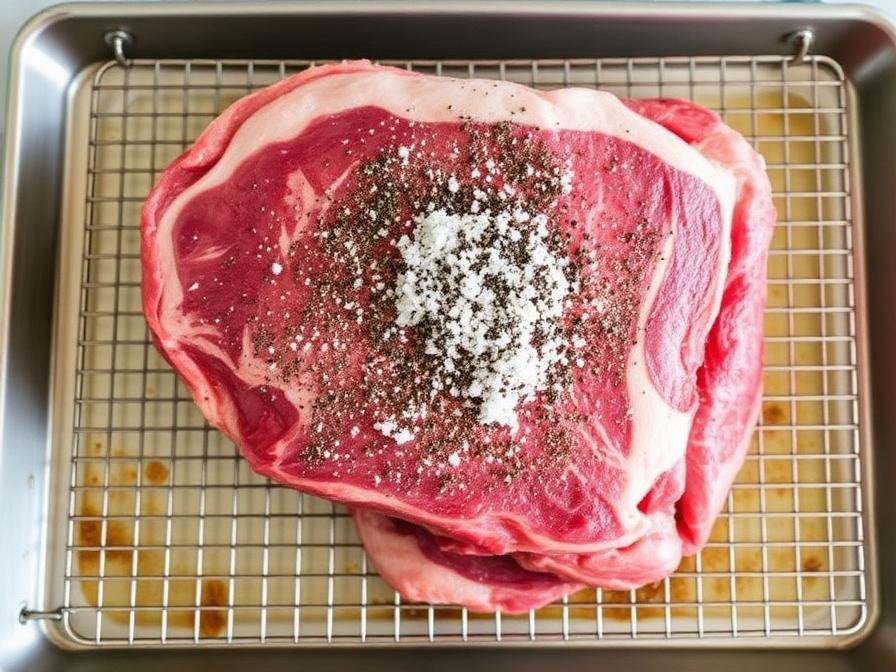
Time: 5 minutes active + 24-48 hour rest
- 2
BUTTER
Coat with herbed butter, let temper 1-2 hours
2 hours before cooking, remove the prime rib from the refrigerator. In a small bowl, mix softened butter with chopped rosemary, thyme, and minced garlic (or garlic powder). Optional: add 2 tablespoons of Dijon mustard for extra umami depth.
Spread the herbed butter generously over all surfaces of the prime rib — especially the fat cap. Use your hands; it's messy but effective. The butter melts during cooking, basting the meat continuously.
Let the buttered prime rib sit at room temperature for 1.5-2 hours. Cold meat from the fridge cooks unevenly; tempered meat hits target temperature uniformly. For thick prime rib roasts especially, this room-temperature rest is meaningful — the difference between dry edges and pink edge-to-edge interior.
Time: 5 minutes active + 1.5-2 hour temper
- 3
PREHEAT
Set Traeger to 225°F with Super Smoke if available
Fire up your Traeger and set it to 225°F. If your model has Super Smoke mode (Ironwood, Timberline, Woodridge Pro), enable it for Stage 1 — prime rib absorbs smoke flavor exceptionally well during the long smoke phase.
Hickory is the classic beef pairing — bold, slightly sweet, traditional smoke flavor. Most popular choice. Pecan is the underrated pit-master pick — nutty, refined profile. Cherry adds beautiful mahogany color to the bark with subtle sweet smoke. Mesquite delivers bold Texas-style smoke; use sparingly (or blended) for a 4-5 hour cook. Traeger Signature Blend is a balanced default if you don't want to think too hard.
Avoid: pure apple alone (too mild), pure maple alone (too subtle).
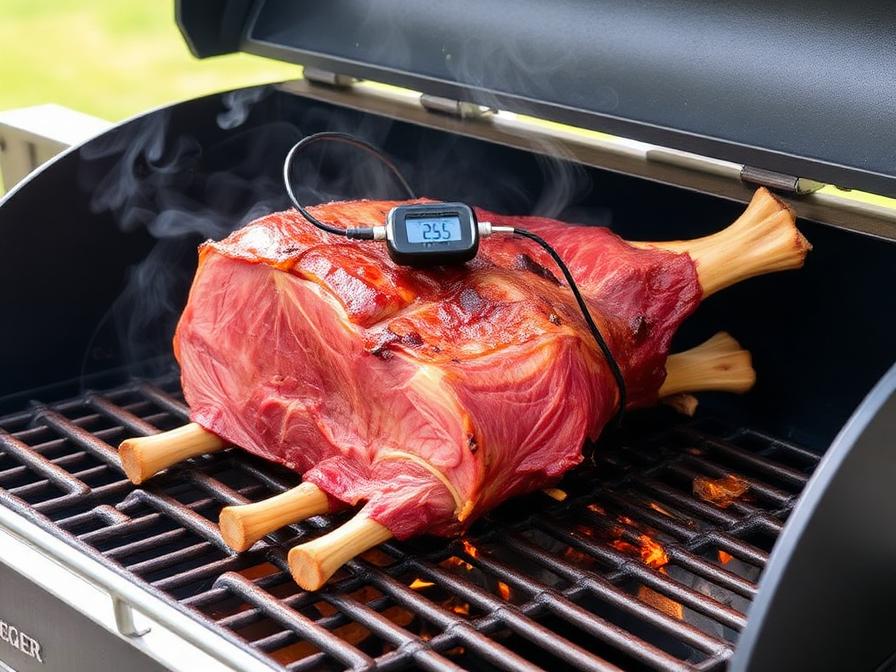
Time: 15 minutes preheat
- 4
STAGE 1
Place roast bone-side down on grates, smoke 3.5-5 hours
Place the prime rib bone-side DOWN directly on the grill grates (the bones act as a natural roasting rack). If boneless, place fat-side UP. Insert a wireless probe thermometer into the center of the roast, avoiding bones and large fat pockets.
Close the lid. Set the probe alarm for 115°F internal (we'll pull around 120°F to allow for carryover). Walk away.
Smoke time depends on roast size: 4-5 lb takes 3-3.5 hours; 6-7 lb takes 4-4.5 hours; 8-9 lb takes 4.5-5.5 hours; 10+ lb takes 5.5-6.5 hours. Rule of thumb: ~35-40 minutes per pound at 225°F.
Don't open the lid during this phase. Trust the thermometer. The Traeger maintains steady temperature; the prime rib will hit target temperature when it hits it.
Critical pull temperatures (these are PRE-rest; carryover adds 3-5°F): for final medium-rare (130°F final), pull at 120°F internal. For final rare (120°F final), pull at 110°F. For final medium (140°F), pull at 130°F.
When the probe hits your target Stage 1 temperature, pull the roast off the grill. Place it on a clean cutting board, tent loosely with foil, and let it rest while you crank the grill for Stage 2.
Time: 3.5-5 hours (depending on roast size)
- 5
CRANK
While roast rests, increase Traeger to maximum temperature
Crank the Traeger to its maximum temperature setting (typically 500°F on most models). This takes 10-15 minutes for the grill to climb from 225°F to 500°F.
If using GrillGrates (the aluminum sear panels that sit on top of regular grates), place them now during the temperature ramp. GrillGrates concentrate heat to 650°F+ — meaningfully better sear marks than the bare 500°F grates.
The roast continues to rest during this preheat. Internal temperature climbs another 3-5°F via carryover (going from 120°F to maybe 123-125°F). This is normal and useful — the brief rest also lets juices redistribute through the meat.
Time: 10-15 minutes
- 6
STAGE 2
Sear at 500°F to 130°F internal, rest 20-30 minutes
When the Traeger hits maximum temperature, place the prime rib back on the grates. The sear should make an audible sizzle when the meat makes contact.
Sear 8-15 minutes total. Rotate the roast halfway through for even crust on all sides. Watch the internal temperature carefully — the sear pushes temperature up FAST.
Pull from sear at 130°F internal for medium-rare (final temp after rest: 132-135°F). For other doneness levels, target the pre-rest temp from the chart in Step 4.
Transfer the seared prime rib to a clean cutting board. Tent loosely with foil. Rest 20-30 minutes — non-negotiable. Skipping the rest loses 30-40% of the juices to the cutting board within 10 minutes.
During the rest, internal temperature climbs another 3-5°F via carryover, finishing at perfect medium-rare (132-135°F). The juices redistribute through the meat instead of pouring out when sliced.
After resting, carve the roast: if bone-in, separate bones from meat with a sharp knife along the curvature. Slice the meat into 1/2-inch thick slices, against the grain. Serve immediately with horseradish, au jus, or simple flaky sea salt.
Pair with: roasted potatoes, Yorkshire pudding, creamed spinach, roasted brussels sprouts, garlic green beans. Bold red wine (Cabernet Sauvignon, Bordeaux, Syrah) is the classic pairing.
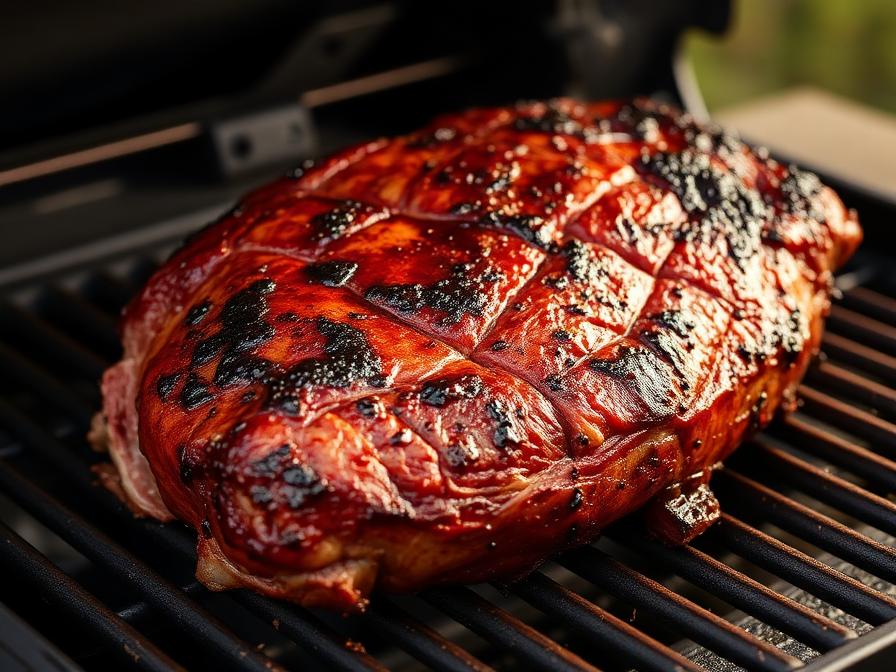
Time: 8-15 min sear + 20-30 min rest + 5 min carving
Doneness Reference
Prime Rib Doneness Temperature Guide
Match cook temperatures to your preferred doneness. The reverse-sear method requires pulling early to account for carryover during the rest.
Prime rib continues cooking after it leaves the grill — this "carryover cooking" can add 3-8°F to internal temperature during the 20-30 minute rest. Always pull at temperatures BELOW your final target. Use this table:
Doneness
Rare
Pull from smoke
105°F
Pull from sear
115°F
Final after rest
118-122°F
Visual / who it's for
Cool red center, soft texture. Steakhouse traditionalists.
Doneness
Medium-Rare (Recommended)
Pull from smoke
115°F
Pull from sear
125-130°F
Final after rest
130-135°F
Visual / who it's for
Warm pink center edge-to-edge, juicy with rosy interior. Most prime rib eaters; the steakhouse default.
Doneness
Medium
Pull from smoke
125°F
Pull from sear
135-140°F
Final after rest
138-142°F
Visual / who it's for
Pink center fading to gray near edges. Buyers who prefer less pink but still tender.
Doneness
Medium-Well
Pull from smoke
135°F
Pull from sear
145-150°F
Final after rest
148-152°F
Visual / who it's for
Slight pink center, firmer texture. Buyers who don't like pink.
Doneness
Well-Done (Not Recommended)
Pull from smoke
145°F
Pull from sear
155°F
Final after rest
158-162°F
Visual / who it's for
No pink, drier texture. This recipe genuinely doesn't work for well-done. Prime rib's marbling renders out at high temperatures; the resulting meat is dry. If well-done is your preference, choose a leaner cut..
For most home cooks: target medium-rare (130°F final). This is the steakhouse standard for prime rib because it preserves the marbling that makes prime rib special. Cook beyond medium and you're wasting the cut.
Wood Selection
The Best Wood for Smoked Prime Rib
Beef stands up to bolder smoke than chicken or pork. Hickory and pecan are the consensus picks; mesquite for serious smoke fans.
Hickory (Classic Choice)
The most popular pellet for prime rib. Bold, slightly sweet smoke that complements beef's richness. Produces deep mahogany bark color. The default choice for most pit masters smoking beef. If you only buy one pellet for holiday cooking, buy hickory.
Best for: Classic beef flavor, traditional holiday cooking
Pecan (Refined Choice)
Nutty, slightly sweet profile that's underused for prime rib. Pairs beautifully with the buttery richness of well-marbled prime rib. Less aggressive than hickory, more interesting than mild fruit woods. Pit-master's pick for refined holiday cooking.
Best for: Refined flavor, complex profile
Cherry (Color) or Mesquite (Bold)
Cherry adds gorgeous mahogany-red color to the crust with subtle fruit sweetness — Instagram-ready visual presentation. Mesquite delivers Texas-style intense smoke for cooks who want it pronounced. Both work; mesquite needs to be balanced (50/50 with hickory) for prime rib's relatively short 4-5 hour cook.
Best for: Visual appeal (cherry) or maximum smoke flavor (mesquite)
What to Avoid
- •Apple alone: too mild for prime rib's robust flavor.
- •Maple alone: too subtle; works in blends but not as standalone.
- •Olive wood: not common in pellet form; skip.
The Gear I Use
Essential Gear for Smoked Prime Rib
Four tools that meaningfully impact prime rib results. The wireless probe thermometer is the single most important.
Wireless Probe Thermometer
Non-negotiable for prime rib. The 4-5 hour cook requires monitoring temperature without opening the lid. ThermoPro TP20 ($70) — two probes, wireless, reliable. MEATER Plus ($100) — single wireless probe that lives in the meat. ThermoWorks Smoke ($99) — premium accuracy, professional standard.
Shop wireless thermometers →Hickory or Pecan Pellets
Hickory for classic beef flavor, pecan for refined nutty profile. Traeger Hickory ($25/20lb), Bear Mountain ($22), or Lumberjack 100% Pecan ($30) all work. 20-pound bag lasts 4-5 prime rib cooks. Buy a backup bag during holiday season — running out mid-cook on Christmas Day is a disaster.
Shop hickory pellets →Carving Knife and Fork Set
Prime rib deserves a proper carving knife — long-bladed (10-12 inches), serrated or Granton-edged, sharp. Wusthof Classic 12-inch Granton Carving Knife ($150) is the heirloom investment. Victorinox Fibrox 12-inch ($60) is the value pick. Pair with a long-tined carving fork for stability.
Shop carving knives →Carving Board with Juice Well
Prime rib produces significant juices during carving. A cutting board with a deep groove around the perimeter catches the juices for au jus instead of letting them spill on the counter. John Boos Maple Carving Board ($120) is the heirloom version; Ironwood Gourmet at $40 is the value option.
Shop carving boards →Avoid These
7 Common Smoked Prime Rib Mistakes
Seven preventable errors that ruin what should be a holiday showstopper.
Mistake 1: Skipping the dry brine
The single biggest mistake. The 24-48 hour dry brine is what separates good prime rib from great prime rib. Salt penetrates the meat for deeper flavor; cold dry air creates the surface that browns beautifully during the sear; proteins break down for more tender texture. Skip it and your prime rib is fine. Do it and your prime rib is memorable. If you're tight on time, salt 4-6 hours minimum — but plan ahead and dry brine 24+ hours when possible.
Mistake 2: Cooking past medium-rare
Prime rib's value is in the marbling. Cooking past medium-rare (130-135°F final) renders out the intramuscular fat and produces drier, less flavorful meat. The famous "well-done prime rib" jokes exist because well-done prime rib is genuinely a waste of money. If your guests want well-done, give them a different cut. Hold the line at medium-rare.
Mistake 3: Pulling at the wrong temperature for reverse sear
Reverse sear requires pulling the roast EARLIER than your final target temp. Carryover cooking during the sear and rest adds 8-12°F. If you want medium-rare (130°F final), pull from the smoke at 115°F (not 130°F) and pull from the sear at 125°F (not 130°F). Always pull below target — you can always cook more, never less.
Mistake 4: Skipping the rest
20-30 minute rest after searing is non-negotiable. Carving immediately after the sear loses 30-40% of the juices to the cutting board. Tent loosely with foil (not tightly — soggy crust) and rest the full 20-30 minutes. Internal temperature climbs another 3-5°F during the rest, finishing at perfect medium-rare. The rest is when the magic completes.
Mistake 5: Cooking from cold
Cold prime rib straight from the fridge cooks unevenly — the exterior overcooks before the interior catches up. Always temper the roast at room temperature for 1.5-2 hours before smoking. The room-temperature rest is part of the recipe, not optional. For 6-8 pound roasts especially, this matters.
Mistake 6: Wrong cut (boneless instead of bone-in)
Boneless prime rib cooks faster but less evenly than bone-in. Bones insulate the meat and act as a natural roasting rack. If your butcher offers both, choose bone-in. Best of both worlds: ask the butcher to remove the bones, then tie them back on with twine — bone-in cooking with boneless carving ease.
Mistake 7: Slicing with the grain instead of against
Prime rib's muscle fibers run along the length of the roast. Slicing WITH those fibers gives you long tough strands. Slicing AGAINST them (perpendicular to the grain) breaks the fibers into shorter, more tender pieces. Identify the grain direction before you slice; rotate the roast if needed. This single slicing detail separates tender prime rib from chewy prime rib.
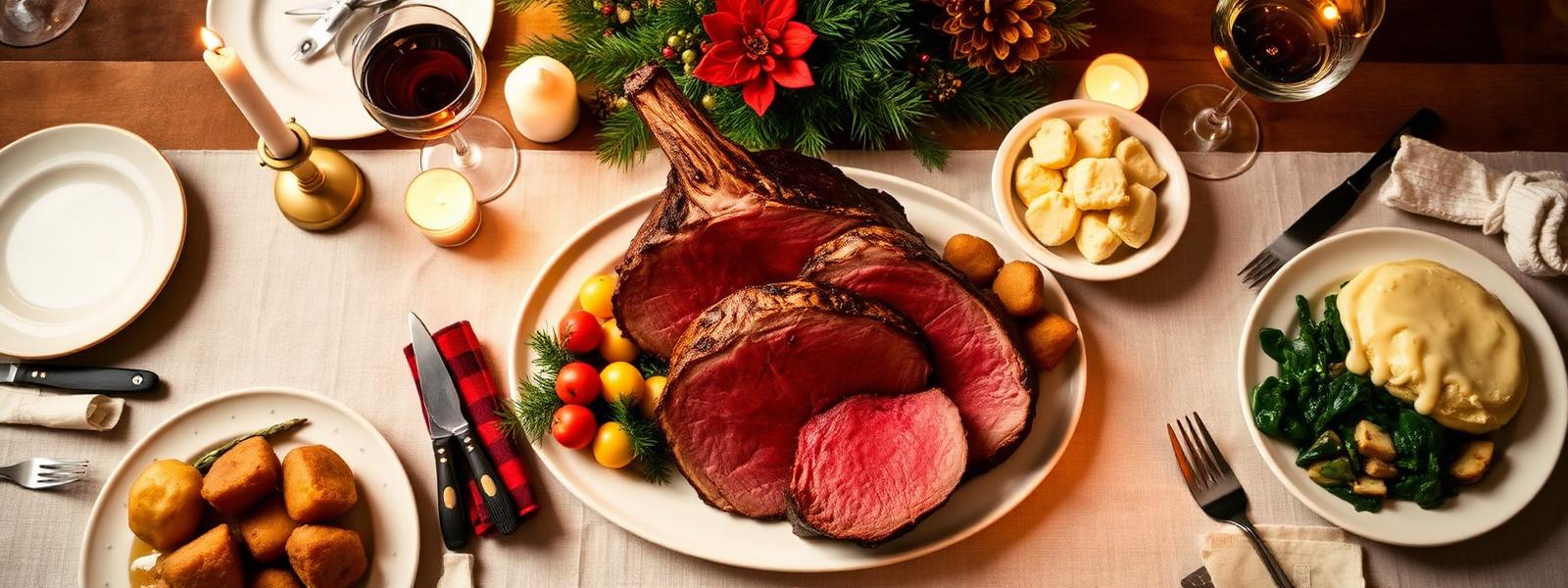
How to Serve It
6 Ways to Serve Smoked Prime Rib
Prime rib is the centerpiece — sides should support, not compete. Six classic serving styles for different occasions.
1. Classic Christmas Plate
Sliced prime rib, mashed potatoes, Yorkshire pudding, creamed spinach, gravy, horseradish on the side. The traditional holiday plate.
2. Carving Board Family Style
Whole roast on a wooden board, carved tableside, family serves themselves. Showpiece presentation that turns dinner into an event.
3. Steakhouse Style
Thick slices with creamed spinach, baked potato, asparagus, red wine reduction. Restaurant presentation at home.
4. With Au Jus and Horseradish
Sliced thin (1/4 inch) with au jus for dipping and prepared horseradish cream. The French dip approach.
5. Open-Faced Sandwich
Sliced prime rib on toasted sourdough with horseradish cream, arugula, caramelized onions. Day-after lunch.
6. Prime Rib Hash
Diced cold leftover prime rib with crispy potatoes, onions, fried egg on top. Boxing Day breakfast.
Leftover prime rib keeps in the fridge 3-4 days. Reheat gently in a 275°F oven wrapped in foil with a splash of beef broth — high heat reheating ruins the medium-rare texture. Or slice cold and serve over salad, in sandwiches, or as charcuterie. Don't waste leftovers — prime rib is too valuable.
FAQ