Traeger Recipe
Traeger Pulled Chicken: The 2-Hour Recipe (Pulled Pork's Weeknight Cousin)
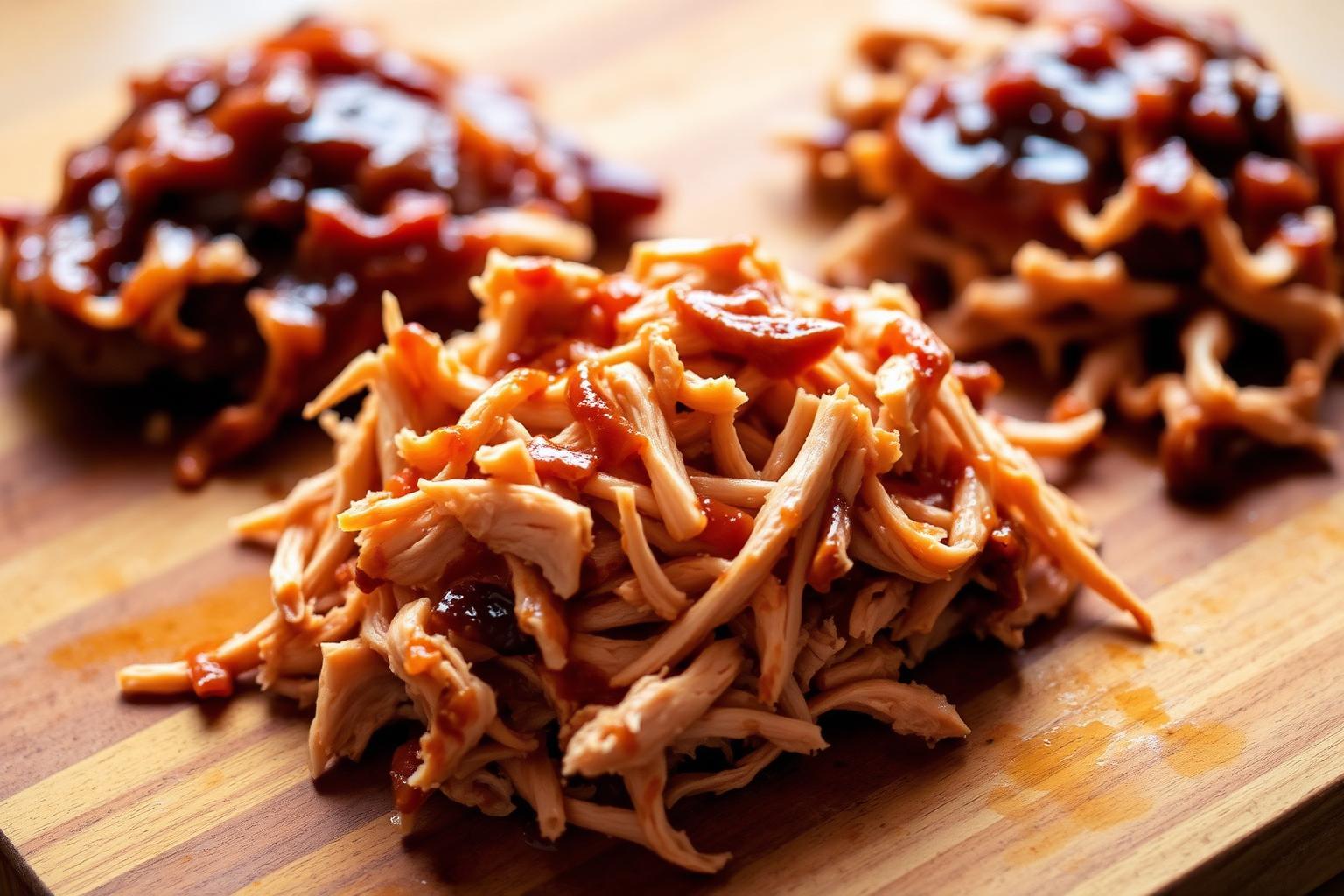
Smoked pulled chicken is the weeknight version of pulled pork. Same shredded format, same end uses (sandwiches, tacos, bowls, salads), but cooked in 2-3 hours instead of 8-10. The technique is similar to pulled pork but with one critical difference most home cooks miss: chicken needs to be pulled at 175-180°F (breast) or 190-195°F (thighs) — well above the 165°F USDA minimum — because connective tissue needs to break down for proper shredding texture. At 165°F chicken is firm and doesn't shred well; at 180°F+ it pulls apart with a fork. Bone-in skin-on chicken thighs are the cut of choice — moist, forgiving, perfect for pulling. Total time: 2-3 hours. Cost per pound: $4-6 vs $10-15 for pulled pork. Meal-prep friendly: keeps 4 days in fridge, 2 months frozen.
The Recipe
Traeger Smoked Pulled Chicken
Rated 4.9 — based on 356 reader ratings
Prep Time
5 min (+ optional brine)
Cook Time
1 hr smoke + 1-1.5 hr finish
Rest Time
10-15 min
Serves
6-8
Smoker temp: 225°F (smoke phase) → 350°F (finish phase)
Pull temp: 175-180°F breast / 190-195°F thighs
Recommended pellets: Apple, Cherry, Pecan, or Traeger Signature Blend
Share this recipe:
The Temperature Logic
Why You Pull Chicken at 180°F+ (Not 165°F)
The USDA says 165°F is safe for chicken. That's correct for SAFETY. But pulled chicken needs higher temperatures for proper shredding texture.
This is the single most important technique detail in the recipe — and the one most home cooks miss. Standard chicken recipes (grilled chicken thighs, roasted breasts, etc.) pull at 165°F because the chicken is served whole. Pulled chicken is different. The chicken needs to shred apart into proper pulled texture — and that requires connective tissue to break down into gelatin, which only happens at temperatures well above 165°F.
165°F = Safe but Too Firm
At 165°F internal, chicken is fully cooked and USDA-safe to eat. But the texture is firm — the meat doesn't pull apart easily. You can chop it with a knife, but it doesn't shred into the proper "pulled" texture. Restaurant-quality pulled chicken always cooks past 165°F to develop the right texture. Pulling at 165°F produces "diced chicken" not "pulled chicken."
180°F (Breast) = Shred-Ready
At 175-180°F internal, chicken breast's connective tissue starts breaking down. The meat fibers separate easily when pulled with a fork. Texture transitions from firm-and-sliceable to soft-and-shreddable. Critical: this works for bone-in skin-on chicken — boneless skinless breasts WOULD dry out at 180°F. The skin protects the meat at higher temps.
190-195°F (Thighs) = Fall-Apart Tender
Chicken thighs have more connective tissue than breasts and can take even higher temperatures. At 190-195°F, the collagen has fully rendered into gelatin — the meat literally falls off the bone with minimal force. Thighs at 195°F are MORE tender than thighs at 165°F (counterintuitive but true) because the collagen has melted.
The practical rule for pulled chicken: pull breasts at 175-180°F, pull thighs at 190-195°F. Use bone-in skin-on cuts so the meat doesn't dry at these higher temperatures. Skip boneless skinless breasts entirely — they don't have the protection needed for the higher pull temperatures.
Before You Start
What You'll Need
Bone-in skin-on chicken pieces, simple seasoning, BBQ sauce. Pantry-staple ingredients.
The Ingredients
Homemade Chicken BBQ Rub
- 2 tablespoons brown sugar
- 1 tablespoon smoked paprika
- 2 teaspoons kosher salt
- 1 teaspoon black pepper
- 1 teaspoon garlic powder
- 1 teaspoon onion powder
- 1/2 teaspoon ground mustard
- 1/2 teaspoon cayenne (optional, for mild heat)
The brown sugar in the rub is what creates the caramelized exterior on the skin (which gets discarded before shredding, but contributes flavor during cooking). Don't skip it. The cayenne is optional — even at 1/2 teaspoon, the heat is mild and balances the sweetness.
The Equipment
On shredding methods: forks work for small batches but get tedious for 3-4 pounds. Bear claws (~$10) are designed for shredding and make the process 5x faster. Stand mixer with paddle attachment on LOW speed for 30-60 seconds is the pro shortcut — shreds 3 pounds of chicken in under a minute. All three methods produce equivalent results; pick based on your equipment and patience level.
Step by Step
How to Smoke Pulled Chicken on a Traeger
Six steps across two stages. The two-stage temperature is what gets you flavor + speed without sacrificing texture.
- 1
SEASON
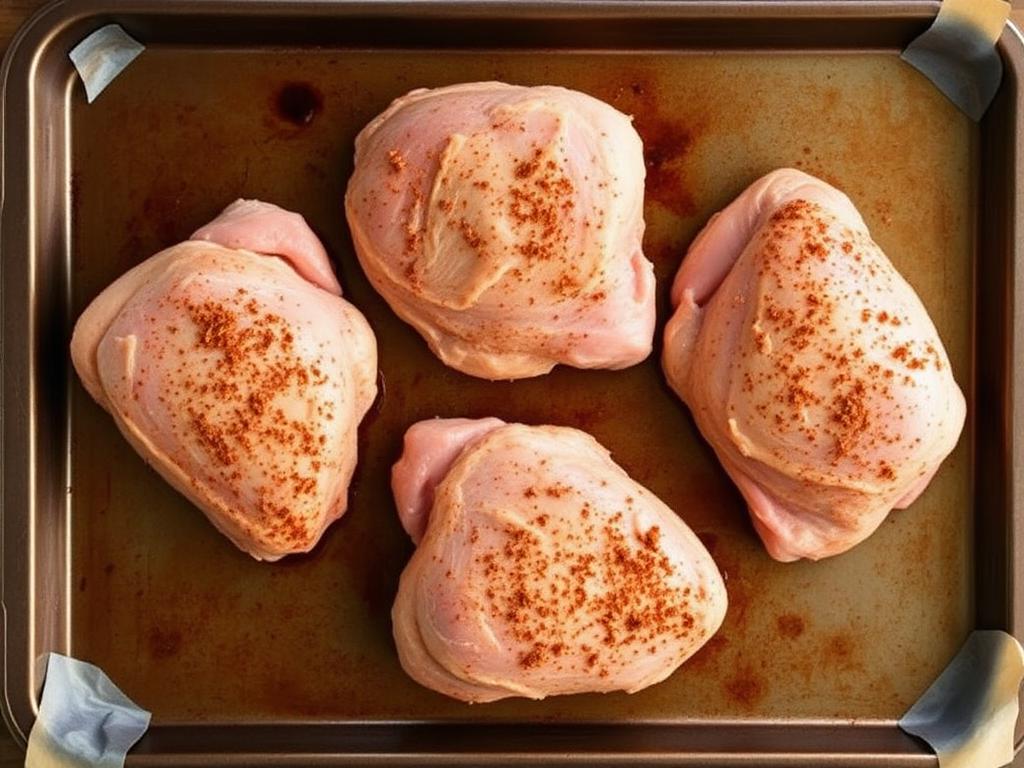
Apply rub generously, including under the skin
Pat the chicken pieces completely dry with paper towels. Wet skin steams instead of seasoning properly.
Drizzle olive oil OR yellow mustard over the chicken as a binder (mustard sounds odd but the flavor disappears during cooking — it just helps the rub adhere). Apply the dry rub generously to both sides of each piece — about 1 tablespoon of rub per pound of chicken.
Critical step most home cooks skip: gently lift the breast skin from the meat (use your fingers, working carefully) and rub seasoning UNDER the skin directly on the breast meat. Same technique for thigh skin if accessible. This adds significantly more flavor to the meat itself — the skin gets discarded before shredding, so seasoning only on top wastes flavor.
Let the seasoned chicken sit at room temperature for 20-30 minutes while the smoker preheats. Cold chicken straight from the fridge cooks unevenly.
Time: 5 minutes active + 20-30 minute rest
- 2
PREHEAT
Set Traeger to 225°F with Super Smoke if available
Fire up your Traeger and set it to 225°F. If your model has Super Smoke mode (Ironwood, Timberline, Woodridge Pro), enable it for Stage 1 — chicken absorbs smoke flavor exceptionally well during the first 60 minutes.
Recommended wood for pulled chicken:
Apple: Mildest, most popular for chicken. Beautiful golden-mahogany color.
Cherry: Slightly bolder than apple with reddish-mahogany color.
Pecan: Underrated nutty profile. Pairs with brown sugar in the rub.
Hickory: Bolder traditional BBQ smoke. Use sparingly — chicken absorbs hickory faster than beef or pork.
Traeger Signature Blend: Balanced default if you don't want to think about it.
AVOID mesquite: too aggressive for chicken.
Time: 15 minutes preheat
- 3
STAGE 1
Smoke at 225°F for 1 hour (to 145°F internal)
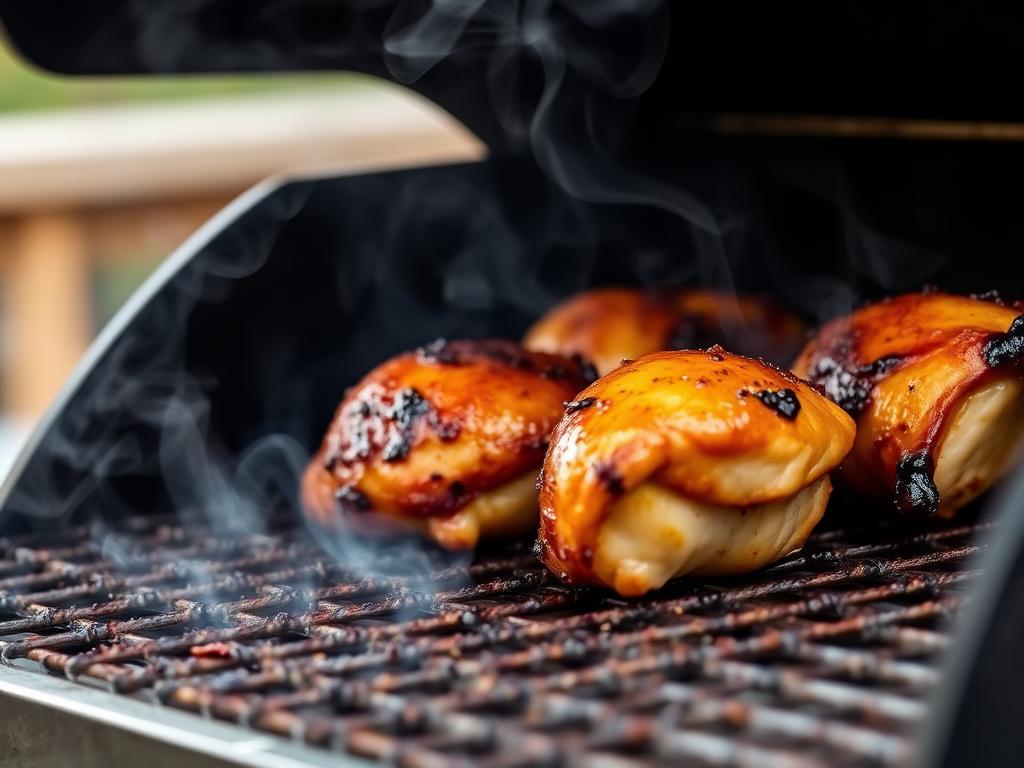
Place the chicken pieces directly on the grill grates skin-side UP. Insert a wireless probe thermometer into the thickest part of one piece (the largest thigh or breast). If you have a second probe, insert it into the thickest part of a second piece for redundancy.
Smoke at 225°F until internal temperature reaches ~145°F. This typically takes about 1 hour, though depends on chicken piece size and starting temperature. Don't open the lid during this phase — smoke needs to develop.
This phase is purely flavor development. The chicken isn't done yet — at 145°F it would be unsafe to eat. We're building wood-fire flavor and starting the cook before bumping to higher heat.
Time: 1 hour
- 4
RAMP
Bump the smoker to 350°F (the finishing stage)
When chicken hits 145°F internal, crank the Traeger to 350°F. Leave the chicken in place — no need to remove during temperature ramp. Most pellet grills take 8-12 minutes to climb from 225°F to 350°F.
This higher temperature finishes the chicken faster while keeping it moist. Cooking exclusively at 225°F would take 2.5-3.5 hours total — fine but unnecessarily long for chicken (which doesn't need brisket-style ultra-low temperatures). The 225°F + 350°F combination gives you smoke flavor in Stage 1 plus faster finish in Stage 2.
Time: 8-12 minutes for grill to reach 350°F
- 5
STAGE 2
Cook to 175-180°F (breast) and 190-195°F (thighs)
Continue cooking at 350°F. Monitor temperature in the largest piece and any second piece you have probes in.
Pull temperatures (this is where pulled chicken differs from regular smoked chicken):
Breasts: 175-180°F (don't pull at 165°F — see "Why Pull Above 165°F" section above)
Thighs: 190-195°F (collagen breakdown for fall-apart-tender shredding)
If cooking a mix of breasts and thighs, you'll need to monitor both. Breast pieces typically hit 180°F first (they're smaller and less dense). Pull breasts at 180°F and let thighs continue cooking until they hit 195°F. The thighs aren't damaged by waiting at 195°F — they get more tender.
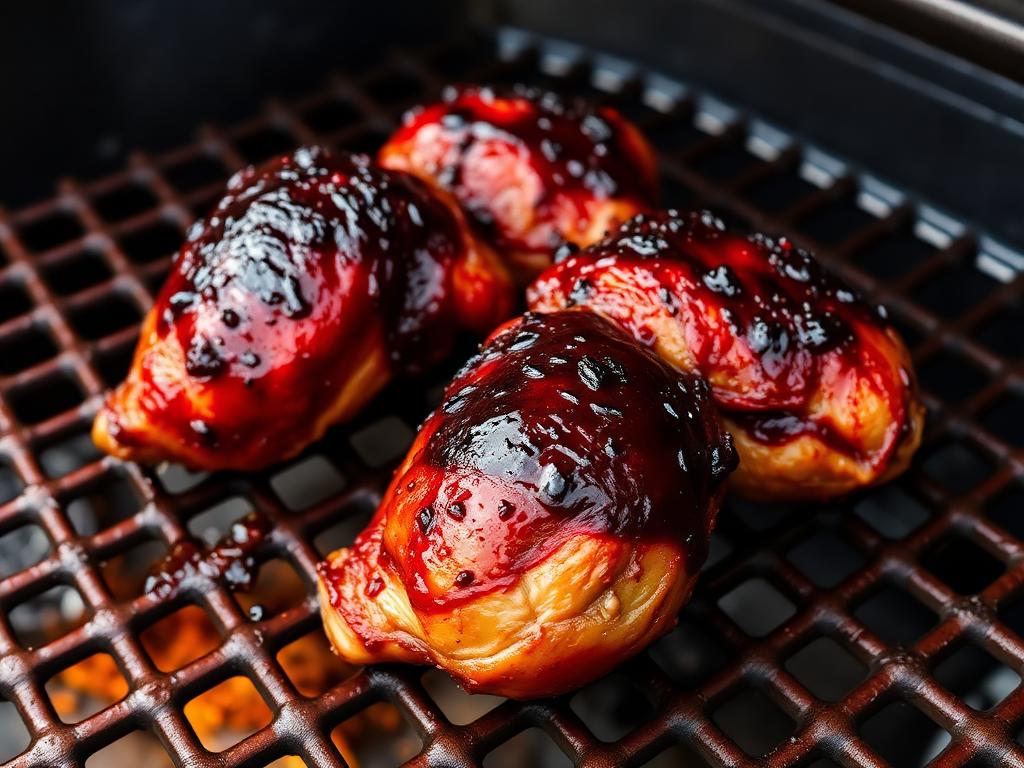
If using BBQ sauce: brush sauce on the chicken during the last 15 minutes of Stage 2. Sauce caramelizes properly at 350°F. Apply too early and sugars burn; apply too late and sauce stays wet.
Time: 1-1.5 hours
- 6
SHRED
Rest 10-15 minutes, then shred and toss with BBQ sauce
Pull the chicken from the smoker when target temperatures are hit. Transfer to a large baking sheet or tray. Tent loosely with foil. Rest 10-15 minutes.
During the rest, juices redistribute through the meat. Skipping the rest results in 30-40% of juices ending up on your cutting board instead of in the chicken.
Remove the skin from each piece and discard (skin is delicious during smoking but doesn't shred well — texture is rubbery in pulled chicken). Some pit masters chop the skin into small pieces and add it back for flavor; that's optional.
Remove the bones. Set aside for stock if desired.
Shred the meat using your preferred method: two forks (5-10 min for 3 lbs), bear claws (3-5 min, $10 specialty tool), OR stand mixer with paddle attachment on LOW for 30-60 seconds (PROFESSIONAL trick — shreds 3 lbs in under a minute, don't go above low or you'll pulverize the chicken).
Toss the shredded chicken with optional 1/4 cup apple cider vinegar (adds tangy flavor punch). Then toss with 1 cup BBQ sauce until well coated. Add more sauce if desired — pulled chicken can take more sauce than pulled pork because the chicken's meat-to-sauce ratio is leaner.
Serve immediately or transfer to airtight containers for meal prep storage.
Time: 10-15 minutes rest + 5-10 minutes shredding/saucing
The Comparison
Pulled Chicken vs Pulled Pork: Which When?
Same shredded format, same end uses. But meaningfully different cook times and costs. Here's when each one wins.
Weeknight Winner
Pulled Chicken
- Cook time: 2-3 hours
- Cost per pound: $4-6
- Yield from 3 lb raw: ~2 lbs shredded
- Best smoker temps: 225°F + 350°F two-stage
- Lighter calorie profile: ~165 kcal per 3 oz
Best for: Weeknight dinner, meal prep, taco night, lunch sandwiches, salads, bowls.
Weekend Project
Pulled Pork (Boston Butt)
- Cook time: 8-10 hours
- Cost per pound: $10-15
- Yield from 8 lb raw: ~5 lbs shredded
- Best smoker temps: 225°F throughout (low and slow)
- Richer calorie profile: ~250 kcal per 3 oz
Best for: Weekend BBQ, large gatherings, smoke-flavor-focused cooks who want maximum bark and flavor depth. See the full pulled pork recipe →
Both recipes shine in different contexts. Pulled chicken is the weeknight workhorse — meal prep on Sunday, eat through Wednesday. Pulled pork is the weekend showpiece — start at 8 AM Saturday, eat by 6 PM. Many cooks rotate between them: pulled chicken in the meal prep rotation, pulled pork as a weekend project. Both work in identical end-use applications (sandwiches, tacos, bowls, nachos, salads).
Wood Selection
The Best Wood for Pulled Chicken
Chicken absorbs smoke flavor faster than beef or pork. Milder pellets generally produce better results — chicken is easy to over-smoke.
Apple (Most Reliable)
The most popular pellet for chicken. Mild, slightly sweet smoke that complements chicken's flavor without overpowering. Beautiful golden-mahogany color. If you only buy one pellet for chicken, buy apple. Pairs perfectly with sweet BBQ sauces and traditional chicken dry rubs.
Best for: Reliable default, classic chicken flavor
Cherry or Pecan
Cherry adds beautiful color and slightly bolder flavor than apple. Pecan adds nutty complexity that pairs especially well with brown sugar in the rub. Both are excellent step-up choices from apple. Pecan is the underrated pit-master pick for refined pulled chicken.
Best for: Visual appeal (cherry), refined flavor (pecan)
Hickory (Use Sparingly)
Bolder traditional BBQ smoke. Works for pulled chicken if you want more pronounced smoke flavor — especially for chicken that'll be heavily sauced (sweet-and-tangy or smoky BBQ sauces benefit from bolder smoke base). Don't over-smoke with hickory; chicken absorbs it faster than beef or pork.
Best for: BBQ-style flavor, heavy sauce applications
What to Avoid
- •Mesquite: Far too aggressive for chicken. Will completely overpower the meat.
- •Pure oak: Works but produces less interesting flavor than fruit/nut woods on chicken.
- •Maple alone: Too subtle for the 2-3 hour cook; works in blends but not standalone.
The Gear I Use
Essential Gear for Pulled Chicken
Four tools that make this recipe foolproof. The shredding tool is what most home cooks underspecify.
Wireless Probe Thermometer
Critical for hitting the precise pull temps (180°F breast, 195°F thighs). The 2-3 hour cook requires monitoring without opening the lid. ThermoPro TP19 ($25), ThermoWorks Smoke ($99), or MEATER Plus ($100). Critical for knowing exactly when each piece is shred-ready.
Shop wireless thermometers →Bear Claws (Meat Shredders)
The single most-impactful purchase for pulled meat recipes. Bear claws shred 3 pounds of chicken in 3-5 minutes — vs 10-15 minutes with two forks. Cave Tools Bear Claws ($10), Bear Paws Original ($15), or Mountain Voyage Pulled Pork Shredder Claws ($12). Cheap, effective, lifetime tool.
Shop bear claws →Apple or Cherry Wood Pellets
Apple for classic chicken flavor, cherry for color. Traeger Apple ($25/20lb), Bear Mountain Cherry ($22), or Lumberjack 100% Apple ($28). 20-pound bag handles 8-10 pulled chicken cooks. Buy backup pellets — running out mid-cook ruins meal prep timing.
Shop chicken pellets →Quality BBQ Chicken Rub
Meat Church Holy Voodoo, Killer Hogs The BBQ Rub, Traeger Chicken Rub, or Historic BBQ All Purpose. Premium rubs ($10-18) genuinely improve over generic supermarket seasonings. Enough for 12-15 batches of pulled chicken.
Shop BBQ chicken rubs →Avoid These
6 Common Pulled Chicken Mistakes
Six preventable errors that ruin what should be a foolproof weeknight recipe.
Mistake 1: Pulling at 165°F instead of 180°F+
The #1 most-impactful mistake. Pulling chicken at 165°F (USDA-safe minimum) produces firm chicken that doesn't shred properly. The result is "diced chicken" not "pulled chicken." Pull breasts at 175-180°F and thighs at 190-195°F so connective tissue breaks down. The chicken doesn't dry out at these higher temps when bone-in skin-on. The 15-30°F difference is what separates good pulled chicken from great pulled chicken.
Mistake 2: Using boneless skinless breasts
Boneless skinless chicken breasts dry out before reaching shred-ready temperatures (180°F+). The skin and bone protect the meat at higher pull temps; without them, the chicken turns into dry stringy fibers. Use bone-in skin-on chicken thighs (best), or a mix of bone-in skin-on thighs + breasts. Boneless skinless cuts are great for grilled chicken; they're wrong for pulled chicken.
Mistake 3: Skipping the high-heat finish phase
Smoking exclusively at 225°F means 2.5-3.5 hours total cook time. Bumping to 350°F after Stage 1 cuts that to 2-3 hours total — meaningful for weeknight cooking. Plus the 350°F finish helps render skin fat and crisp the surface (which gets discarded but contributes flavor during cooking). The two-stage approach is faster AND produces better results than single-temperature cooking.
Mistake 4: Not seasoning under the skin
Dry rub on skin only flavors the skin — and you discard the skin before shredding. Lift the skin gently with your fingers and rub seasoning directly on the meat underneath. This single technique dramatically improves the flavor of the shredded chicken. Most authority recipes call this out specifically; home cooks routinely skip it.
Mistake 5: Sauce timing — too early or too late
Apply BBQ sauce only during the last 15 minutes of Stage 2 (350°F phase). Sauce caramelizes properly at 350°F+. Too early (during 225°F smoke phase) = gummy uncaramelized sauce. Too late (after pulling) = sauce mixed with cold chicken instead of caramelized on cooked chicken. Proper timing produces glaze-style finish.
Mistake 6: Trying to shred chicken cold
Shred chicken WHILE STILL WARM — preferably immediately after the 10-15 minute rest. Cold chicken is significantly harder to shred and the texture is wrong (clumpy instead of shreddy). If you're prepping for later use, shred while warm and store the shredded chicken; don't store whole pieces and shred when cold.
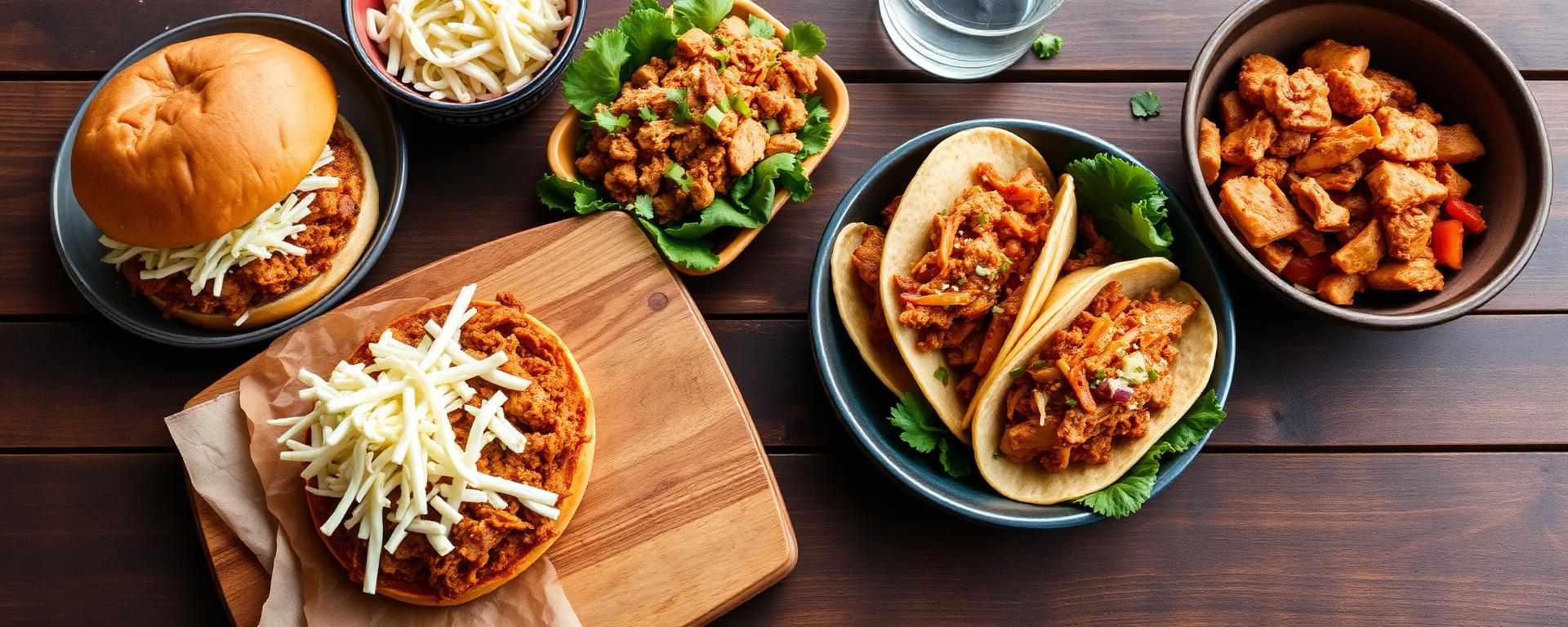
What to Make
8 Ways to Use Smoked Pulled Chicken
Pulled chicken is the meal-prep MVP. Same shredded format works in dozens of dishes. Eight serving ideas to use the recipe yield.
1. BBQ Sandwiches
Pulled chicken on toasted brioche with coleslaw, pickles, additional BBQ sauce. The classic.
2. Chicken Tacos
Pulled chicken in flour tortillas with avocado, lime crema, cilantro, queso fresco. Taco night.
3. Loaded Baked Potato
Russet potato topped with pulled chicken, cheddar, sour cream, scallions, BBQ sauce. Hearty dinner.
4. Chicken Quesadillas
Flour tortilla, pulled chicken, melted cheese, cooked until golden. Quick lunch.
5. Salad Topper
Mixed greens, pulled chicken, corn, black beans, avocado, ranch. Healthy lunch.
6. Mac and Cheese Topper
Stovetop or baked mac and cheese topped with pulled chicken. Comfort food.
7. BBQ Chicken Pizza
Pulled chicken on pizza dough with red onion, cheese, BBQ sauce drizzle. Friday night dinner.
8. Stuffed Sweet Potatoes
Roasted sweet potato split open and topped with pulled chicken, black beans, lime, cilantro. Healthy meal prep.
Meal prep storage: Pulled chicken keeps in airtight containers in the fridge for 4 days, or freezer for 2 months. For meal prep: portion into single-serving containers (1/2 to 3/4 cup chicken per portion), freeze flat in zip-top bags for easy thawing. Reheat in microwave for 60-90 seconds OR in skillet with splash of broth to maintain moisture.
FAQ