Brand Comparison

Grilla Grills vs Traeger: Why Grilla Often Wins at the Same Price Point

Traeger invented the pellet grill in 1986 and still dominates market share. Grilla Grills (founded 2012, acquired by American Outdoor Brands in 2022) is a smaller competitor that builds meaningfully better hardware for the same price. At the mid-tier $899 price point, the Grilla Silverbac beats Traeger's Woodridge Base in build quality, insulation, and features — full stainless steel internals, double-wall insulated chamber, Alpha Connect WiFi with TempTamer temperature recovery, and 20-pound pellet hopper. Traeger wins on app ecosystem, retail availability, and brand recognition. This comparison covers both brands honestly across all price tiers so you can match the right grill to your actual priorities.

12 min readUpdated April 2026Both brands recommended
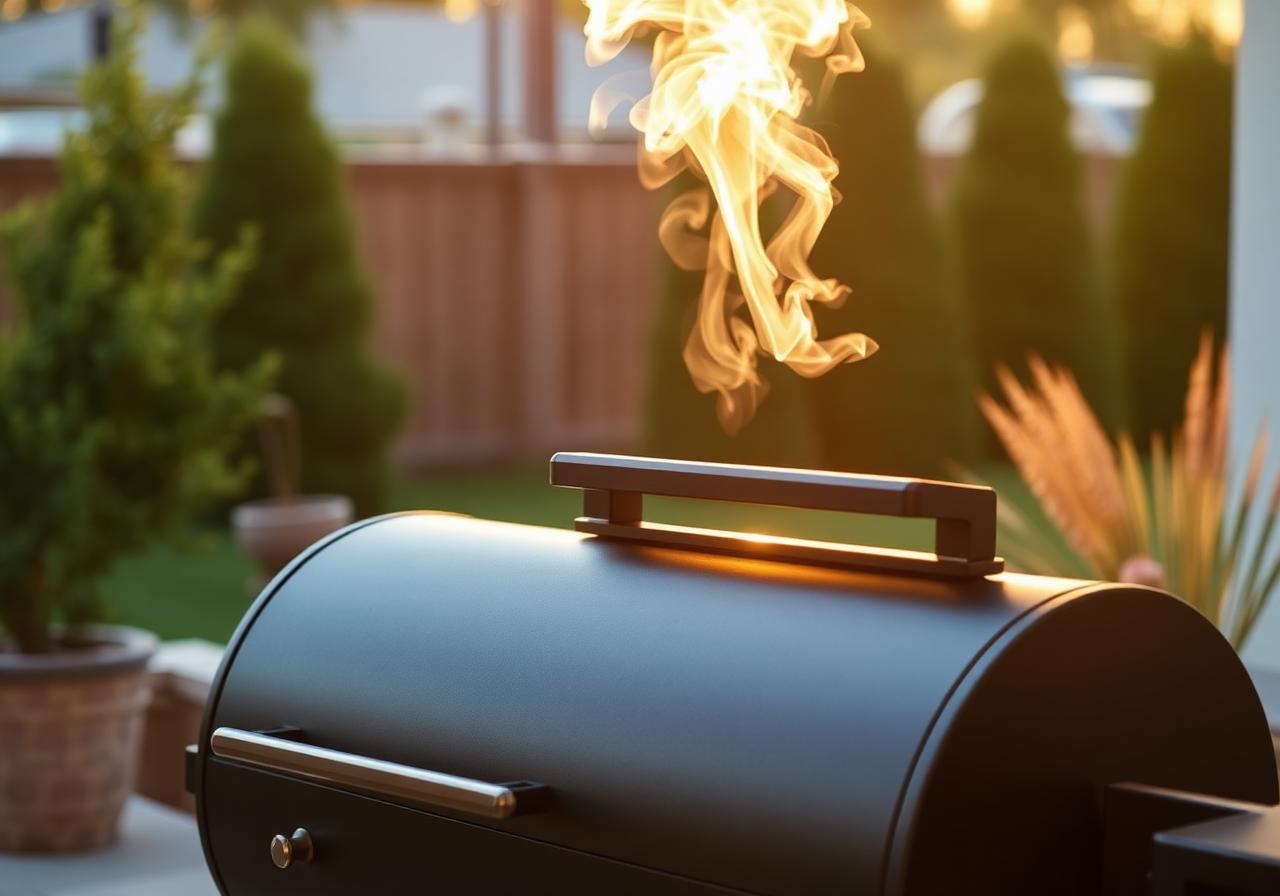
Pellet grill on patio with smoke rising — Grilla Grills and Traeger comparison

Two brands. Similar prices. Meaningfully different hardware. Here's where each one wins.

The Short Answer

Our 60-Second Verdict

At the $899 mid-tier price point, Grilla Silverbac is the better buy for most serious pellet grill shoppers. You get full stainless steel internals, double-wall insulated construction, Alpha Connect WiFi with TempTamer heat recovery, and a 20-pound hopper — hardware advantages that genuinely matter during long cooks and cold-weather smoking. Traeger's Woodridge Base wins on app ecosystem polish, retail availability (Home Depot, Lowe's, Amazon), and established brand recognition. For first-time pellet grill buyers who want a mainstream recommendation, Traeger is perfectly fine. For buyers who research carefully and prioritize build quality over brand recognition, Grilla Silverbac delivers meaningfully more grill for the same money.

Mid-Tier Flagship Comparison

Grilla Silverbac vs Traeger Woodridge Base

Both priced at $899. Same market position. Meaningfully different hardware. Here's what each actually delivers for your $900.

Recommended for Most

Grilla Silverbac Alpha Connect

$899

  • • Cooking area: 692 sq in total (504 + 188)
  • • Pellet hopper: 20 lbs
  • • WiFi: Alpha Connect with TempTamer
  • • Temperature range: 180–500°F (5°F increments)
  • • Construction: Full stainless interior + double-wall insulated body

Strengths

  • Full stainless steel internals — racks, grease tray, heat deflector, burn pot
  • Double-wall insulated cooking chamber — better cold-weather performance
  • TempTamer technology recognizes lid-open and boosts burn rate to reduce swings
  • 20-lb pellet hopper matches standard pellet bag size (just dump it in)
  • Combined time-based + PID temperature control (switchable via app)
  • Heavy-gauge steel construction — 145 lbs total (sturdier feel than Traeger)
  • Window in hopper door doubles as firepot visibility (Alpha model)
  • Customer service consistently praised — ask for the engineer if needed

Weaknesses

  • Smaller retail footprint — mostly direct-to-consumer or specialty retailers
  • Alpha Connect app less polished than Traeger app (occasional connectivity issues)
  • Fewer pellet flavor options in retail stores (order direct for wider variety)
  • Shipping takes 7–15 business days from grilla.com
  • Some Silverbac owners report minor cart misalignment issues at assembly
Brand Recognition Choice

Traeger Woodridge Base

$899

  • • Cooking area: 860 sq in total (larger than Silverbac)
  • • Pellet hopper: 18 lbs
  • • WiFi: WiFIRE (Traeger app)
  • • Temperature range: 180–500°F (5°F increments)
  • • Construction: Standard steel with porcelain grates

Strengths

  • Larger cooking area (860 vs 692 sq in)
  • Excellent Traeger app with 1,000+ recipes
  • Widely available at Home Depot, Lowe's, Amazon, Costco, Walmart
  • Established brand with proven long-term support
  • Digital pellet sensor monitors fuel remotely via app
  • Strong resale value in used market
  • Snap-Jet fast preheat

Weaknesses

  • Standard steel internals (not stainless) — shorter expected lifespan
  • Single-wall construction — 10–15% more pellet consumption in cold weather
  • Does NOT include Super Smoke Mode (only on Woodridge Pro $999)
  • 18-lb hopper requires partial bag dumping (most pellet bags are 20 lbs)
  • Made in China like most Traeger products
  • Less responsive customer service per forum reports

"The Silverbac gives you better hardware; the Woodridge gives you better software and retail support. For shoppers who prioritize grill construction and cold-weather performance, Grilla wins. For shoppers who prioritize app ecosystem and retail availability, Traeger wins. Both are legitimately good choices — this isn't a situation where one grill is objectively wrong."

The Arguments

Four Specific Reasons Grilla Beats Traeger at the Same Price

"Build quality" is vague marketing language. Here are the specific, verifiable hardware advantages the Grilla Silverbac has over Traeger's mid-tier options.

1

Stainless steel internals vs standard steel

The Grilla Silverbac uses full stainless steel for its cooking grates, grease tray, heat deflector, and burn pot. Traeger's Woodridge Base uses porcelain-coated standard steel for grates and plain steel for internal components. Stainless resists corrosion at high temperatures; standard steel eventually pits and rusts, especially in humid climates. Over 5–10 years of ownership, stainless internals dramatically outlast standard steel. Replacement cost difference: ~$100–200 in grate/tray replacement you'd need on the Traeger that the Silverbac doesn't require.

2

Double-wall insulation vs single-wall

The Silverbac has double-wall insulated construction in the cooking chamber — air gap between outer and inner walls acts as a thermal barrier. Traeger's Woodridge Base uses single-wall construction. In real-world use, this means the Silverbac holds temperature better in cold weather (below 40°F), recovers faster after opening the lid, and uses 10–15% fewer pellets per hour during long cooks. If you grill year-round in a climate with real winter, this is a meaningful ongoing operational cost difference.

3

TempTamer vs standard PID

Both grills use PID temperature control for accuracy, but the Grilla Alpha Connect controller adds TempTamer — a proprietary system that detects when the lid opens and boosts burn rate to reduce temperature swing. Result: when you open the lid to check food, the Silverbac drops maybe 10–15°F and recovers in 2–3 minutes. Traeger's Woodridge drops 20–30°F and recovers in 4–6 minutes. Small difference per individual lid-open; significant cumulative difference over a 12-hour brisket cook with multiple checks.

4

20-pound hopper vs 18-pound

Pellet bags come in 20-pound sizes. Grilla Silverbac has a 20-pound hopper — dump the whole bag in, done. Traeger's Woodridge Base has an 18-pound hopper — you either measure out 2 pounds to hold back, or the bag overflows. This is a trivial daily annoyance but it reflects design thinking: Grilla built the Silverbac to match the pellet supply chain; Traeger designed the hopper arbitrarily. Over hundreds of pellet bag swaps, the difference accumulates.

The Other Side

Three Specific Reasons Traeger Beats Grilla for Some Buyers

Grilla wins on hardware; Traeger wins on ecosystem. For specific buyers, the ecosystem advantages matter more than the hardware disadvantages.

App Ecosystem Polish

The Traeger app is genuinely one of the best-designed pellet grill apps on the market — smooth UX, 1,000+ recipes, reliable WiFiRE connectivity, detailed cook logs. Grilla's Alpha Connect app works fine but feels less polished, with occasional connectivity issues reported by users. If you plan to use smartphone monitoring heavily, Traeger's software advantage is real.

Retail Availability

Traeger is carried at Home Depot, Lowe's, Walmart, Costco, Amazon, REI, and specialty grill stores everywhere. You can walk in and buy one today. Grilla is primarily direct-to-consumer (grilla-grills.com) with limited specialty retailer presence. If you need to see the grill in person, get it assembled in-store, or receive it quickly, Traeger wins on logistics.

Established Brand Recognition

Traeger has 38 years of brand history and universal recognition. Every BBQ YouTube channel has a Traeger recipe. Parts and accessories are everywhere. Resale value on the used market is higher. For buyers who value brand heritage or plan to sell the grill eventually, Traeger's brand equity is genuinely worth something — probably $100–200 at resale time vs an equivalent-condition Grilla.

If you're a first-time pellet grill buyer who wants the safest mainstream choice, Traeger is the defensible pick. If you're a researcher who's going to own the grill 10+ years and wants the best hardware per dollar, Grilla wins.

Portable Comparison

Grilla Chimp vs Traeger Ranger: The Portable Battle

Both brands make compact portable pellet grills for tailgating, camping, and small-patio use. Different philosophies, similar prices.

Grilla Chimp

$599

  • • 280 sq in cooking area
  • • 6-lb pellet hopper
  • • Digital temperature controller
  • • Stainless steel internals
  • • 57 lbs total weight
  • • Suitcase-style folding design

Pros

  • Stainless steel internals (rust-resistant)
  • Suitcase folding design with carry handle
  • Heavy-duty construction

Cons

  • Smaller cooking area than Ranger
  • No WiFi/app integration
  • Heavier than Ranger
See Grilla Chimp on Amazon →

Traeger Ranger

$499

  • • 184 sq in cooking area (smaller than Chimp!)
  • • 8-lb pellet hopper
  • • Digital temperature controller
  • • Porcelain-coated grates
  • • 60 lbs total weight
  • • Briefcase-style portable design

Pros

  • Traeger brand with wider retail availability
  • Slightly lower price
  • Larger pellet hopper than Chimp

Cons

  • Smaller cooking area than Chimp
  • Porcelain grates (not stainless)
  • Standard steel internals
See Traeger Ranger on Amazon →

Our take: the Chimp's larger cooking area and stainless internals are worth the $100 premium for most portable-grill shoppers. The Ranger wins only if retail availability or price is the binding decision factor. Both are niche products — portable pellet grilling is genuinely harder than portable charcoal (Weber Go-Anywhere, Q-series) because pellet grills need electrical power that many tailgating scenarios don't easily provide.

Premium Comparison

Grilla Alpha vs Traeger Ironwood/Timberline

At the premium tier ($1,500+), both brands offer flagship models with enhanced features. The comparison becomes about aesthetic preference more than hardware quality.

Grilla Alpha

$1,499

  • • 720 sq in total cooking area
  • • 22-lb pellet hopper
  • • Alpha Connect WiFi + TempTamer
  • • Full stainless steel internals
  • • Double-wall insulated body
  • • Unique gorilla-window design (firepot visibility)

Distinctive aesthetic with illuminated gorilla logo window that doubles as firepot view.

See Grilla Alpha on Amazon →

Traeger Ironwood XL

$1,799

  • • 924 sq in total cooking area
  • • 22-lb pellet hopper
  • • WiFIRE app + Super Smoke Mode
  • • Standard steel internals (not stainless)
  • • Double-wall insulated body
  • • Traeger's flagship app ecosystem

Larger cooking area, better app integration, broader accessory ecosystem.

See Traeger Ironwood XL on Amazon →

Our take: at the premium tier, both grills are genuinely excellent. Grilla Alpha has slightly better hardware (stainless internals); Traeger Ironwood XL has slightly better software and a larger cooking area. Price difference of $300 is small at this tier, so the decision comes down to whether you value hardware aesthetic (Alpha's unique design) or app ecosystem (Traeger's WiFIRE). Neither is a wrong choice.

Post-Purchase Support

Customer Service: Where Grilla Consistently Wins

Forum reports and customer reviews consistently favor Grilla on customer service responsiveness and problem-resolution. Here's what each brand typically delivers.

Grilla Customer Service

Direct phone support to actual engineers (unusual in the industry). Email responses typically within 24–48 hours. Warranty claims processed quickly — replacement parts often shipped next-day without lengthy disputes. Smaller team means your support interaction is more personal. Known for going above-and-beyond on obscure edge cases.

Traeger Customer Service

Tier-based support system — Tier 1 reps handle most inquiries. Email responses can take 3–5 business days during peak season. Warranty claims on older grills sometimes require multiple contact points. Larger team means less personal interaction. Known for eventually resolving issues but requiring more follow-up.

The customer service gap is real and frequently cited. For a $900 grill that you'll own 10+ years, customer service quality matters — especially for warranty claims years into ownership. Grilla's service reputation is a genuine differentiator.

Which Brand for You

Which Brand Fits Your Priorities?

Both brands are legitimately good choices. The right pick depends on your specific priorities as a buyer.

Choose Grilla If

Grilla Grills is right for you if…

  • You research carefully before buying and prioritize build quality over brand recognition
  • You plan to own the grill 10+ years (stainless internals matter)
  • You grill year-round including cold weather (double-wall insulation matters)
  • You want meaningful hardware advantages per dollar at the mid-tier
  • Customer service quality is important to you
  • You don't mind direct-to-consumer ordering and 7–15 day shipping
  • You're comfortable with a smaller, specialty brand

Choose Traeger If

Traeger is right for you if…

  • You want the mainstream choice with proven brand recognition
  • App ecosystem polish is a high priority for you
  • You need to buy locally (Home Depot, Lowe's, Costco, Walmart all carry Traeger)
  • Brand-name resale value matters (you may sell the grill eventually)
  • You value extensive accessory ecosystem and community support
  • You plan to heavily use smartphone monitoring and recipe apps
  • You're a first-time pellet grill buyer wanting the safest pick

FAQ

Grilla Grills vs Traeger Frequently Asked Questions

Is Grilla Grills better than Traeger?

At the same price points, yes — Grilla typically delivers better hardware than Traeger. The Silverbac's stainless internals, double-wall insulation, and TempTamer technology are objective hardware advantages over Traeger's Woodridge Base at the same $899 price. However, Traeger has better app ecosystem, wider retail availability, and stronger brand recognition. For most serious shoppers, Grilla is the better buy. For first-time buyers who want the safest mainstream choice, Traeger is fine.

What's the difference between Grilla Silverbac and Traeger Woodridge Base?

Same price ($899), different hardware philosophies. Silverbac has full stainless steel internals, double-wall insulated cooking chamber, 20-lb pellet hopper, and Alpha Connect WiFi with TempTamer heat recovery. Woodridge Base has larger cooking area (860 vs 692 sq in), 18-lb hopper, standard steel internals with porcelain grates, single-wall construction, and Traeger's WiFIRE app. Silverbac wins on build quality and cold-weather performance; Woodridge wins on cooking capacity and app ecosystem.

Who owns Grilla Grills?

American Outdoor Brands acquired Grilla Grills in 2022 from its original founders. American Outdoor Brands also owns the Meat Your Maker brand and other outdoor-cooking product lines. Grilla continues to operate as a distinct brand with its original product lineup (Silverbac, Chimp, Alpha, Kong), though distribution and customer service are now backed by the larger parent company. Grills are manufactured in China (like most pellet grills, including Traeger).

Does Grilla Grills have better customer service than Traeger?

Yes, consistently. Forum reports and BBQ community feedback strongly favor Grilla on customer service responsiveness. Grilla offers direct phone support to actual engineers — unusual in the grill industry. Email responses typically arrive within 24-48 hours. Traeger uses a tier-based support system with 3-5 business day response times during peak season. For a product you'll own 10+ years, this difference matters at warranty claim time.

What's the difference in cooking capacity between Silverbac and Woodridge Base?

Woodridge Base has more total cooking capacity — 860 sq in vs Silverbac's 692 sq in. However, both grills handle similar food volumes because the Silverbac's space is better-organized (higher upper rack clearance, better airflow around the food). For a typical family hosting 6-8 people, both grills are genuinely sufficient. If you regularly host 10+ people or cook whole briskets, the Woodridge's extra capacity is meaningful.

Does Grilla Silverbac have WiFi like Traeger?

Yes. The Silverbac's Alpha Connect controller includes WiFi for smartphone monitoring and control via the Grilla Grills app. It offers features Traeger doesn't: TempTamer lid-open detection, switchable PID vs time-based modes for different smoke characteristics, and 5°F temperature increments. The Grilla app is functional but less polished than Traeger's WiFIRE app — occasional connectivity issues are reported. Both grills offer full smartphone control; Traeger's software is better designed.

Are Grilla Grills made in USA?

No, like Traeger and most pellet grills, Grilla manufactures in China. Grilla is an American-owned company (acquired by American Outdoor Brands in 2022) but the physical grills are manufactured overseas. If "Made in USA" is a priority, consider Yoder Smokers (based in Kansas) — they make pellet grills in the US but at significantly higher price points ($1,800-3,500).

Should I buy Grilla Silverbac or Traeger Ironwood at $1,500?

The Grilla Alpha at $1,499 is the direct competitor to Traeger Ironwood at $1,799. At this premium tier, Grilla Alpha has better hardware (full stainless, double-wall) and distinctive design (gorilla-window firepot visibility). Traeger Ironwood has better app integration, larger cooking area, Super Smoke Mode, and broader accessory ecosystem. The $300 price difference is small at this tier — pick based on whether you value hardware aesthetic or app ecosystem more.

Does Traeger's Pro 575 still compete with Grilla Silverbac?

No — Traeger discontinued the Pro 575 and Pro 780 in January 2025. Both models are now only available used. The Woodridge Base replaced the Pro 575's market position at the same $899 price. Used Pro 575s at $400-500 compete with used Silverbacs at $500-650, and at those used-market prices, either is a reasonable choice depending on condition. See our Traeger Pro 575 vs Pro 780 comparison for details.

What pellets work on both Grilla and Traeger?

Any pellet grill can use any brand of wood pellets — Traeger, Grilla, Lumberjack, Bear Mountain, CookinPellets, Pit Boss, etc. Pellets are standardized (6mm diameter) across the industry. Traeger sells Traeger-branded pellets marketed for their grills, but Grilla grills cook identically on Traeger pellets, and Traegers cook identically on Grilla-branded pellets. Choose pellets based on wood type (apple, hickory, cherry, mesquite) and quality, not brand marketing.

The Bottom Line

Final Verdict: Both Good, Grilla Is the Better Value

Traeger dominates market share for a reason — they make good grills, support them with excellent app ecosystem, and sell through every major retailer. They're a safe, mainstream choice that 90% of buyers will be happy with.

But "safe and mainstream" isn't the same as "best value." At identical price points ($899 mid-tier, $1,499 premium), Grilla Grills delivers meaningfully better hardware — stainless steel internals, double-wall insulation, better temperature recovery, 20-lb hopper that matches pellet bag sizes. For buyers who research carefully and prioritize build quality over brand recognition, Grilla is the smarter buy.

Our recommendations by shopper type:

  • First-time pellet grill buyer wanting the safest choice: Traeger Woodridge Base at $899 or Woodridge Pro at $999. Excellent app, wide retail availability, established brand.
  • Serious buyer prioritizing build quality per dollar: Grilla Silverbac at $899. Better hardware, better cold-weather performance, better customer service — for the same price.
  • Premium shopper ($1,500+): Either Grilla Alpha ($1,499) or Traeger Ironwood XL ($1,799). Both excellent; pick based on aesthetic vs app ecosystem preference.
  • Cold-climate year-round griller: Grilla Silverbac (double-wall insulation matters in actual winter conditions).
  • Heavy app user: Traeger Woodridge Pro (app ecosystem polish matters if you use it extensively).
  • Used-market shopper: Either brand's discontinued models at 40–55% off original MSRP — both hold up well long-term, but Silverbac's stainless internals hold up better in used condition.

The mainstream-vs-value framework

Traeger = the mainstream, safe, retail-available choice. You can walk into Home Depot today and buy one. The app is excellent. The brand has 38 years of history. Parts and accessories are everywhere.

Grilla = the researcher's value pick. Better hardware at the same price. Smaller brand with better customer service. Direct-to-consumer model means you need patience (7–15 day shipping) but the product quality justifies it.

Affiliate disclosure: qualitygrillparts.com earns a small commission on qualifying purchases at no extra cost to you.