Beef Recipe
Smoked Flanken Short Ribs: Korean Kalbi & Texas-Style (Both Methods)
Flanken short ribs are the cross-cut style — sliced ¼ to ½ inch thick across all three bones — sometimes labeled "LA-style" or "Korean-style" at the butcher counter. The cut is completely different from English-cut plate ribs (the dinosaur ribs we cover in our smoked beef ribs recipe). Two legitimate cooking approaches work brilliantly: Korean kalbi/galbi style at 500°F for 6-8 minutes total (marinade-forward, classic Korean BBQ), or Texas-style smoke at 225°F followed by a 500°F sear (smoke-forward, BBQ enthusiast approach). This guide covers both methods so you can pick based on flavor preference and time available. Total time: 15 minutes (Korean) to 2 hours (Texas-style). The cut that feeds 6-8 people in under 30 minutes when you need fast crowd-pleasing BBQ.
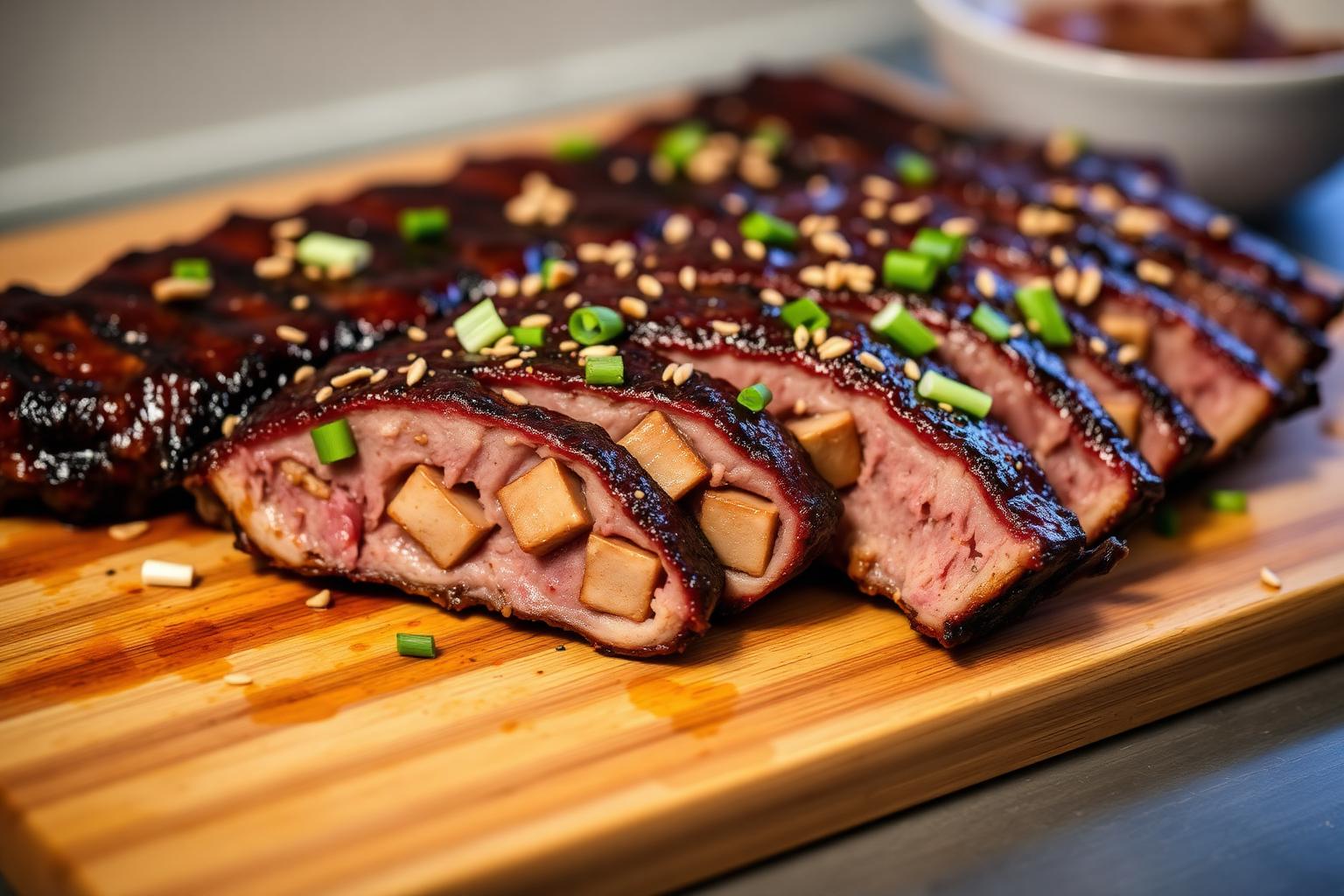
The Primary Recipe
Korean Kalbi Flanken Short Ribs (Hot & Fast)
The Recipe
Korean Kalbi Flanken Short Ribs
Rated 4.9 — based on 326 reader ratings
Prep Time
15 min (+ 2-12 hr marinade)
Cook Time
6-8 min
Rest Time
2-3 min
Serves
6-8
Smoker temp: 500°F (max temperature)
Pull temp: 3-4 minutes per side, flip once
Recommended pellets: Apple, cherry, pecan, or any high-heat pellet
Share this recipe:
Key Distinction
Flanken vs English-Cut Short Ribs: Two Different Cuts
The most common confusion at the butcher counter: home cooks ask for "short ribs" without specifying the cut. Flanken and English-cut are completely different cooking experiences.
Beef short ribs come from the same primal (chuck or plate) but butchers cut them in two different ways. Both are sold as "short ribs" — but the cooking methods, results, and recipes are completely different. Buying the wrong cut and trying to apply the wrong recipe produces inedible results.
This Recipe
Flanken-Cut Short Ribs (LA-Style, Korean-Style)
- Cut direction: Across all 3-4 bones, perpendicular to bone direction
- Thickness: ¼ to ½ inch
- Each piece contains: 3-4 small disc-shaped bones in a single strip
- Best cooking: Hot and fast (500°F, 6-8 min) OR smoke + sear
- Common labels: "Flanken-style," "LA-style," "Korean-style," "Galbi cut," "Kalbi cut"
- Marinade: Highly recommended — thin slices absorb flavor quickly
Identification: thin strips with a row of 3-4 small bone discs visible in each piece. Often pre-packaged in Asian markets.
Not This Recipe
English-Cut Short Ribs (Plate Ribs, Dinosaur Ribs)
- Cut direction: Between the bones, parallel to bone direction
- Thickness: 1-1.5 inches thick (or kept whole as 3-bone "rib plate")
- Each piece contains: 1 large bone running lengthwise
- Best cooking: Low and slow (225°F, 5-7 hours)
- Common labels: "English-cut," "Plate short ribs," "Dinosaur ribs," "Beef back ribs"
- Marinade: Optional — long cook breaks down meat without it
Identification: thick chunks with a single large bone, similar shape to bone-in pork chops. Often sold as a 3-rib plate at premium butchers.
The simple test: hold the package up. Flanken = thin strip with small dot-shaped bones in a row. English = thick chunks with one large bone each. This recipe is for flanken-cut. For English-cut plate ribs (Texas-style brisket-y BBQ ribs), see our Smoked Beef Ribs recipe — completely different technique, 5-6 hour cook.
Two Techniques
Korean Kalbi vs Texas Smoke + Sear: Which Method?
Both methods produce excellent results from the same flanken cut. Different flavor profiles, different time investments, different audiences.
Method 1 — Popular Choice
Korean Kalbi (Hot & Fast)
Time: 8 minutes cook (+ 2-12 hour marinade) · Heat: 500°F max
Flavor Profile
- • Bold Korean BBQ marinade-forward flavor
- • Sweet-savory umami balance (soy + brown sugar + sesame)
- • Slight char from high heat
- • Tender meat (thin cut + acidic marinade tenderizes)
- • Marinade is the dominant flavor, smoke is subtle
Best For
- • Weeknight dinners (8 minutes total cook)
- • Crowd-feeding (4 lbs cooks in 15 minutes)
- • Korean BBQ enthusiasts
- • Lettuce wraps with rice and kimchi
- • Cooks who want fast, foolproof results
Method 2 — BBQ Enthusiast Pick
Texas Smoke + Sear (Slow then Fast)
Time: 90 min smoke + 5 min sear · Heat: 225°F smoke, then 500°F sear
Flavor Profile
- • Deep wood-fire smoke flavor primary
- • BBQ rub-forward (no marinade)
- • Crispy bark from final sear
- • Slightly chewier texture (less acidic tenderization)
- • Smoke is the dominant flavor, beef is the supporting actor
Best For
- • Weekend BBQ projects
- • Smoke-flavor-focused cooks
- • Backyard BBQ pairings (alongside ribs, brisket-style cuts)
- • Dry-rub-and-smoke purists
- • Cooks who want to fully use their smoker
Both methods are legitimate. Korean kalbi is the fast crowd-pleaser; Texas smoke + sear is the BBQ enthusiast project. Choose based on time available, flavor preference, and what else you're cooking that day. Some cooks split a 4 lb package and cook half each way.
Method 1
Korean Kalbi Flanken Short Ribs (Hot & Fast)
The fast Korean BBQ approach. 8 minutes of cook time, marinade does most of the work. The classic kalbi/galbi method.
Ingredients (Marinade-Forward)
The Ingredients
The Asian pear is the secret tenderizer. Asian pears contain enzymes that break down proteins — making the meat noticeably more tender than marinades without it. If unavailable, substitute Bosc pear (¾ pear) or kiwi (½ kiwi peeled). Never use pineapple — too aggressive, makes meat mushy in 4+ hours.
The Equipment
Method Steps
- 1
MIX
Make the marinade (5 minutes)
Combine all marinade ingredients (everything except the ribs and garnishes) in a large bowl. Whisk until brown sugar dissolves. The marinade should taste sweet, salty, and slightly tangy.
Optional: blend marinade in a food processor for 30 seconds for a smoother texture that coats meat better.
Pro tip: the Asian pear is the secret tenderizer. Don't skip it. Substitutes: Bosc pear (¾ pear) or kiwi (½ peeled kiwi). Never use pineapple — too aggressive.
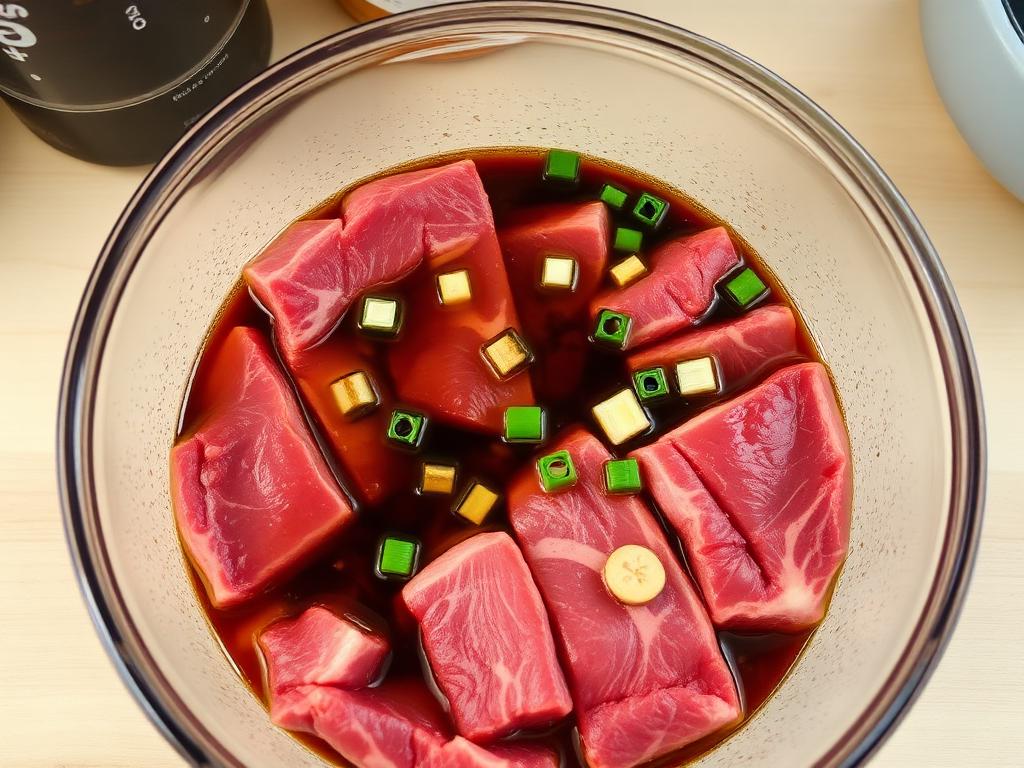
Time: 5 minutes
- 2
MARINATE
Marinate the ribs (2-12 hours)
Place flanken ribs in a large zip-top bag or shallow dish. Pour marinade over ribs, ensuring all surfaces are coated. Massage ribs through the bag (or toss in dish) to coat evenly.
Refrigerate 2 hours minimum, 12 hours ideal, 24 hours maximum. Beyond 24 hours, the acidic marinade can start to "cook" the meat (similar to ceviche), producing unpleasant texture.
If you have less than 2 hours, marinate at room temperature (covered) for 30-45 minutes — better than skipping entirely.
Time: 5 minutes active + 2-12 hour marinate
- 3
PREHEAT
Preheat smoker to 500°F
Remove ribs from refrigerator 30 minutes before cooking. Cold meat from the fridge cooks unevenly.
Preheat your smoker/pellet grill to 500°F (max temperature on most grills). On a Traeger, this is the maximum setting. Let the grill stabilize at temperature for 15 minutes — fully preheated grates produce better sear marks.
For best results: place GrillGrates on top of regular grates (concentrates heat to 650°F+ surface temperature) OR use a cast iron griddle for restaurant-quality sear marks.
Time: 15 minutes preheat + 30 minutes meat tempering
- 4
SEAR
Cook hot and fast (3-4 min per side)
Remove ribs from marinade. Pat the ribs dry with paper towels — wet meat won't sear properly, and the sugar in the marinade can burn before the meat browns.
Place ribs directly on the hot grates. Don't crowd — leave ½ inch between pieces for proper airflow.
Cook 3-4 minutes per side, flipping ONCE. The thin cut means cook time is short — overcooking by 2 minutes turns tender meat into chewy meat.
Visual cue for doneness: surface develops dark caramelized crust with grill marks. Edges of bones may char slightly (normal and desired). Meat releases easily from grates when cooked properly.
For thicker pieces (½ inch): cook 4-5 minutes per side. For thinner pieces (¼ inch): cook 2-3 minutes per side.
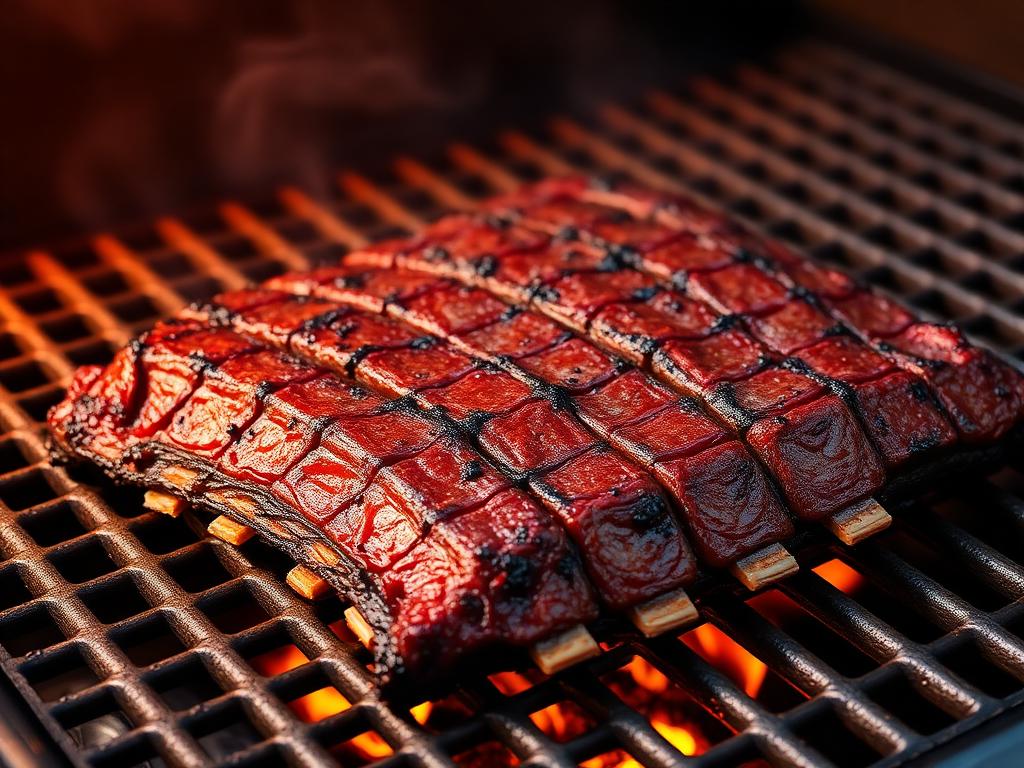
Time: 6-10 minutes total cook
- 5
SERVE
Rest, garnish, serve
Transfer cooked ribs to a serving platter. Tent loosely with foil for 2-3 minutes (very brief rest — these are thin cuts). The brief rest lets juices redistribute without losing too much heat.
Garnish with toasted sesame seeds and chopped green onion greens.
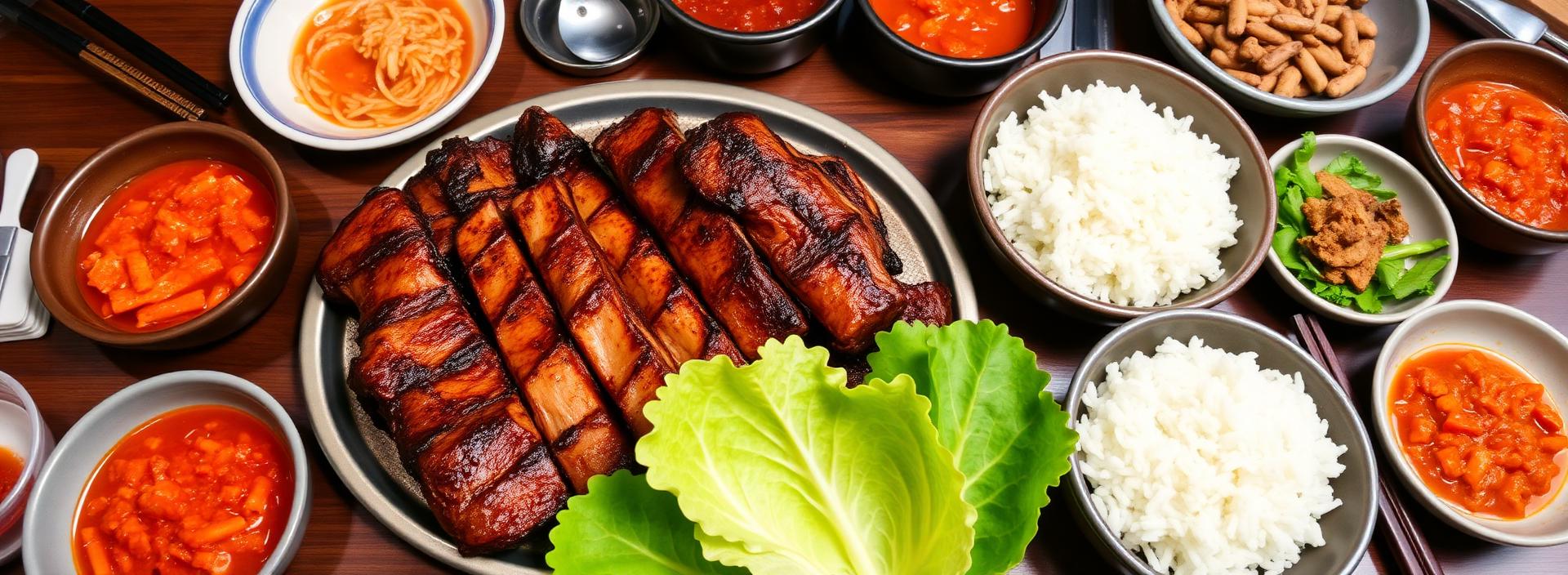
Serve immediately. Traditional accompaniments: steamed white rice, kimchi (cabbage and/or radish), lettuce wraps (red leaf or butter lettuce), banchan (Korean side dishes), gochujang sauce on the side, sesame oil for drizzling.
For lettuce wraps: place ribs on cutting board, slice meat off bones into bite-size pieces, place in lettuce leaves with rice, kimchi, and gochujang.
Time: 5 minutes plating
Method 2
Texas Smoke + Sear Flanken Short Ribs
The BBQ enthusiast approach. Smoke at 225°F for 90 minutes for deep wood flavor, then sear at 500°F for crispy bark. No marinade — the smoke is the flavor.
Ingredients (Smoke-Forward)
No marinade required. The smoke is the flavor. Premium rubs produce noticeably better bark than generic supermarket rubs — this is the place to spend.
Method Steps
- 1
RUB
Apply BBQ rub (5 minutes + 30 min rest)
Pat ribs dry with paper towels. Drizzle with olive oil OR yellow mustard as binder. Apply BBQ rub generously to both sides — about 1 tablespoon per pound of meat. Press rub into meat.
Let sit at room temperature 30 minutes while smoker preheats.
Recommended rubs: Meat Church Holy Cow, Killer Hogs The BBQ Rub, Traeger Beef Rub, or homemade SPG (salt + pepper + granulated garlic).
Time: 5 minutes + 30 minutes rest
- 2
SMOKE
Smoke at 180-225°F for 90 minutes
Preheat pellet grill to 180-225°F. If your smoker has Super Smoke mode, enable it (180°F + Super Smoke produces maximum smoke flavor on these thin cuts).
Place ribs on grates. Smoke 90 minutes. The thin cut absorbs smoke quickly — you'll see noticeable mahogany color development.
The internal temperature isn't critical at this stage — we're focusing on flavor, not cook progression. The ribs are still partially raw at this point.
Recommended wood: hickory, pecan, oak, or cherry. Apple is too mild for the bold beef flavor of short ribs.
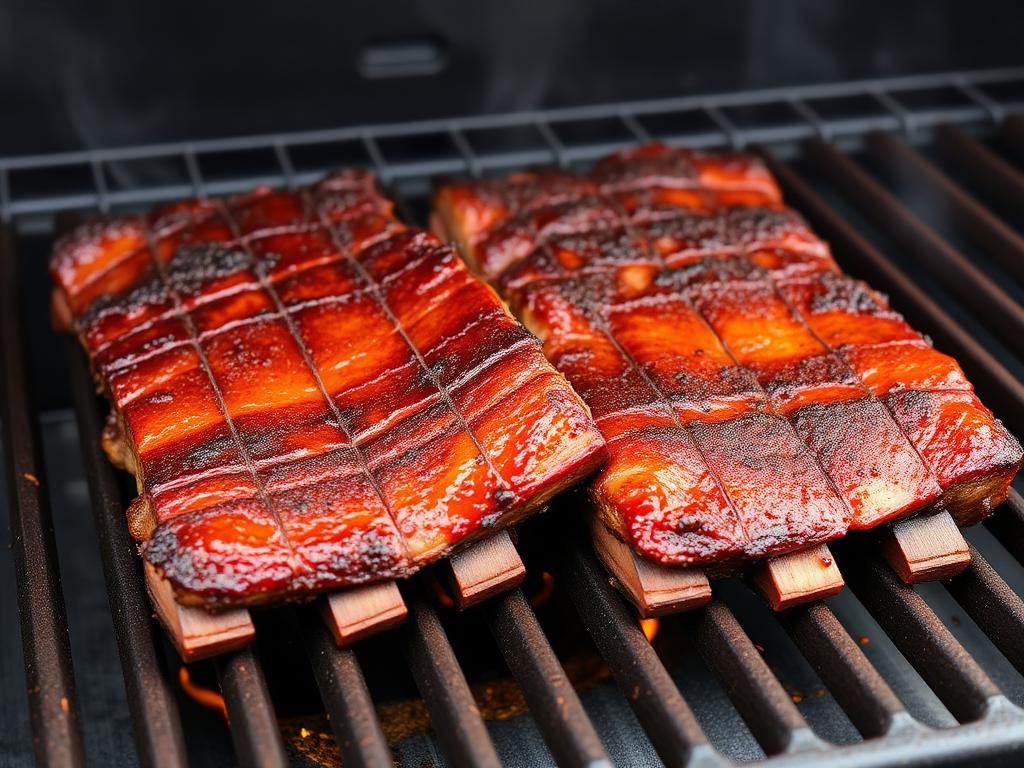
Time: 90 minutes
- 3
RAMP
Crank to 500°F (8-12 minute ramp)
After 90 minutes, increase grill temperature to 500°F. Let grill climb to max heat — typically 8-12 minutes for the temperature ramp.
Keep the lid closed during the ramp. Opening it loses heat and slows the ramp meaningfully.
Time: 8-12 minutes
- 4
SEAR
Sear 2-3 minutes per side at 500°F
When grill hits 500°F, sear the ribs directly on the grates. 2-3 minutes per side, flip once. Watch closely — the rub can scorch quickly at this temperature.
Optional: brush with BBQ sauce during the last 60 seconds of cooking for a glazed finish. Sauce caramelizes properly at 500°F.
Time: 4-6 minutes
- 5
REST
Rest 3-5 minutes and serve
Pull ribs from grill. Tent loosely with foil for 3-5 minutes (slightly longer rest than Method 1 because of the smoke phase).
Serve as Texas-style BBQ alongside: smoked baked beans, coleslaw, cornbread, pickles and white onion, BBQ sauce on the side.
This method produces meaningfully different results than Method 1 — bolder smoke flavor, BBQ-style rather than Korean. Both are legitimate; choose based on the meal you're building.
Time: 3-5 minutes
Wood Selection
The Best Wood for Flanken Short Ribs
Wood choice depends on which method you're using. Korean kalbi pairs with milder woods; Texas-style smoke benefits from bolder woods.
Apple, Cherry, or Pecan (Mild)
Korean kalbi is marinade-forward, so wood smoke should support not compete. Apple and cherry are mildest. Pecan is slightly bolder with nutty character that pairs with sesame oil. The marinade is the star; wood adds gentle background depth.
Best for: Method 1 Korean Kalbi
Hickory, Oak, or Pecan (Medium-Strong)
Texas-style smoke is the dominant flavor, so bolder woods deliver more impact. Hickory is the classic American BBQ wood. Post oak is the Central Texas favorite. Pecan splits the difference with refined nuttiness. All three work brilliantly for Method 2.
Best for: Method 2 Texas Smoke + Sear
Cherry (Beautiful Color)
Cherry produces the deepest mahogany color on flanken ribs — both methods benefit visually. Adds subtle fruit sweetness without competing with marinade or rub flavors. The Instagram-friendly choice that works for both techniques.
Best for: Either method, especially when visual presentation matters
What to Avoid
- •Mesquite alone: too aggressive even for Texas-style smoke. Use sparingly or blend with milder wood.
- •Maple alone: too subtle for the bold beef. Works in blends but not standalone.
- •Pure alder: better for fish than beef. Too mild for either flanken method.
The Gear I Use
Essential Gear for Flanken Short Ribs
Four tools that meaningfully impact results. GrillGrates is the most-impactful upgrade for Method 1 (Korean Kalbi).
GrillGrates (Sear Panels)
The single most-impactful upgrade for hot-and-fast cooking on a pellet grill. Pellet grills max at 500°F natively — GrillGrates panels concentrate heat to 650°F+ for restaurant-quality sear marks. $80-100 investment that transforms Korean kalbi results. Critical for Method 1.
Shop GrillGrates →Box Grater
Critical for Korean kalbi — you'll grate Asian pear, ginger, and garlic. OXO Good Grips Etched Box Grater ($25) works for everything. Microplane Premium Zester ($15) is preferred for ginger/garlic specifically. Sharp grating is what separates good kalbi marinade from great kalbi marinade.
Shop graters →Apple or Cherry Wood Pellets
Apple is the most reliable for Korean kalbi (Method 1). Cherry adds beautiful color for both methods. For Texas-style smoke (Method 2), hickory or pecan are better. Traeger Apple ($25/20lb) or Bear Mountain Cherry ($22). Buy a backup bag.
Shop pellets →Premium BBQ Beef Rub (Method 2)
For Texas-style smoke method, premium rub matters. Meat Church Holy Cow ($15), Killer Hogs The BBQ Rub ($18), Traeger Beef Rub ($14), or homemade SPG (salt + pepper + granulated garlic). Quality rubs produce noticeably better bark than generic supermarket rubs.
Shop BBQ rubs →Avoid These
7 Common Flanken Short Rib Mistakes
Seven preventable errors that turn an easy recipe into a disappointing result.
Mistake 1: Buying English-cut instead of flanken-cut
The most common confusion at the butcher counter. Flanken = cross-cut thin strips with multiple small bone discs. English-cut = thick chunks with one large bone each. These are completely different cuts requiring different cooking methods. Trying to grill English-cut at 500°F for 8 minutes produces raw, tough meat. Always specify "flanken-cut," "LA-style," or "Korean-style" at the butcher.
Mistake 2: Skipping the Asian pear in the marinade
Asian pear isn't just for flavor — it contains enzymes that break down protein, making meat noticeably more tender. Marinades without Asian pear produce chewier kalbi. If unavailable, substitute Bosc pear or kiwi (NOT pineapple — too aggressive). The 5 minutes spent grating pear is the difference between good and great kalbi.
Mistake 3: Marinating longer than 24 hours
Acidic marinades can over-tenderize meat past 24 hours, producing mushy texture. The "longer = better" rule doesn't apply to acidic marinades. 12 hours is ideal; 24 hours is maximum. Beyond 24 hours, the marinade starts "cooking" the meat (similar to ceviche). For longer marinating, freeze the marinated ribs immediately and thaw before cooking.
Mistake 4: Cooking flanken ribs low and slow (Method 1)
Korean kalbi is HOT AND FAST cooking — 500°F max temperature, 6-8 minutes total cook. Cooking flanken ribs at 225°F for hours produces dry, leathery meat. The thin cut requires high heat to cook quickly before drying out. If you want long-smoke flavor, choose Method 2 (smoke at 225°F THEN sear at 500°F) — never just smoke flanken ribs without the sear.
Mistake 5: Not patting ribs dry before cooking
Wet meat from marinade won't sear properly — moisture creates steam that prevents browning. Always pat ribs dry with paper towels before placing on grill. The sugars in the marinade will scorch quickly at 500°F if any liquid remains. Dry surface = perfect sear marks.
Mistake 6: Crowding the grill grates
Flanken ribs cook fast and produce moisture. Crowding causes pieces to steam each other instead of searing. Leave ½ inch between pieces for proper airflow. For 3+ lbs of ribs, cook in batches if your grill is small. Better to take 2 batches and get proper sear than 1 batch with steamed meat.
Mistake 7: Overcooking by even 2 minutes
Flanken ribs are thin (¼-½ inch). Going from "perfectly tender" to "chewy and dry" takes 2-3 minutes of overcooking. Watch closely. The visual cue for doneness: dark caramelized crust on both sides with slightly charred edges. If in doubt, undercook slightly — these thin cuts continue cooking from residual heat after pulling.
How to Serve
6 Ways to Serve Flanken Short Ribs
Korean kalbi has classic accompaniments. Texas-style smoke fits backyard BBQ. Six serving styles for different occasions.
1. Korean BBQ Plate (Classic)
Steamed rice, kimchi, banchan, lettuce wraps, gochujang sauce. The traditional presentation.
2. Lettuce Wraps
Red leaf or butter lettuce, sliced kalbi meat, rice, kimchi, gochujang. Hand-held interactive eating.
3. Rice Bowl (Bibimbap-Style)
Steamed rice base, sliced kalbi, sesame seeds, scallions, fried egg on top.
4. Backyard BBQ Plate (Texas Method)
Smoked baked beans, coleslaw, cornbread, pickles, white onion. Traditional BBQ side spread.
5. Korean-Mexican Tacos
Sliced kalbi meat in flour tortillas with avocado, cilantro, lime, gochujang aioli. Fusion favorite.
6. Salad Topper
Mixed greens, sliced kalbi, edamame, sesame dressing, crispy noodles. Light lunch option.
Storage: Leftover cooked flanken ribs keep in airtight containers in the fridge 3 days. Reheat gently in 300°F oven for 5-7 minutes (microwave makes them chewy). Cold leftovers work brilliantly in salads, rice bowls, and sandwiches without reheating.
FAQ