Holiday Recipe
Smoked Ham: The Double-Smoked Spiral Recipe with Pineapple Glaze
Double-smoking a pre-cooked spiral ham is the easiest holiday main dish you can possibly make on a pellet grill. The grocery store ham is already cured, smoked, and fully cooked — your job is to reheat it slowly while adding a second layer of wood-fire smoke flavor and a sticky-sweet glaze. The 8-pound ham takes about 2.5-3 hours total: 90 minutes of low-and-slow smoking at 225°F to develop deep smoke flavor, then 60-90 minutes at 325°F to caramelize the glaze. Pull at 140°F internal, rest 20 minutes, serve. The Easter ham everyone asks for the recipe to. Works on any pellet grill, Weber Smokey Mountain, kamado, or smoker.
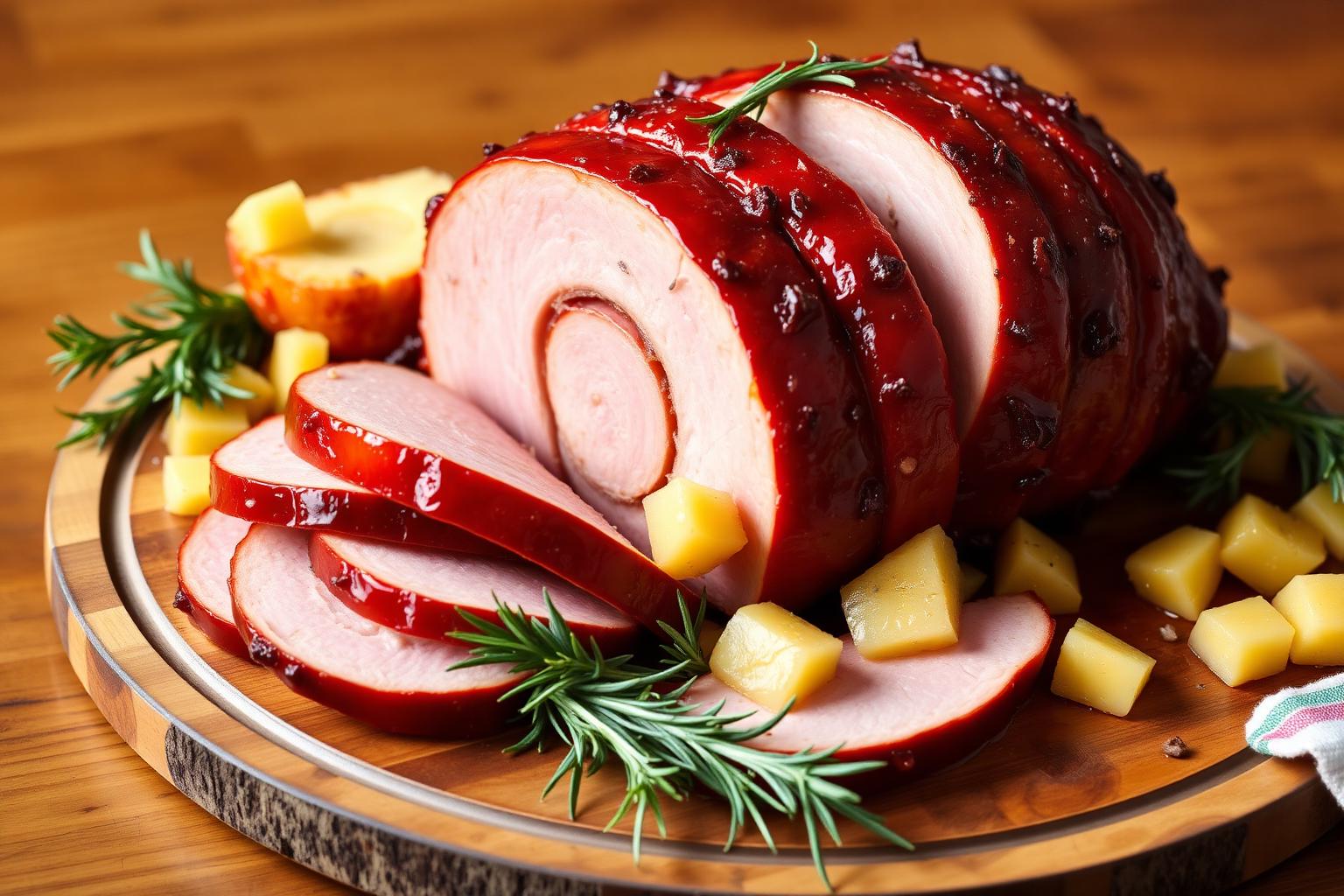
The Recipe
Double-Smoked Spiral Ham (with Pineapple Glaze)
Rated 4.9 — based on 267 reader ratings
Prep Time
10 min
Cook Time
90-120 min smoke
Rest Time
20-30 min
Serves
12-16
Smoker temp: 225°F (smoke phase) → 325°F (glaze phase)
Pull temp: 140°F internal (carries to USDA-safe 145°F)
Recommended pellets: Cherry, Apple, Pecan, or Maple
Share this recipe:
The Technique Explained
What Is "Double-Smoked" Ham? (And Why It's Easier Than It Sounds)
"Smoked ham" can mean two completely different recipes. This one is the popular, easy version that produces excellent results in under 3 hours.
The grocery store hams sold around Easter and Christmas — the spiral-cut ones with the glaze packet — are already fully cooked and pre-smoked at the factory. They're labeled "fully cooked" or "ready to eat." Technically, you can slice them straight out of the package and serve them cold. They taste fine.
But the difference between "fine" and "exceptional" is the second smoke. By placing a pre-cooked spiral ham on a pellet grill at 225°F for 90 minutes, then glazing it and finishing at 325°F, you add:
A Second Layer of Smoke
The ham was smoked at the factory months ago — that flavor has faded. The 90 minutes at 225°F on YOUR pellet grill adds fresh wood-fire smoke flavor that grocery-store ham doesn't have. Cherry, apple, or pecan pellets impart the smoke that genuinely tastes home-cooked rather than mass-produced.
A Caramelized Glaze Crust
The glaze packet that comes with most spiral hams is mediocre at best. Making your own glaze (brown sugar + pineapple juice + honey + spices) and applying it during the high-heat phase produces a sticky-sweet caramelized crust that's the showstopping feature of a great holiday ham. This is the editorial difference.
A Centerpiece Worthy of Easter
The visual presentation of a properly double-smoked, glazed, sliced spiral ham is what makes it a holiday centerpiece rather than just dinner. The mahogany-glazed exterior, the tender interior, the steam rising from freshly-sliced meat — this is the recipe people remember from their grandmother's Easter table.
This recipe is for pre-cooked, pre-smoked spiral ham — the most common type sold in grocery stores. If you have a fresh raw ham (uncooked, uncured), that's a completely different recipe with a 6-8 hour cook time. See the Fresh Ham section near the bottom of this page.
Before You Start
What You'll Need
An 8-10 pound bone-in spiral ham, simple glaze ingredients, and 3 hours. Most ingredients are pantry staples; the ham is the only specialty item.
The Ingredients
Alternative Glaze: Maple-Mustard
- 1 cup brown sugar
- 1/2 cup pure maple syrup
- 1/4 cup Dijon mustard
- 2 tablespoons apple cider vinegar
- 1 teaspoon allspice
- 1/2 teaspoon black pepper
The pineapple-bourbon glaze is the showstopper for Easter; the maple-mustard is the savory alternative for cooks who prefer less sweetness. Both work equally well; pick based on your guests' preferences. The brown sugar is non-negotiable — it's what creates the caramelized crust.
The Equipment
On choosing the ham: Costco's Kirkland Signature Spiral-Cut Ham is the consensus best value (typically $2.99-3.99/lb during holiday season). HoneyBaked Ham is premium ($7-10/lb but worth it for special occasions). Whatever you buy, look for "fully cooked" on the label and reject hams labeled "Ham, water added" — those are pumped with brine and dilute the flavor.
Step by Step
How to Smoke a Spiral Ham (Step-by-Step)
Six steps, mostly hands-off. The smoker does the work; the glaze provides the transformation.
- 1
PREP
Apply binder and rub (5 minutes)
Remove the ham from its packaging. Discard the glaze packet that came with it — you're making your own better one. If the ham has a netting or string holding it together, leave that intact for now (it keeps the spiral from spreading apart during cooking).
Place the ham cut-side DOWN in a disposable aluminum tray. The cut-side-down position keeps moisture in during the long smoke; if placed cut-side up, the slices dry out at the edges.
Apply a thin layer of Dijon mustard, olive oil, or yellow mustard to all exposed surfaces (don't worry — the mustard taste cooks off; it serves as a binder for the rub). Sprinkle BBQ rub generously over the ham. About 2-3 tablespoons for an 8-pound ham.
If the ham has a thick fat cap, score it lightly in a cross-hatch pattern (1/4 inch deep) — helps the rub penetrate and improves visual presentation.
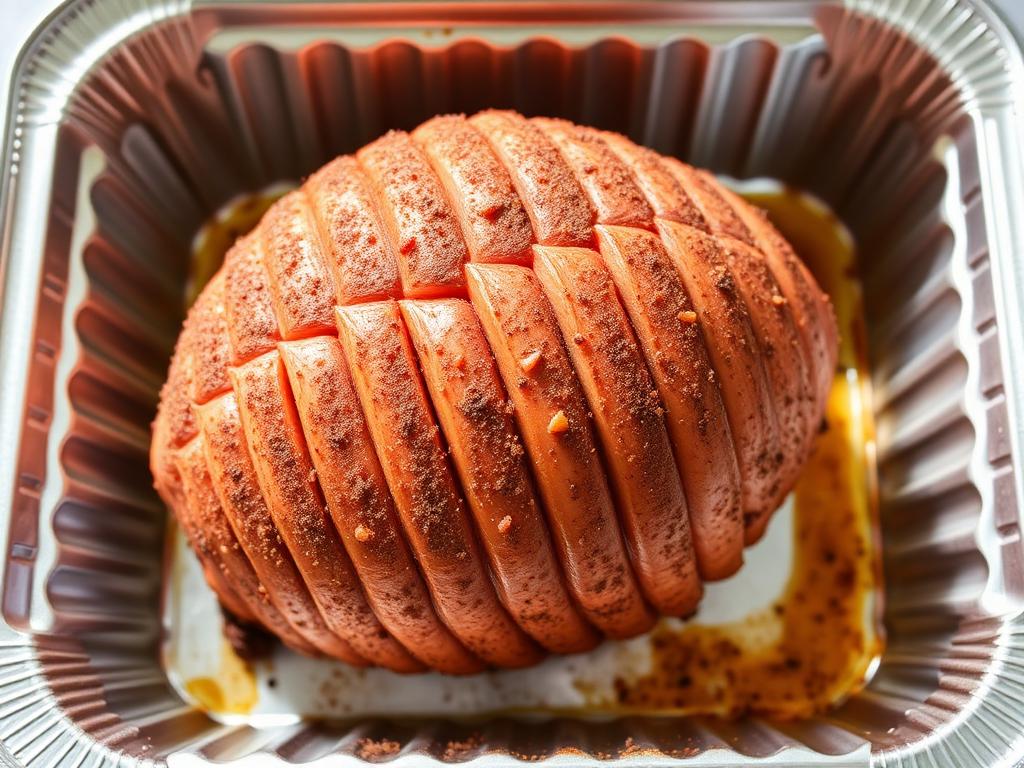
Time: 5 minutes
- 2
PREHEAT
Preheat smoker to 225°F with cherry, apple, or pecan pellets
Fire up your pellet grill and set it to 225°F. If your Traeger has Super Smoke mode (Ironwood, Timberline, Woodridge Pro), enable it during Stage 1 — ham absorbs smoke flavor exceptionally well during the first 60-90 minutes.
Recommended wood for ham:
Cherry: Most popular for ham. Mild, slightly sweet smoke that adds beautiful mahogany color to the glaze. The traditional Easter ham wood.
Apple: Mildest of the recommended options. Subtle sweetness that complements the pineapple glaze without competing.
Pecan: Underrated nutty profile. Pairs beautifully with brown sugar in the glaze.
Maple: Sweet and subtle. Excellent for sweeter glazes specifically.
Avoid: Mesquite (too aggressive for ham — overpowers the glaze). Hickory works but can compete with sweet glaze.
Time: 15 minutes preheat
- 3
STAGE 1
Smoke at 225°F to 120-130°F internal (90-120 minutes)
Place the aluminum tray with the ham directly on the grill grates. Insert a probe thermometer into the thickest part of the ham, avoiding bone (bone temperatures read inaccurately).
Close the lid. Set the probe alarm for 125°F internal. Walk away.
This stage develops the "second smoke" flavor that distinguishes double-smoked ham from grocery-store ham. The 90-120 minutes at 225°F lets wood smoke compounds penetrate the meat layers exposed by the spiral cut.
Smoke time depends on ham size: 6-8 pound ham: 75-90 minutes. 8-10 pound ham: 90-120 minutes. 10-14 pound ham: 120-150 minutes.
Rule of thumb: ~12-15 minutes per pound at 225°F to reach 125°F internal.
While the ham smokes, make the glaze in a saucepan on the stove (next step).
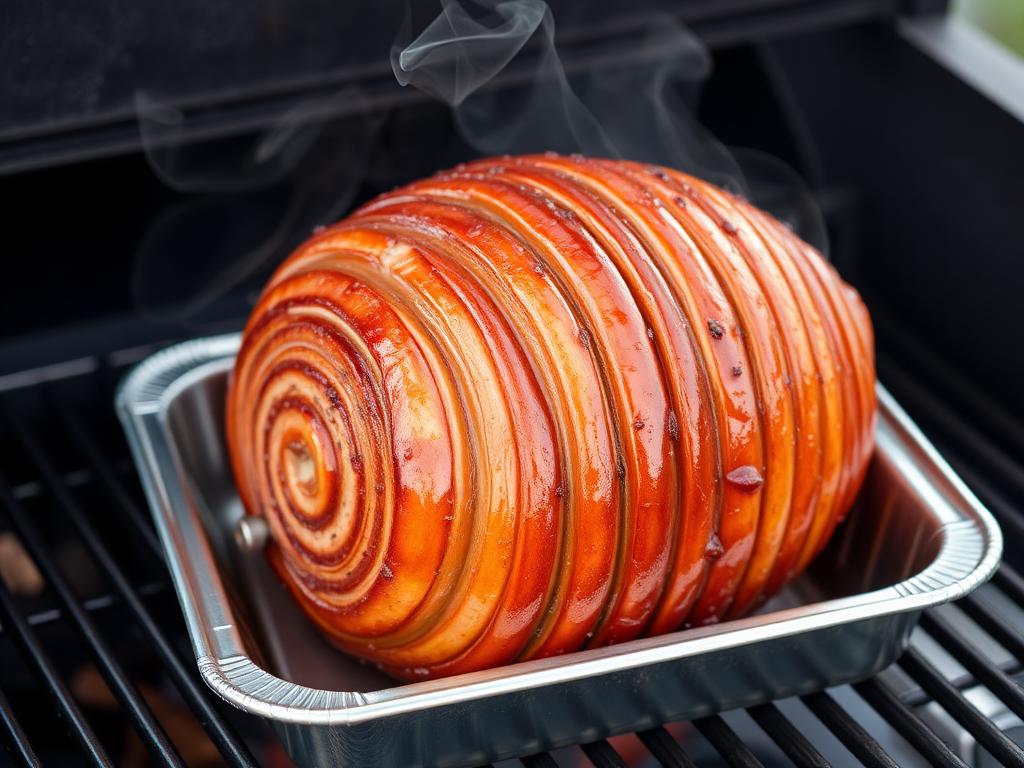
Time: 90-120 minutes
- 4
GLAZE
Reduce glaze ingredients on the stove (15 minutes)
While the ham smokes, prepare the pineapple-bourbon glaze. In a small saucepan over medium-low heat, combine: 1 cup brown sugar, 1/2 cup pineapple juice, 1/4 cup honey, 1/4 cup bourbon (optional but recommended), 2 tablespoons Dijon mustard, 1 teaspoon cinnamon, 1/2 teaspoon ground cloves, 1/2 teaspoon nutmeg.
Whisk to combine. Bring to a gentle simmer (not a hard boil — sugar can scorch). Reduce heat to low and simmer 10-15 minutes, stirring occasionally, until the glaze thickens to a syrupy consistency that coats the back of a spoon.
If the glaze is too thin: simmer 5 more minutes. If the glaze is too thick: add 1-2 tablespoons of pineapple juice to thin it.
Remove from heat. The glaze stays liquid enough to brush while warm; if it sets up before you use it, gently rewarm on low heat.
Optional: reserve 1/4 of the glaze for serving alongside sliced ham. Diners can drizzle additional glaze over their slices.
Time: 15 minutes (during the smoke phase — multitask)
- 5
STAGE 2
Glaze and caramelize at 325°F to 140°F internal
When the ham reaches 125-130°F internal, it's time for the magic. Open the lid (this is the only time you should during the cook).
Brush a generous coat of glaze over the entire exterior of the ham. Make sure to brush between the spiral slices where possible — the glaze pools in the cuts and adds flavor throughout.
Increase the smoker temperature to 325°F. Close the lid.
Continue cooking. Every 15-20 minutes, brush another coat of glaze over the ham. Apply 3-4 total coats during this stage. Each coat caramelizes slightly before the next one is applied, building up the sticky-sweet crust.
Continue until internal temperature reaches 140°F. This typically takes 45-75 more minutes at 325°F, depending on ham size.
Pull the ham from the smoker when internal hits 140°F. Carryover during the rest will bring the final temperature to 145°F (USDA-safe for fully cooked ham).
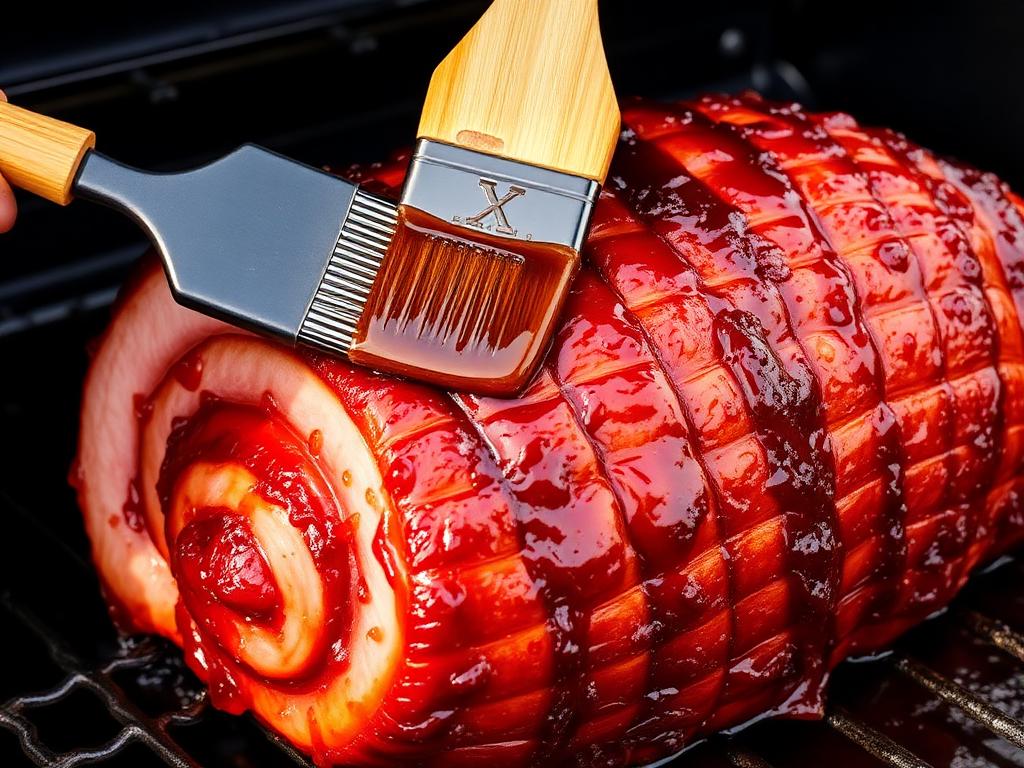
Time: 45-75 minutes
- 6
REST
Rest 20-30 minutes loosely tented, then carve and serve
Transfer the ham to a serving platter or large cutting board. Cover loosely with foil — not tightly, just a loose tent that retains heat without trapping steam (which would soften the glaze).
Rest for 20-30 minutes. This is non-negotiable. The juices redistribute throughout the ham during the rest; carving immediately means dry slices and lost juice on the cutting board.
After resting, the ham is ready to serve. With spiral-cut ham, carving is dramatically easier: use a sharp knife to slice along the bone (creates a flat surface). Slices fall away from the bone naturally because of the spiral cut. Arrange slices on a serving platter, drizzle with reserved glaze if desired.
Pair with traditional Easter sides: scalloped potatoes, deviled eggs, asparagus, dinner rolls, hot cross buns, carrot cake for dessert.
Optional garnish: fresh pineapple slices (using the chunks from the can), maraschino cherries, fresh herbs (rosemary, thyme).
Time: 20-30 minutes rest + 10 minutes serving
Why It Works
Why the Glaze Is the Difference Between Good and Great Ham
The glaze is what separates a memorable Easter ham from "yeah it was fine." The grocery store glaze packet is bland; making your own takes 15 minutes and transforms the dish.
A pre-cooked spiral ham without a glaze is just reheated grocery store ham. Edible, fine, forgettable. The glaze is what creates the memorable holiday meal. Three reasons the homemade glaze matters:
Flavor Balance
Store-bought ham glaze packets are typically just brown sugar and water. Home-made glaze adds: pineapple juice (acidity to balance sweetness), Dijon mustard (subtle tang), bourbon (depth + caramelization), warm spices (cinnamon, cloves, nutmeg). The result is a complex, balanced glaze that complements rather than dominates the ham's natural flavor.
Caramelization Develops Real Crust
Multiple coats of glaze applied during the 325°F stage actually caramelize on the ham's surface — sugar molecules undergo Maillard browning, creating a sticky-sweet crust with depth of flavor. Single-coat glazing produces a thin syrupy layer that washes off when sliced. Multi-coat glazing builds up the iconic "ham crust" that makes holiday hams photo-worthy.
It Takes 15 Minutes (Same Time as Smoke)
The glaze takes 15 minutes to reduce on the stovetop — exactly the same window as part of the smoke phase. While the ham smokes for 90-120 minutes hands-off, you make the glaze on the stove. Zero added time to the recipe. Just better results from a small extra effort.
Skip the glaze packet that comes with the ham. It's bland, generic, and doesn't reduce properly. Make your own pineapple-bourbon glaze in 15 minutes while the ham smokes. The difference in finished result is dramatic.
Wood Selection
The Best Wood for Smoked Ham
Ham's already been smoked once at the factory. The second smoke needs to be subtle — too aggressive and you overpower the glaze. Sweet, mild fruit woods are the consensus choice.
Cherry (Most Popular)
The most popular pellet for double-smoked ham. Mild, slightly sweet smoke that complements the brown sugar glaze and adds beautiful mahogany color to the exterior. The traditional Easter ham wood. If you only buy one pellet for holiday cooking, buy cherry.
Best for: Beautiful color, classic Easter flavor
Apple or Maple (Sweetest Subtle)
Apple is the mildest fruit wood — neutral, slightly sweet, won't overpower. Maple is sweet and subtle, excellent specifically for sweeter glazes. Both work beautifully with pineapple-bourbon glaze. Apple is more widely available; maple adds a subtle additional sweetness.
Best for: Apple = mildest, foolproof; Maple = sweetest, glaze-friendly
Pecan (Refined Choice)
Nutty, slightly sweet profile. Pairs beautifully with brown sugar in the glaze — the nuttiness complements the caramelized crust. Pit-master's pick for refined ham. Slightly bolder than apple but still subtle enough not to overpower glaze.
Best for: Refined flavor, complex profile, BBQ enthusiast preference
What to Avoid
- •Mesquite: Far too aggressive for ham. Will completely overpower the glaze.
- •Hickory: Strong choice but can compete with sweet glaze. Use sparingly if you choose this.
- •Pure oak: Works but produces less interesting flavor than fruit woods on ham.
The Gear I Use
Essential Gear for Smoked Ham
Four tools that make this Easter recipe genuinely foolproof.
Wireless Probe Thermometer
The ham's narrow done window (130°F glaze trigger, 140°F pull) requires accurate monitoring without opening the lid. ThermoPro TP20 ($70) — two probes, wireless, reliable. MEATER Plus ($100) — single wireless probe in the meat. Critical for hitting both temperature triggers precisely.
Shop wireless thermometers →Cherry or Apple Pellets
Cherry for classic Easter ham flavor + beautiful color. Apple for foolproof results. Bear Mountain Cherry ($28/20lb), Traeger Apple ($25/20lb), or Lumberjack 100% varietals. 20-pound bag handles 6-8 ham cooks. Buy a backup bag during holiday season — Easter demand can clear shelves.
Shop cherry pellets →Aluminum Half-Pans
The ham smokes in a half-pan to catch glaze drippings. Disposable aluminum pans from grocery stores ($1-2 each) work perfectly. Heavy-duty aluminum is preferred — thin pans can warp under the ham's weight. Stock 4-6 pans during holiday season for prep, smoking, and serving.
Shop aluminum pans →Quality BBQ Rub for Ham
Heath Riles Apple Rub ($12), Traeger Pork & Poultry Rub ($10), or Killer Hogs The BBQ Rub ($15). Premium rubs genuinely improve over plain salt-and-pepper. Or make your own with brown sugar + paprika + garlic powder + onion powder + black pepper. Enough for 6-8 hams per bottle.
Shop BBQ rubs →Avoid These
7 Common Smoked Ham Mistakes
Seven preventable errors that turn what should be Easter dinner triumph into disappointment.
Mistake 1: Using the glaze packet that came with the ham
Grocery store glaze packets are bland and generic. Make your own pineapple-bourbon (or maple-mustard) glaze in 15 minutes during the smoke phase. The difference in final flavor is dramatic. The packet glaze is the #1 reason home-cooked ham tastes "fine but forgettable" instead of "everyone's asking for the recipe."
Mistake 2: Single-coating the glaze instead of building up layers
Brushing one coat of glaze over the ham at the end produces a thin syrupy layer that mostly washes off when sliced. Apply 3-4 coats during the 325°F stage, every 15-20 minutes. Each coat caramelizes before the next is applied, building up the iconic sticky-sweet crust. Multi-coat glazing is what creates "ham crust."
Mistake 3: Smoking at high heat from the start
Going straight to 325°F skips the deep smoke flavor development of the 90-minute Stage 1 at 225°F. Yes, the ham cooks faster — but it's just reheated grocery store ham at that point, not double-smoked. The 90 minutes at 225°F is what creates the "double" in double-smoked. Plan for the time; the result justifies it.
Mistake 4: Cooking past 140°F internal
The ham was already fully cooked at the factory. Re-cooking it to 145°F+ dries it out — pre-cooked ham doesn't have the moisture margin that fresh meat does. Pull at 140°F internal; carryover during the rest brings it to 145°F (USDA-safe for fully cooked ham). At 150°F+ internal, the ham becomes noticeably dry, and the glaze can't compensate.
Mistake 5: Buying ham labeled "Ham, water added"
This designation means the ham was injected with brine to increase weight. Result: diluted ham flavor, watery texture when sliced, less impressive eating experience. Look for "ham" or "ham, natural juices" on the label — these are properly cured without water injection. Costco's Kirkland Signature is a reliable choice; HoneyBaked is premium. Avoid the cheapest hams in the case.
Mistake 6: Cooking cut-side up instead of cut-side down
Spiral-cut hams have exposed slice edges that dry out at the cut surface. Placing the ham cut-side UP exposes those edges to direct heat — they crisp and dry. Cut-side DOWN positions the slices against the moist tray bottom, retaining moisture. This single positioning detail dramatically affects final texture, especially on the slices closest to the cut surface.
Mistake 7: Skipping the rest period
20-30 minute rest after pulling from the smoker is non-negotiable. Carving immediately produces dry slices and pools of juice on the cutting board. Cover loosely with foil (loose tent, not tightly wrapped) and rest 20-30 minutes. The juices redistribute throughout the ham. Carving after rest produces moist, juicy slices.
A Note on Fresh Ham
What If You Have a Fresh (Raw) Ham?
If you accidentally bought a fresh raw ham instead of a pre-cooked spiral ham, this recipe doesn't apply. Fresh ham is a completely different cook.
A "fresh ham" is a raw, uncured pork leg — essentially a giant pork roast in the shape of a ham. Sometimes called a "green ham." It's not pre-cooked, not pre-smoked, and not glazed. You're starting from scratch.
Smoking a fresh ham requires:
- Curing process (typically 5-7 days in brine before cooking) OR roasting from raw without curing
- 6-8 hour cook time at 225°F
- Final internal temperature of 145°F (USDA-safe for fresh pork)
- Resulting in pork roast with subtle smoke flavor — meaningfully different from the holiday glazed ham most people expect
If you have a fresh ham, the simpler path is to cure it for 5-7 days in a wet brine (1 cup salt + 1 cup brown sugar + 1 gallon water + spices), then smoke at 225°F for 6-8 hours until 145°F internal. The result is closer to a smoked pork roast than the iconic Easter ham.
For most home cooks, the double-smoked spiral ham recipe at the top of this page is what you actually want — it produces the recognizable Easter ham flavor and presentation in 3 hours instead of 6+ days.
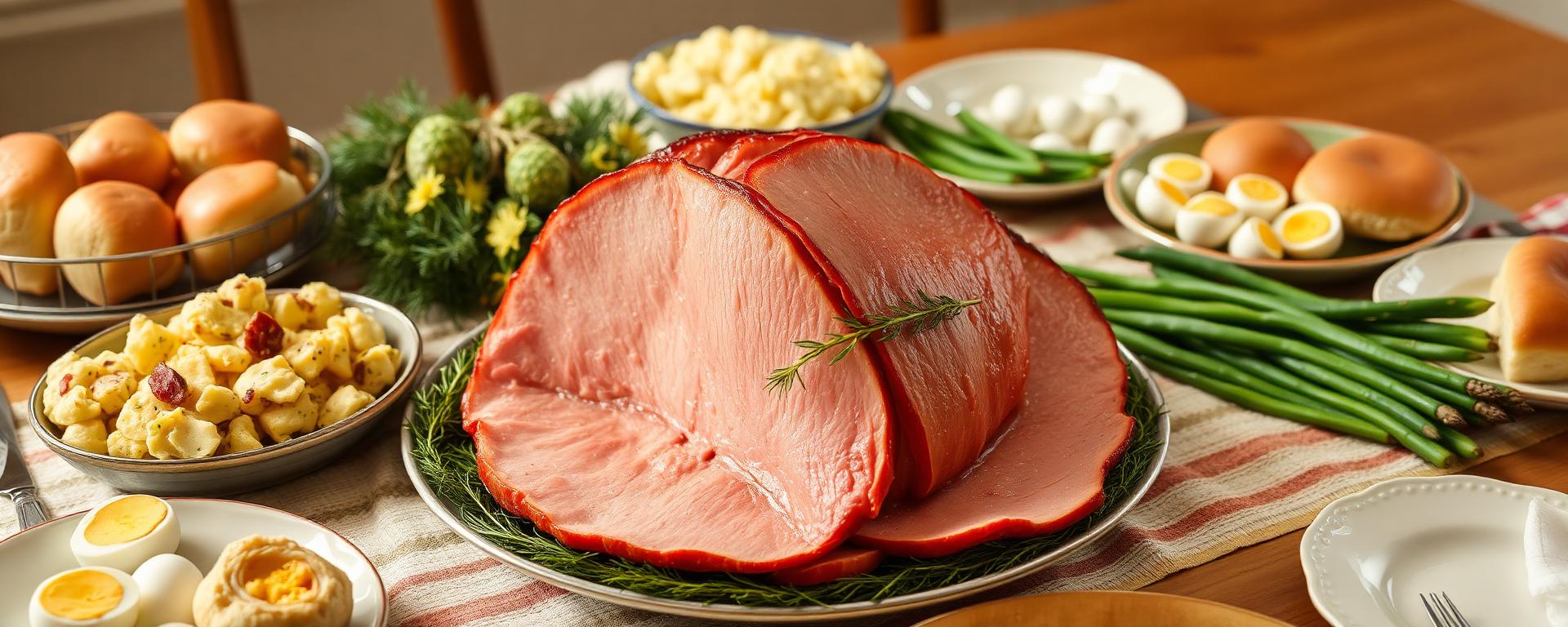
How to Serve It
6 Ways to Serve Smoked Ham
Smoked ham is essentially the most versatile holiday protein — works as Easter centerpiece, leftover sandwich star, breakfast hash hero, soup base.
1. Classic Easter Plate
Sliced glazed ham, scalloped potatoes, deviled eggs, asparagus, dinner rolls, fresh fruit. The traditional centerpiece.
2. Carving Board Family Style
Whole spiral ham on a wooden board, family carves themselves. Showpiece presentation with maraschino cherries and pineapple wedges as garnish.
3. Easter Brunch
Sliced ham with eggs benedict, hot cross buns, asparagus, fresh fruit, mimosas. Spring brunch upgrade.
4. Day-After Sandwich
Sliced cold ham on toasted sourdough or croissant with Dijon mustard, Swiss cheese, lettuce. The classic leftover.
5. Ham and Bean Soup
Diced leftover ham + ham bone simmered with white beans, carrots, celery, onion, herbs. Day-after weekend cooking.
6. Breakfast Hash
Diced cold ham with crispy potatoes, peppers, onions, fried egg on top. Boxing Day-style breakfast.
Leftover ham keeps in the fridge 3-5 days in airtight containers. The bone makes superb stock for split pea soup, ham and bean soup, or any soup recipe that calls for chicken stock — simmer 4-6 hours with vegetables. For longer storage, vacuum seal sliced ham and freeze up to 2 months. Don't waste the bone — it's the foundation for next month's soup.
FAQ