Smoker Recipe
Smoked Pork Belly Burnt Ends: The 4-Hour Pork Candy Recipe
Pork belly burnt ends — affectionately called "pork candy" by the BBQ community — are sticky-sweet, melt-in-your-mouth cubes of smoked pork belly braised in butter, brown sugar, and BBQ sauce. The result rivals brisket burnt ends but in a fraction of the cooking time. The proven 3-stage method: smoke 1.5-inch cubes at 250°F for 3 hours uncovered to build bark, braise in a sweet sticky liquid for 90 minutes covered, finish uncovered for 15 minutes to set the glaze. Total time: 4 hours from raw to plate. Works on any pellet grill, Weber Smokey Mountain, or charcoal smoker capable of holding 250°F. The single most-requested BBQ recipe across smoking forums for good reason.
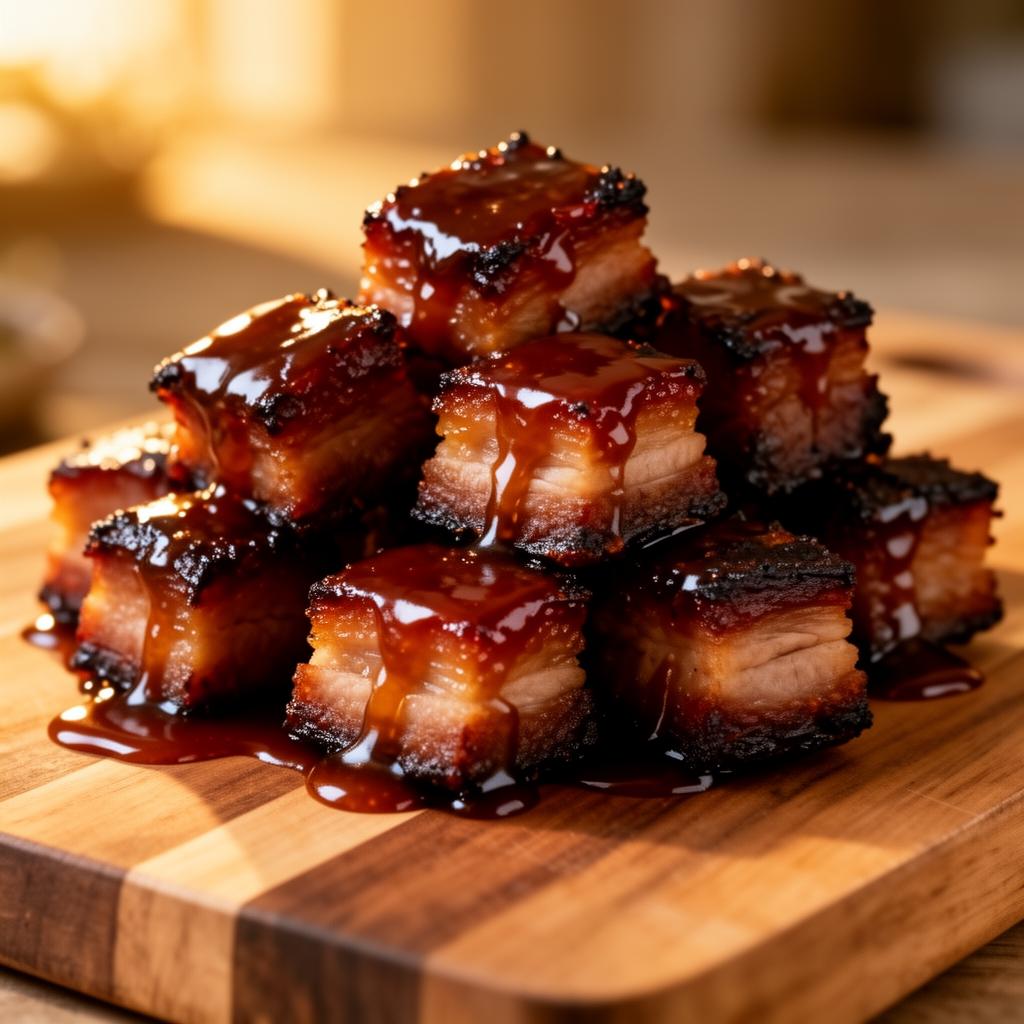
The Recipe
Smoked Pork Belly Burnt Ends
Rated 4.9 — based on 247 reader ratings
Prep Time
15 minutes
Cook Time
3 hrs (Stage 1) + 90 min (Stage 2) + 15 min (Stage 3)
Rest Time
5-10 minutes
Serves
6-8 (one 3-4 lb pork belly)
Smoker temp: 250°F (constant throughout 3 stages)
Pull temp: 200-205°F internal (probe-tender)
Recommended pellets: Cherry (best), Hickory (bolder), Pecan (nutty), Apple (mildest)
Share this recipe:
Before You Start
What You'll Need
A 3-4 pound pork belly, dry rub, butter, brown sugar, honey, and BBQ sauce. Most ingredients are pantry staples — pork belly is the only specialty item.
The Ingredients
Homemade Pork Dry Rub
- 1/4 cup brown sugar
- 2 tbsp smoked paprika
- 2 tbsp kosher salt
- 1 tbsp coarse black pepper
- 1 tbsp garlic powder
- 1 tbsp onion powder
- 1 tsp chipotle powder (or cayenne for milder heat)
- 1 tsp ground mustard
The brown sugar in the rub is non-negotiable — it caramelizes during the smoke phase to create the bark. Salt-only or sugar-free rubs produce dry, less-flavorful burnt ends. Embrace the sweetness; this isn't a low-calorie recipe.
The Equipment
This recipe specifically requires the aluminum pan for Stage 2 braising — the rendered fat and sticky liquid cannot be cooked directly on grill grates. The half-pan is the right size for a 3-4 pound pork belly cubed (approximately 50-60 cubes).
Step by Step
How to Smoke Pork Belly Burnt Ends (3-Stage Method)
Six steps across three stages. Each stage has a specific purpose — bark, braise, glaze. Don't skip stages or you lose the magic.
- 1
PREP
Cube and rub the pork belly
Place the pork belly on a cutting board. If skin is still attached, remove it with a sharp knife (most butchers sell skin-off; verify before buying because skin-on adds significant trimming time). Cut the pork belly into uniform 1.5-inch cubes. A 3-pound pork belly yields approximately 45-55 cubes; a 4-pound belly yields 60-75 cubes.
Place all cubes in a large mixing bowl. Drizzle with olive oil and toss to coat. Sprinkle the dry rub generously over the cubes — about 1 tablespoon of rub per pound of pork belly. Toss with your hands (or BBQ gloves) until every cube is fully coated on all sides.
Arrange the seasoned cubes on a wire rack set over a baking sheet, leaving 1/4 to 1/2 inch between each cube. The wire rack lets smoke circulate fully around each cube during Stage 1. Let the rubbed cubes rest at room temperature for 15-30 minutes while the smoker preheats. The rub will start melting slightly into the meat — this is good.
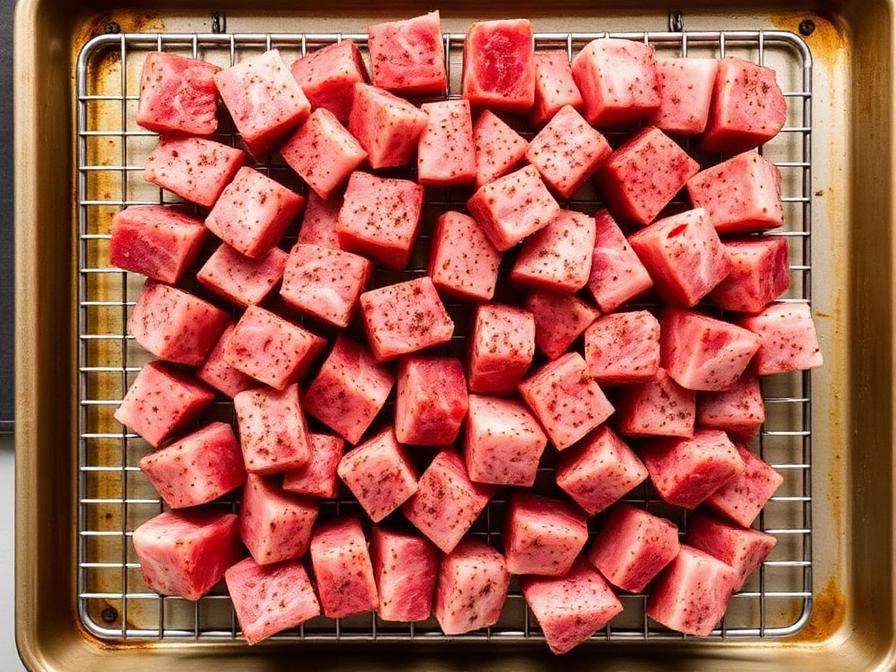
Time: 15 minutes active + 15-30 minute rest
- 2
PREHEAT
Preheat to 250°F with cherry, hickory, or pecan wood
Fire up your smoker and set it to 250°F. This temperature is critical — too low (225°F) and the cook stretches to 6+ hours unnecessarily; too high (275°F+) and the bark forms too fast before the interior cooks. 250°F is the consensus sweet spot from authority BBQ sources.
Cherry is the sweetest, produces beautiful mahogany color on the bark, and is the most popular pellet for pork belly burnt ends. Recommended for first-timers. Hickory is bolder, classic BBQ flavor — works well if you prefer assertive smoke. Pecan has an underrated nutty profile that pairs beautifully with the brown sugar in the rub. Apple is the mildest but pleasant. Avoid mesquite (too aggressive for a 4-hour cook) and 100% oak (works but less interesting for pork).
If your Traeger has Super Smoke mode (Ironwood, Timberline, Woodridge Pro), enable it during Stage 1 — pork belly absorbs smoke exceptionally well during the first hour.
Time: 15 minutes preheat
- 3
STAGE 1
Smoke uncovered at 250°F to 165-175°F internal (build the bark)
Place the wire rack of pork belly cubes directly on the grill grates. Close the lid. Insert a probe thermometer into one cube (avoid touching the grates).
Smoke uncovered at 250°F until the cubes reach 165-175°F internal temperature. This typically takes 2.5-3 hours for 1.5-inch cubes. During this stage, the bark forms — exterior becomes mahogany-brown, slightly crusty, with visible smoke ring. Some fat will render and drip into the sheet pan below.
Do not open the lid during Stage 1. Every lid-opening drops smoker temperature 30-50°F and extends total cook time. Trust the thermometer. Optional: spritz with apple juice or apple cider vinegar at the 90-minute mark if cubes look dry, but most cooks skip this — pork belly's natural fat content keeps cubes moist.
When internal temp hits 165-175°F, pull the wire rack from the smoker. Move to Stage 2 immediately.
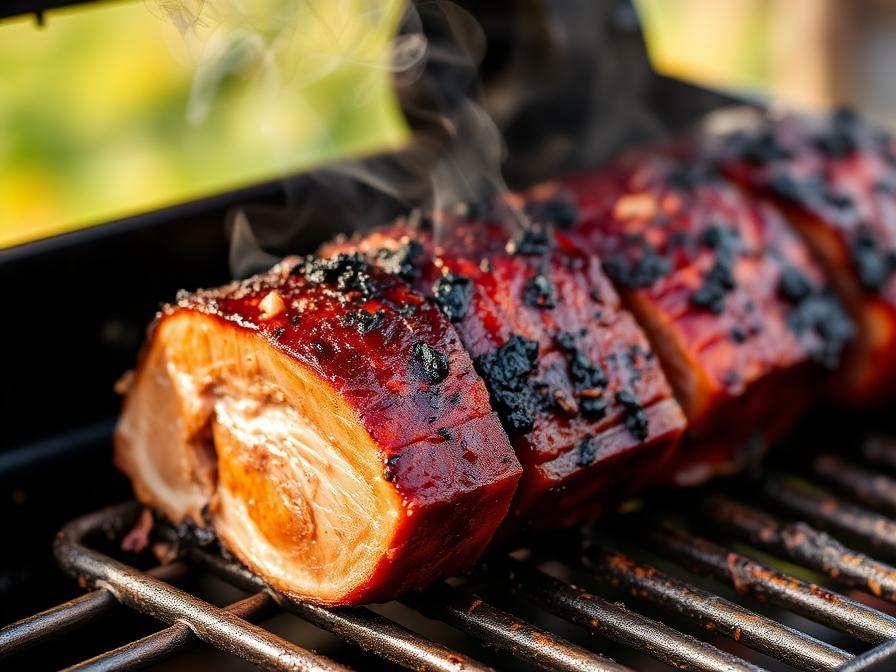
Time: 2.5-3 hours
- 4
STAGE 2
Braise with butter, brown sugar, honey, and BBQ sauce
Transfer all the smoked pork belly cubes from the wire rack into a 9x13 aluminum half-pan. Add: 1 stick (1/2 cup) unsalted butter sliced into 8-10 pats, 1/2 cup brown sugar sprinkled evenly over the cubes, 1/4 cup honey drizzled over everything, and 1 cup BBQ sauce poured around (not directly on top of) the cubes.
The butter, sugar, and honey will melt into a sticky braising liquid. The cubes will partially submerge in this liquid as they cook. This is the magic — the rendered pork fat combines with the butter, sugar, and honey to create the "pork candy" effect that makes burnt ends famous.
Cover the pan tightly with heavy-duty aluminum foil. Make sure no steam can escape from the edges — the foil seal is what creates the braising environment.
Place the covered pan back on the smoker (still at 250°F). Reinsert the probe thermometer through a small hole in the foil into the largest cube. Smoke covered for 90 minutes, or until internal temperature hits 200-205°F (probe-tender).
Time: 5 minutes setup + 90 minutes braise
- 5
STAGE 3
Uncover, brush with extra BBQ sauce, smoke 15 minutes
When the cubes hit 200-205°F internal, remove the foil from the pan. The cubes will be swimming in a sticky, dark mahogany-colored sauce.
Carefully toss the cubes in the sauce to coat (a heat-resistant silicone spatula or pair of BBQ tongs works best — the sauce is very hot and sticky). Optionally brush an additional 1/4 cup of BBQ sauce over the cubes for extra glaze.
Return the uncovered pan to the smoker. Smoke for 10-15 more minutes — just long enough for the glaze to "tack up" (become slightly thicker and stickier as some moisture evaporates). The cubes should look glossy and dark with sauce, not wet and dripping.
Pull the pan from the smoker. Let cubes rest in the pan for 5-10 minutes — this is when the glaze fully sets and the cubes become "candy-like."
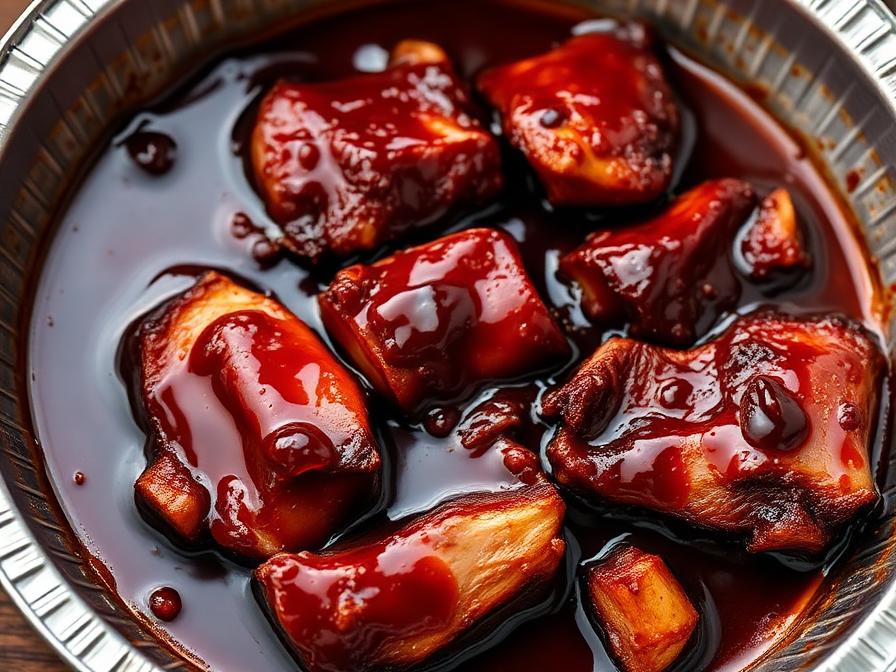
Time: 10-15 minutes
- 6
SERVE
Serve immediately with toothpicks
Pile the burnt ends in a serving dish or directly in the aluminum pan. Provide toothpicks for each guest — these are finger food that's too sticky for forks.
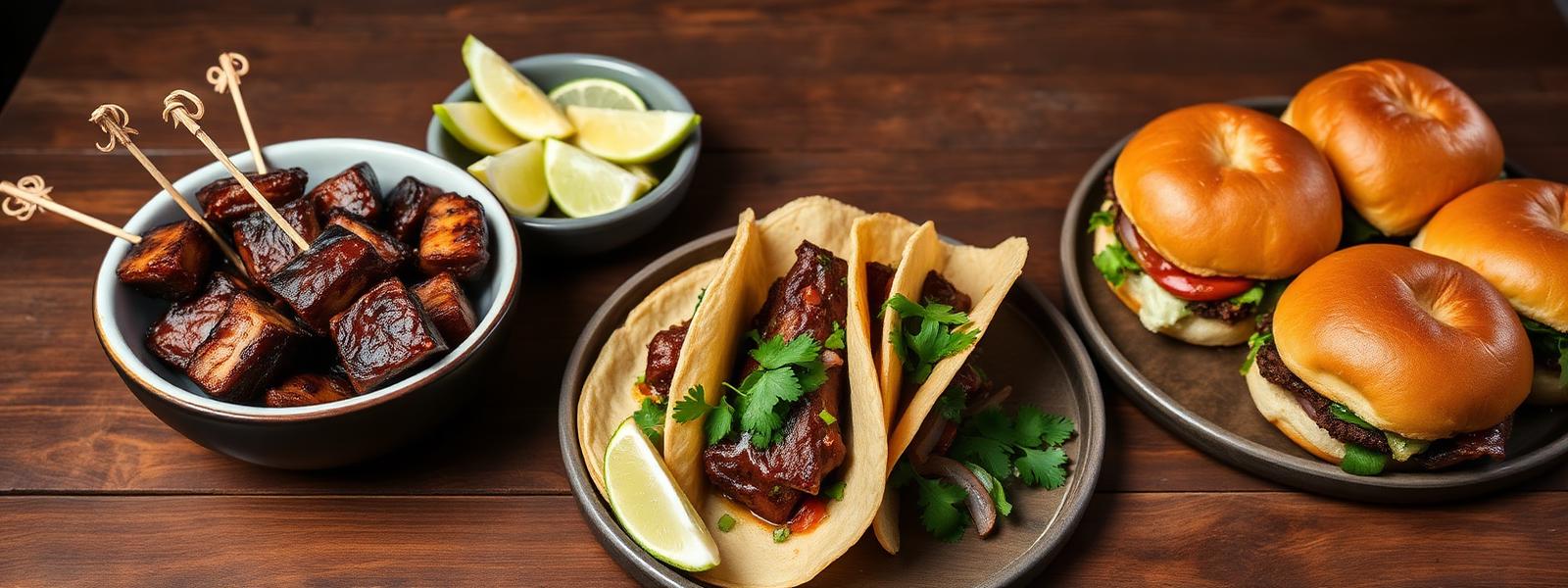
Serving styles: Appetizer style — pile in a bowl with toothpicks, serve immediately to a group of guests. Taco style — wrap in flour tortillas with pickled red onion, cilantro, and lime. Slider style — pile on slider buns with coleslaw and pickles. Plate style — serve over white rice or grits, with collard greens or coleslaw on the side. Garnish — snipped chives, sesame seeds, or chopped cilantro add color contrast.
Pair with bold red wine (Syrah, Malbec, Zinfandel), brown ale, bourbon, or sweet tea.
Time: 5 minutes plating
The Science
Why the 3-Stage Method Works (And Why Shortcuts Fail)
Pork belly burnt ends require three distinct cooking environments. Skipping any stage fails to deliver the complete texture and flavor profile.
Each of the three stages serves a specific cooking purpose that the others can't accomplish.
Stage 1 Builds the Bark
Smoking uncovered at 250°F for 3 hours allows the dry rub to penetrate, the exterior to form bark (Maillard browning), and smoke flavor to deeply absorb into the fat. Without this stage, you have no bark and minimal smoke flavor — the cubes taste like pot roast, not BBQ. The bark layer also seals in fat for the next stage.
Stage 2 Tenderizes via Braising
The covered braise in butter, sugar, honey, and BBQ sauce creates a steam environment that dissolves collagen (turning tough connective tissue into gelatin) while rendering excess fat. Without braising, cubes stay tough and chewy at 175°F. The 90-minute braise to 200-205°F internal is what creates the "melt-in-your-mouth" texture.
Stage 3 Sets the Glaze
Uncovering for 15 minutes lets the wet braising sauce evaporate slightly and caramelize on the cubes. This is what creates the sticky-sweet "candy" exterior. Without Stage 3, your burnt ends are tender but soupy and wet rather than glazed and sticky. The glaze step transforms good braised pork into "pork candy."
Common shortcut that fails: smoking pork belly to 200°F internal without braising in butter+sugar+sauce produces tender pork but lacks the signature sticky-sweet glaze. The result tastes like good barbecue pork, not "pork candy." The 3-stage method is what makes burnt ends BURNT ENDS — don't shortcut.
Wood Selection
The Best Wood for Smoked Pork Belly Burnt Ends
Wood choice meaningfully affects pork belly's final flavor. Here's how the four most common BBQ woods compare for this specific cook.
Cherry (Top Choice)
The most popular pellet for pork belly burnt ends. Sweet, mild smoke that complements the brown sugar and honey in the recipe. Produces beautiful mahogany-red bark color — Instagram-ready visual presentation. If you only buy one pellet for this recipe, buy cherry.
Best for: Most cooks, beautiful color, balanced flavor
Hickory (Bold Classic)
Stronger, more assertive smoke. Best choice if you want classic American BBQ flavor without the sweetness emphasis. Pairs especially well with savory rubs (Killer Hogs The BBQ Rub) and lower-sugar BBQ sauces. Can compete with the brown sugar + honey braise — adjust expectations.
Best for: Bold smoke flavor, traditional BBQ profile
Pecan (Underrated Choice)
Nutty, slightly sweet profile that's often underused. Pairs beautifully with the brown sugar in the rub and the butter in the braise. Less aggressive than hickory, more interesting than apple. Pellet experts often consider pecan the "pit master's choice" for pork belly.
Best for: Pit masters, complex flavor, nutty depth
What to Avoid
- •Mesquite: too aggressive for a 4-hour cook on pork. Overwhelms the rub and braise flavors.
- •Pure oak: works fine but produces less interesting flavor than fruit woods on pork belly.
- •100% maple: too subtle — needs to be blended with another wood for sufficient smoke flavor.
The Gear I Use
Essential Gear for Smoked Pork Belly Burnt Ends
Four tools that make this recipe foolproof. All under $30 — except the thermometer, which is the one upgrade worth its price.
Leave-In Meat Thermometer
The 3-stage method requires monitoring temperature through Stage 1 (165-175°F) and Stage 2 (200-205°F). A leave-in thermometer with wireless display lets you track without opening the smoker. ThermoPro TP20 at $70 has two probes (track 2 cubes simultaneously). MEATER Plus at $100 is the premium wireless option.
Shop meat thermometers →Cherry Wood Pellets
Cherry is the gold-standard pellet for pork belly burnt ends. Traeger Cherry, Bear Mountain Cherry, or Lumberjack 100% Cherry all work. 20-pound bag costs $20-30 and lasts 8-10 burnt ends cooks. Always keep backup pellets — running out mid-cook ruins the recipe.
Shop cherry pellets →Sharp Cubing Knife
Cutting pork belly into uniform 1.5-inch cubes requires a sharp knife. Victorinox Fibrox 8-inch chef's knife at $40 is the workhorse. Cubing fatty pork belly with a dull knife is genuinely dangerous — the blade slips. Sharpen or buy new before this recipe.
Shop chef knives →Aluminum Half-Pan + Foil
The Stage 2 braise requires an aluminum 9x13 half-pan. Disposable pans from grocery stores ($1-2 each) work fine. Heavy-duty aluminum foil is essential for the seal — generic thin foil can tear during braise. Reynolds Heavy Duty or store-brand equivalent.
Shop aluminum pans →Avoid These
6 Common Pork Belly Burnt End Mistakes
Six preventable errors that ruin what should be a foolproof recipe.
Mistake 1: Skipping the braise stage
The most common shortcut — smoking pork belly cubes to 200°F internal without the butter+sugar+sauce braise. Result: tender pork that tastes like pot roast, not "pork candy." The braise is what creates the signature sticky-sweet exterior. Don't skip Stage 2 — it takes 90 minutes but it's what defines burnt ends.
Mistake 2: Cubing pork belly into different sizes
Uneven cube sizes mean uneven cooking — small cubes hit 200°F while large cubes are still at 180°F, OR small cubes overcook while you wait for large ones. Cut all cubes to the same 1.5-inch dimension. Slight variation is fine; significant variation (1-inch and 2.5-inch cubes mixed) creates timing problems.
Mistake 3: Using sweet BBQ sauce that burns
Sweet Baby Ray's and similar high-sugar sauces work fine in the braising liquid (Stage 2) where they're protected by the foil cover. But brushing them on for the final glaze (Stage 3) can produce burned/bitter exteriors if smoker temp creeps above 250°F. Use savory or balanced sauces (Stubb's Original, Traeger Texas Spicy) for the final glaze.
Mistake 4: Removing skin yourself instead of buying skin-off
Most pork belly sold in US grocery stores is skin-off. If you accidentally buy skin-on (sometimes available at Asian markets), removing skin is genuinely difficult — requires a sharp knife and 30+ minutes of careful work. Verify before buying. Skin-off pork belly costs $1-2 more per pound but saves significant time and frustration.
Mistake 5: Using salt-only rub or no rub
The dry rub is what creates the bark in Stage 1. Salt-only seasoning produces bland, pale exteriors without the mahogany color. Brown sugar in the rub is non-negotiable for proper bark formation. Use a real BBQ rub (Meat Church, Killer Hogs, Traeger) or homemade with brown sugar.
Mistake 6: Eating burnt ends immediately without resting
Pulling the pan from the smoker and eating immediately produces overly hot, scalding cubes. Let the pan rest 5-10 minutes after Stage 3 — this is when the glaze fully sets, the cubes cool to a temperature that doesn't burn your mouth, and the flavors equalize. Patience for 5 minutes; reward for 30 minutes of pork candy.
What to Do With Them
6 Ways to Serve Pork Belly Burnt Ends
The recipe makes 4-5 cups of cubed pork candy. Here are six ways to serve them depending on the occasion.
1. Toothpick Appetizer
Pile in a bowl with toothpicks. The classic game-day presentation. Most-shared serving style on social media.
2. BBQ Tacos
Corn tortilla, pork belly, pickled red onion, cotija cheese, cilantro, lime. The crowd-pleaser.
3. Pork Candy Sliders
Brioche slider buns, pork belly, coleslaw, pickles. Sticky-sweet meets crunchy-tangy.
4. Burnt End Bowls
White rice or grits base, pork belly, scallions, sriracha mayo. Bowl-meal comfort food.
5. Topped Mac & Cheese
Creamy mac base, pork belly scattered on top, breadcrumbs. Decadent comfort food upgrade.
6. Brunch Plate
Pork belly with grits, fried eggs, hot sauce, biscuits. Southern brunch maximalism.
Leftover burnt ends keep in the fridge for 3-4 days. Reheat in a 350°F oven for 10-15 minutes (microwave makes them rubbery). They also freeze beautifully — portion into zip-top bags, freeze flat, thaw in fridge overnight or in warm water. Frozen burnt ends keep up to 3 months.
FAQ