Pellet Grill Recipe
Smoked Tri-Tip Recipe: Reverse Sear Method for Pellet Grills
Smoked tri-tip on a pellet grill takes 60–90 minutes of cook time and produces a steakhouse-quality roast for a fraction of ribeye prices. Three things matter: pull at 125–130°F internal (lower for medium-rare), sear hot at 450–500°F to finish, and slice the right way — tri-tip's grain runs in two directions, and getting this wrong turns tender medium-rare beef into chewy disappointment. The recipe works on Traeger, Pit Boss, Camp Chef, Recteq, or any pellet grill that holds 225°F. Reverse sear is the modern standard and is far more forgiving than traditional Santa Maria-style direct grilling.
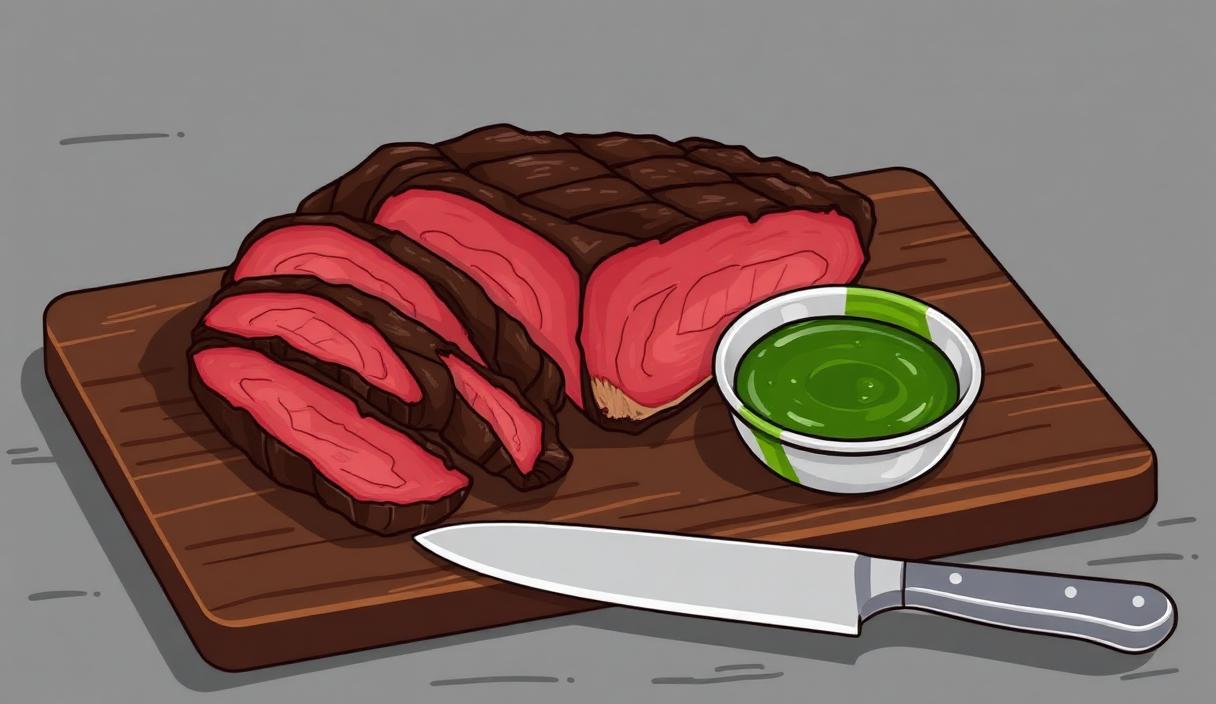
The Recipe
Smoked Tri-Tip (Reverse Sear, Pellet Grill Method)
Prep Time
15 min (trim + season)
Cook Time
60–90 min smoke + 4–6 min sear
Rest Time
10–15 min
Serves
4–6 (2 lb) or 6–8 (3 lb)
Smoker temp: 225°F smoke, then 450–500°F sear
Pull temp: 130°F final for medium-rare
Recommended pellets: Oak (primary); pecan, hickory, or cherry
Before You Start
What You Need
Tri-tip is a famously simple recipe. Salt, pepper, garlic, smoke, sear, slice. The gear matters more than the ingredient list — especially the thermometer and the slicing knife.
Ingredients
Gear
Background
What Tri-Tip Is and Why It's the West Coast's Best-Kept Secret
Tri-tip is a triangular muscle from the bottom sirloin (anatomically, the tensor fasciae latae). Each cow yields exactly two tri-tips, weighing 1.5–2.5 lbs each. The cut takes its name from its triangular shape.
Its modern popularity is credited to butcher Bob Schutz at the Santa Maria Market in California in the 1950s. Faced with an oversupply of trimmings bound for ground beef, he started grilling the whole muscle over red oak. It became a Central Coast staple. For decades, tri-tip was nearly impossible to find outside California — most American butchers ground it for hamburger.
Other names: Santa Maria steak, California cut, Newport steak, bottom sirloin tip, triangle tip, or aiguillette baronne in French.
Tri-tip is one of the best flavor-per-dollar cuts in the entire cow. More flavorful than tenderloin, leaner than ribeye, smaller than brisket, and faster to cook than anything else worth smoking. A 2-lb tri-tip feeds 4–6 people for under $30.
What Actually Matters
The Three Things That Actually Matter for Tri-Tip
Most tri-tip failures come from the same three mistakes. Get these right and the rest of the cook takes care of itself.
Don't overcook
Tri-tip is leaner than ribeye and dries fast above medium. Pull at 130–135°F max for medium-rare. There's no recovering from overcooked tri-tip.
Reverse sear, don't direct grill
Smoke first at 225°F to slowly bring up internal temp, then sear hot at the end. Uniform pink interior with a dark crust. Direct grilling overcooks the edges before the center is done.
Slice the right way
Tri-tip's grain runs in two directions. Cut the rested roast in half along the grain change, THEN slice each half against its own grain. Sliced wrong, even perfect medium-rare tri-tip is tough.
Step by Step
How to Smoke a Tri-Tip on a Pellet Grill (Reverse Sear)
Nine steps. The active work is steps 1–2 (buy, trim, season) and step 8 (slice). The middle is the pellet grill doing its job.
- 1
BUY
Buy the right tri-tip
Look for a 2–3 pound roast. Anything under 2 lbs is too small for a proper reverse sear — internal temp hits target before bark forms. Anything over 3 lbs is rare in the wild and usually has to be special-ordered.
Grade: USDA Choice is fine for tri-tip. The cut is naturally tender enough that Prime is a luxury, not a requirement. Costco's Choice tri-tips are excellent value.
The roast should be flexible (not stiff and dry), with a thick fat cap on one side and minimal silver skin on top.
Sourcing note: outside California, tri-tip can be hard to find at regular grocery stores. Costco, Whole Foods, and dedicated butcher shops are the most reliable. Some stores label it California cut or bottom sirloin tip. If your butcher doesn't have it on display, ask — most can order it.
- 2
TRIM + SEASON
Trim and season (10–15 minutes)
Trim the fat cap to about 1/4 inch — or remove it entirely if you prefer. Tri-tip's fat cap is optional. Unlike brisket, it doesn't render down into the meat the same way, and many cooks remove it completely.
Remove silver skin with a sharp knife. Pull it tight, slide the blade underneath at a shallow angle.
Pat dry with paper towels. A dry surface develops better bark and seasoning sticks to dry meat.
Optional binder: a thin layer of olive oil or yellow mustard. The mustard cooks off completely — the finished tri-tip does not taste mustardy.
Mix the salt, pepper, and granulated garlic in a small bowl, then sprinkle generously from height for even coverage. Apply to all sides.
Let the seasoned tri-tip sit at room temperature for 30 minutes while the grill preheats. Cold meat dropped on a hot grill cooks unevenly.
- 3
SET UP
Set up the pellet grill
Set the pellet grill to 225°F. Once it reaches temperature, give it another 15 minutes to fully heat-soak.
Pellet choice: oak is the classic Santa Maria wood and the gold standard for tri-tip. Pecan, hickory, and cherry all work well — pick what you have. Skip mesquite; it's too aggressive for the relatively short cook.
Insert a leave-in probe thermometer into the thickest part of the roast. Tri-tip is uneven by nature — the thick end will read several degrees higher than the thin end. Always probe the thickest section.
Place the tri-tip directly on the cooking grate. No pan needed.
- 4
SMOKE
Smoke at 225°F (45–75 minutes, until 115–125°F internal)
The smoke phase brings the internal temperature up slowly while the meat absorbs smoke flavor.
Pull temperature depends on your final doneness goal. For final medium-rare (130–135°F): pull at 115°F. For final medium (135–140°F): pull at 125°F. For final medium-well (140–145°F): pull at 130°F — but past this point tri-tip starts drying out fast, and it's not recommended.
Total smoke time depends on size. A 2-lb tri-tip hits 115°F in about 45–60 minutes. A 3-lb tri-tip takes 75–90 minutes.
Don't open the lid to peek. Use the probe.
When the target temp is reached, pull the tri-tip off the grill and place it on a sheet pan or cutting board. Don't sear yet — let it rest uncovered for 5 minutes while the grill ramps up.
- 5
CRANK
Crank the heat for the sear
Set the pellet grill to its highest setting — typically 450°F or 500°F. If your grill has a Sear or Super Smoke mode, use it.
Wait until the grill stabilizes at the high temp (5–10 minutes). The grates need to be ripping hot before the meat goes back on.
Alternative: skip the grill sear and use a cast iron pan on a stove burner or side burner. Pre-heat the cast iron until smoking, add a tablespoon of high-smoke-point oil (avocado or refined canola), and sear there. Cast iron actually produces a better crust than most pellet grills' sear modes — the contact surface stays hotter than open grates.
- 6
SEAR
Sear (4–6 minutes total)
Place the tri-tip on the screaming-hot grates (or in the cast iron pan).
Sear 2–3 minutes per side, with one flip. The goal is dark crust, not full doneness — the interior is already 115–125°F from the smoke phase, and you only need 5–10 more degrees to hit final target.
Use the probe to monitor. Pull when the internal hits 130°F for medium-rare. Carryover heat will push it to 135°F during the rest.
Total sear time is usually 4–6 minutes — much faster than people expect. Don't walk away during the sear.
- 7
REST
Rest (10–15 minutes — non-negotiable)
Transfer the seared tri-tip to a clean cutting board. Tent loosely with foil — don't seal it. Sealed foil traps steam and softens the crust you just built.
Rest 10–15 minutes. Internal temperature will continue rising 3–5°F during the first few minutes (carryover), then settle.
During the rest, the muscle fibers relax and juices redistribute. Slicing immediately bleeds the juices onto the cutting board instead of staying in the meat.
This is enough time to make a chimichurri or set the table.
- 8
SLICE
Slice — the most important step
This is the section that separates good tri-tip from great tri-tip. Tri-tip's grain runs in two directions, and slicing it incorrectly turns medium-rare meat into shoe leather.
Place the rested tri-tip on the cutting board. Look at the surface — you'll see long parallel muscle fibers. Look closely. About halfway through the roast, the direction of the fibers changes by roughly 90 degrees. One half has fibers running one way; the other half has fibers running the other way. This is normal. Every tri-tip does this.
Step one: cut the roast in half along the grain change. Find the line where the grain changes direction. Slice perpendicular through the roast at that line. You now have two pieces, each with consistent grain direction.
Step two: slice each half against its own grain. Cut 1/4-inch pieces (pencil-thick), perpendicular to that piece's fibers.
Done correctly, every slice is fork-tender. Done with the grain, even perfectly cooked medium-rare tri-tip is chewy.
A diagram in your head: imagine cutting a long stick of celery into thin pieces. You cut across the celery, not lengthwise. Same principle here — across the muscle fibers, not along them.
- 9
SERVE
Serve
Plate sliced tri-tip on a serving board. Fan the slices slightly so the pink interior is visible.
Traditional Santa Maria serving: pinquito beans, fresh salsa, garlic bread, green salad.
Modern serving options: chimichurri sauce on top (the dominant pellet-grill pairing), in tacos with charred tortillas, on sandwiches with horseradish cream, sliced over a Caesar salad, or just plain with a flaky finishing salt.
Save leftover slices for the next day. Cold-sliced tri-tip on toasted bread with horseradish or chimichurri is one of the great steak sandwiches.
Troubleshooting
Common Tri-Tip Mistakes and How to Avoid Them
Slicing in one direction across the whole roast
The single most common failure. Tri-tip's grain changes direction roughly halfway through. Cut the roast in half at the grain change first, then slice each half against its own grain.
Pulling too late
Tri-tip dries fast above 140°F internal. Aim for 130°F final, max. Use a probe — don't guess by feel.
Direct grilling instead of reverse sear
The exterior burns before the interior cooks. Reverse sear gives you both the dark crust and the uniform pink center.
Skipping the rest
A tri-tip cut immediately bleeds onto the cutting board. Rested 10–15 minutes, the juices stay in the meat. Non-negotiable.
Buying a tri-tip that's too small
A 1.5-lb tri-tip cooks too fast for a proper reverse sear — internal hits target before bark forms. Stick to 2 lbs minimum.
Using mesquite pellets
Too aggressive for tri-tip's relatively short cook time. Oak, pecan, hickory, or cherry are all better.
Cultural Context
The Santa Maria Tradition
Traditional Santa Maria-style tri-tip is grilled directly over red oak coals on a special crank-up grill that lets the cook raise and lower the grates to control heat. The seasoning is famously simple — salt, pepper, and granulated garlic — and the preparation is fast: a hard sear over high heat, flipped repeatedly, until the internal hits medium-rare. It's served with pinquito beans (a small pink bean grown only in the Santa Maria Valley), fresh salsa, and grilled French bread.
Most home cooks outside Central California don't have access to a Santa Maria grill, which is why the reverse-sear method on a pellet grill has become the dominant modern approach. The flavor result is similar; the technique is just more forgiving.
Bonus Recipe
Best Tri-Tip Rub Recipe (Santa Maria-Style)
- •1 tablespoon kosher salt (Diamond Crystal)
- •1 tablespoon coarse-ground black pepper (16-mesh)
- •1 tablespoon granulated garlic
- •1 teaspoon onion powder (optional)
- •1 teaspoon smoked paprika (optional)
Mix in a small bowl. This rub covers a 2–3 lb tri-tip generously. The first three ingredients are the Santa Maria classic — many tri-tip purists use only those three. Onion powder and smoked paprika add depth without changing the character.
For more rub options across BBQ categories, see our roundup of the best BBQ rubs.
FAQ
Smoked Tri-Tip Frequently Asked Questions
How long does it take to smoke a tri-tip?
What temperature do I pull a tri-tip at?
What's the difference between tri-tip and brisket?
Can I make tri-tip without a pellet grill?
Why does my tri-tip turn out chewy?
Should I marinate tri-tip?
Where do I buy tri-tip?
Is tri-tip the same as flank steak?
The Bottom Line
Why Every Backyard Cook Should Learn Tri-Tip
Tri-tip is the cut every backyard cook should learn after mastering brisket and ribeye. It's faster, cheaper per pound than premium steaks, and produces results that compete with $30/lb tenderloin.
Three priorities: pull at 130°F internal, reverse-sear, and slice in two halves against each half's grain. Everything else — pellet brand, exact rub, sauce on the side — is decoration on those three fundamentals.
Tri-tip is also the gateway cut to other West Coast traditions: Santa Maria pinquito beans, oak-fired grilling, chimichurri-topped beef. Worth exploring once you nail the basics.
Once you've nailed tri-tip, the natural next steps in beef are smoked brisket for the long-cook project, Traeger picanha for the Brazilian alternative, or reverse-seared ribeye for premium steakhouse-style cuts.