Cookware Buying Guide

Best Titanium Pans for Eggs, Bacon and Everyday Cooking

Titanium pans and titanium-style frying pans are often compared for eggs, bacon, vegetables, fish, and easy-clean everyday meals. The best titanium pan for you depends on material details, coating, pan size, stovetop compatibility, heat control, care instructions, and your buyer expectations — not just the marketing claim on the box.

  • For eggs, bacon, vegetables, fish, and everyday meals
  • Compare titanium-style, nonstick, ceramic, and stainless steel options
  • Choose by material, size, care, and compatibility

We organize picks by use case, material claims, size, compatibility, cleaning effort, and buyer expectations. We do not claim hands-on testing unless clearly stated. Categories covered include titanium pans, titanium-style frying pans for eggs, bacon, fish, and vegetables, everyday and nonstick-style cooking, plus stainless steel and ceramic alternatives.

Editorial guide. Quality Grill Parts is not affiliated with or endorsed by any cookware manufacturer.

Why a cookware guide on Quality Grill Parts?

Quality Grill Parts mainly covers grills, BBQ tools, and outdoor cooking gear, but many grill owners also care about everyday cookware for eggs, bacon, vegetables, fish, flat-top-style meals, outdoor kitchen side burners, camping and RV cooking, and simple meals. This titanium pan guide sits next to our grill and cooking gear reviews and grill buying guides for that reason — not to force a grill connection where it doesn't belong.

How we chose

How we chose these titanium pan picks

Picks are organized by use case, food type, material/coating, pan size, stovetop fit, and care — not by hands-on testing. We compared category information and manufacturer-provided details so you can shortlist faster.

Buyer use case

Breakfast cook, everyday-meal cook, fish cook, or outdoor-kitchen side-burner cook — the right pan changes with how you actually cook.

Food type

Eggs, bacon, vegetables, fish, and everyday meals each favor different pan sizes and surface types.

Material & coating

Titanium-reinforced coatings, titanium-style marketing, ceramic-titanium hybrids, and full titanium cookware lines all behave differently.

Care level

Most titanium-style nonstick surfaces want gentle washing, moderate heat, and the right utensils.

Size & stovetop fit

Pan diameter affects how much food cooks at once and whether the pan fits your gas, electric, glass-top, or induction stovetop.

Cleaning effort

Don't assume dishwasher-safe. Many coated pans last longer with hand-washing.

No hands-on testing claim. Specs and recommendations come from category research and manufacturer-provided information.

At a glance

Best titanium pans at a glance

Category-style picks across the most common titanium frying pan and titanium cookware types — featured direct offer, best for eggs, bacon, fish, ceramic-titanium, cookware sets, budget, and the best alternative when titanium isn't the right call. Use these as starting points and confirm size, material, and care notes on every product page before buying.

FEATURED
Titanium Pro Pan™ category visual
01Featured direct-offer titanium-style pan

Titanium Pro Pan™

Best for: Eggs, bacon, vegetables, fish, everyday meals

Titanium Pro Pan™ is a direct-offer cookware product positioned around everyday meals — eggs, bacon, vegetables, fish, and simple cooking. A good starting point for buyers comparing titanium-style pans before committing.

Choose this if

  • You want one everyday pan for eggs, bacon, vegetables, and fish
  • You're comparing titanium-style, ceramic, and stainless steel options
  • You're willing to check the offer page for size and care details

Watch out for: Newer direct-response product — confirm pan size, material/coating, stovetop compatibility, shipping, refund, and care instructions before ordering.
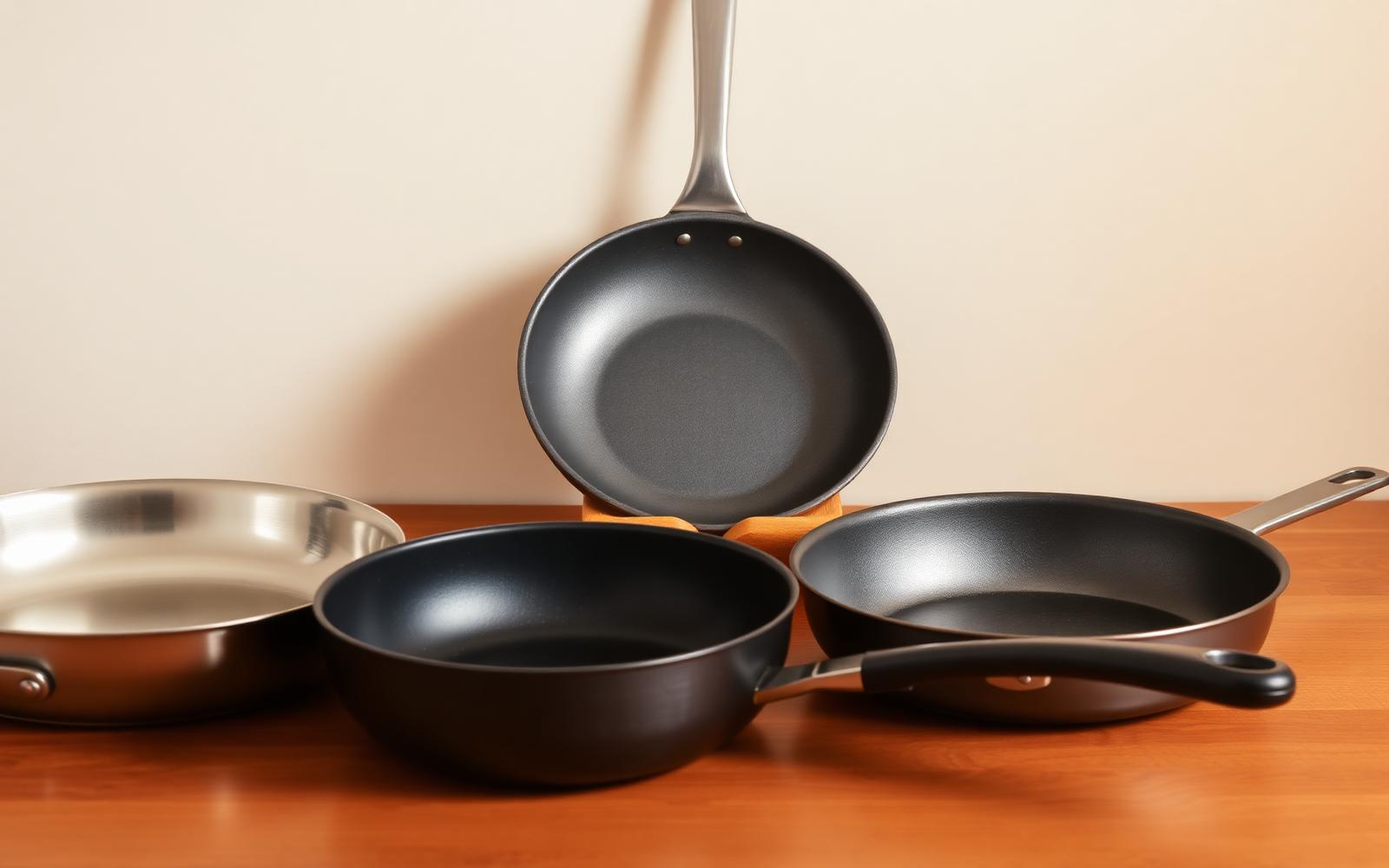
Titanium-style nonstick frying pan category visual
02Best titanium pan for eggs

Titanium-style nonstick frying pan

Best for: Eggs, omelets, breakfast

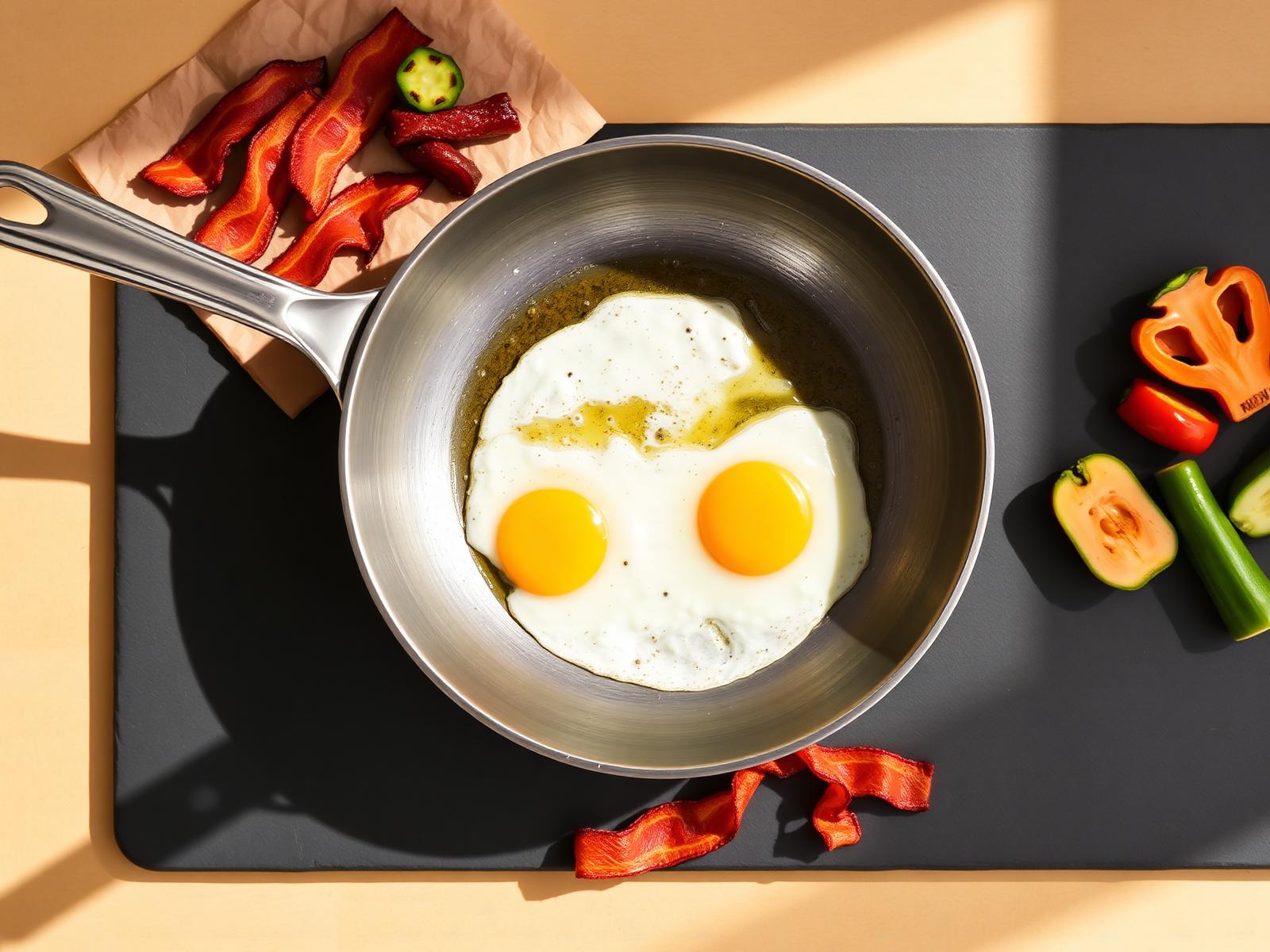
A titanium-style nonstick frying pan can be a strong everyday pick for eggs and omelets. Heat level, a little fat, and gentle utensils matter — the best nonstick pan for eggs is usually one you treat well.

Choose this if

  • Eggs and breakfast are your main use case
  • You want a smaller, more agile everyday pan
  • You're willing to follow care instructions

Watch out for: Confirm exact material wording and oven/dishwasher status on the listing.

Wide titanium-style frying pan category visual
03Best titanium pan for bacon

Wide titanium-style frying pan

Best for: Bacon, breakfast hash, family-size cooks

Bacon needs surface area. A wider titanium-style frying pan lets strips lay flat without crowding and gives you room for breakfast hash or larger family-size cooks.

Choose this if

  • You cook bacon or hash regularly
  • You want one pan that handles a family-size batch
  • You're comfortable managing grease and heat

Watch out for: Check diameter on the product page so the pan fits your stovetop.

Titanium-style nonstick skillet category visual
04Best titanium pan for fish

Titanium-style nonstick skillet

Best for: Delicate fish fillets, scallops

Fish can stick or break in many pans. A smooth, well-maintained titanium-style nonstick skillet can help — pat the fillet dry, preheat fully, use a little fat, and let the fish release on its own before flipping.

Choose this if

  • You cook fish at home often
  • You want easier release for delicate foods
  • You're patient with preheat and technique

Watch out for: No pan guarantees zero sticking — technique still matters.

BEST VALUE
Ceramic titanium frying pan category visual
05Best ceramic titanium pan

Ceramic titanium frying pan

Best for: Buyers avoiding traditional nonstick

Ceramic titanium pans appeal to buyers who want a smooth easy-release surface without traditional nonstick coatings. Coating durability varies by brand — check care instructions and reviews carefully.

Choose this if

  • You prefer ceramic-style cookware
  • You want a smooth easy-release surface
  • You're willing to use low-to-medium heat

Watch out for: Ceramic coatings can wear faster if treated roughly. Avoid metal utensils unless allowed.

Titanium cookware set category visual
06Best titanium cookware set

Titanium cookware set

Best for: Buyers who need multiple pieces

A full titanium-style cookware set is only worth it if you actually need multiple pans and pots. If a single everyday pan covers your cooking, a set is overkill.

Choose this if

  • You're outfitting a new kitchen
  • You need fry pans, sauce pans, and a stock pot
  • You want one consistent line

Watch out for: Confirm every piece's stovetop, oven, and dishwasher status — sets sometimes vary piece to piece.

Basic titanium frying pan category visual
07Best budget titanium-style pan

Basic titanium frying pan

Best for: First-time titanium pan buyers

A basic titanium-style frying pan is a low-risk way to try the category. Check material wording, pan size, and care instructions — cheap titanium-style pans vary widely in build quality.

Choose this if

  • You want to try titanium-style cookware on a budget
  • You only need one everyday pan
  • You're comfortable replacing it if it underperforms

Watch out for: "Titanium" can mean different things at the budget tier — read the actual material details.

Stainless steel or ceramic frying pan category visual
08Best alternative to titanium

Stainless steel or ceramic frying pan

Best for: Buyers who don't need titanium specifically

A standard stainless steel pan or ceramic pan may be a better fit if you want long-term durability or a familiar nonstick experience without the titanium-style marketing angle.

Choose this if

  • You want a known established cookware category
  • You're comfortable with stainless technique
  • You don't care about the titanium label specifically

Watch out for: Stainless needs preheat and oil to prevent sticking; ceramic coatings can still wear over time.

Featured direct-offer option

Featured: Titanium Pro Pan™

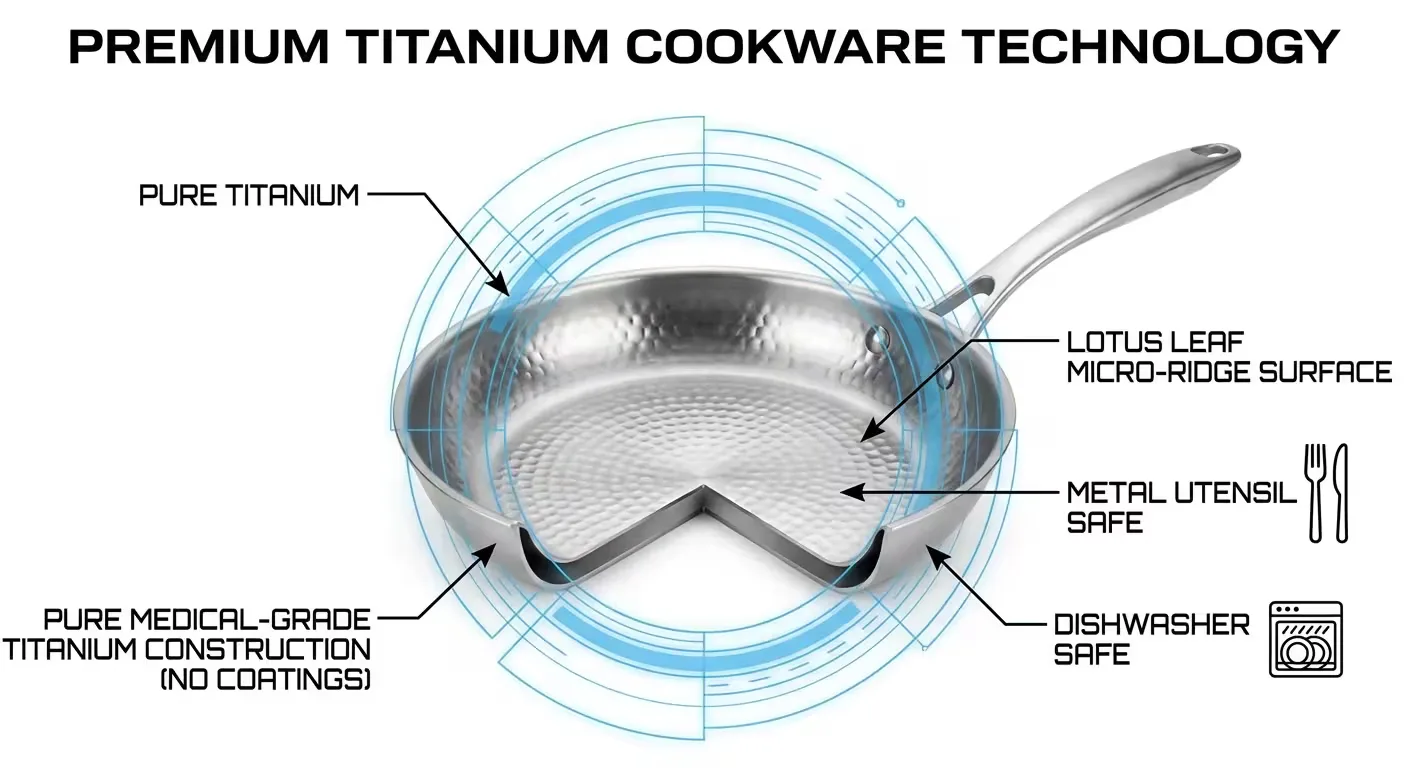
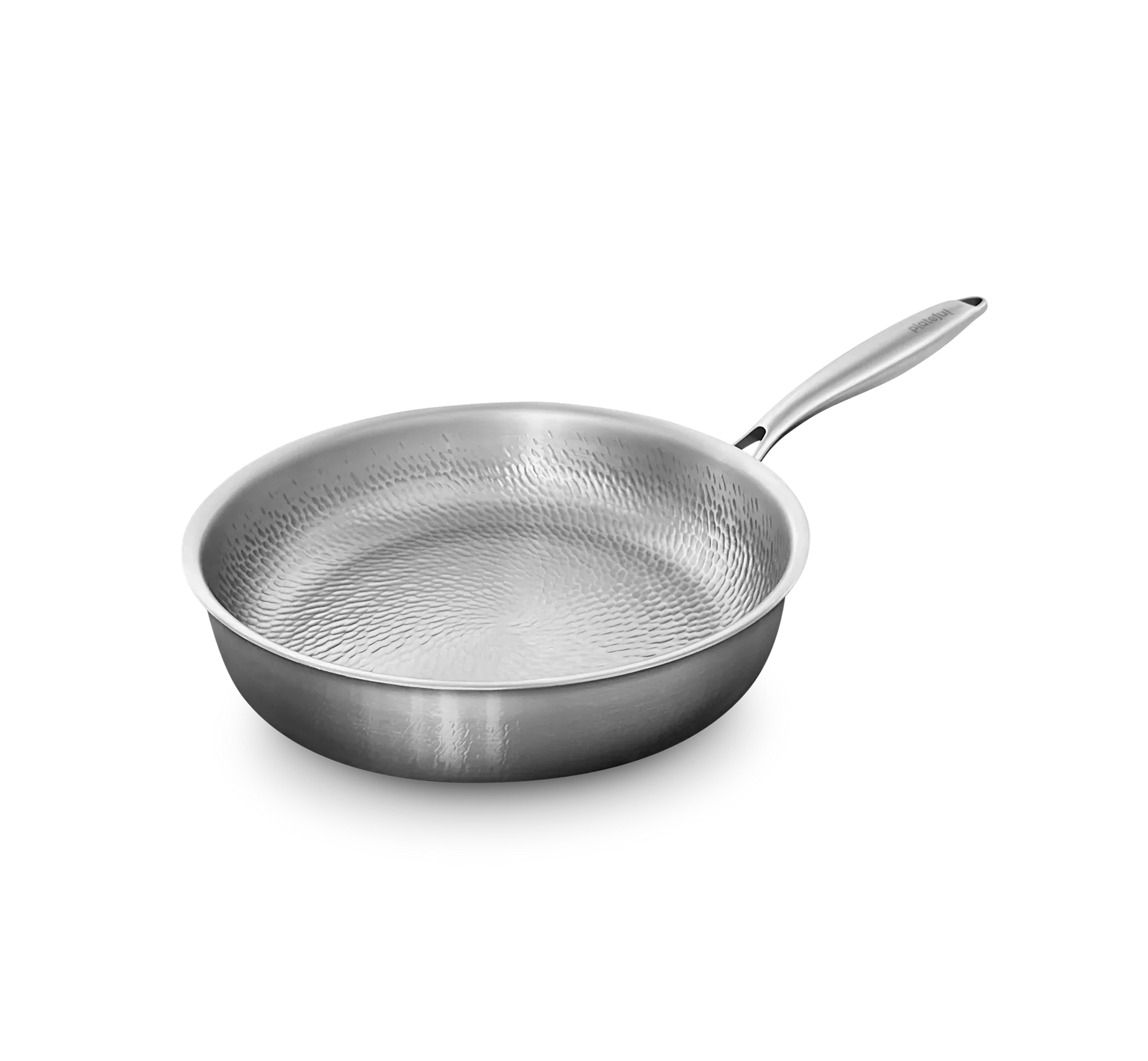
Titanium Pro Pan™ pure titanium frying pan with stainless steel handle

Advertiser-provided product image. Results may vary based on food type, heat, oil/fat use, and care.

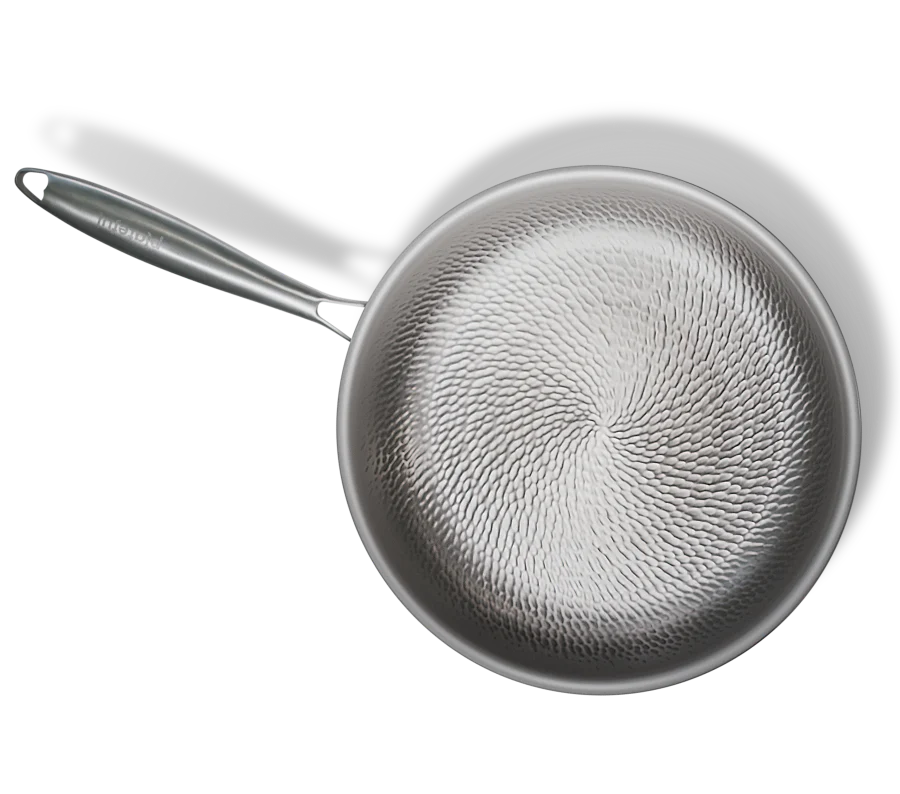
Titanium Pro Pan™ technology diagram showing pure titanium constructionTop-down view of Titanium Pro Pan™ hammered cooking surface

Titanium Pro Pan™ is a direct-offer cookware product promoted for everyday meals like eggs, bacon, vegetables, fish, and simple cooking. It may appeal to buyers comparing titanium-style pans, nonstick pans, ceramic pans, and stainless steel pans for a single workhorse skillet.

Best for

  • Eggs
  • Bacon
  • Vegetables
  • Fish
  • Light everyday meals
  • People comparing titanium-style cookware
  • Buyers checking a current direct offer

Not ideal for

  • Buyers who need a full cookware set
  • People who already own cookware they like
  • People who only want established retail brands
  • Buyers who need independent third-party testing first
  • Buyers who need confirmed oven/induction/dishwasher status they cannot verify

Trust note — before buying, check

  • Pan size and diameter
  • Actual material and coating description
  • Stovetop compatibility (gas, electric, glass, induction)
  • Oven-safe status and max temperature
  • Dishwasher-safe status
  • Utensil restrictions
  • Shipping cost and delivery estimate
  • Refund or guarantee terms
  • Care and cleaning instructions

Newer direct-response cookware product. Confirm details on the live offer page.

Buyer guide

How to choose the best titanium pan

A. Actual material and coating

"Titanium pan" can mean different things. Some use a titanium-reinforced coating, some use titanium-style marketing, some are part of a larger titanium cookware line. Read the product page carefully.

B. Pan size

Eggs need less surface area, bacon needs more width, fish needs enough room, and family meals may need a larger pan. Check the diameter.

C. Stovetop compatibility

Confirm gas, electric, glass-top, induction, and outdoor kitchen side-burner compatibility before ordering — don't assume.

D. Oven & dishwasher status

Don't assume oven-safe or dishwasher-safe unless the product instructions clearly say so, along with a maximum oven temperature.

E. Heat control

Many pans perform better with moderate heat and proper preheating. Overheating can damage some coatings.

F. Utensil restrictions

Some pans should not be used with metal utensils unless the manufacturer confirms it. Wood, silicone, or nylon are often safer defaults.

G. Cleaning and care

Nonstick-style pans usually need gentle cleaning and full drying before storage. Avoid harsh abrasives unless allowed.

Cooking outdoors too? Browse our best flat top grills, best portable grills, and best grill thermometers picks.

By use case

Best titanium pan by use case

Eggs

Best titanium pan for eggs

Eggs are one of the most common tests for an everyday pan. Heat level, oil or butter, and surface care all matter — gentle preheating beats blasting on high.

Works well for

  • Fried and over-easy eggs
  • Omelets and scrambles
  • Breakfast for one or two

Avoid

  • High heat with no fat
  • Metal utensils unless the product allows
Shop titanium pans for eggs
Bacon

Best titanium pan for bacon

Bacon needs surface area and careful grease handling. A wider titanium-style pan lets strips lay flat without crowding — check pan size on the product page.

Works well for

  • Family-size bacon batches
  • Breakfast hash
  • Bacon-and-veg cooks

Avoid

  • Crowding strips on a small pan
  • High heat unattended
Shop titanium pans for bacon
Fish

Best titanium pan for fish

Fish can stick or break in many pans. A smooth, well-maintained surface and careful heat control matter. Preheat fully, use a little fat, and let the fillet release on its own.

Tip: pair with our best grill thermometers picks for safe internal temperatures.

Works well for

  • Salmon, cod, tilapia fillets
  • Scallops
  • Pan-finishing oven dishes

Avoid

  • Moving fish too early
  • Cold pan starts
Shop titanium pans for fish
Vegetables

Best titanium pan for vegetables

Useful for sautéed peppers, onions, mushrooms, zucchini, and greens. Cut to similar sizes, stir often, and manage heat so nothing scorches.

Works well for

  • Sautéed veg sides
  • Stir-fries
  • Quick weeknight veg

Avoid

  • Very high heat with delicate coatings
Shop titanium pans for vegetables
Everyday meals

Best titanium pan for everyday meals

Best for buyers who want one pan for small daily meals — eggs, hash, stir-fries, one-pan dinners — rather than a full cookware set.

Works well for

  • One-pan dinners
  • Quick weeknight cooks
  • Small-household kitchens

Avoid

  • Trying to replace a full cookware set with one pan
Shop everyday titanium pans
Cookware set

Best titanium cookware set

Only relevant for buyers who need multiple pans and pots. Don't force a set if a single everyday pan covers what you actually cook.

Works well for

  • New kitchens
  • Full upgrades
  • Households who cook large meals

Avoid

  • Buying a full set when one pan is enough
Shop titanium cookware sets

Side by side

Titanium pan comparison table

No single pan wins every category. Here's how titanium-style pans, Titanium Pro Pan™, ceramic-titanium pans, regular nonstick, stainless steel, cast iron, and carbon steel compare side by side — including care level.

Pan typeBest forProsConsCareBest buyer
Titanium-style nonstick panEveryday eggs, bacon, vegetablesEasier release, low cleaning effort, premium marketing angleMaterial details vary widely between brandsMediumCook who wants one everyday nonstick-style pan
Titanium Pro Pan™Direct-offer everyday cookingActive offer with bundle options, advertiser materialsNewer direct-response product; verify compatibilityMediumComparison shopper checking a direct offer
Ceramic titanium panSmooth easy-release surfaceOften free of traditional nonstick coatingsCoating durability varies; low-medium heat bestMediumBuyer avoiding traditional nonstick
Regular nonstick frying panConvenience and easy cleanupFamiliar, widely available, strong releaseCoating wears; avoid metal utensils and high heatMediumConvenience-focused everyday cook
Stainless steel panSearing, fond, long-term durabilityVery durable, handles high heat, no coating to wearNeeds technique to prevent stickingLowTechnique-driven cook
Cast iron skilletHeat retention and searingExcellent heat retention, lasts decadesHeavy, needs seasoning, slower to heatHighCook who wants searing and old-school control
Carbon steel panPro-style searing and stir-fryLighter than cast iron, builds nonstick patinaNeeds seasoning and careHighEnthusiast cook

Care ratings reflect general category effort — actual care depends on the specific product build.

Buyer comparison

Titanium pan vs stainless steel vs ceramic

  • Stainless steel is durable and handles high heat well, but it requires more technique to prevent sticking — preheating, oil, and patience.
  • Ceramic pans can be easy to use, but coating durability varies between brands.
  • Regular nonstick pans are convenient but require careful heat control and the right utensils.
  • Cast iron holds heat well and lasts decades, but it needs seasoning and care.
  • Titanium-style pans may appeal to buyers looking for premium-sounding nonstick-style cookware, but actual material details vary by product.
  • The best choice depends on cooking style, heat control, cleaning expectations, and care habits.

Buyer intent

Titanium pan vs regular nonstick pan

A titanium-style pan is often marketed as stronger or more durable than a basic regular nonstick pan, but buyers should verify the actual material wording on the product page. "Titanium-reinforced" doesn't always mean the same thing across brands.

Regular nonstick pans are widely available, familiar, and convenient — a safe pick if you want the standard easy-release experience. Titanium-style pans may appeal to buyers who want a different coating angle, a premium-sounding material story, or compatibility with a slightly tougher cooking surface.

Practically, both categories benefit from moderate heat, the right utensils, and hand-washing unless the product clearly says otherwise.

Material & safety

Cookware safety: what buyers should verify

Safety checklist

  • Many buyers compare cookware based on materials, coatings, and food-contact safety.
  • The safest approach is to review the official product page, label, documentation, and any compliance statements.
  • Do not rely only on fear-based marketing.
  • If you have specific health concerns, sensitivities, or medical questions, consult product documentation and qualified professional advice.
  • We do not verify lab safety claims unless official documentation is provided.

We do not make medical claims. If you have specific health concerns, sensitivities, or medical questions, consult qualified professional advice.

Use & care

How to use and care for titanium-style pans

  1. Read the product instructions first.
  2. Use an appropriate heat level — low to medium for most cooking.
  3. Avoid overheating an empty pan unless instructions allow.
  4. Use utensils the product recommends — often wood, silicone, or nylon.
  5. Avoid metal utensils unless the product confirms they're safe.
  6. Let the pan cool before washing.
  7. Avoid harsh abrasive scrubbing unless allowed.
  8. Dry the pan fully before storing.
  9. Do not assume dishwasher-safe unless stated.
  10. Do not assume oven-safe unless stated.
  11. Do not assume induction-safe unless stated.

Manufacturer instructions always win. If a specific product's care guide differs from anything here, follow the product's guide.

Avoid these

Titanium pan mistakes to avoid

  • Buying without checking the actual material/coating
  • Assuming all titanium pans are the same
  • Using high heat carelessly
  • Using metal utensils when not allowed
  • Assuming dishwasher-safe without confirmation
  • Assuming induction-compatible without confirmation
  • Expecting every food to release perfectly
  • Not checking pan size against your stovetop
  • Buying a single pan when a cookware set is needed

Cooking outdoors too? See our best grill baskets picks and our how to clean a grill walkthrough.

Final recommendation

Which titanium pan should you choose?

There's no single right answer — but here's how we'd steer most buyers based on how they actually cook.

Choose a titanium-style pan if

  • You want one everyday pan for eggs, bacon, fish, vegetables, and simple meals
  • You're comparing nonstick-style cookware options
  • You're willing to follow care instructions
  • You check material and compatibility details first

Choose stainless steel if

  • You want long-term durability
  • You're comfortable with more cooking technique
  • You don't need a nonstick-style surface

Choose ceramic if

  • You want a smooth easy-release pan
  • You understand coating durability can vary
  • You're willing to follow care instructions

Choose cast iron or carbon steel if

  • You want strong heat retention
  • You don't mind seasoning and maintenance
  • You cook searing-style meals often

If you specifically want a direct-offer titanium-style pan

Read our full Titanium Pro Pan™ review

A detailed editorial walkthrough of Titanium Pro Pan™ — what it is, what it's best for, pros and cons, and what to confirm before ordering.

Availability, bundles, and discounts may change. Review final checkout details before purchasing.

FAQ

Titanium pans frequently asked questions

What is the best titanium pan?

There's no single best titanium pan — the right pick depends on what you cook and how often. A titanium-style nonstick frying pan is a good everyday choice for eggs, bacon, and vegetables. A wider pan is better for bacon and family-size cooks. If you specifically want a direct-offer titanium-style pan to look at, see our Titanium Pro Pan review.

Are titanium pans good for eggs?

Yes — eggs are one of the most common use cases for a titanium-style nonstick pan. Use low to medium heat, a little oil or butter, and gentle utensils. Results depend on technique and surface condition, but eggs are a natural fit for the best nonstick pan for eggs in your kitchen.

Are titanium pans good for bacon?

Yes — titanium-style pans can be a strong choice for bacon as long as the pan is wide enough for strips to lay flat without crowding. Use moderate heat and handle grease carefully. Check the pan diameter on the product page before buying.

Is titanium cookware nonstick?

Most titanium-style pans are marketed as easier-release nonstick-style cookware. Read the actual material details on the listing — "titanium" can mean a titanium-reinforced coating, a titanium-style marketing angle, or a full titanium cookware line. Don't assume every food will release perfectly; technique still matters.

Is titanium cookware safe?

Buyers often compare cookware based on materials, coatings, and food-contact safety. The safest approach is to review the official product page, label, documentation, and any compliance statements. Don't rely only on fear-based marketing. If you have specific health concerns or sensitivities, consult product documentation and qualified professional advice.

Is titanium better than stainless steel?

Neither is automatically better. Stainless steel is more durable, handles higher heat, and has no coating to wear, but it requires more technique to prevent sticking. A titanium-style nonstick pan is often easier for everyday eggs and quick meals, while stainless steel often wins for searing.

Is titanium better than ceramic cookware?

They compete in a similar everyday-cooking space. Ceramic pans are often chosen by buyers avoiding traditional nonstick coatings; coating durability varies by brand. Titanium-style pans may appeal to buyers who want a different surface or marketing angle. The right choice depends on heat habits, care, and how the product page describes the actual surface.

Are titanium pans dishwasher-safe?

Don't assume dishwasher-safe. Many coated pans last longer with hand-washing in warm soapy water. Confirm dishwasher instructions on the product page before risking the surface.

Are titanium pans oven-safe?

Don't assume oven-safe unless the product page clearly states it, along with a maximum oven temperature. Handle materials, rivets, and coatings all affect what's safe in an oven.

Can titanium pans be used on induction cooktops?

Induction compatibility depends on the pan's base material. Don't assume induction-safe unless the product page clearly states it.

What should I check before buying a titanium pan?

Pan size, actual material and coating description, stovetop compatibility, oven-safe status if needed, dishwasher-safe status if needed, utensil restrictions, cleaning instructions, shipping cost, refund or guarantee terms, and whether you actually need a single pan or a full cookware set.

Is Titanium Pro Pan™ worth considering?

Titanium Pro Pan™ is worth considering if you want an everyday pan for eggs, bacon, vegetables, fish, and simple meals and you're comfortable checking the offer details before ordering. It's a newer direct-response product, so confirm pan size, material details, stovetop compatibility, shipping, refund terms, and care instructions on the live offer page. Read our full Titanium Pro Pan review for the details.