Grill Thermometer Buying Guide
Best Grill Thermometers of 2026: Instant-Read, Wireless & Smoker Picks
A good grill thermometer is not just a gadget. It is the difference between guessing and knowing when burgers, chicken, steak, brisket, pork, turkey, and fish are done. The best grill thermometers and the best meat thermometer for grilling depend on whether you need fast instant readings, a leave-in probe for long cooks, wireless monitoring for a smoker, or a budget thermometer for everyday grilling.
We focus on real grilling use cases: fast burger checks, chicken safety, steak doneness, long smoker cooks, pellet grill monitoring, probe durability, wireless range, and whether replacement probes and accessories are easy to find later.
Quick buyer note: Instant-read thermometers are best for fast spot checks. Leave-in and wireless thermometers are better for long smoking sessions. Many serious grillers use both.
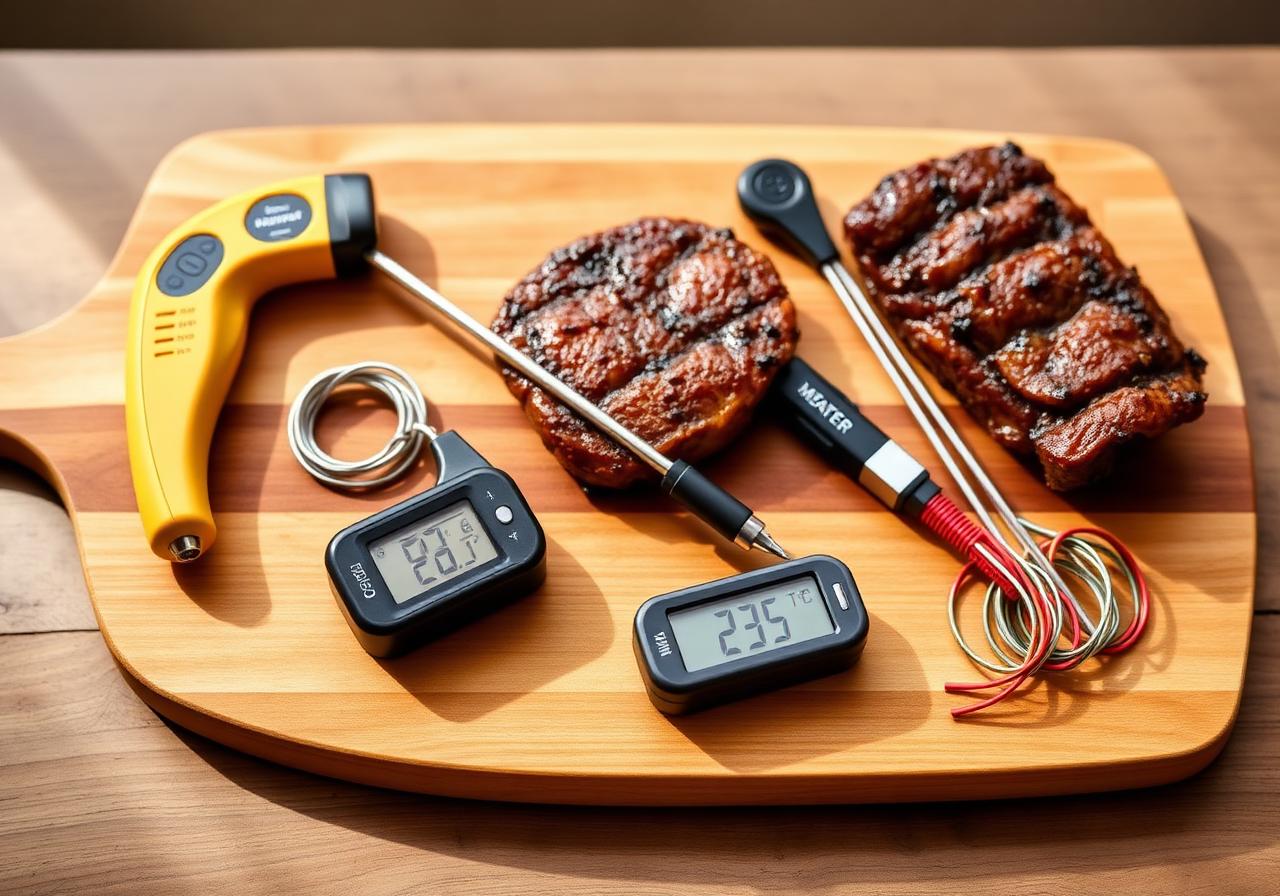
Editor's Pick Lineup
2026Best instant-read
Fast folding probe thermometer
Best wireless
App-connected probe thermometer
Best smoker thermometer
Multi-probe leave-in unit
Best value
ThermoPro-style instant-read or wireless kit
Best premium
Thermapen-style instant-read
Most important feature
Accuracy and response speed
Quick Verdict
Quick verdict: the best grill thermometer for most people
For most grill owners, the best grill thermometer setup is one fast instant-read thermometer plus one leave-in or wireless probe thermometer. Use the instant-read for burgers, steaks, chicken pieces, pork chops, and fish. Use the leave-in or wireless probe for brisket, pork shoulder, turkey, prime rib, and longer smoker or pellet grill cooks. If you only buy one thermometer, choose a fast instant-read first.
- Buy an instant-read first if you mostly cook burgers, steaks, chicken pieces, pork chops, and fish.
- Add a leave-in probe if you cook roasts, turkey, prime rib, pork shoulder, or brisket.
- Choose wireless if you smoke or pellet-grill often and want remote monitoring.
- Choose multi-probe if you want to track both meat temperature and pit temperature together.
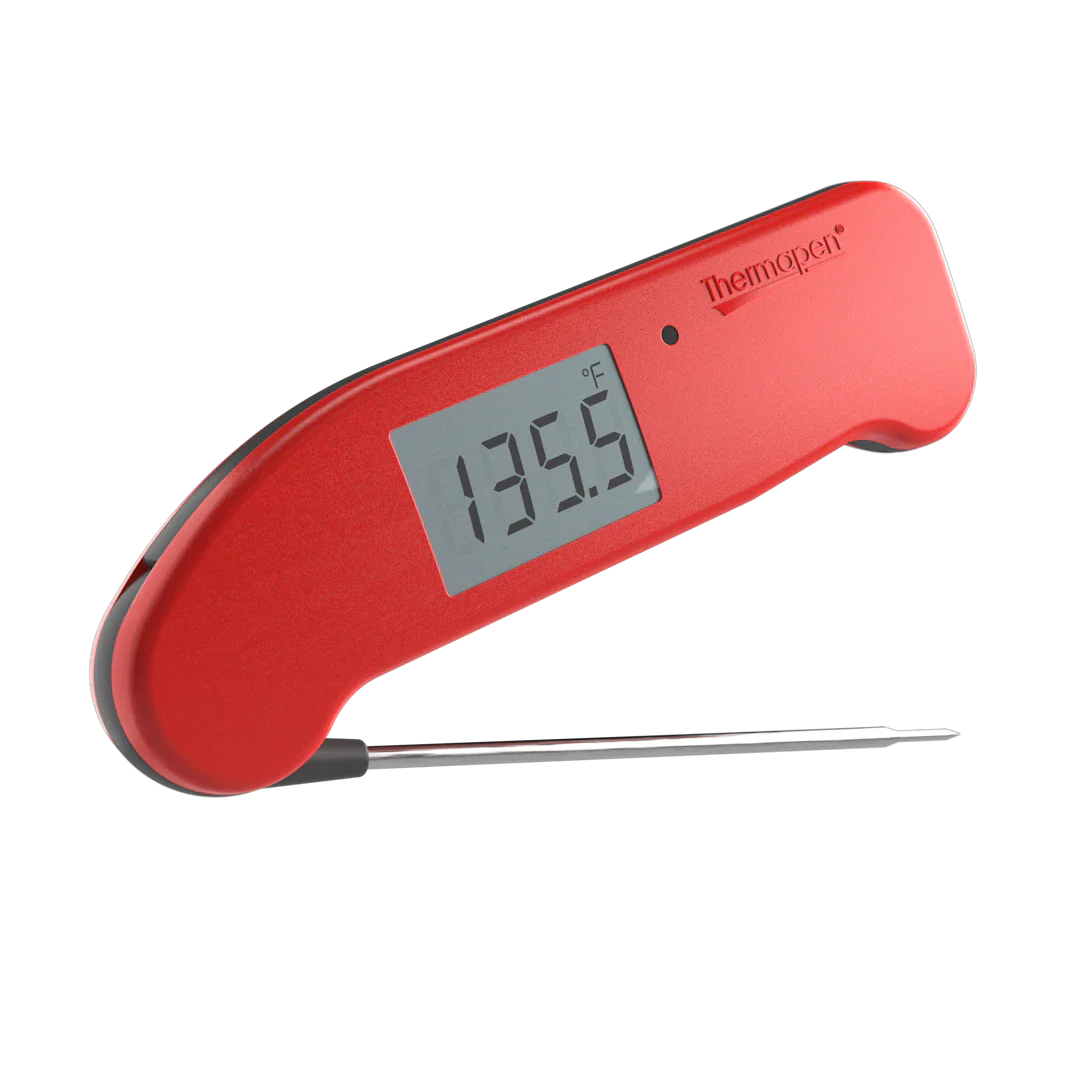
Featured premium instant-read thermometer
ThermoWorks Thermapen ONE
ThermoWorks Thermapen ONE is a premium instant-read meat thermometer for grillers who want fast spot checks on steak, chicken, burgers, pork, fish, turkey, and BBQ. It is not a leave-in wireless smoker probe, but it is a strong option for people who want a premium instant-read thermometer from a known thermometer brand. See our full ThermoWorks Thermapen ONE review.
Best for
- steak doneness checks
- chicken and poultry checks
- burgers, pork chops, pork tenderloin
- fish, turkey, and large roasts
- BBQ spot checks and serious home grillers
Watch out for
- premium price vs budget thermometers
- not a leave-in wireless probe
- not multi-probe monitoring or app alerts
- check current warranty, colors, accessories, shipping, and return terms
Share this recipe:
Type Chooser
Which grill thermometer type should you buy?
Pick the type first, then the brand. These four cover ~95% of home grilling and smoking needs.
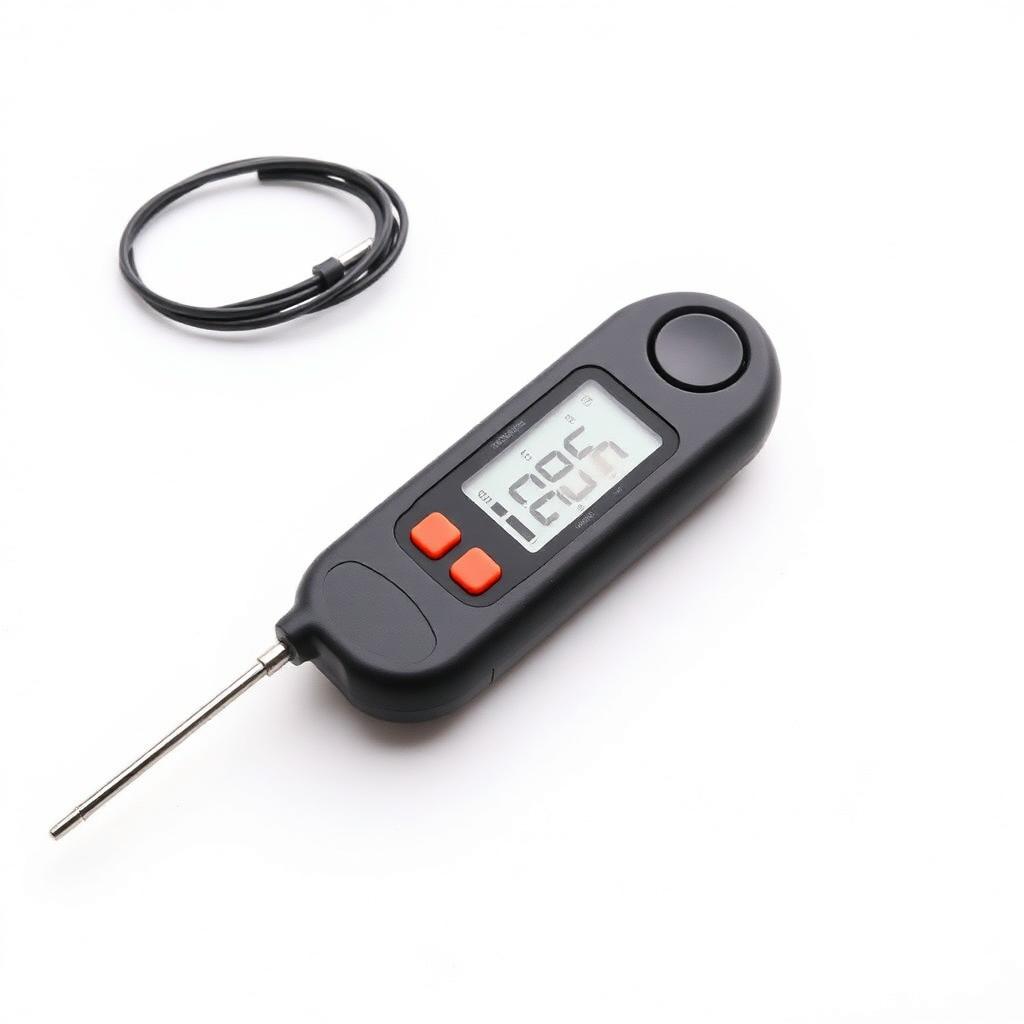
Instant-read thermometer
Best for: Fast spot-checks on thin, fast-cooking foods.
Not ideal for: Sitting inside a hot, closed grill for hours.
Example foods: Burgers, steaks, chicken pieces, pork chops, fish.
Buy this first if you only buy one thermometer.
Shop instant-read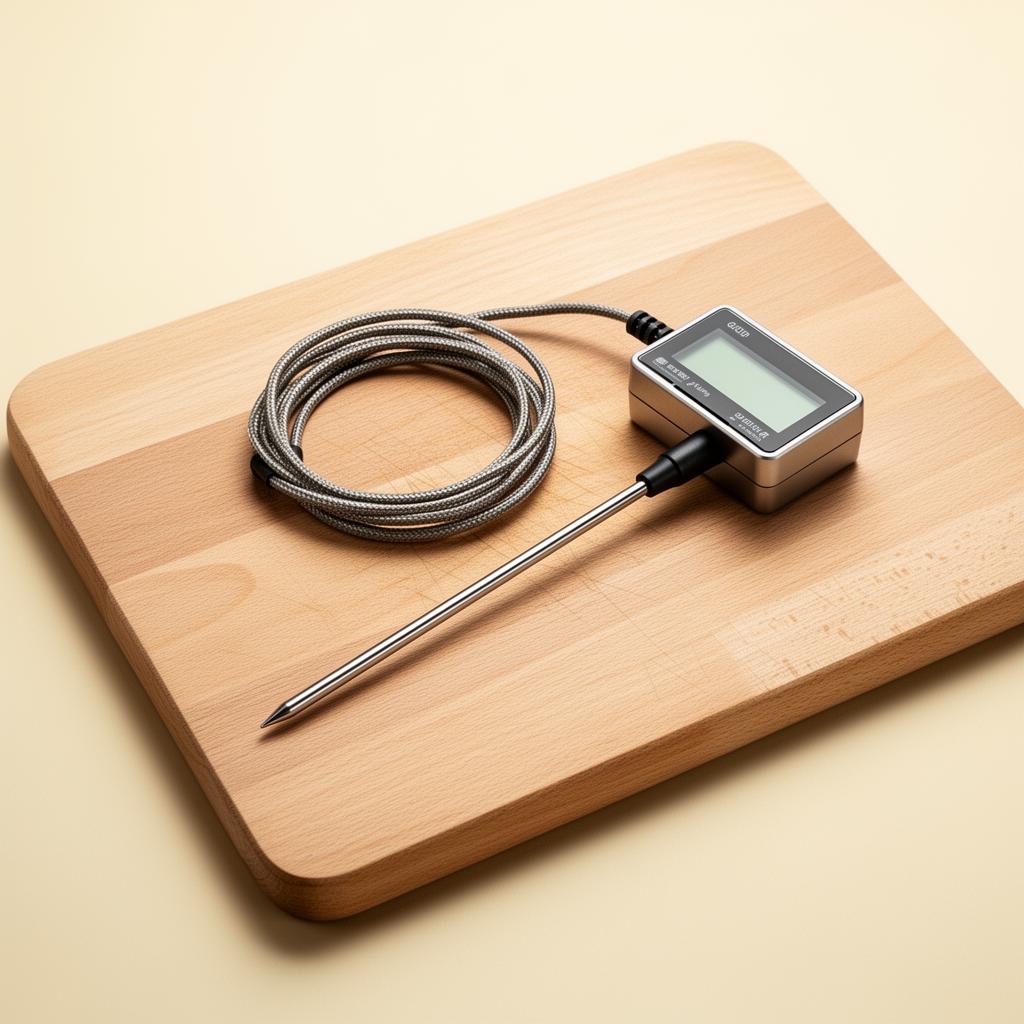
Leave-in probe thermometer
Best for: Long roasts and unattended oven or grill cooks.
Not ideal for: Thin cuts that cook faster than the probe settles.
Example foods: Whole turkey, prime rib, pork shoulder, large roasts.
Best second thermometer after an instant-read.
Shop leave-in probe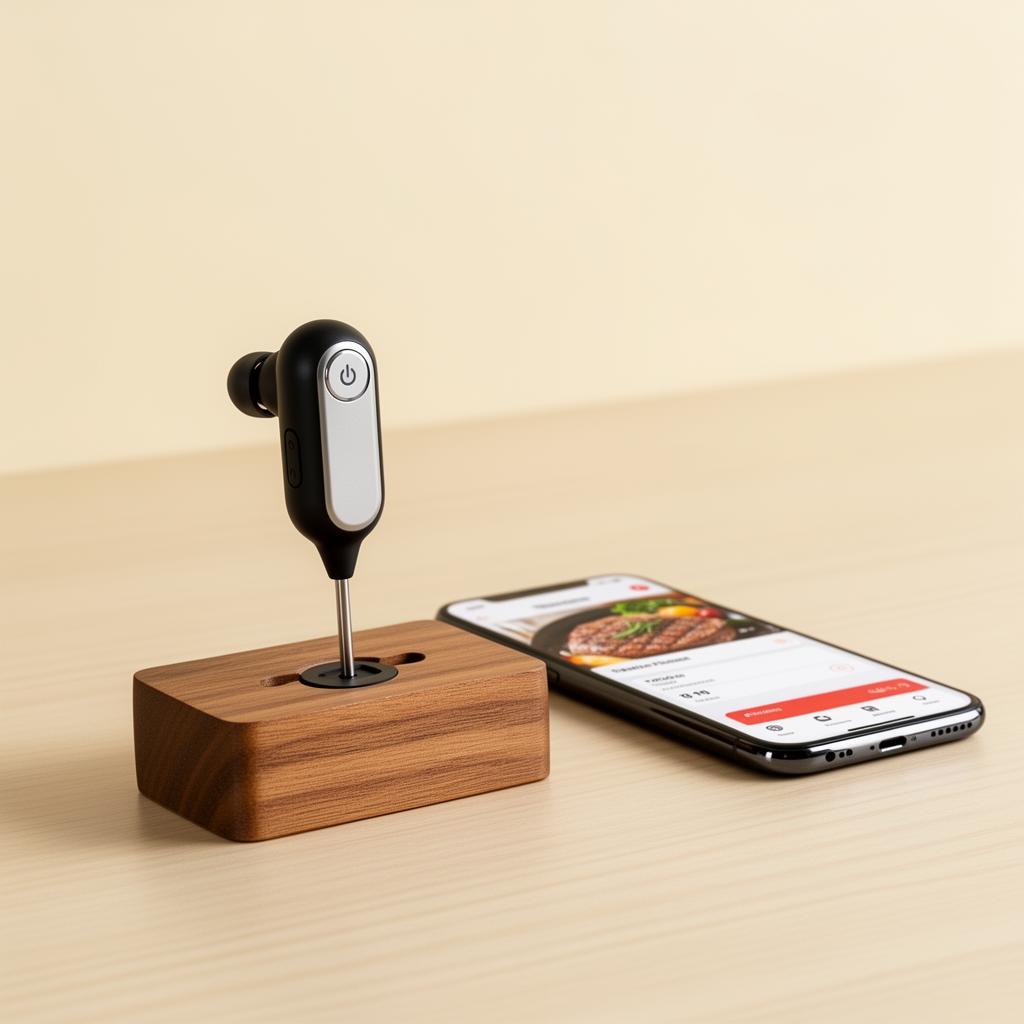
Wireless meat thermometer
Best for: Remote monitoring during smokes and pellet grill cooks.
Not ideal for: Weeknight grilling where a fast read is simpler.
Example foods: Brisket, pork shoulder, overnight smokes, turkey.
Worth it if you smoke or pellet-grill regularly.
Shop wireless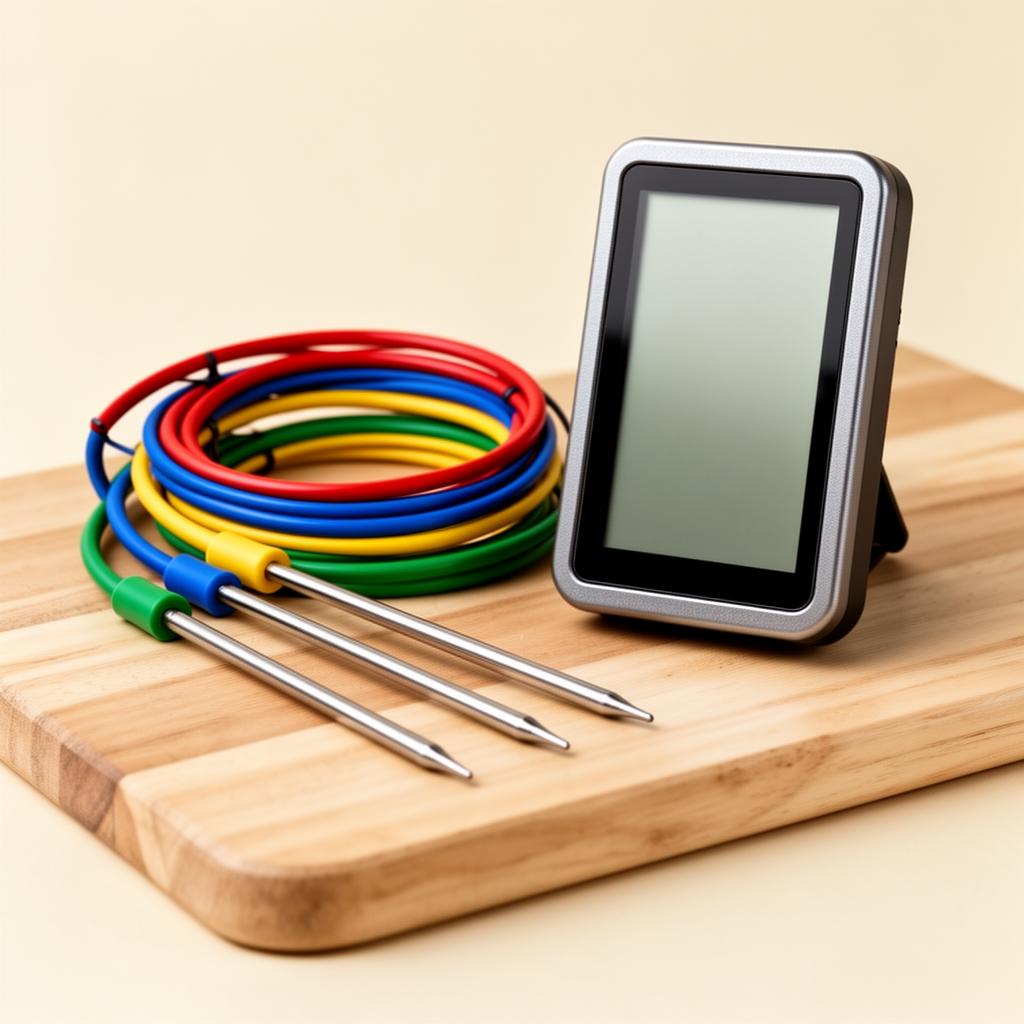
Multi-probe smoker thermometer
Best for: Tracking pit temperature and multiple meats at once.
Not ideal for: Single-protein weeknight cooks.
Example foods: Competition BBQ, multiple briskets, big-batch hosting.
Best for BBQ and pellet grill enthusiasts.
Shop multi-probeTop Picks
Best grill thermometers compared
Twelve category winners at a glance. Match the row that fits how you actually cook.
| Pick | Best for | Type | Main strength | Watch out for | Best buyer | Shop |
|---|---|---|---|---|---|---|
Best Grill Thermometer OverallBest Overall | Everyday grilling + occasional smokes | Instant-read + leave-in pair | Covers fast checks and long cooks together | Two devices to charge and store | Anyone who grills weekly | Shop instant-read |
Best Instant-Read Thermometer | Burgers, steaks, chicken, pork chops, fish | Instant-read folding probe | 1–3 second reads, pocketable | Not designed to stay in a hot grill | Grillers who want speed and accuracy | Shop instant-read |
Best Wireless Meat ThermometerBest Wireless | Smokers, pellet grills, long cooks | True wireless probe + app | No cables, remote alerts | Battery and app dependence | Smoker users monitoring from inside | Shop wireless |
Best Smoker ThermometerBest Smoker | Brisket, pork butt, ribs, pit + meat | Multi-probe leave-in | Tracks grate temp and meat together | Wired probes need cable management | BBQ and pellet grill cooks | Shop multi-probe |
Best BBQ Thermometer | Competition-style cooks, large smokers | Multi-probe wireless or RF | Range that reaches the house | Higher price | Serious BBQ enthusiasts | Shop BBQ thermometer |
Best Leave-In Meat Thermometer | Roasts, turkey, prime rib, pork shoulder | Wired or wireless leave-in probe | Set target, lid stays closed | Probes have a service life | Sunday roast and holiday cooks | Shop leave-in probe |
Best Budget Grill ThermometerBest Budget | Casual grillers, gift buyers | Instant-read or single-probe wireless | Solid accuracy under $40 | Slower read times than premium | First thermometer or backup | Shop budget pick |
Best Premium Instant-ReadBest Premium | Frequent grillers, chefs, weekly cooks | Pro instant-read folding probe | ~1 sec reads, ±0.5°F accuracy | Premium price | Anyone cooking 2+ times per week | Shop premium |
Best Multi-Probe Thermometer | Multiple proteins or pit + meat | 4-probe wireless base | Color-coded probes, one screen | Cables run out of the grill | Hosts and BBQ practice cooks | Shop multi-probe |
Best Thermometer for Pellet Grills | Traeger, Pit Boss, Recteq, Camp Chef | Wireless leave-in or multi-probe | Confirms grate temp vs controller | Some pellet apps already monitor meat | Pellet grill owners chasing accuracy | Shop pellet grill pick |
Best for Burgers & Steaks | Quick proteins, weekday grilling | Fast instant-read | Side-check burgers, doneness on steaks | Skip leave-in cables for thin cuts | Weeknight grillers | Shop steak pick |
Best for Brisket & Turkey | Long, lid-closed cooks | Leave-in or wireless probe | Tracks long temp curve without peeking | Probe placement matters on big cuts | Holiday and weekend BBQ cooks | Shop brisket pick |
Best Grill Thermometer Overall
Best Overall- Best for:
- Everyday grilling + occasional smokes
- Type:
- Instant-read + leave-in pair
- Strength:
- Covers fast checks and long cooks together
- Watch out for:
- Two devices to charge and store
- Best buyer:
- Anyone who grills weekly
Best Instant-Read Thermometer
- Best for:
- Burgers, steaks, chicken, pork chops, fish
- Type:
- Instant-read folding probe
- Strength:
- 1–3 second reads, pocketable
- Watch out for:
- Not designed to stay in a hot grill
- Best buyer:
- Grillers who want speed and accuracy
Best Wireless Meat Thermometer
Best Wireless- Best for:
- Smokers, pellet grills, long cooks
- Type:
- True wireless probe + app
- Strength:
- No cables, remote alerts
- Watch out for:
- Battery and app dependence
- Best buyer:
- Smoker users monitoring from inside
Best Smoker Thermometer
Best Smoker- Best for:
- Brisket, pork butt, ribs, pit + meat
- Type:
- Multi-probe leave-in
- Strength:
- Tracks grate temp and meat together
- Watch out for:
- Wired probes need cable management
- Best buyer:
- BBQ and pellet grill cooks
Best BBQ Thermometer
- Best for:
- Competition-style cooks, large smokers
- Type:
- Multi-probe wireless or RF
- Strength:
- Range that reaches the house
- Watch out for:
- Higher price
- Best buyer:
- Serious BBQ enthusiasts
Best Leave-In Meat Thermometer
- Best for:
- Roasts, turkey, prime rib, pork shoulder
- Type:
- Wired or wireless leave-in probe
- Strength:
- Set target, lid stays closed
- Watch out for:
- Probes have a service life
- Best buyer:
- Sunday roast and holiday cooks
Best Budget Grill Thermometer
Best Budget- Best for:
- Casual grillers, gift buyers
- Type:
- Instant-read or single-probe wireless
- Strength:
- Solid accuracy under $40
- Watch out for:
- Slower read times than premium
- Best buyer:
- First thermometer or backup
Best Premium Instant-Read
Best Premium- Best for:
- Frequent grillers, chefs, weekly cooks
- Type:
- Pro instant-read folding probe
- Strength:
- ~1 sec reads, ±0.5°F accuracy
- Watch out for:
- Premium price
- Best buyer:
- Anyone cooking 2+ times per week
Best Multi-Probe Thermometer
- Best for:
- Multiple proteins or pit + meat
- Type:
- 4-probe wireless base
- Strength:
- Color-coded probes, one screen
- Watch out for:
- Cables run out of the grill
- Best buyer:
- Hosts and BBQ practice cooks
Best Thermometer for Pellet Grills
- Best for:
- Traeger, Pit Boss, Recteq, Camp Chef
- Type:
- Wireless leave-in or multi-probe
- Strength:
- Confirms grate temp vs controller
- Watch out for:
- Some pellet apps already monitor meat
- Best buyer:
- Pellet grill owners chasing accuracy
Best for Burgers & Steaks
- Best for:
- Quick proteins, weekday grilling
- Type:
- Fast instant-read
- Strength:
- Side-check burgers, doneness on steaks
- Watch out for:
- Skip leave-in cables for thin cuts
- Best buyer:
- Weeknight grillers
Best for Brisket & Turkey
- Best for:
- Long, lid-closed cooks
- Type:
- Leave-in or wireless probe
- Strength:
- Tracks long temp curve without peeking
- Watch out for:
- Probe placement matters on big cuts
- Best buyer:
- Holiday and weekend BBQ cooks
By Use Case
Best grill thermometers by use case
Twelve editorial picks across instant-read, wireless, smoker, leave-in, budget, premium, multi-probe, pellet grill, burgers and steaks, and brisket and turkey.
Best OverallBest Overall Grill Thermometer
Instant-read + leave-in pairing
Best fit for: Grillers who want one setup that handles both quick checks and long cooks.
Worth considering if: An instant-read covers weeknight grilling. A leave-in or wireless probe covers smokes and roasts. Together they handle ~95% of home cooks.
Skip if: Two thermometers to charge, store, and clean. Start with the instant-read if you can only buy one.
- Accuracy note
- Pro instant-reads land within ±0.5–1°F. Mid-tier leave-in probes land within ±2°F.
- Probe note
- Look for a 4–6 inch probe on the leave-in unit so it reaches the center of large roasts.
Best cooking use: Steaks, burgers, chicken, brisket, pork shoulder, turkey, prime rib.
Shop the pairing on AmazonBest Instant-ReadBest Instant-Read Thermometer
Premium folding probe instant-read
Best fit for: Quick checks on burgers, steaks, chicken pieces, pork chops, and fish.
Worth considering if: Reads in roughly 1–3 seconds so you can spot-check without holding the lid open. The single most useful thermometer for everyday grilling.
Skip if: Not built to live inside a hot grill. Pull it out between checks.
- Accuracy note
- Best models read within ±0.5°F.
- Probe note
- Pocket-size folding probe. Easy to carry and store.
Best cooking use: Anything thin or fast: burgers, steaks, chops, breasts, fish fillets.
Shop instant-read on AmazonBest WirelessBest Wireless Meat Thermometer
True wireless probe with app
Best fit for: Smokers, pellet grills, and remote monitoring.
Worth considering if: A fully wireless probe (no cable trailing out of the lid) reports temperature to a phone app so you can step away during long cooks.
Skip if: Bluetooth range varies. WiFi extenders or cloud features may cost extra. Battery and app reliability matter.
- Accuracy note
- Premium wireless probes land within ±1°F when used inside their rated ambient range.
- Probe note
- Look for a 6+ inch probe rating and a charging dock for storage.
Best cooking use: Brisket, pork shoulder, prime rib, turkey, overnight smokes.
Shop wireless on AmazonBest SmokerBest Smoker Thermometer
Multi-probe leave-in for pit + meat
Best fit for: Tracking pit temperature and meat temperature at the same time.
Worth considering if: Lid thermometers and pellet grill controllers often read 15–40°F different from grate level. A leave-in probe at grate level tells you the truth.
Skip if: Wired probes need cable management out of the lid. Replace probes every 18–24 months of heavy use.
- Accuracy note
- Mid-tier multi-probe units land within ±2°F. Pro units land within ±1°F.
- Probe note
- Look for color-coded probes and a high-heat-rated cable.
Best cooking use: Brisket, ribs, pork butt, whole turkey, chuck roast.
Shop smoker pick on Amazon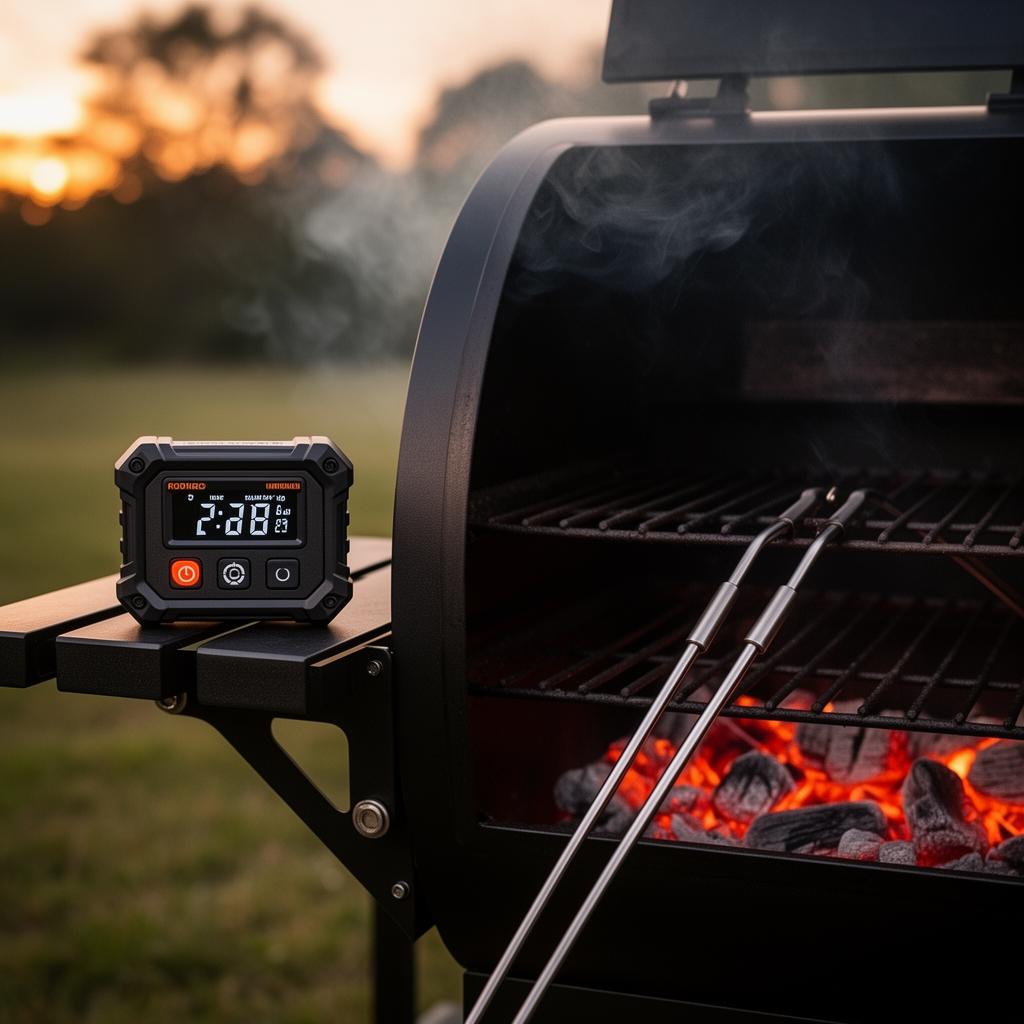 Best BBQ
Best BBQ Thermometer
Multi-probe wireless or RF
Best fit for: Long BBQ cooks where you want to monitor multiple meats and the pit.
Worth considering if: Real BBQ usually means hours of cook time and several pieces of meat. A 4-probe wireless or RF unit covers everything from one screen.
Skip if: RF and pro models cost more. Bluetooth-only is fine if you stay near the grill.
- Accuracy note
- Pro RF units land within ±1°F at long range.
- Probe note
- Look for at least 4 probes and a high-heat ambient rating.
Best cooking use: Competition-style cooks, big family BBQ, multiple briskets.
Shop BBQ thermometerBest Leave-InBest Leave-In Meat Thermometer
Wired or wireless leave-in probe
Best fit for: Roasts, turkey, prime rib, and pork shoulder.
Worth considering if: Lets you set a target temperature and keep the lid closed. Carryover cooking is easier to manage when you can see the curve.
Skip if: Probe wires are the most fragile part — keep them away from direct flames.
- Accuracy note
- Most leave-in probes are accurate within ±2°F across normal cook temperatures.
- Probe note
- A 4–6 inch probe reaches the center of large roasts.
Best cooking use: Holiday roasts, slow-cooked beef, whole birds.
Shop leave-in probe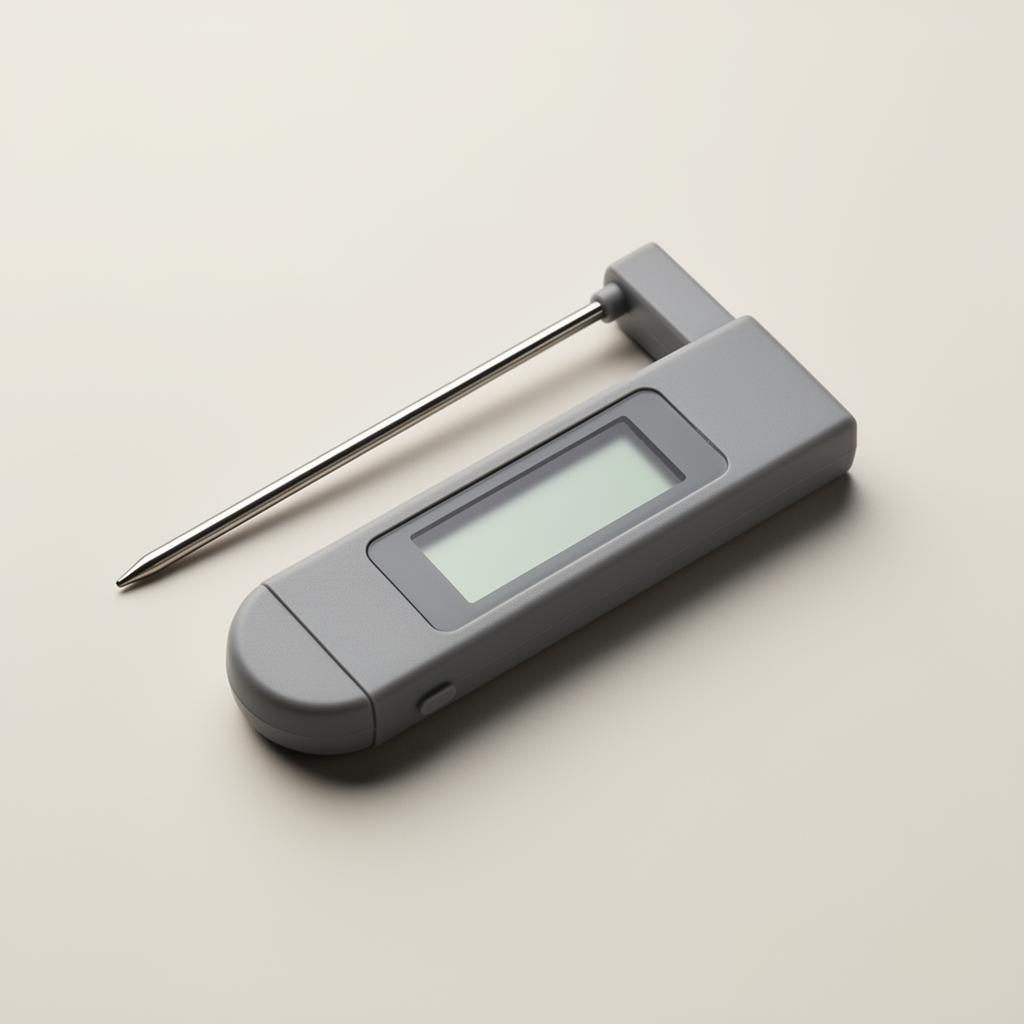 Best Budget
Best Budget Grill Thermometer
ThermoPro-style instant-read or wireless kit
Best fit for: Casual grillers, first thermometers, gift buyers.
Worth considering if: Modern budget thermometers under $40 are far better than they were five years ago. Accuracy is usually within ±2°F and read times are tolerable.
Skip if: Slower than premium. Cheap no-name knockoffs can drift 5–10°F — stick with established brands.
- Accuracy note
- Within ±2°F on reputable models.
- Probe note
- Single probe is fine for occasional grilling.
Best cooking use: Burgers, chicken pieces, weeknight steaks.
Shop budget pickBest PremiumBest Premium Instant-Read Thermometer
Thermapen-style pro instant-read
Best fit for: Frequent grillers who want the fastest, most accurate read possible.
Worth considering if: Roughly 1-second read time and ±0.5°F accuracy. Auto-rotating display and a folding probe make it the most-used tool in serious kitchens.
Skip if: Premium price. Single-probe only.
- Accuracy note
- Within ±0.5°F.
- Probe note
- Folding probe stores compact.
Best cooking use: Daily grilling, baking, candy, frying, sous vide finish.
Shop premium instant-readBest Multi-ProbeBest Multi-Probe Thermometer
4-probe wireless base unit
Best fit for: Multiple proteins at once or pit + meat monitoring.
Worth considering if: Four color-coded probes let you watch pit temperature and several meats on a single screen.
Skip if: More cables to manage and more probes to clean.
- Accuracy note
- Within ±2°F on mid-tier models.
- Probe note
- Color-coded leads keep cooks organized.
Best cooking use: Hosting, BBQ practice, holiday cooks.
Shop multi-probeBest for PelletBest Pellet Grill Thermometer
Wireless leave-in or multi-probe
Best fit for: Traeger, Pit Boss, Recteq, Camp Chef, and other pellet grills.
Worth considering if: Pellet grill controllers read the chamber, not the grate. A separate probe at grate level confirms what your food actually sees.
Skip if: Some pellet grills already include meat probes — a second thermometer is a backup, not a duplicate.
- Accuracy note
- Within ±1–2°F on reputable wireless models.
- Probe note
- Use a high-heat-rated cable for the sear setting.
Best cooking use: See our pellet grill picks in the related guides below.
Shop pellet grill pick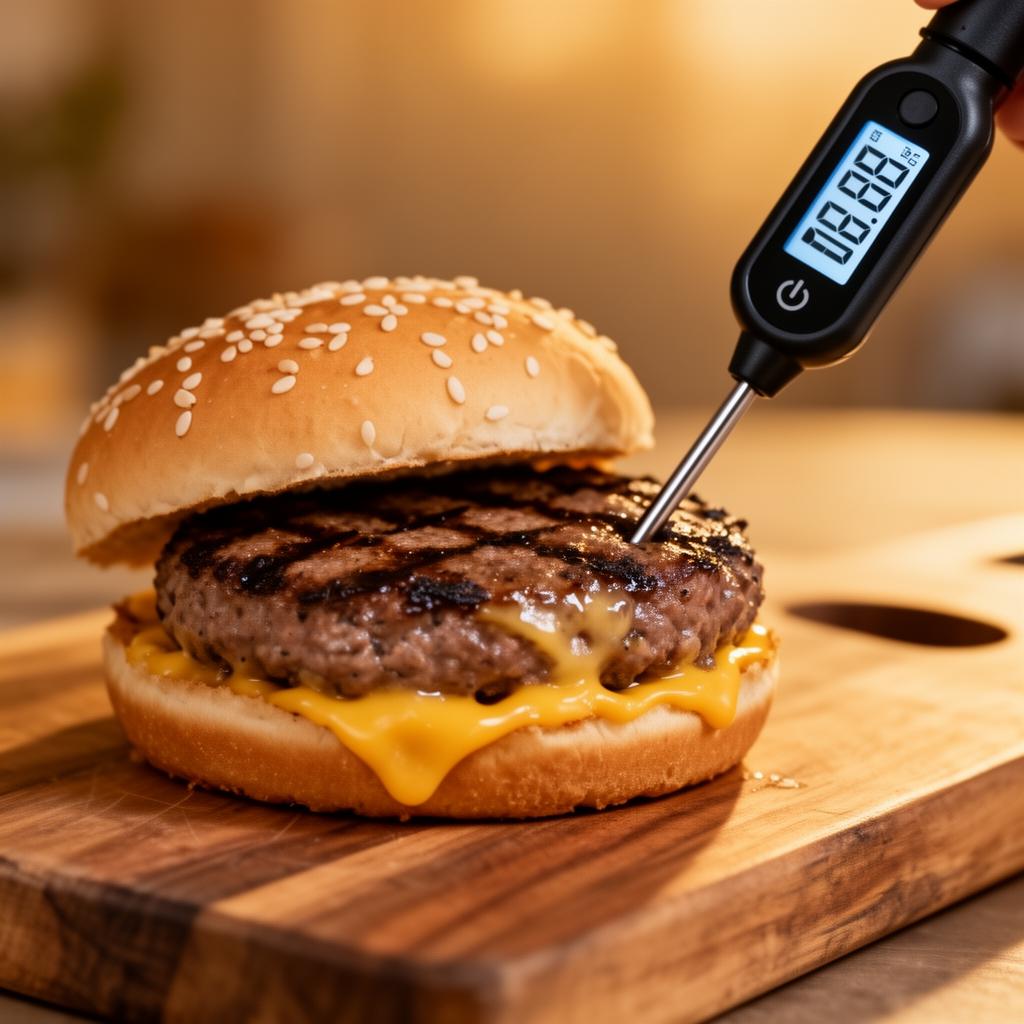 Best for Burgers & Steaks
Best Thermometer for Burgers & Steaks
Fast instant-read
Best fit for: Quick proteins where seconds matter.
Worth considering if: For burgers and thin steaks, you want a read before the surface dries out. Side-checking from the edge of the patty gives you a true center read on burgers.
Skip if: Skip leave-in probes on thin cuts — they cook faster than the probe can settle.
- Accuracy note
- Within ±0.5–2°F depending on price tier.
- Probe note
- Thin tip helps minimize the channel left behind.
Best cooking use: Burgers, ribeye, strip, sirloin, flank, skirt.
Shop steak thermometer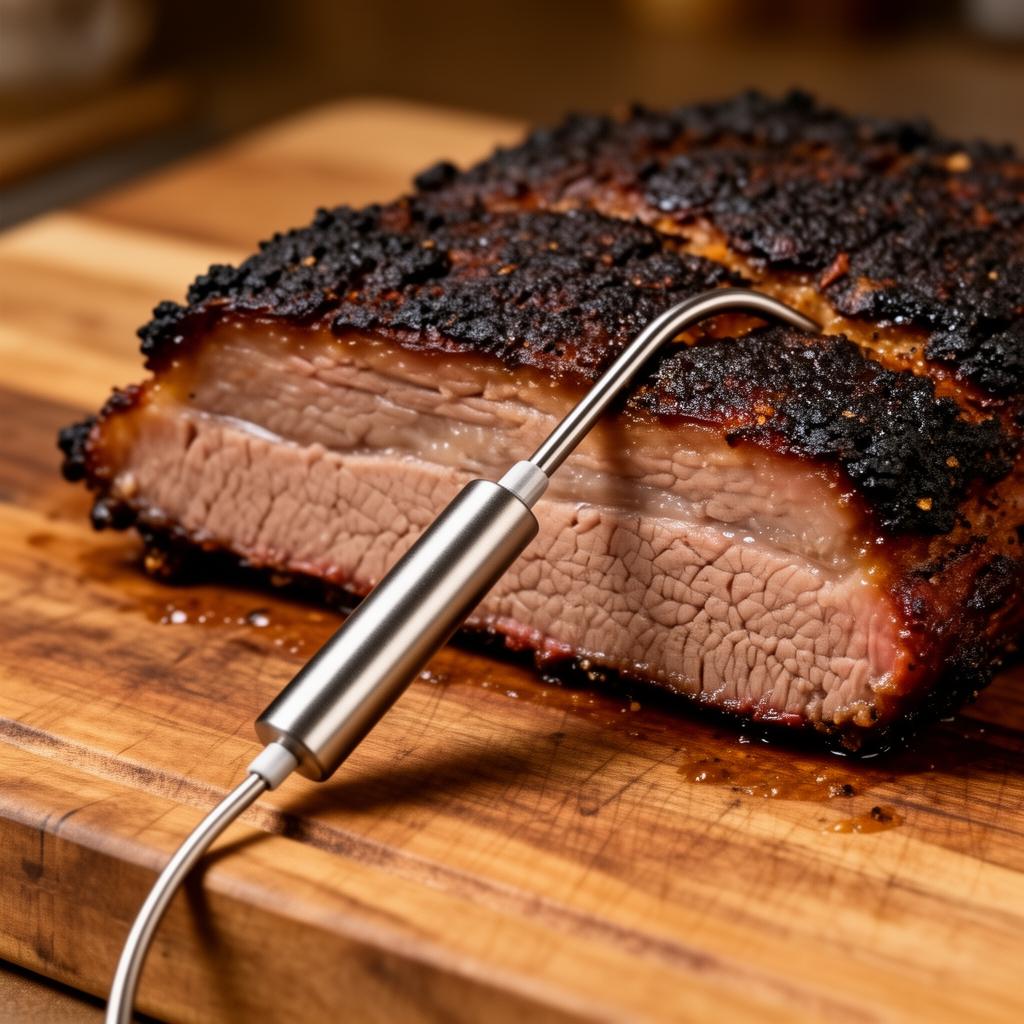 Best for Brisket & Turkey
Best Thermometer for Brisket & Turkey
Leave-in or wireless probe with alarm
Best fit for: Long cooks where opening the lid hurts you.
Worth considering if: Brisket and turkey both reward a set-and-forget alarm. A leave-in probe tells you when to wrap, when to pull, and when to rest.
Skip if: Probe placement matters — center of the thickest part, away from bone or fat pockets.
- Accuracy note
- Within ±1–2°F on reputable models.
- Probe note
- Wireless with a 6+ inch probe is ideal for big cuts.
Best cooking use: Brisket, whole turkey, pork butt, prime rib.
Shop brisket and turkey pickDecision Framework
How to choose the best grill thermometer
The best thermometer is the one you will actually use every cook. A fast instant-read prevents overcooked burgers and chicken. A leave-in or wireless probe keeps the lid closed on long smokes and pellet grill cooks.
Accuracy
Within ±1°F is excellent. Within ±2°F is acceptable. Anything worse than ±5°F is unreliable.
Response speed
1–3 seconds is professional grade for instant-read. 5–10 seconds is acceptable. Over 15 seconds is frustrating.
Instant-read vs leave-in
Instant-read for quick checks. Leave-in for long cooks. Most serious cooks eventually own both.
Wired vs wireless probe
Wired is cheaper and reliable. Wireless removes cables and adds remote monitoring at a higher price.
Number of probes
One probe is enough for single-protein cooks. Four probes covers pit + meat for BBQ.
Temperature range
Ambient rating matters for the cable, not just the tip. Look for ratings that cover sear temps if you cook hot.
App reliability
App-only thermometers depend on a working phone connection. Read recent app store reviews.
Display readability
Backlit, auto-rotating displays read fast in any light.
Battery life
Replaceable batteries never strand you mid-cook. Rechargeable means one less thing to buy.
Water resistance
IP-rated water resistance survives rain and cleaning splashes.
Probe durability
Probes are consumables. Replacements should be available.
Alarm settings
Custom high/low alerts are the whole point of a leave-in probe.
Magnet or stand
A magnetic back or stand keeps the base in easy reach on the grill.
Budget
The best thermometer is the one you'll actually use every cook. Start where you'll commit.
Type Comparison
Instant-read vs wireless vs leave-in grill thermometers
Six thermometer types, side-by-side. Pick the type before you pick the brand.
| Type | Best for | Strength | Weakness | Best foods | Best buyer |
|---|---|---|---|---|---|
| Instant-read thermometer | Quick doneness spot-checks | Fast and accurate | Not for unattended cooks | Burgers, steaks, chicken, fish | Almost every grill owner |
| Leave-in probe thermometer | Long roasts and unattended cooks | Lid stays closed | Cables can be fragile | Roasts, turkey, prime rib | Sunday and holiday cooks |
| Wireless meat thermometer | Remote monitoring from inside | True wireless, app alerts | Battery and app dependence | Brisket, pork shoulder, smokes | Smoker and pellet grill users |
| Multi-probe smoker thermometer | Pit + multiple meats together | Pit temp and meat temp on one screen | More cables to manage | BBQ briskets, ribs, butts | BBQ and pellet grill cooks |
| Infrared thermometer | Surface temperature checks | Reads grate and pan temps fast | Does not measure internal doneness | Searing surfaces, pizza stones | Hot-cookers, pizza grillers |
| Built-in grill lid thermometer | Rough chamber temp reference | Always there | Often 15–40°F off at grate level | Reference only — not for doneness | Everyone, as a backup |
Verdict by type
- Instant-read is the best first thermometer for most grill owners.
- Leave-in probes are best for roasts and long cooks.
- Wireless probes are best for monitoring from a distance.
- Multi-probe smoker thermometers are best for BBQ and pellet grill users.
- Infrared thermometers measure surface temperature, not food doneness.
- Built-in lid thermometers are useful for rough grill temperature but should not replace a meat thermometer.
Food Safety
Safe internal temperatures for grilling
USDA-aligned minimums for grilling and smoking. Use a thermometer every time.
| Food | Safe internal temperature | Thermometer tip | Related guide |
|---|---|---|---|
| Ground beef burgers | 160°F | Side-check burgers from the edge for a true center read. | Frozen burgers on a Traeger → |
| Ground turkey or chicken burgers | 165°F | Ground poultry needs 165°F minimum — no exceptions. | — |
| Chicken pieces (thighs, drumsticks, breasts) | 165°F | Probe the thickest part, avoiding bone. | Traeger chicken legs → |
| Whole turkey or chicken | 165°F | Check the thickest part of the breast and the inner thigh. | Smoked spatchcock turkey → |
| Pork chops | 145°F with 3-minute rest | Pull at 140°F if you want pink; carryover finishes it. | Traeger pork chops → |
| Pork tenderloin | 145°F with rest | Tenderloin overshoots fast — rely on the alarm. | Smoked pork tenderloin → |
| Beef steak | 145°F minimum (USDA) — see doneness note | Doneness preferences vary, but USDA minimum for whole-muscle beef is 145°F with rest. | Traeger smoked ribeye → |
| Fish | 145°F | Fish flakes easily once it hits temp — don't overshoot. | Smoked salmon → |
| Leftovers and reheated food | 165°F | Always reheat to 165°F regardless of original cook temp. | — |
Temperature preferences for steak can vary, but food-safety minimums are different from doneness preferences. Use a thermometer and follow USDA guidance for minimum safe temperatures.
By Cooking Style
Best grill thermometer by cooking style
Burgers
Use: Instant-read
Why: Side-check from the edge for a fast 160°F read.
Common mistake: Trusting color — pink can still be food-safe at 160°F.
Steak
Use: Instant-read
Why: Speed matters so you can pull at exact doneness.
Common mistake: Probing from the top and hitting the grate.
Chicken
Use: Instant-read for pieces, leave-in for whole birds
Why: Chicken pieces vary in size — check each one to 165°F.
Common mistake: One reading on the breast and assuming the thighs are done.
Brisket
Use: Leave-in or wireless probe
Why: Wrap, stall, and pull windows are all temperature-driven.
Common mistake: Going by time instead of probe feel at 200–205°F.
Pork shoulder
Use: Leave-in or wireless probe
Why: Long stall — alarms beat staring at the lid.
Common mistake: Pulling at 195°F and getting tough pork instead of probe-tender.
Turkey
Use: Leave-in probe in the breast
Why: 165°F in the thickest breast meat, with the thigh hitting 175°F+.
Common mistake: Probing the bone and getting a falsely low reading.
Ribs
Use: Leave-in probe at grate level + bend test
Why: Use the probe for pit temp and the bend test for doneness.
Common mistake: Trusting a meat probe in thin rib meat — it's misleading.
Fish
Use: Instant-read
Why: 145°F is the line. Fish flakes the moment it gets there.
Common mistake: Leaving fish on the heat 'just a little longer.'
Pellet grilling
Use: Wireless leave-in
Why: Confirms grate temp vs the controller reading.
Common mistake: Assuming the controller is right at grate level.
Charcoal grilling
Use: Instant-read + lid thermometer
Why: Heat zones shift — verify with an instant-read.
Common mistake: Trusting the lid thermometer for doneness.
Gas grilling
Use: Instant-read
Why: Quick, repeatable, no app needed.
Common mistake: Cooking burgers and chicken by time alone.
Griddle cooking
Use: Infrared for surface, instant-read for meat
Why: Infrared confirms zone temps. Instant-read confirms doneness.
Common mistake: Using infrared to judge whether the burger is cooked through.
Wireless
Are wireless meat thermometers worth it?
Wireless thermometers are worth it for smokers, pellet grills, larger roasts, turkey, brisket, and any cook where you want remote monitoring. They are less necessary for quick burgers, thin steaks, or weeknight grilling, where a fast instant-read is simpler and faster.
Best for
Smokers, pellet grills, brisket, pork shoulder, turkey, prime rib, and overnight cooks.
Less necessary for
Quick burgers, thin steaks, chicken pieces, and weeknight grilling.
- App range — Bluetooth is typically 100–500 ft, WiFi/RF reaches further.
- Battery life — 24+ hours is ideal for overnight cooks.
- Probe thickness — thinner probes leave smaller channels in meat.
- Ambient temperature limits — check the cable rating, not just the tip.
- Charging case — doubles as storage and protects probes.
- Signal reliability — read recent app reviews before buying.
- Cleaning limitations — no dishwashers, no full submersion of bases.
- Replacement probes and accessories — confirm they are easy to buy a year from now.
Smoker & Pellet Grill Setup
Best thermometer setup for smokers and pellet grills
For smokers and pellet grills, the best setup is a leave-in or multi-probe thermometer that watches both meat temperature and cooking chamber temperature. Pellet grill controllers and lid thermometers can be useful, but a separate probe at grate level confirms what is actually happening to your food.
Brand Comparison
Thermapen vs ThermoPro vs MEATER: which type fits you?
Three of the most-searched thermometer brands, framed around the decision rather than a head-to-head winner.
Thermapen-style (ThermoWorks)
Best for: Premium instant-read speed and accuracy.
Strength: ~1-second reads, ±0.5°F accuracy, made-in-England build quality, strong customer service.
Consider: Premium pricing and single-probe only.
ThermoPro-style
Best for: Strong value across instant-read, leave-in, and multi-probe wireless.
Strength: Accuracy within ±2°F, good app support, broad availability, fair pricing.
Consider: App polish and probe lifespan lag the premium brands.
MEATER-style
Best for: Fully wireless, app-connected cooking.
Strength: True wireless probes (no cable in the smoker), guided cooks, predictive doneness.
Consider: App dependence and per-probe pricing — multi-protein cooks need multiple units.
How to decide
- Choose Thermapen-style if you want premium instant-read speed and accuracy.
- Choose ThermoPro-style if you want strong value across instant-read and multi-probe options.
- Choose MEATER-style if you want fully wireless, app-connected cooking.
- Choose none of these blindly. Match the thermometer to your cooking style first, then pick the brand.
Mistakes
Mistakes to avoid when buying a grill thermometer
- Buying wireless when you only need an instant-read
- Trusting the lid thermometer for meat doneness
- Ignoring probe durability and replacement cost
- Forgetting app and Bluetooth range limitations
- Buying more probes than your cooks need
- Not checking the temperature range for the cable
- Never calibrating or checking accuracy
- Putting non-oven-safe probes through high heat
- Putting probes in the dishwasher
- Owning a great thermometer and not using it every cook
Technique
How to use a grill thermometer correctly
- 1Insert the probe into the thickest part of the meat.
- 2Avoid bone, fat pockets, and contact with the grate or pan.
- 3Check burgers from the side for a true center read.
- 4Use multiple spots on large cuts — meat is rarely even.
- 5Keep probes clean between proteins to avoid cross-contamination.
- 6Do not leave an instant-read thermometer in the grill unless it's rated for it.
- 7Use leave-in probes only within the manufacturer's heat rating.
- 8Let carryover cooking work for you — pull 5–10°F early on roasts.
- 9Clean the probe after every use with hot soapy water, not the dishwasher.
Accessories
Grill thermometer accessories worth having
Instant-read thermometer
Best for: Burgers, steaks, chicken pieces, pork chops, fish
Fastest path to repeatable doneness in under 3 seconds.
Shop instant-readWireless meat thermometer
Best for: Smokers, pellet grills, long cooks
True-wireless probe with phone-app monitoring and alerts.
Shop wirelessMulti-probe smoker thermometer
Best for: Pit + meat tracking, BBQ, hosting
Watch pit temp and several meats on one screen.
Shop multi-probeLeave-in probe thermometer
Best for: Roasts, turkey, prime rib, pork shoulder
Set a target temperature and keep the lid closed.
Shop leave-inReplacement thermometer probes
Best for: Anyone with a leave-in or wireless unit
Probes are consumables — keep a spare before yours fails mid-cook.
Shop replacement probes
Probe clips
Best for: Holding the ambient probe at grate level
Stops the pit probe from touching the grate and reading false-high.
Shop probe clipsProbe wipes
Best for: Sanitizing between raw and cooked proteins
Quick alcohol wipes for the probe tip — no dishwasher needed.
Shop probe wipesStorage case
Best for: Protecting probes and cables between cooks
Keeps tips straight and cables from kinking in the drawer.
Shop storage caseHeat-resistant gloves
Best for: Probing and adjusting hot meat safely
Safer probe handling on hot grates and smoker grids.
Shop grill glovesMagnetic grill light
Best for: Night grilling and overnight smokes
Read the probe display and grate after dark.
Shop grill lightWhere Thermapen ONE fits in this guide
How Thermapen ONE fits with the other thermometer types
Thermapen ONE is best understood as a premium instant-read thermometer. It is strongest for fast spot checks during grilling and everyday cooking — steak, chicken, burgers, pork, fish, turkey, and BBQ doneness verification. It is not the same as a wireless leave-in smoker thermometer, so long BBQ cooks may still benefit from a separate leave-in or wireless probe. Many serious grillers own both.
FAQ
Best grill thermometer frequently asked questions
What is the best grill thermometer for most people?
For most grill owners, the best setup is one fast instant-read thermometer plus one leave-in or wireless probe. The instant-read handles burgers, steaks, chicken pieces, pork chops, and fish. The leave-in or wireless probe handles brisket, pork shoulder, turkey, and prime rib. If you can only buy one, choose a fast instant-read first.
What is the best meat thermometer for grilling?
A pro instant-read like a Thermapen-style thermometer is the best meat thermometer for everyday grilling. It reads in about 1 second with accuracy near ±0.5°F, which is what you want for thin cuts like burgers, steaks, and chicken pieces where seconds matter.
Is an instant-read or wireless thermometer better?
They solve different problems. Instant-read is better for quick checks on fast-cooking food. Wireless is better for long smokes and roasts where you want remote alerts. Many serious cooks own both.
What is the best wireless meat thermometer?
The best wireless meat thermometer is a true-wireless probe with reliable app monitoring, a 6-inch probe length, and a charging dock. App range, probe ambient rating, and app reliability matter as much as the hardware itself.
What is the best smoker thermometer?
A multi-probe leave-in unit is the best thermometer for smokers and pellet grills. Use one probe at grate level to monitor pit temperature and additional probes for each piece of meat. This is how pit masters and competition cooks set up.
What is the best thermometer for burgers?
A fast instant-read thermometer is the best choice for burgers. Insert the probe from the side of the patty to get a true center reading at 160°F for ground beef or 165°F for ground turkey and chicken.
What is the best thermometer for brisket?
A wireless or leave-in probe with an alarm is best for brisket. Set a temperature alert near the wrap window (around 165°F) and another near the pull window (around 200–205°F), then use probe feel to confirm tenderness.
What is the best thermometer for steak?
A premium instant-read thermometer is best for steak. Speed is critical so you can pull at exact doneness. USDA minimum for whole-muscle beef is 145°F with rest; doneness preferences vary above that.
Can you leave a meat thermometer in while grilling?
Only if it is rated for it. Leave-in probes and many wireless probes are designed for in-grill use. Pocket instant-read thermometers usually are not — pull them out between checks.
Can you leave an instant-read thermometer in the grill?
No. Instant-read thermometers are designed for quick spot-checks, not for sitting inside a hot grill. The display, gasket, and battery can be damaged. Use a leave-in or wireless probe for continuous monitoring.
Are wireless meat thermometers worth it?
Yes for smokers, pellet grills, large roasts, turkey, brisket, and overnight cooks where remote monitoring saves you from babysitting the grill. They are less necessary for quick burgers and weeknight steaks, where a fast instant-read is simpler.
Is a grill lid thermometer accurate enough?
Not for doneness. Lid thermometers often read 15–40°F different from grate level, where the food actually cooks. Use the lid thermometer as a rough reference and a meat thermometer for doneness.
How do you use a grill thermometer correctly?
Insert the probe into the thickest part of the meat, avoiding bone, fat pockets, and contact with the grate. For large cuts, check multiple spots. Clean the probe between proteins and never put it in the dishwasher.
What temperature should burgers reach?
Ground beef burgers should reach 160°F internal. Ground turkey and chicken burgers should reach 165°F internal. Always verify with a thermometer — color alone is not a safe indicator for ground meat.
What temperature should chicken reach?
All chicken — pieces, whole birds, and ground chicken — should reach a minimum internal temperature of 165°F per USDA guidance. Thighs and drumsticks are more forgiving and many cooks take dark meat to 175–185°F for texture.
What is better, Thermapen or ThermoPro?
Thermapen-style thermometers are faster and more accurate, with ~1-second reads and ±0.5°F accuracy at a premium price. ThermoPro-style thermometers are strong value picks across instant-read and multi-probe wireless models, with ±2°F accuracy at a lower price. Pick Thermapen for daily-use speed; pick ThermoPro for budget or multi-probe needs.
What is better, MEATER or ThermoPro?
MEATER-style thermometers are best when you want fully wireless, app-connected cooking and a single probe per cook. ThermoPro-style thermometers are better when you want multiple probes, a base unit display without an app, or lower per-probe pricing. The right choice depends on how many proteins you cook at once and whether you want to live in the app.
Keep Reading
Related guides
Recipe
Frozen Burgers on a Traeger
Time and temperature for cooking frozen patties to a safe 160°F.
Read guideRecipe
Traeger Chicken Legs
Crisp-skin chicken legs to 165°F — temperature-led from start to finish.
Read guideRecipe
Traeger Smoked Ribeye
Reverse-seared ribeye with target internal temps for every doneness.
Read guideRecipe
Smoked Brisket Recipe
Wrap, stall, and pull windows mapped to probe temperatures.
Read guideRecipe
Smoked Prime Rib
Holiday roast with carryover-aware pull temps.
Read guideRecipe
Smoked Spatchcock Turkey
Breast and thigh probe placement for safe, even doneness.
Read guideRecipe
Smoked Pork Tenderloin
Pull at 140°F and rest to a USDA-safe 145°F.
Read guideBuying Guide
Best Pellet Grill
Match your thermometer to the right pellet grill.
Read guideBuying Guide
Best Gas Grills
Top gas grills across budget and premium tiers.
Read guideBuying Guide
Best Charcoal Grills
Kettles, kamados, and barrel grills compared.
Read guideHow-To
How to Clean a Grill
Keep probe holes, grates, and burners clean for accurate cooks.
Read guideBuying Guide
Best Grill Cleaner
Cleaners that pair well with regular thermometer probe cleaning.
Read guide