Pellet Grill Recipe
Smoked Brisket Recipe: The Complete Pellet Grill Method
Smoking a brisket on a Traeger or any pellet grill takes 12–14 hours of cook time plus 1–2 hours of resting, and the result is the single most impressive piece of meat anyone will ever serve from a backyard cooker. Three things actually matter: a clean trim, a simple rub (Texas-style salt-and-pepper is genuinely better than complex rubs for brisket), and patience through the stall. The recipe works on Traeger, Pit Boss, Camp Chef, Recteq, or any pellet grill that holds a steady 225°F. This is achievable for a first-time smoker — thousands of home cooks pull off competition-quality brisket on entry-level pellet grills.
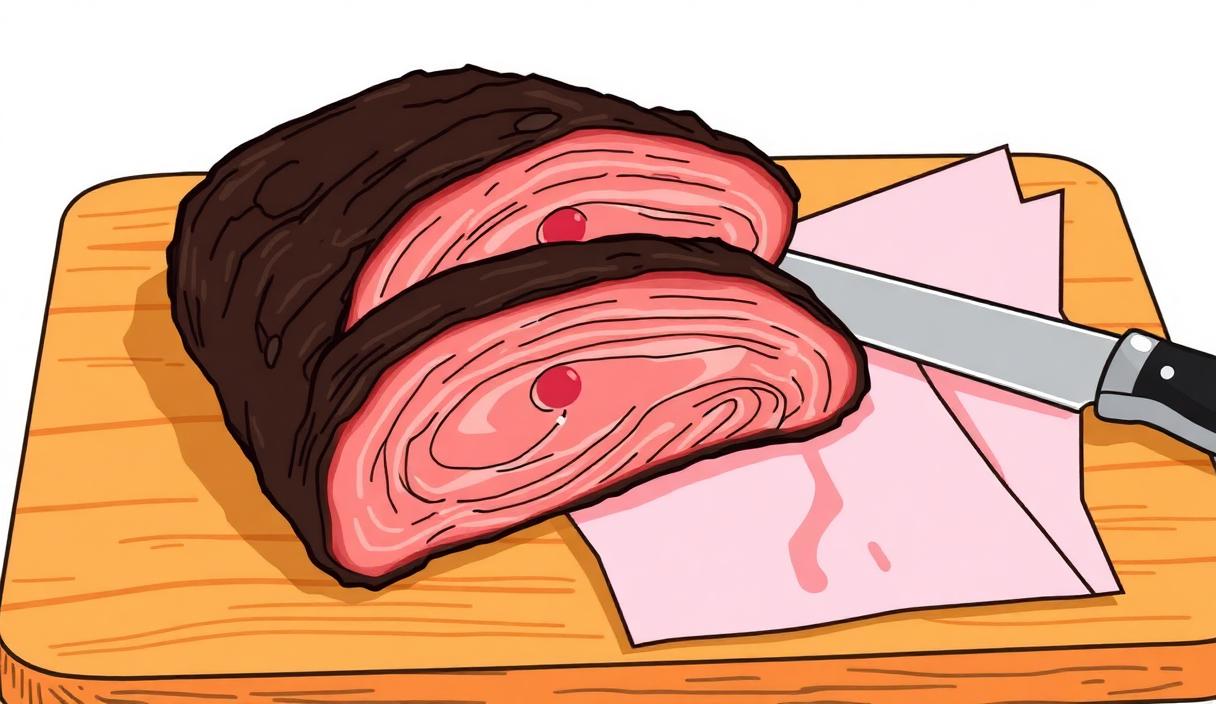
The Recipe
Smoked Brisket (Pellet Grill / Traeger Method)
Prep Time
30 min (trim + season)
Cook Time
12–14 hours
Rest Time
1–2 hours
Serves
12–15 people
Smoker temp: 225°F start to finish
Pull temp: Probe-tender (~203°F internal)
Recommended pellets: Oak (primary); cherry or hickory blend optional
Before You Start
What You Need
Brisket is a famously simple recipe. Salt, pepper, smoke, time. The gear matters more than most cooks expect — especially the thermometer.
Ingredients
Gear
What Actually Matters
The Four Things That Actually Matter for Brisket
Most brisket failures come from the same handful of mistakes. Get these four right and the rest of the cook takes care of itself.
Trim properly
Fat cap to 1/4 inch, hard fat removed, false ends squared. Bad trim = bad bark and uneven cook.
Seasoning is simple
Salt and pepper, equal parts, applied generously. Texas brisket is famous because the seasoning gets out of the way of the beef flavor.
Time, not temperature, finishes the brisket
A brisket is done when a probe slides in like room-temperature butter — usually around 203°F internal, but probe feel is the real signal.
Rest is non-negotiable
A brisket pulled at 203°F and sliced immediately will be tough, dry, and disappointing. A brisket rested 1–2 hours in a cooler is transcendent. The rest is half the technique.
Step by Step
How to Smoke a Brisket on a Pellet Grill
Nine steps. The active work is in steps 1–3 (buy, trim, season) and step 9 (slice). The middle is the pellet grill doing its job.
- 1
BUY
Buy the right brisket
Choose a packer cut — the whole brisket with the point and flat still attached. Avoid flat-only cuts. The flat alone dries out faster and you miss the fat-marbled point that makes burnt ends.
Size: 12–14 pounds is ideal for first-timers. Smaller briskets cook faster but lose moisture; larger briskets hold moisture but take longer and are harder to fit on a 22-inch cooker.
Grade matters. USDA Prime has the most marbling and produces the best result, at a price. USDA Choice is the common grocery-store grade and works fine. Costco's Choice packers are widely considered better than most grocery-store briskets at the same grade.
Look for a brisket that bends easily when held by one end. Stiff = lean and dry. Look for a thick flat (not a tapered runt) and an even, white fat cap on top.
- 2
TRIM
Trim the fat (about 15 minutes)
Trim the fat cap on the top side down to about 1/4 inch thick. Thinner than that, the meat dries out. Thicker, the rub never penetrates and the bark sits on a layer of unrendered fat.
Remove the hard fat — the thick, waxy gristle layer between point and flat. It will not render in 12 hours. Cut it out cleanly.
Square off the false end of the flat — the thin tail that will overcook to jerky before the rest is done. Trim it back.
Lightly trim silver skin from the point. Leave most of the point intact.
Save the trimmings. Brisket fat ground into burgers makes the best ground beef on Earth.
- 3
SEASON
Season (about 10 minutes)
Pat the brisket dry with paper towels. A dry surface holds rub and forms bark.
Optional: a thin layer of yellow mustard or hot sauce as a binder. The mustard helps seasoning stick. It cooks off completely — the finished brisket does not taste mustardy.
Mix 1/4 cup kosher salt and 1/4 cup coarse black pepper (16-mesh, sometimes labeled "BBQ grind"). This is the Texas-style rub, and it is genuinely all most briskets need.
Apply heavily. About 70 percent will fall off during the cook. Don't be shy.
Let the brisket rest at room temperature for 30 minutes while the grill preheats. A cold brisket dropped onto a hot grate condenses moisture and prevents bark formation.
- 4
SET UP
Set up the pellet grill
Set the pellet grill to 225°F. Once it reaches temperature, let it preheat another 15 minutes — the cookbox needs to fully heat-soak before the meat goes on.
Pellets: oak is the gold standard for brisket. Neutral, clean smoke, classic central-Texas flavor. Cherry adds sweetness and color. Hickory is bold and traditional but can get heavy over a 12-hour cook. Avoid mesquite (too aggressive for this long a cook) and avoid mystery fruit blends with no listed ratio.
Place the brisket fat-side up on the grate, point end facing the firepot. The hottest part of any pellet grill is near the firepot — putting the thicker point closer to the heat helps it finish in step with the thinner flat.
Insert a leave-in probe into the thickest part of the flat (not the point — the point will finish later).
- 5
SMOKE
Smoke unwrapped (6–8 hours)
Cook unwrapped at 225°F until the brisket reaches 165–170°F internal in the flat, OR until the bark is set and dark mahogany. This is typically 6–8 hours.
After hour 3, spritz every 60–90 minutes with water, apple juice, or a 75/25 mix of water and apple cider vinegar. Beef broth works too. Spritzing keeps the surface tacky for smoke absorption and prevents the bark from over-charring. The exact mix matters less than the frequency — keep it light, keep it consistent.
Don't open the lid every 20 minutes to peek. Each peek adds 15–20 minutes to total cook time. Spritz, look, close.
Watch for the stall — the internal temp will plateau, sometimes for 2–3 hours, around 150–170°F. This is normal evaporative cooling. Don't panic. Don't crank the temperature. Wait it out, or wrap (next step).
- 6
WRAP
Wrap (the critical decision point)
At 165–170°F internal, you have three options. Pick one based on what you want from the finished brisket.
Pink butcher paper (recommended). Wrap tightly in unwaxed pink butcher paper and return to the grill. Bark stays mostly intact, the stall shortens by 2–3 hours, the brisket holds a competition texture. This is the default for most pellet-grill cooks.
Aluminum foil (faster, softer bark). Wrap in heavy-duty foil. Cooks 1–2 hours faster than paper, but the bark steams and softens. Good if you're tight on time. Slightly more pot-roast texture in the final brisket.
No wrap (longer cook, hardest bark). Continue cooking unwrapped. Takes 2–3 hours longer than wrapped. Produces the firmest, blackest bark — Texas trash-can-lid finish. Highest moisture-loss risk.
For most pellet-grill briskets, butcher paper is the right call. Foil if the clock is against you. No-wrap for experienced smokers chasing maximum bark.
- 7
FINISH
Continue cooking (3–5 more hours)
Wrapped brisket goes back on at the same 225°F until probe-tender.
Probe-tender means: when you slide a thermometer probe (or a wooden skewer) into the thickest part of the flat, it goes in with no resistance — like pushing into room-temperature butter or warm peanut butter.
This is usually around 200–205°F internal, but the temperature is a guide, not a finish line. A probe that slides in clean at 198°F means done. A probe that resists at 205°F means keep cooking.
Total cook time for a 12-pound packer at 225°F: typically 12–14 hours.
- 8
REST
Rest (1–2 hours minimum, longer is better)
This is the step most people get wrong. The rest is not optional.
Pull the wrapped brisket off the grill. Vent the wrap — small slit in the butcher paper, or crack the foil open — for the first 15–20 minutes. This stops carryover cooking from pushing the brisket past done.
Place the wrapped brisket in an empty cooler (a Cambro hold) with a clean towel above and below for insulation. No ice. The cooler is acting as an insulator, not a refrigerator.
Rest 1 hour minimum, 2 hours ideal. Some pitmasters rest for 4+ hours. Internal temperature falls slowly to 150–165°F — perfect serving temperature.
A brisket rested 2 hours and a brisket sliced immediately are genuinely different products. The rest is when moisture redistributes and the texture sets.
- 9
SLICE
Slice and serve
Pull the brisket from the cooler and unwrap it.
Find the grain on the flat — long parallel fibers running one direction. Slice the flat against the grain in 1/4-inch slices, about pencil-thick.
Find the grain on the point — it runs roughly 90 degrees to the flat's grain. Rotate the point and slice it 1/4-inch thick against ITS grain.
Serve with pickles, white bread, raw onion, and BBQ sauce on the side. Good brisket needs no sauce, but offer it.
Save leftover point cubes for burnt ends: cube, sauce, return to the smoker for 2 hours at 250°F. That's a separate recipe, but the point is built for it.
Alternative Method
The Weber Kettle Alternative
No pellet grill? You can smoke a brisket on a Weber kettle using the snake method — a half-circle ring of unlit briquettes lit at one end, holding 225–275°F for 6–8 hours per snake. A 12-pound brisket on a 22-inch kettle is tight but doable; a 26-inch kettle handles it comfortably. The principles are the same: same internal temps, same wrap technique, same rest. The kettle just requires more attention to vent management.
Full kettle setup walkthrough: Setting Up a Weber Kettle for Smoking.
Troubleshooting
Common Brisket Problems and How to Fix Them
Brisket is dry
Most common cause: under-rested. Other causes: overcooked past probe-tender, or too lean a brisket (a Choice flat instead of a Prime packer). The fix: rest longer next time, pull at probe-tender (not 203°F if it's tender at 198°F), buy a fattier brisket.
Bark is soft and gummy
Wrapped too early (before bark set), or used foil instead of butcher paper. Wait until bark is dark mahogany — not just brown — before wrapping, and use butcher paper, not foil.
The stall lasted 4 hours
That's normal. Wait it out, or wrap. Don't crank the temperature to force it through — that dries out the meat without speeding the cook meaningfully.
Brisket finished 4 hours early
Good news. Wrap it, rest it in the cooler. A wrapped brisket can hold at 150°F+ in a Cambro for up to 6 hours and only get better.
Brisket finished 2 hours late and dinner is on
Crank the pellet grill to 275°F for the final hour. Higher temp won't ruin a wrapped brisket. Rest it 30 minutes minimum — less than ideal, but workable.
Bark is too dark or burnt
Lower the cook temp next time (225°F, not 250°F), wrap earlier (at 160°F internal, not 175°F), and spritz more frequently in the first 6 hours.
Bonus Recipe
Best Brisket Rub Recipe (Texas-Style)
- •1/4 cup kosher salt (Diamond Crystal)
- •1/4 cup coarse-ground black pepper (16-mesh)
- •1 tablespoon granulated garlic (optional)
- •1 tablespoon smoked paprika (optional)
Mix in a small bowl. This rub covers a 12–14 lb brisket. The salt-pepper-only version (just the first two ingredients) is what most central-Texas BBQ joints actually use, and it is genuinely all most briskets need. Garlic and paprika are optional — they don't hurt, but they're not necessary.
For more rub options across BBQ categories, see our roundup of the best BBQ rubs.
FAQ
Smoked Brisket Frequently Asked Questions
How long does it take to smoke a brisket per pound?
What temperature do I pull a brisket at?
Should I wrap brisket in butcher paper or foil?
Why do I need to rest a brisket so long?
Can I smoke a brisket overnight?
Do I trim before or after seasoning?
Can I use a smaller brisket flat instead of a packer?
What if my pellet grill doesn't hold 225°F steady?
The Bottom Line
What Actually Separates a Good Brisket From a Great One
Brisket rewards patience more than skill. Anyone who can hold a pellet grill at 225°F can produce competition-quality brisket — the variables are time and rest, not technique.
Three things matter: trim properly, salt and pepper only — keep it simple, and cook to probe-tender, then rest 1–2 hours minimum. Everything else — pellet brand, wrap timing, spritz frequency — is decoration on those three fundamentals.
A first-time brisket on a pellet grill, done right, will outperform 80 percent of restaurant brisket. There is no better project for a new pellet grill owner.
Once you've nailed brisket, the natural beef-cluster next steps are smoked beef ribs and reverse-seared ribeye. For a different long cook, Traeger pulled pork follows the same low-and-slow philosophy on pork shoulder. If you want a beef cook that finishes in two hours instead of fourteen, smoked tri-tip delivers competition-quality results in a fraction of the time.