BBQ Side Dish
Smoked Mac and Cheese: The BBQ Side Dish with Crispy Panko Topping
Smoked mac and cheese is the BBQ side dish that pairs with every protein on your smoker — pulled pork, beef ribs, brisket, ribs, prime rib, ham, turkey, pulled chicken. The technique is straightforward: smoke a creamy three-cheese mac at 225°F for 60-90 minutes for deep wood-fire flavor, then crank the smoker to 350°F for 15-30 minutes to brown a pre-toasted panko topping for crispy textural contrast. Total time: about 90 minutes. Single most-impactful pro tip that most home cooks miss: pre-toast the panko in butter on the stovetop before adding it to the top of the dish. This produces a dramatically crispier finish than raw panko. Cast iron skillet preferred but disposable aluminum pans work. The side dish that genuinely transforms a backyard cookout.
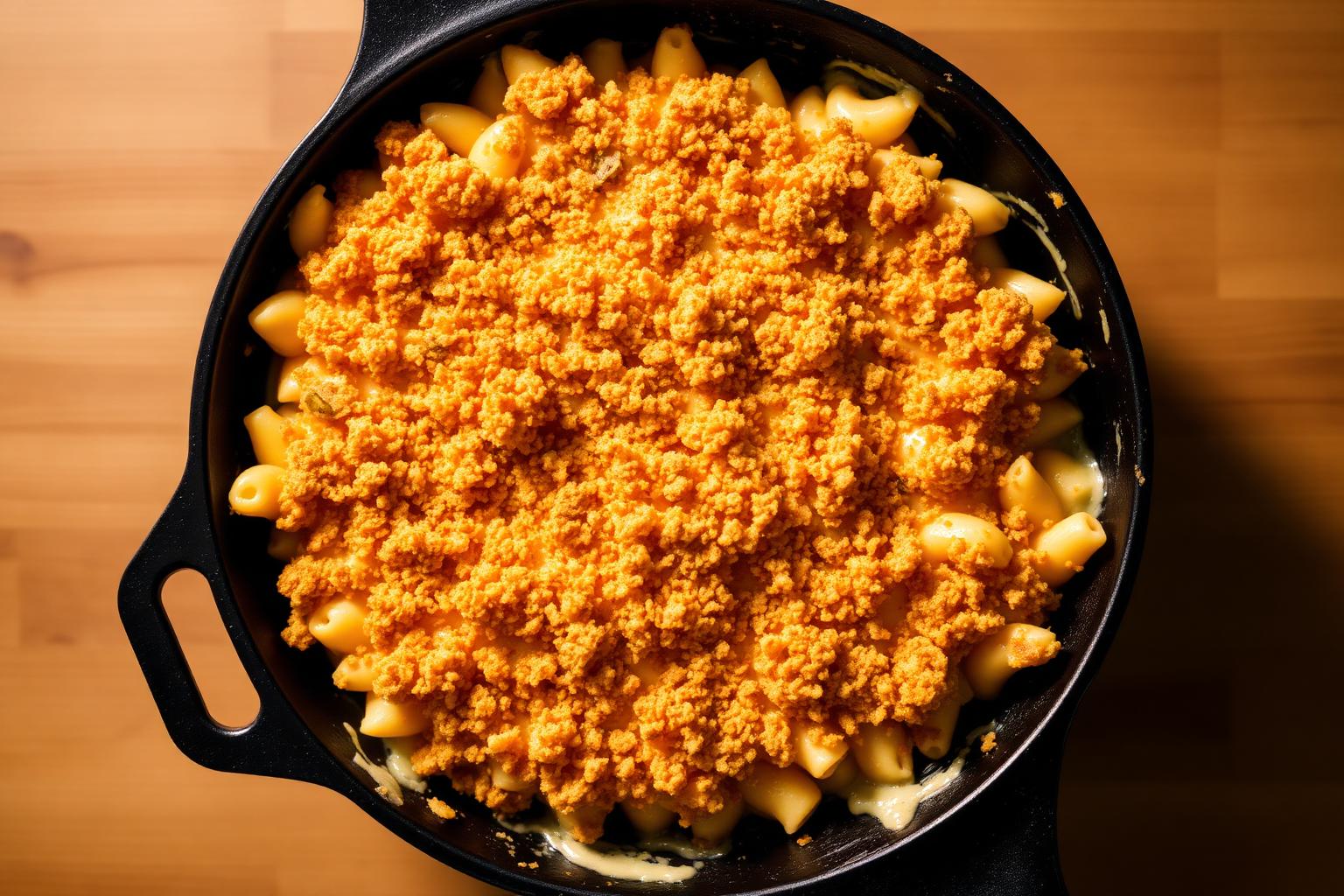
The Recipe
Smoked Mac and Cheese (Three Cheese)
Rated 4.9 — based on 421 reader ratings
Prep Time
15 min
Cook Time
60-90 min smoke + 15-30 min bake
Rest Time
5-10 min
Serves
8-10
Smoker temp: 225°F (Stage 1) → 350°F (Stage 2)
Pull temp: Golden crispy panko + 165°F internal
Recommended pellets: Apple, Cherry, Pecan, or Traeger Signature Blend
Share this recipe:
Why Smoke It?
What Makes Smoked Mac and Cheese Different
Stovetop mac and cheese is fast and easy. Baked mac and cheese is classic and creamy. Smoked mac and cheese is something different — it adds a wood-fire dimension that genuinely transforms the dish.
The smoke flavor doesn't overpower the cheese — it complements it. The cheddar absorbs subtle wood-fire notes during the 60-90 minute smoke phase, creating a flavor profile that's recognizably mac and cheese but distinctly upgraded. The pre-toasted panko topping adds crispy textural contrast that contrasts beautifully with the creamy interior.
Smoke Adds a New Flavor Dimension
Cheese is genuinely a great smoke vehicle — sharp cheddar specifically absorbs wood-fire flavor over 60-90 minutes of slow smoking. The result tastes recognizably like mac and cheese but with a smoky depth that elevates the dish from comfort food to BBQ side dish. The cheese flavor stays primary; the smoke is the supporting actor. Apple and pecan woods produce the best results — gentle, fruit-forward smoke that pairs with cheese.
Texture Contrast Matters
Stovetop mac and cheese is uniformly creamy. Baked mac and cheese has SOME contrast from a topping but typically not enough. Smoked mac and cheese with pre-toasted panko has dramatic textural contrast — crispy golden top, creamy melted middle. The texture difference separates 'good mac and cheese' from 'memorable mac and cheese.' Pre-toasting the panko in butter before adding to the dish is the single most-impactful technique upgrade.
Pairs with Every BBQ Protein
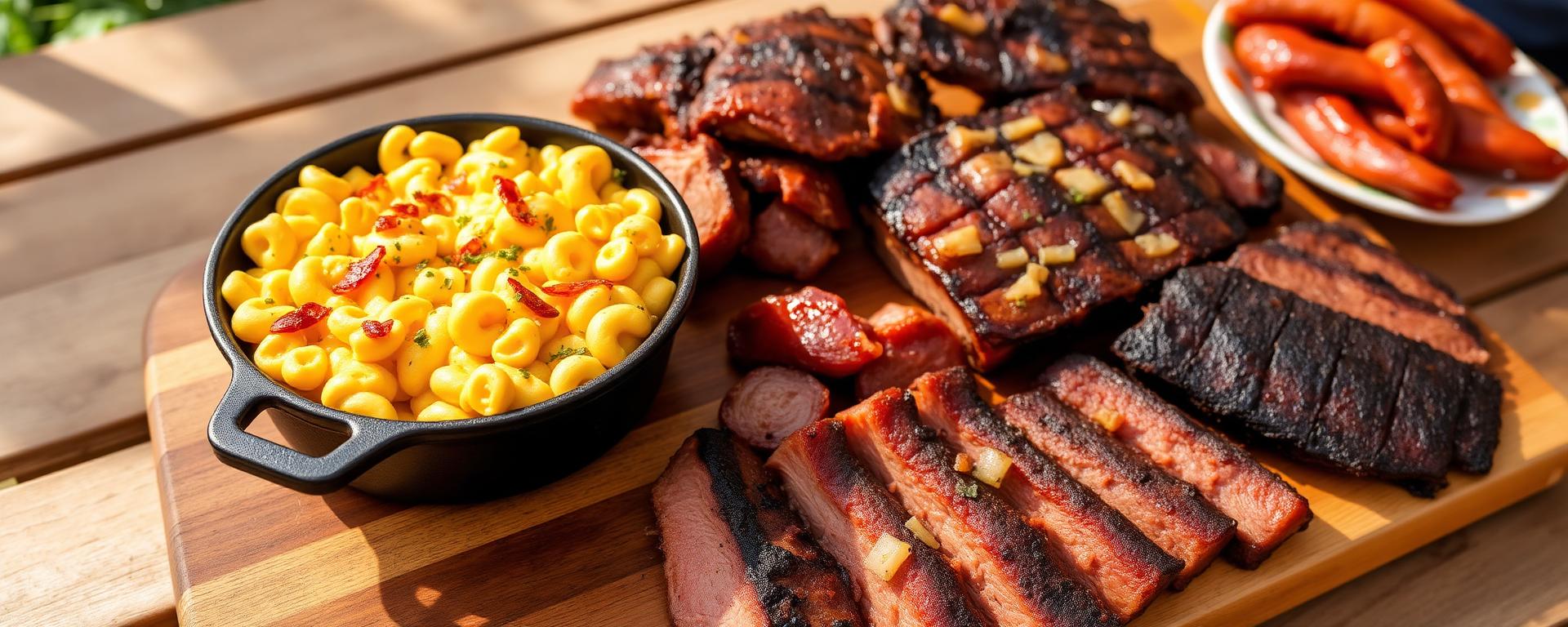
Mac and cheese is the universal BBQ side. Pulled pork sandwich + mac and cheese on the side. Smoked beef ribs with mac and cheese. Brisket-style cuts with mac and cheese. Prime rib with mac and cheese. Ham and mac and cheese (the classic combination). Turkey and mac and cheese. Pulled chicken and mac and cheese. There's literally no protein on this site that doesn't pair with smoked mac and cheese. The side that genuinely fits every BBQ menu.
The case for smoking mac and cheese: takes 30-60 minutes longer than baked, but adds wood-fire flavor that genuinely changes the dish. For weeknight cooking, baked mac and cheese in the oven is fine. For BBQ-focused meals where you're already running the smoker for the protein, smoked mac and cheese is the obvious side choice.
Before You Start
What You'll Need
Three cheeses, pasta, cream sauce ingredients, panko for topping. Most ingredients are pantry staples.
The Ingredients
Pre-Toasted Panko Topping
- 1.5 cups panko breadcrumbs
- 4 tablespoons unsalted butter, melted
- 1/2 cup parmesan cheese (reserved from main ingredients)
- 1 teaspoon dried Italian herbs (optional)
- 1/4 teaspoon kosher salt
Toast in skillet over medium heat for 2-3 minutes until golden. Cool slightly before topping the dish.
Critical: ALWAYS use freshly grated cheese — never pre-shredded bagged cheese. Pre-shredded cheeses contain anti-caking agents (potato starch, cellulose) that prevent smooth melting. The 5 minutes spent grating is the difference between creamy mac and cheese and grainy mac and cheese. Buy block cheese, grate yourself.
The Equipment
Why cast iron: a 12-inch cast iron skillet produces the best smoked mac and cheese. Cast iron heats evenly, holds temperature in the smoker, and develops crispy cheese edges around the perimeter. 10½-inch cast iron is too small for this recipe. Disposable aluminum pans (9x13) work but don't produce the same edge texture. If using a glass or ceramic baking dish, expect slightly longer bake time at the 350°F finishing stage.
Step by Step
How to Smoke Mac and Cheese (5 Steps in 90 Minutes)
Five steps. The béchamel is the only technique-sensitive part; everything else is foolproof. Pre-toasted panko topping is the single most-impactful upgrade most home cooks miss.
- 1
PREP
Boil pasta to AL DENTE and pre-toast the panko
Bring a large pot of salted water to a boil. Add the elbow macaroni (or cellentani). Cook for 1-2 minutes LESS than the package time — al dente or even slightly firmer.
This is critical: the pasta will continue cooking in the smoker for 60-90 minutes. If you cook it fully soft on the stovetop, it'll be mushy after smoking. Drain (do NOT rinse with cold water — you want the pasta starch to help bind the sauce).
While the pasta cooks, pre-toast the panko topping: melt 4 tablespoons butter in a skillet over medium heat. Add 1.5 cups panko breadcrumbs. Stir constantly for 2-3 minutes until the panko turns golden brown. Remove from heat.
Let cool slightly, then mix in 1/2 cup grated parmesan and the optional Italian herbs and salt.
This step is non-negotiable for crispy topping. Raw panko added to the top of the dish softens during the long smoke and never crisps properly. Pre-toasted panko stays crispy through the whole cook.
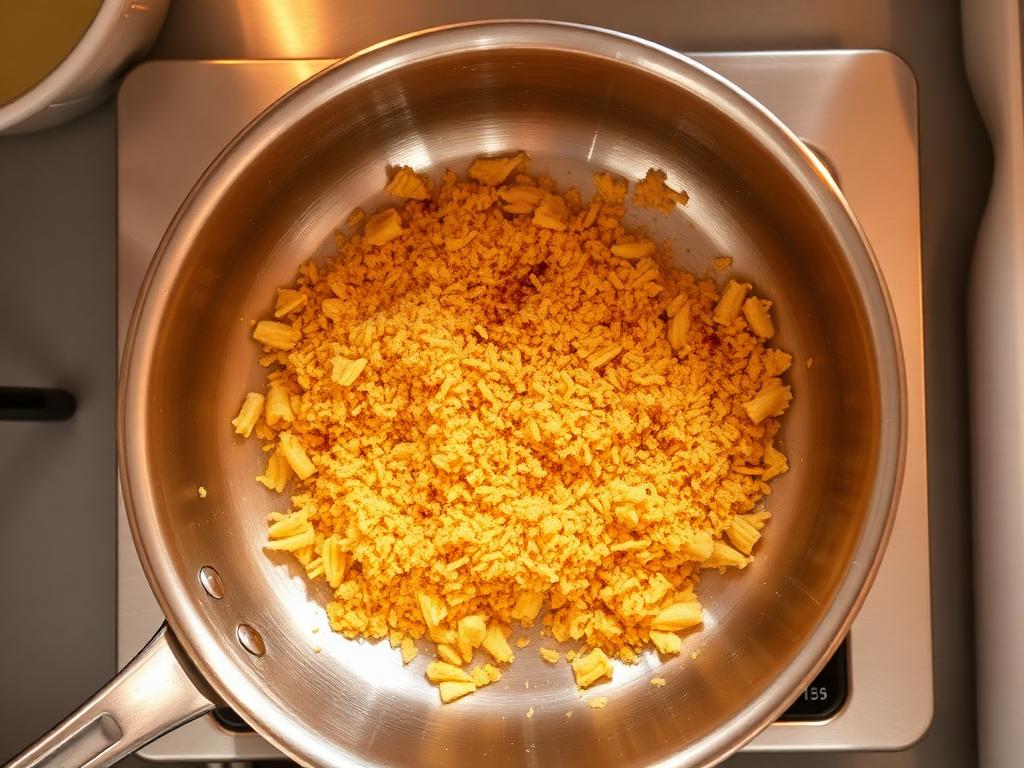
Time: 15-20 minutes (parallel)
- 2
SAUCE
Make the three-cheese béchamel sauce
In a large saucepan over medium heat, melt the remaining 1/2 cup (1 stick) butter.
Whisk in 1/4 cup flour to make a roux. Cook 1-2 minutes — don't brown it, keep it pale.
Slowly whisk in 3 cups whole milk, breaking up any lumps. Add the cubed cream cheese. Whisk until melted and smooth.
Stir in seasonings: ground mustard, garlic powder, onion powder, salt, pepper, and optional cayenne.
Reduce heat to low. Add the 4 cups grated sharp cheddar and 2 cups grated Gruyère in batches, stirring until each batch is fully melted before adding the next. Stir in 1/2 cup grated parmesan (saving the other 1/2 cup for the topping).
Sauce should be smooth, thick enough to coat a spoon, and glossy. If too thick, add a splash of milk. If too thin, simmer 2-3 more minutes.
Combine cooked pasta with cheese sauce in the saucepan. Stir until every noodle is coated. The mixture should look VERY saucy — the sauce will thicken during smoking. Slightly soupy is correct.
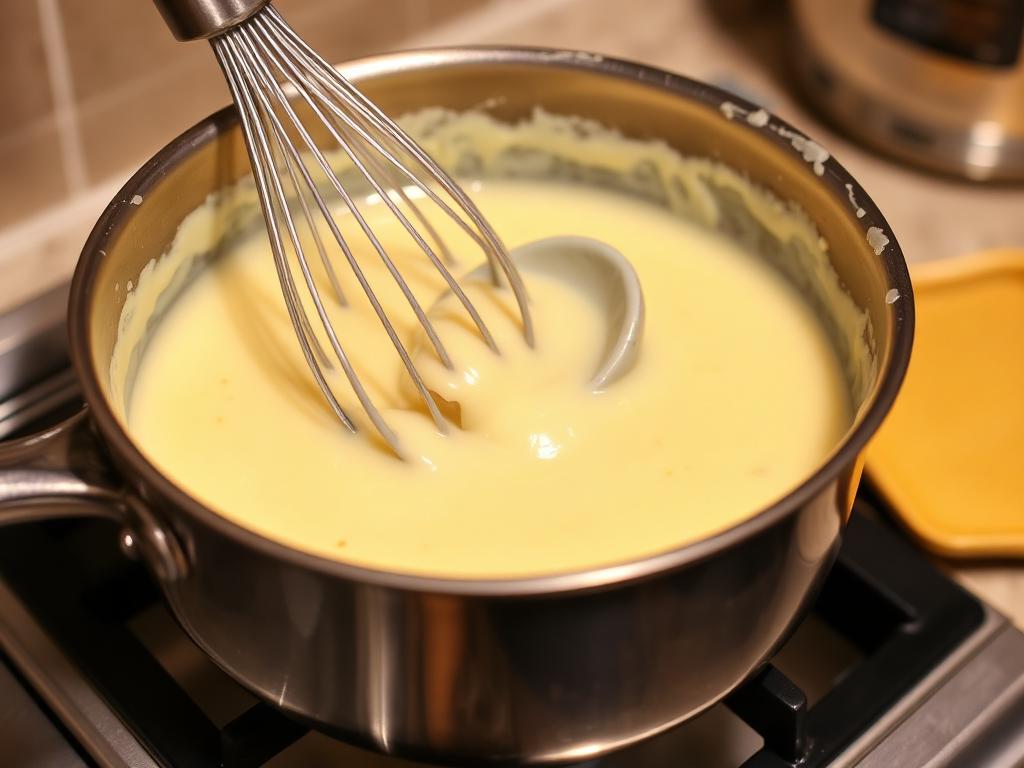
Time: 10-15 minutes
- 3
ASSEMBLE
Transfer to greased cast iron skillet, top with panko
Grease a 12-inch cast iron skillet (or 9x13 baking dish) with butter or cooking spray.
Pour the mac and cheese mixture into the skillet. Smooth the top with a spatula.
Sprinkle the pre-toasted panko topping evenly over the top — distribute uniformly so every serving has crispy topping.
Optional: scatter 1/2 cup finely chopped cooked bacon over the panko for extra richness and BBQ-friendly flavor.
Set the skillet aside while the smoker preheats.
Time: 5 minutes
- 4
SMOKE
Stage 1: Smoke at 225°F for 60-90 minutes
Fire up your smoker and set it to 225°F. If your model has Super Smoke mode, enable it for maximum smoke flavor.
Recommended wood for mac and cheese:
Apple: Mildest, most popular for cheese-based dishes. Fruity, won't overpower.
Cherry: Slightly bolder than apple with subtle sweetness.
Pecan: Underrated nutty profile that pairs beautifully with sharp cheddar.
Traeger Signature Blend (hickory + maple + cherry): Balanced default.
Hickory (use moderately): Bolder smoke flavor for those who want it more pronounced.
AVOID mesquite: too aggressive — completely overpowers cheese.
Place the skillet directly on the grill grates. Close the lid. Smoke for 60-90 minutes — 60 for milder smoke flavor, 90 for stronger.
During the smoke phase: cheese melts fully and starts absorbing smoke, the sauce thickens slightly as moisture evaporates, the top of the panko begins darkening (it'll deepen during Stage 2), and some bubbling around the edges of the skillet is normal.
Don't open the lid during the smoke — you're locking in flavor. If using a wireless thermometer, monitor that the internal temperature reaches at least 165°F (food safety for held dish).
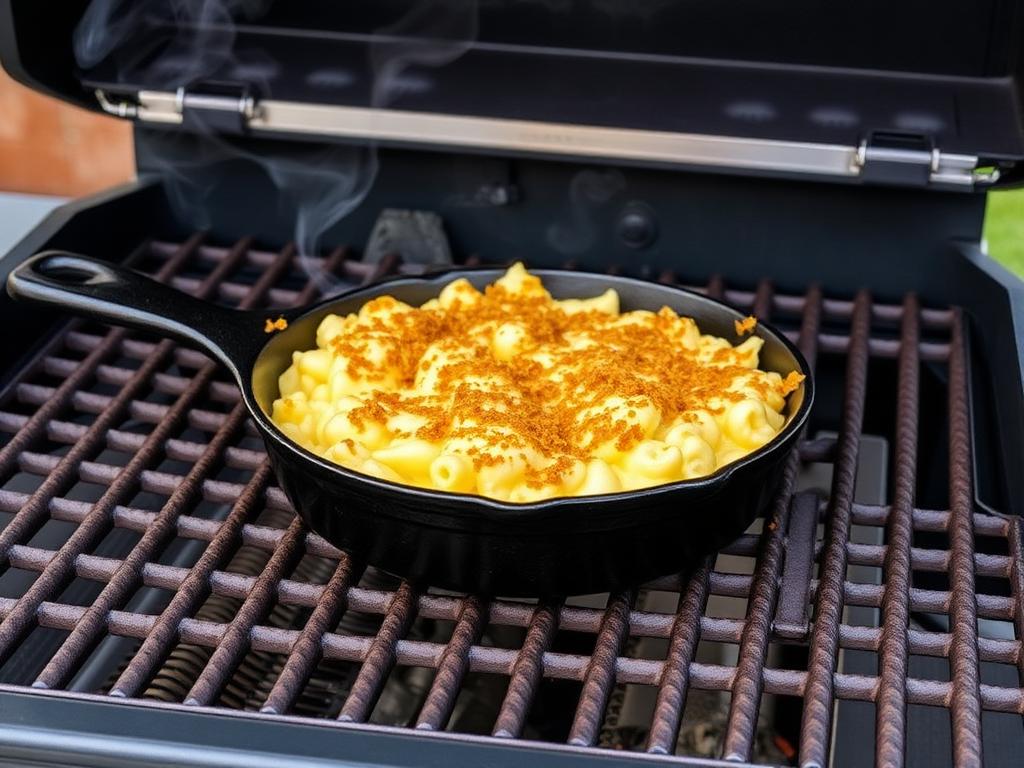
Time: 60-90 minutes
- 5
BROWN & REST
Stage 2: Crank to 350°F for 15-30 minutes, then rest
After the smoke phase, increase smoker temperature to 350°F. The grill takes 5-10 minutes to climb from 225°F to 350°F.
Continue cooking at 350°F for 15-30 minutes until the panko topping is golden brown and crispy (visual check), the sauce is bubbling around the edges of the skillet, the top center reads at least 165°F internal, and the cheese is fully melted with slight golden brown spots on exposed cheese.
If the topping browns faster than the rest of the dish, tent loosely with foil for the last few minutes (rare — most cooks find the timing works perfectly without intervention).
Pull the skillet from the smoker. Let rest 5-10 minutes before serving.
The rest period lets the sauce set slightly (less runny when scooped), brings the dish to safer eating temperature, and firms up the crispy topping as the butter solidifies a bit. Cheese pulls away from skillet edges slightly for easier serving.
Serve directly from the cast iron skillet for rustic presentation, or transfer to a serving dish for more formal occasions. Best eaten warm — leftovers reheat decently in the oven (300°F, foil-covered) but never quite recapture the just-pulled crispy panko.
Time: 15-30 minutes bake + 5-10 min rest
Cheese Matters
The Best Cheese Combinations for Smoked Mac and Cheese
Cheese selection is the difference between good mac and cheese and great mac and cheese. Three categories to combine.
The right cheese combination balances three things: meltability (smooth texture), flavor depth (cheese complexity), and smoke compatibility (won't compete with smoke flavor). Pick at least one cheese from each category.
Base Cheese (Choose 1)
The bulk of the cheese. Should melt smoothly and take on smoke flavor.
- Sharp cheddar ← top pick. Best meltability, best smoke absorption, classic mac and cheese flavor
- Mild cheddar: works but less flavor depth
- Colby: similar to cheddar, slightly creamier
- Monterey Jack: melts beautifully, mild flavor
Use 4 cups (16 oz) for the recipe.
Premium Cheese (Choose 1)
Adds nutty depth and creaminess. Slight upgrade from straight cheddar mac and cheese.
- Gruyère ← top pick. Nutty, creamy, slightly sweet. Worth the premium ($8-12 per 8 oz)
- Gouda: rich, nutty, caramelly. Excellent.
- Smoked Gouda: doubles down on smoke flavor. Skip if using strong wood.
- Fontina: melts beautifully, mild nuttiness
Use 2 cups (8 oz) for the recipe.
Creamy Boost (Optional but Recommended)
Adds silky texture and richness. Pulls everything together.
- Cream cheese ← top pick. 8 oz cubed makes the sauce creamier than any other addition.
- Mascarpone: similar to cream cheese, slightly sweeter
- Velveeta: controversial — produces ultra-smooth melt, processed-cheese stigma. Some pit masters swear by it.
Use 8 oz cream cheese OR 4 oz Velveeta + reduced milk.
Cheeses to AVOID: Swiss (competes with smoke flavor), aged Parmigiano alone (doesn't melt smoothly — use only as finishing/topping), feta (won't melt), goat cheese (separates), pre-shredded bagged cheese (anti-caking agents prevent smooth melting). Always grate fresh from blocks.
Wood Selection
The Best Wood for Smoked Mac and Cheese
Cheese-based dishes pair with milder, fruit-forward woods. Aggressive smokes overpower the cheese flavor.
Apple (Top Pick)
The most reliable wood for cheese-based dishes. Mild, slightly sweet smoke that complements sharp cheddar without overpowering. Beautiful golden-mahogany top color in 60-90 minutes. If you only buy one pellet for mac and cheese, buy apple.
Best for: Reliable default, classic flavor
Cherry or Pecan
Cherry adds beautiful color and slightly bolder fruit profile. Pecan adds nutty complexity that pairs especially well with Gruyère in the cheese mix. Both are step-up choices from apple. Pecan is the underrated pit-master pick for refined smoked mac and cheese.
Best for: Visual appeal (cherry), refined flavor (pecan)
Hickory or Signature Blend
Hickory delivers bolder traditional BBQ smoke — works for mac and cheese if you want pronounced smoke flavor. Use moderately. Traeger Signature Blend (hickory + maple + cherry) is a balanced default that produces consistent results. Both work well.
Best for: Bolder flavor, BBQ-style mac and cheese
What to Avoid
- •Mesquite: Far too aggressive for cheese. Will completely overpower the dish.
- •Pure oak alone: Works but produces less interesting flavor than fruit/nut woods.
- •Maple alone: Too subtle for the relatively short cook; works in blends but not standalone.
The Gear I Use
Essential Gear for Smoked Mac and Cheese
Four tools that meaningfully impact mac and cheese results. The 12-inch cast iron skillet is most-impactful.
12-Inch Cast Iron Skillet
The single most-impactful gear upgrade. Cast iron heats evenly, holds temperature in the smoker, and develops crispy cheese edges. Lodge 12-inch Cast Iron Skillet ($30-40) — pre-seasoned, lasts decades, doubles as serving dish. Aluminum disposable pans work but don't produce the same edge texture.
Shop cast iron skillets →Apple or Pecan Wood Pellets
Apple is the reliable default for cheese dishes. Pecan adds nutty complexity. Traeger Apple ($25/20lb), Bear Mountain Pecan ($28), or Lumberjack 100% Apple ($28). 20-pound bag handles 15-20 mac and cheese cooks. Avoid mesquite — too aggressive for cheese.
Shop pellets →Box Grater (Stop Buying Pre-Shredded)
Pre-shredded bagged cheese contains anti-caking agents that prevent smooth melting. Block cheese + box grater = creamy mac and cheese. OXO Good Grips Etched Box Grater ($25) — ergonomic handle, sharp etching, dishwasher-safe. Or use a food processor with shredding disc for batch grating.
Shop box graters →Quality Sharp Cheddar
Cheese quality matters more than most home cooks realize. Tillamook Vintage White Cheddar (extra sharp), Cabot Seriously Sharp Cheddar, or Cracker Barrel Vermont Sharp White Cheddar all produce dramatically better results than generic store-brand 'sharp cheddar.' Spend $5-8 per pound for quality cheese — it's the foundation of the dish.
Shop quality cheddar →Avoid These
6 Common Smoked Mac and Cheese Mistakes
Six preventable errors that turn an easy side dish into a mediocre disappointment.
Mistake 1: Using pre-shredded bagged cheese
The #1 most-impactful mistake. Pre-shredded bagged cheese contains anti-caking agents (potato starch, cellulose, calcium sulfate) that prevent smooth melting. The result is grainy, separated, sometimes oily mac and cheese. ALWAYS grate fresh from block cheese. The 5 minutes spent grating is the difference between creamy and grainy. This applies to ALL the cheeses — cheddar, Gruyère, parmesan.
Mistake 2: Skipping the pre-toasted panko topping
Raw panko added to the top of the dish softens during the long smoke and never crisps properly. The result is soggy topping that doesn't add textural contrast. Pre-toast the panko in butter on the stovetop for 2-3 minutes before adding to the dish. The toasted panko stays crispy through the whole cook. This single technique change dramatically improves the final dish.
Mistake 3: Overcooking the pasta
Pasta continues cooking in the smoker for 60-90 minutes. If you cook it fully soft on the stovetop, it'll be mushy after smoking. Cook pasta to AL DENTE (1-2 minutes shy of package time). The pasta will reach perfect texture during the smoke phase. Soft pasta on the stovetop = mushy mac and cheese on the smoker.
Mistake 4: Using mesquite or aggressive pellets
Mesquite overpowers cheese flavor completely. Stick with apple, cherry, pecan, or Traeger Signature Blend. Cheese is a delicate flavor profile — aggressive smoke woods compete instead of complementing. The 'wrong wood' mistake produces mac and cheese that tastes only like smoke, not like cheese.
Mistake 5: Not making the sauce thick enough (mac and cheese soup)
The cheese sauce should coat a spoon and look slightly thicker than heavy cream. If it's thin enough to pour, it's too thin. The sauce will absorb into the pasta during smoking — starting too thin produces soupy mac and cheese. If sauce looks thin: simmer 2-3 more minutes to reduce. If it looks too thick: add a splash of milk.
Mistake 6: Skipping the rest period
Pulling mac and cheese directly from the smoker and serving immediately produces mac and cheese soup — sauce hasn't set, topping is too soft to scoop cleanly. Rest 5-10 minutes after pulling. The sauce sets slightly, the topping firms up, and the dish becomes serveable. Skipping the rest doesn't ruin the dish but produces visually messier servings.
Pairing Guide
What to Serve With Smoked Mac and Cheese
Mac and cheese is the universal BBQ side. Here's what pairs best from our other recipes.
Classic Pairing
With Pulled Pork or Pulled Chicken
The classic BBQ combination. Pulled pork sandwich + mac and cheese on the side is the gold-standard cookout plate. Pulled chicken (lighter version) works equally well. Mac and cheese's richness balances the saucy pulled meat.
- Traeger Pulled Pork → (weekend project)
- Traeger Pulled Chicken → (weeknight version)
Holiday Pairing
With Smoked Ham or Prime Rib
Mac and cheese with smoked ham is the Easter classic — many families serve this combination every year. With prime rib at Christmas, mac and cheese is the indulgent side that complements the rich beef. For Thanksgiving turkey, mac and cheese works as the comfort-food alternative to traditional sides.
- Smoked Ham → (Easter)
- Smoked Prime Rib → (Christmas)
- Smoked Spatchcock Turkey → (Thanksgiving)
BBQ Pairing
With Beef Ribs or Brisket-Style Cuts
Mac and cheese with smoked beef ribs is the steakhouse-meets-BBQ combination. Eye of round (brisket-style) pairs equally well. The richness of cheese balances the deeper meat flavors. Pork belly burnt ends + mac and cheese is the indulgent BBQ plate.
"Mac and cheese is the universal BBQ side — it pairs with every protein on the site. The richness, creaminess, and crispy panko topping work alongside everything from light fish (smoked salmon) to heavy beef (prime rib). For BBQ-focused meals, mac and cheese is the side that genuinely transforms a backyard cookout into something memorable."
FAQ